

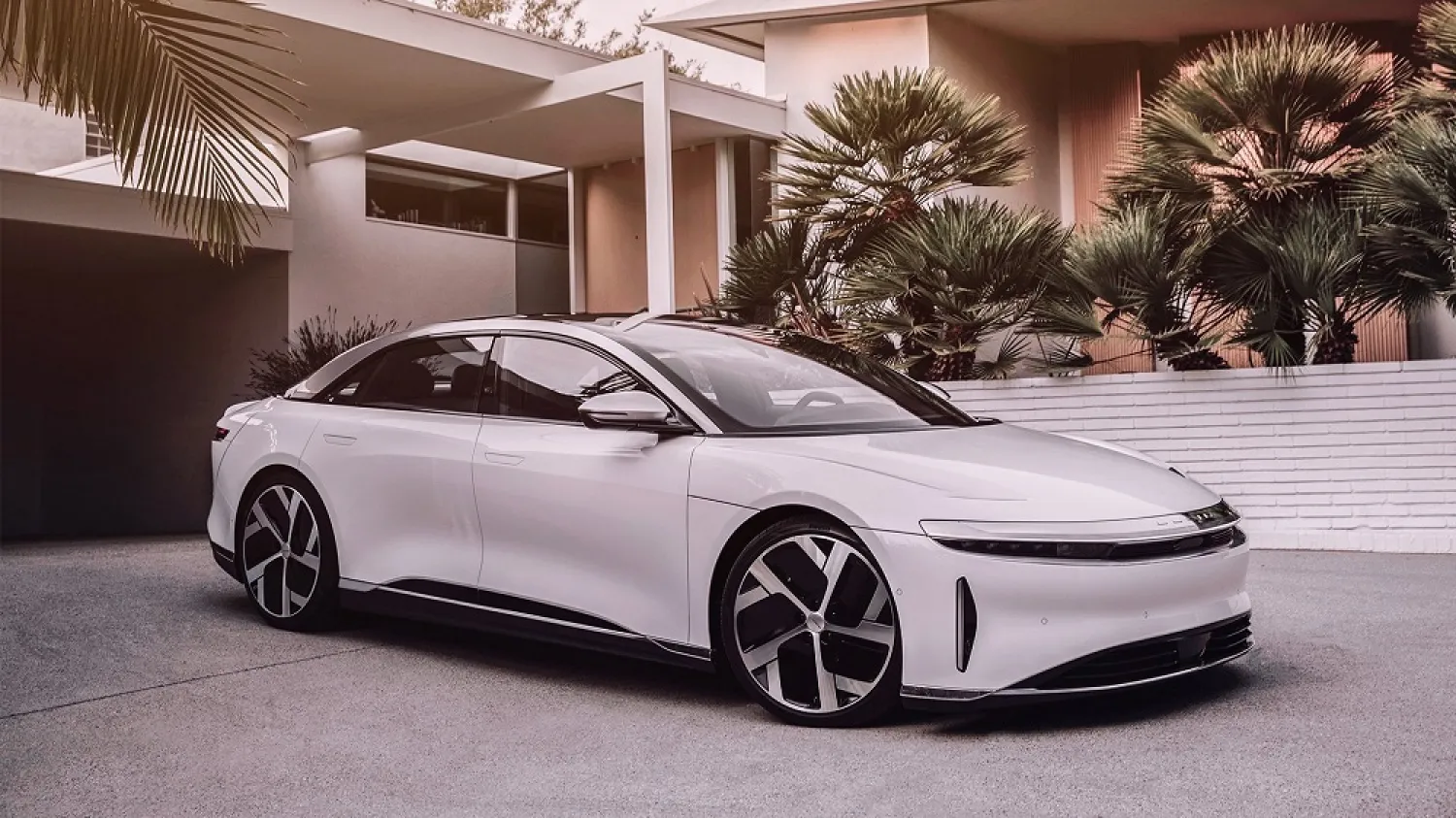

Lucid Motors Unveils its Much-Anticipated New Electric Vehicle

Lucid Motors launches its Lucid Air, state-of-the-art luxury EV Sedan. (Lucid Motors)
TT

Lucid Motors Unveils its Much-Anticipated New Electric Vehicle

Lucid Motors launches its Lucid Air, state-of-the-art luxury EV Sedan. (Lucid Motors)

Lucid Motors, which seeks to set new standards for sustainable transportation with its advanced luxury electric vehicles (EV), unveiled on Thursday production details for the highly anticipated Lucid Air. Having already set new industry benchmarks in the EV and luxury segments in key areas related to performance, efficiency, and design, deliveries of this new pure-electric luxury sedan will start in spring of 2021.

“Lucid Motors is driven to make the electric car better, and by doing so, help move the entire industry forward towards accelerated adoption of sustainable mobility. The goal of this relentless approach to developing the world’s most advanced electric vehicle is to benefit all mankind with sustainable, zero emission transportation, and to also attract new customers to the world of EVs,” said Peter Rawlinson, CEO and CTO, Lucid Motors.

“With the Lucid Air, we have created a halo car for the entire industry, one which shows the advancements that are possible by pushing the boundaries of EV technology and performance to new levels.”

The Lucid Air is the result of a revolutionary approach to automotive packaging called the Lucid Space Concept, which capitalizes upon the miniaturization of Lucid’s in-house developed EV drivetrain to optimize interior cabin space. The concept is central to the architecture of the Lucid Electric Advanced Platform (LEAP) upon which the Lucid Air, and forthcoming Lucid vehicles, will be built. It’s a holistic, clean-sheet approach to advanced EV construction, without using existing “off the shelf” solutions so often seen in EVs from legacy automakers.

Saudi Arabia's Public Investment Fund (PIF) had in 2018 invested more than $1 billion in Lucid Motors. This has allowed the fund to play a pioneering role in developing future industries.

By simultaneously making smaller yet more powerful electric motors and dramatically improving the packaging of the entire electric powertrain, Lucid is able to reclaim that space for passengers and their comfort. This extends the philosophy of hyper-efficiency embedded in every facet of Lucid Air, from energy to spatial efficiency, delivering an unprecedented combination of range, practicality, performance, and luxury, the company said in a statement.

The Space Concept also contributes to the subtly different and modern proportions for the Lucid Air, without relying on any traditional automotive design cues, instead delivering a beautiful car that looks entirely distinctive on the road.

“When we embarked on this journey at Lucid Motors and the development of our first vehicle, the Lucid Air, we refused to compromise. We decided early on that we were going to pursue every facet of performance, innovation, and luxury,” said Derek Jenkins, VP of Design, Lucid Motors. “The result is that we are building the best car in the world, the numbers simply speak for themselves. What’s more, we did all this without ever sacrificing the beauty of the Lucid Air, which will stand as the first example of a car being created from a clean sheet to leverage the total design freedom that an EV architecture provides.”

“The Lucid brand was created with a progressive, post-luxury mindset ideally suited to meet the rapidly evolving needs of the most progressive buyers. We are heading into a future where conscious consumers see sustainability, advanced design, and technical innovation as equally important to more traditional luxury values of quality and craftsmanship,” said Jenkins. “We consider Lucid to be at the forefront in a shift in consumer preferences toward new brands that offer direct relationships alongside products featuring entirely new levels of technology, performance, and design.”

With up to 1,080 horsepower available in a dual-motor, all-wheel-drive architecture, the Lucid Air is able to achieve quarter-mile times as quick as 9.9 seconds on a consistent, repeatable basis. To date, it is the only electric sedan able to achieve a quarter-mile time under 10 seconds. The power of the Lucid Air is complemented by an available extended-range capability that achieves an estimated EPA range of up to 517 miles on a single charge.

When it arrives to market, the Lucid Air will also be the fastest charging electric vehicle ever offered, with the capability to charge at rates of up to 20 miles per minute when connected to a DC Fast Charging network. For owners charging their Lucid Air in real-world conditions on the road, that can translate into 300 miles of range in just 20 minutes of charging.

Lucid Motors drew upon 10 years of experience and over 20 million miles of real-world testing in creating its in-house developed, compact 113kWh extended-range battery pack. Further developed in the world’s leading electric racing championship, Lucid’s race-proven battery technology excels with a custom Battery Management System (BMS), clever cell packaging, and world-class energy density.

The Lucid Air is the world’s most aero-efficient luxury car, with tests completed at Windshear’s advanced rolling-road wind tunnel verifying a coefficient of drag of 0.21.

The Lucid Air’s advanced driver-assistance system (ADAS), Lucid DreamDrive, is a first-of-its-kind platform combining the most comprehensive sensor suite on the market with a cutting-edge Driver Monitoring System (DMS), all standard on the Lucid Air Dream Edition. It is the first system of its kind to offer 32 sensors, covering vision, radar and ultrasonics, plus the world’s first standard high-resolution LIDAR in an EV, all working alongside the standard DMS and geo-fenced HD mapping to provide the safest possible approach to Level 2 and Level 3 driver assistance technologies.

The Lucid Air will be available initially in North America, offered in four model ranges: The Air, the starting point for the lineup, available in 2022 and starting below $80,000; the well-equipped Air Touring model, available late 2021, from $95,000; the fully equipped Air Grand Touring, available mid-2021, from $139,000; the all-inclusive, limited-volume Air Dream Edition, available spring 2021, at $169,000.

Reservations are open now for customers across the US and Canada, as well as in select countries in Europe and the Middle East, including Saudi Arabia and the United Arab Emirates. Production at the Lucid Motors factory in Casa Grande, Arizona, will begin in the coming months, with deliveries of the Lucid Air to North American customers to commence in spring of 2021.

PIF’s investment in Lucid Motors reflects its goals to expand and diversify its international investments. This investment also supports the efforts emphasized in Vision 2030 to build a sustainable future economy that is environmentally-friendly.



Aramco CEO Warns 1 Billion Barrels Lost Will Slow Oil Market Recovery

President and CEO of Saudi's Aramco, Amin Nasser, speaks during the Future Investment Initiative (FII) in Riyadh, Saudi Arabia October 29, 2024. (Reuters)
TT

Aramco CEO Warns 1 Billion Barrels Lost Will Slow Oil Market Recovery

President and CEO of Saudi's Aramco, Amin Nasser, speaks during the Future Investment Initiative (FII) in Riyadh, Saudi Arabia October 29, 2024. (Reuters)

The world has lost about 1 billion barrels of oil over the past two months and energy markets will take time to stabilize even if ‌flows resume, ‌Saudi Aramco’s CEO said on ‌Sunday, ⁠as shipping disruptions ⁠choke traffic through the Strait of Hormuz.

"Our objective is simple: keep energy flowing, even when the system is under strain," Amin Nasser told Reuters in a statement after Aramco reported a 25% ⁠jump in net profit in ‌its first-quarter.

Global energy supplies ‌have been sharply squeezed by Iran’s blockade of ‌the Strait of Hormuz, which ‌has curtailed shipping and driven prices higher following the US-Israeli war.

"Reopening routes is not the same as normalizing a market that has ‌been deprived of about one billion barrels of oil," Nasser said, ⁠adding ⁠that years of underinvestment have compounded the strain on already-low global inventories.

Aramco has used its East-West Pipeline to bypass Hormuz and transport crude to the Red Sea, an asset Nasser described as a "critical lifeline" to mitigate the global supply crisis.

Despite shifts in shipping routes, Nasser reiterated that Asia remained a key priority for the company and was central to global demand.


Boeing: Building a Strategic Partnership to Cement Saudi Arabia as a Global Aviation, Tourism Hub

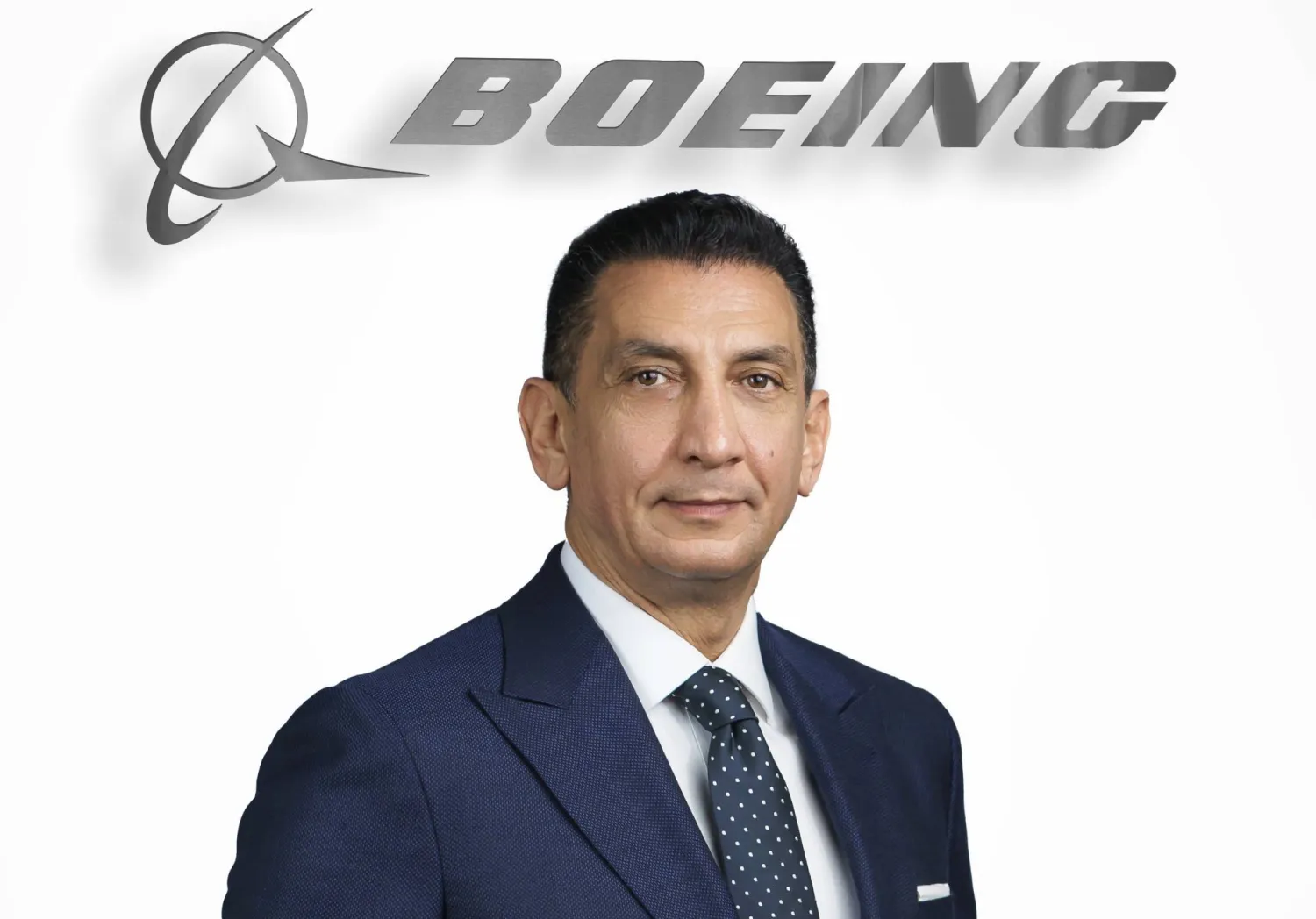
Omar Arekat, Boeing’s vice president for commercial sales and marketing in the Middle East (The company) 
TT

Boeing: Building a Strategic Partnership to Cement Saudi Arabia as a Global Aviation, Tourism Hub

Omar Arekat, Boeing’s vice president for commercial sales and marketing in the Middle East (The company) 

Boeing is seeking to strengthen its presence in Saudi Arabia, citing significant opportunities to support its regional expansion and stressing that cooperation has evolved beyond aircraft sales into a long-term partnership aimed at transforming the Kingdom into a global aviation and tourism hub.

Omar Arekat, Boeing’s vice president for commercial sales and marketing in the Middle East, said Saudi Arabia is among the company’s most important markets outside the United States, amid rising demand for fleet modernization and expanded air connectivity.

Supporting Transformation

In remarks to Asharq Al-Awsat, Arekat underscored Boeing’s role in supporting the transformation underway in Saudi Arabia’s aviation sector, noting that the partnership, which spans more than 80 years, has entered a deeper and more strategic phase as the goals of Vision 2030 accelerate.

He said one of the clearest signs of that cooperation is orders for more than 140 aircraft across several models, including the 787 Dreamliner and 737-8, reflecting the rapid expansion of the Kingdom’s aviation sector and its growing role in boosting global connectivity while supporting sustainability through more fuel-efficient, lower-emission aircraft.

Arekat added that Vision 2030 has reshaped the aviation sector into an integrated strategic ecosystem driven by economic diversification and higher local content targets, fueling demand for maintenance and repair services and paving the way for the development of local supply chains and aviation-related industries.

Localizing Maintenance

He further underlined that Boeing has expanded its local partnerships to include the localization of maintenance operations and engine repair, as well as exploring opportunities for the initial manufacturing of materials used in the sector, including aluminum and titanium, in cooperation with Saudi companies — a move aimed at strengthening industrial self-sufficiency and building sustainable local capabilities.

On the delivery of Dreamliner aircraft to Riyadh Air, Arekat described the move as a milestone in building the Kingdom’s future aviation network. He said the aircraft offer long-range capabilities and high operational efficiency, supporting the launch of direct flights linking Riyadh with destinations worldwide and reinforcing the Saudi capital’s position as a global travel hub.

He stressed that expanding air connectivity is a major economic driver, contributing to tourism growth, attracting investment and facilitating trade, while also creating direct and indirect jobs as passenger and business traffic into the Kingdom increases.

Global Hub

Arekat said the partnership with Riyadh Air is a key factor in accelerating the Kingdom’s ambitions to become a global aviation hub, despite challenges related to infrastructure, workforce development and regulatory frameworks. He added that such challenges represent opportunities to strengthen cooperation between the public and private sectors, as well as academic institutions.

Addressing geopolitical tensions, he noted that demand for air travel in Saudi Arabia and the wider region continues to grow strongly, supported by major infrastructure investments and long-term development strategies. He added that the sector’s economic fundamentals remain solid despite global volatility.

Human Capital

On workforce development, Arekat stressed that investment in human capital is a cornerstone of the company’s strategy, noting Boeing’s support for education and scientific research through academic partnerships and local training programs that have achieved 100 percent Saudization, in addition to investments exceeding SAR 60 million ($16 million) in community initiatives since 2012.

He added that partnerships with Saudi carriers are playing a key role in strengthening the Kingdom’s position within global supply chains through the use of digital solutions, data analytics and operational expertise, helping improve efficiency, enhance the passenger experience and cement Saudi Arabia’s role as a regional hub for aviation services and industries.


Saudi Aramco’s Q1 Profit Rises 25% on Higher Sales, Key Pipeline Full

Saudi Aramco's logo during the CERAWeek energy conference 2026 in Houston, Texas, US, March 24, 2026. (Reuters)
TT

Saudi Aramco’s Q1 Profit Rises 25% on Higher Sales, Key Pipeline Full

Saudi Aramco's logo during the CERAWeek energy conference 2026 in Houston, Texas, US, March 24, 2026. (Reuters)

Saudi oil giant Aramco reported on Sunday a 25% rise in first-quarter net profit, mainly due to higher sales, while the East-West crude pipeline that circumvents the Strait of Hormuz has reached its full capacity.

The world's top oil exporter reported net profit of $32.5 billion in the three months ended March 31, beating an LSEG consensus estimate of $30.95 billion. Total revenue climbed 11.4% from the previous quarter to $115.49 billion.

Aramco CEO Amin Nasser, who had ‌warned during the ‌company's previous earnings of "catastrophic consequences" if the ‌strait remains ⁠shut, said the ⁠results reflect strong resilience and operational flexibility in a "complex geopolitical environment".

Iran's effective blockade of shipping through the crucial waterway following the US-Israeli war against it prompted Aramco to ramp up crude flows from its production heartland on its east coast to the port of Yanbu on ⁠the Red Sea.

"Our East-West Pipeline, which ‌reached its maximum capacity of ‌7.0 million barrels of oil per day, has proven itself ‌to be a critical supply artery, helping to mitigate ‌the impact of a global energy shock and providing relief to customers affected by shipping constraints in the Strait of Hormuz," Nasser said in a statement.

"Recent events have clearly demonstrated ‌the vital contribution of oil and gas to energy security and the global economy, and ⁠are a ⁠stark reminder that reliable energy supply is critical."

Aramco's adjusted net profit for the quarter was $33.6 billion, beating a company-provided median estimate from 13 analysts of $31.16 billion. The figure strips out $1.06 billion in non-operational accounting items, which were mainly tied to changes in inventory replacement costs, paper gains or losses on energy trading contracts and certain financing expenses.