


Will Lampard Learn from the Past?

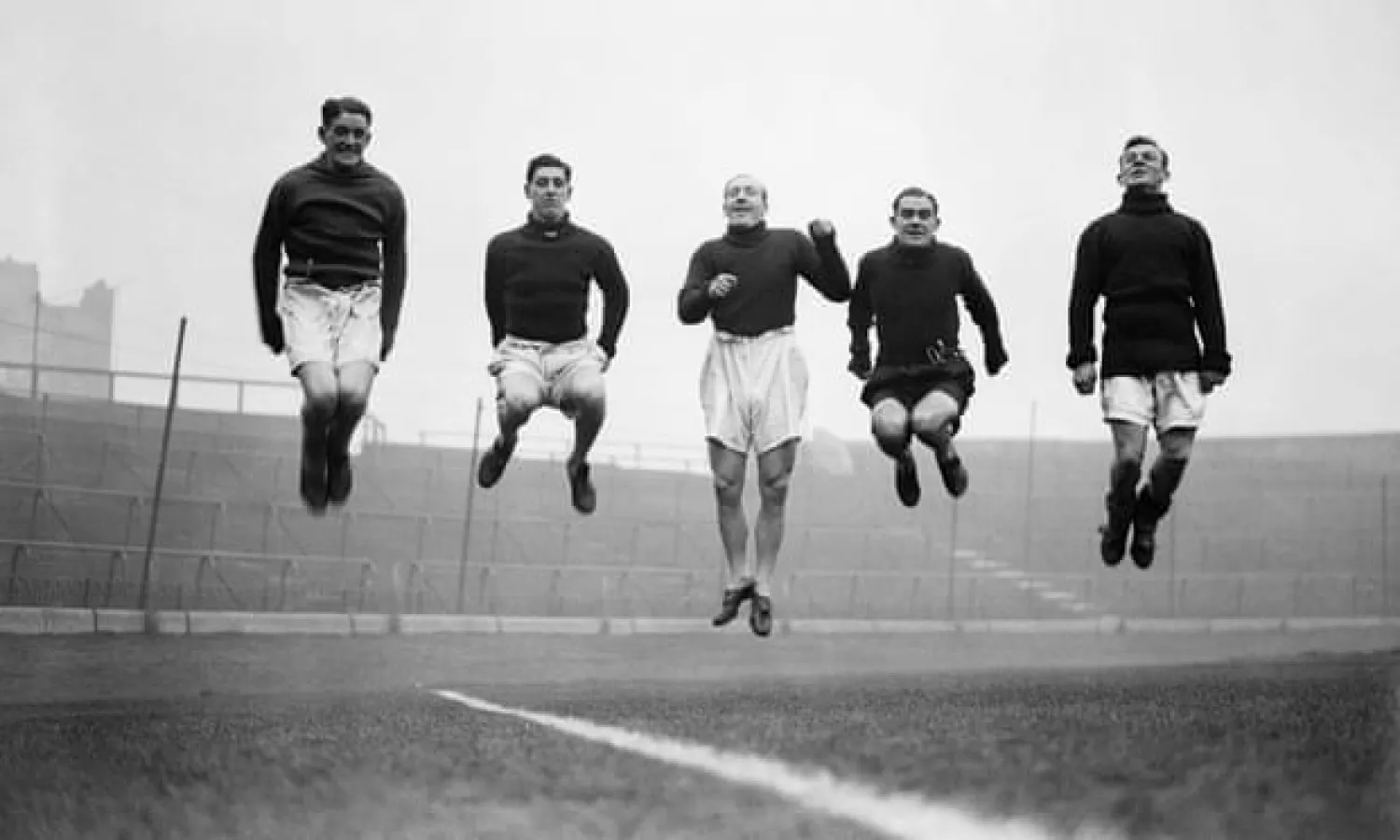
 Alex Cheyne (second from right), jumping with Chelsea teammates in 1932, was among the players brought in at great expense. Photograph: Fox Photos/Getty Images
Alex Cheyne (second from right), jumping with Chelsea teammates in 1932, was among the players brought in at great expense. Photograph: Fox Photos/Getty Images
TT

Will Lampard Learn from the Past?

 Alex Cheyne (second from right), jumping with Chelsea teammates in 1932, was among the players brought in at great expense. Photograph: Fox Photos/Getty Images
Alex Cheyne (second from right), jumping with Chelsea teammates in 1932, was among the players brought in at great expense. Photograph: Fox Photos/Getty Images

Who can blame anyone for succumbing to their wildest dreams? Lampard’s binge will peal loud bells among Chelsea fans of a certain vintage. A 28-day burst of luxury transfer activity during the summer of 2004 brought Petr Cech, Arjen Robben, Didier Drogba, Ricardo Carvalho and Mateja Kezman to Stamford Bridge, and, well, four out of five ain’t bad. José Mourinho’s box-fresh team went on to win the Premier League in short order, a root-and-branch refresh paying instant dividends.

But there are no firm guarantees, and while Mourinho’s special revolution set one historical precedent, a similar gung-ho approach taken by the club in 1930 resonates altogether differently.

David Calderhead is a largely forgotten figure today, a rough deal seeing he took charge of Chelsea for 26 years and 966 matches. But such is the fate of nearly men. Calderhead’s closest brushes with success came midway through his reign: a comprehensive defeat in the 1915 FA Cup final, and a third-place finish in the 1919-20 First Division, the latter campaign fuelled by the goals of Jack Cock, star striker by day, handsome cabaret singer by night, biopic subject in waiting. We digress.

Calderhead may have been a dour Scot from Central Casting, nicknamed The Sphinx for the stone-faced front he reserved for journalists, but the man knew how to please the punters. His teams were renowned for entertaining football, although, as so often with Chelsea during their vastly more interesting pre-superclub years, plenty of time was spent slumming it in the Second Division. End product was a perennial problem; the Pensioners were all scarlet coat and no knickers.

After winning promotion in 1930 – and perhaps concluding that, at 66, he had one last shot at immortality – Calderhead decided enough was enough and whipped out the chequebook. He spent £6,000 on Alec Cheyne, the man whose last-gasp goal direct from a corner in a Scotland-England stramash gave birth to the first Hampden Roar. Cheyne was knocking them in from all angles for Aberdeen, and by himself would have appeared a viable solution to Chelsea’s constipated attack. But Calderhead decided to go large in a manner unprecedented in English football. Hughie Gallacher, the rococo inspiration behind Newcastle’s 1927 title win, joined for a reported world-record £12,000, and the big-money pair quickly got to work: on their Stamford Bridge debuts, Gallacher scored two and Cheyne three as Manchester United were trounced 6-2.

Promising signs ... had United not been at an historic low ebb, shipping 13 goals in their next two home games and losing their first dozen matches straight, en route to ignominious relegation. Chelsea’s rout thus contextualized, they were trounced 4-1 the following weekend by West Ham. Calderhead tried to regain momentum by giving Huddersfield £8,500 for inside-right Alex Jackson, who along with fellow Scotland wizard Gallacher had shoed England around Wembley two years previously. But the completion of the spending spree led to no upturn in results. Jackson barely got a kick in a goalless debut against Sheffield Wednesday. Bolton won at Stamford Bridge the week after, despite Chelsea having nine-tenths of the possession: the same old song. Chelsea were doomed to mid-table irrelevance.

The following season wasn’t any better. In an early home game against Aston Villa, Jackson scored twice and set up another. Unfortunately, Pongo Waring got four, Villa ended up with six, and everyone agreed the visitors wouldn’t have been flattered by double figures. Chelsea finished slap-bang in mid-table again. They were also rocked by a scandal after Jackson bought the team a round of drinks, the night before a match at Manchester City. Chelsea whacked him on the transfer list, an absurd overreaction that almost certainly had roots in Jackson agitating for a transfer to Nîmes, his head turned by a mountain of shiny bronze centimes. Chelsea deliberately priced him out of the market, demanding £10,000, and his career was effectively over at 28.

The goals dried up for Cheyne, whose confidence plummeted. Unlike Jackson, whose manner seemingly irritated the Chelsea board, Cheyne was deemed mere clutter and given permission to chip off. That left Gallacher, the only thing keeping Chelsea from relegation. His signature performance came in April 1933, when he scored two, set up another, and dribbled Leeds United to distraction in a 6-0 win. That display was particularly impressive given events of the night before, when two Leeds players witnessed Gallacher being efficiently dispatched from a King’s Road drinker and into a nearby gutter, where he took a restorative power nap before the big game.

That sort of carry-on wasn’t sustainable over the long haul, and in any case Gallacher was running up sizeable tabs that could only be realistically wiped clean by a signing-on fee. One morning, 10 o’clock, 1934, he heard wind of interest from Derby County; a few persuasive hours later, he was sat on the 6.25 leaving St Pancras for the Midlands. With Calderhead having been eased out the previous summer, the glory gambit in ruins, all principal actors of Chelsea’s first great splurge had gone, within four years. Chelsea had nothing tangible to show for any of it. So should Lampard decide at any point to mine the past for inspiration, it’s probably best if he concentrates mainly on Mourinho’s work ... and be thankful we didn’t also rake up 1946-47, Tommy Walker, Len Goulden, Tommy Lawton, all that.

The Guardian Sport


Lindsey Vonn Back in US Following Crash in Olympic Downhill 

Milano Cortina 2026 Olympics - Alpine Skiing - Women's Downhill 3rd Official Training - Tofane Alpine Skiing Centre, Belluno, Italy - February 07, 2026. Lindsey Vonn of United States in action during training. (Reuters)
TT

Lindsey Vonn Back in US Following Crash in Olympic Downhill 

Milano Cortina 2026 Olympics - Alpine Skiing - Women's Downhill 3rd Official Training - Tofane Alpine Skiing Centre, Belluno, Italy - February 07, 2026. Lindsey Vonn of United States in action during training. (Reuters)

Lindsey Vonn is back home in the US following a week of treatment at a hospital in Italy after breaking her left leg in the Olympic downhill at the Milan Cortina Games.

“Haven’t stood on my feet in over a week... been in a hospital bed immobile since my race. And although I’m not yet able to stand, being back on home soil feels amazing,” Vonn posted on X with an American flag emoji. “Huge thank you to everyone in Italy for taking good care of me.”

The 41-year-old Vonn suffered a complex tibia fracture that has already been operated on multiple times following her Feb. 8 crash. She has said she'll need more surgery in the US.

Nine days before her fall in Cortina d'Ampezzo, Italy, Vonn ruptured the ACL in her left knee in another crash in Switzerland.

Even before then, all eyes had been on her as the feel-good story heading into the Olympics for her comeback after nearly six years of retirement.


Japan Hails ‘New Chapter’ with First Olympic Pairs Skating Gold 

Gold medalists Japan's Riku Miura and Japan's Ryuichi Kihara pose after the figure skating pair skating free skating final during the Milano Cortina 2026 Winter Olympic Games at Milano Ice Skating Arena in Milan on February 16, 2026. (AFP)
TT

Japan Hails ‘New Chapter’ with First Olympic Pairs Skating Gold 

Gold medalists Japan's Riku Miura and Japan's Ryuichi Kihara pose after the figure skating pair skating free skating final during the Milano Cortina 2026 Winter Olympic Games at Milano Ice Skating Arena in Milan on February 16, 2026. (AFP)

Japan hailed a "new chapter" in the country's figure skating on Tuesday after Riku Miura and Ryuichi Kihara pulled off a stunning comeback to claim pairs gold at the Milan-Cortina Olympics.

Miura and Kihara won Japan's first Olympic pairs gold with the performance of their careers, coming from fifth overnight to land the title with personal best scores.

It was the first time Japan had won an Olympic figure skating pairs medal of any color.

The country's government spokesman Minoru Kihara said their achievement had "moved so many people".

"This triumph is a result of the completeness of their performance, their high technical skill, the expressive power born from their harmony, and above all the bond of trust between the two," the spokesman said.

"I feel it is a remarkable feat that opens a new chapter in the history of Japanese figure skating."

Newspapers rushed to print special editions commemorating the pair's achievement.

Miura and Kihara, popularly known collectively in Japan as "Rikuryu", went into the free skate trailing after errors in their short program.

Kihara said that he had been "feeling really down" and blamed himself for the slip-up, conceding: "We did not think we would win."

Instead, they spectacularly turned things around and topped the podium ahead of Georgia's Anastasiia Metelkina and Luka Berulava, who took silver ahead of overnight leaders Minerva Fabienne Hase and Nikita Volodin of Germany.

American gymnastics legend Simone Biles was in the arena in Milan to watch the action.

"I'm pretty sure that was perfection," Biles said, according to the official Games website.


Mourinho Says It Won’t Take ‘Miracle’ to Take Down ‘Wounded King’ Real Madrid in Champions League

Benfica's coach Jose Mourinho reacts during a press conference on the eve of their UEFA Champions League knockout round play-off first leg football match against Real Madrid at Benfica Campus in Seixal, outskirts of Lisbon, on February 16, 2026. (AFP)
TT

Mourinho Says It Won’t Take ‘Miracle’ to Take Down ‘Wounded King’ Real Madrid in Champions League

Benfica's coach Jose Mourinho reacts during a press conference on the eve of their UEFA Champions League knockout round play-off first leg football match against Real Madrid at Benfica Campus in Seixal, outskirts of Lisbon, on February 16, 2026. (AFP)

José Mourinho believes Real Madrid is "wounded" after the shock loss to Benfica and doesn't think it will take a miracle to stun the Spanish giant again in the Champions League.

Benfica defeated Madrid 4-2 in the final round of the league phase to grab the last spot in the playoffs, and in the process dropped the 15-time champion out of the eight automatic qualification places for the round of 16.

Coach Mourinho's Benfica and his former team meet again in Lisbon on Tuesday in the first leg of the knockout stage.

"They are wounded," Mourinho said Monday. "And a wounded king is dangerous. We will play the first leg with our heads, with ambition and confidence. We know what we did to the kings of the Champions League."

Mourinho acknowledged that Madrid remained heavily favored and it would take a near-perfect show for Benfica to advance.

"I don’t think it takes a miracle for Benfica to eliminate Real Madrid. I think we need to be at our highest level. I don’t even say high, I mean maximum, almost bordering on perfection, which does not exist. But not a miracle," he said.

"Real Madrid is Real Madrid, with history, knowledge, ambition. The only comparable thing is that we are two giants. Beyond that, there is nothing else. But football has this power and we can win."

Benfica's dramatic win in Lisbon three weeks ago came thanks to a last-minute header by goalkeeper Anatoliy Trubin, allowing the team to grab the 24th and final spot for the knockout stage on goal difference.

"Trubin won’t be in the attack this time," Mourinho joked.

"I’m very used to these kinds of ties, I’ve been doing it all my life," he said. "People often think you need a certain result in the first leg for this or that reason. I say there is no definitive result."
