Egypt Sentences Muslim Brotherhood Supreme Guide to Life in Prison over 2013 Port Said Unrest

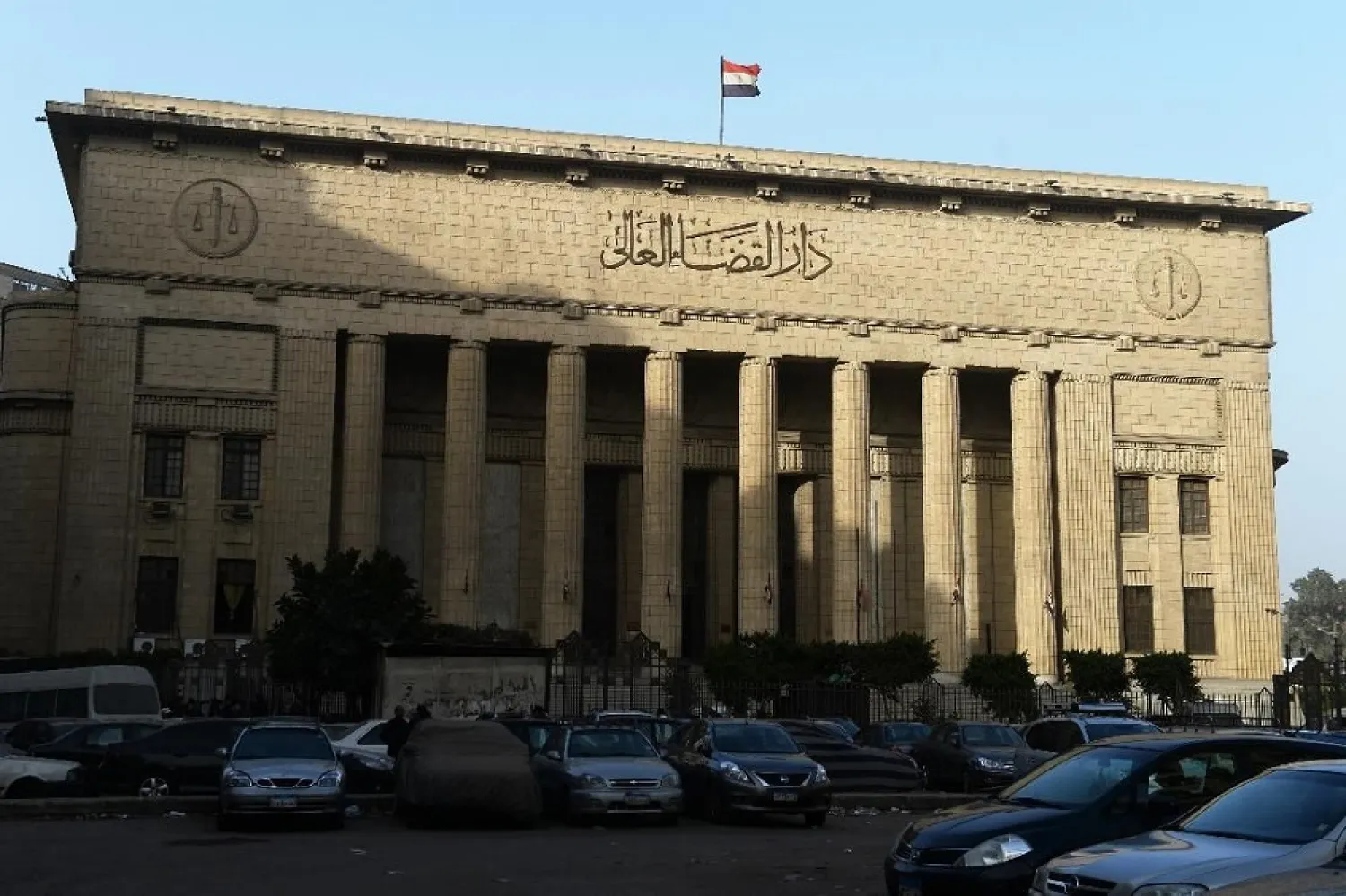
Egypt sentences the Muslim Brotherhood’s former supreme guide to life in prison over 2013 Port Said unrest. (AFP)
TT

Egypt Sentences Muslim Brotherhood Supreme Guide to Life in Prison over 2013 Port Said Unrest

Egypt sentences the Muslim Brotherhood’s former supreme guide to life in prison over 2013 Port Said unrest. (AFP)

The Port Said Criminal Court sentenced Saturday former Muslim Brotherhood Supreme Guide Mohamed Badie and 11 other defendants to life in prison over the 2013 unrest in Port Said.

Other defendants include Freedom and Justice Party’s Secretary-General Mohamed El Beltagy and preacher Safwat Hegazy.

The court also sentenced 59 others to three years in prison in the same case, as well as three to six months in prison.

All convicts are accused of inciting violence outside the Al-Arab Police Station in Port Said in August 2013, forming an armed gang to attack police officers, vandalizing public and private property, looting arms and organizing a demonstration to obstruct law enforcement and assault state authorities.

According to the indictment, the defendants organized a rally of 3,000 people, assaulted individuals, public and private properties and attacked public service personnel.

They possessed unlicensed arms, including rifles and pistols, ammunition and knives and inflicted massive damage at the police station and three nearby vehicles and stores.


Violent Pilot Altercation Forces Diversion of UAE Plane en Route to Israel

A Flydubai aircraft (archive - Asharq Al-Awsat)
TT

Violent Pilot Altercation Forces Diversion of UAE Plane en Route to Israel

A Flydubai aircraft (archive - Asharq Al-Awsat)

A violent altercation between two pilots forced a flight traveling between the United Arab Emirates and Israel to divert on Wednesday. Israel's Prime Minister Benjamin Netanyahu's office denied reports that the aircraft had been hijacked, according to Reuters.

Netanyahu stressed that the situation was "under control" and that all necessary measures are being taken to ensure the safe return of the Israeli passengers.

Flydubai said Flight FZ1073 experienced an incident while airborne and landed safely in Tabuk, Saudi Arabia, with all passengers unharmed.

CNN, citing sources, reported that a violent clash between the pilots led to the transmission of emergency signals. An Israeli official told Reuters that the pilots sent distress codes after becoming involved in a physical confrontation, though it remained unclear whether either pilot intentionally activated the alerts.

Israeli media reported that the aircraft, carrying about 150 passengers, briefly transmitted emergency codes, raising concerns that it may have been hijacked and prompting Israel to scramble two fighter jets to escort the plane.

According to the Ynet news website, the emergency signal was transmitted while the aircraft was descending under manual control and turning back in the opposite direction.

Israeli Prime Minister Benjamin Netanyahu and Defense Minister Israel Katz held urgent security consultations following the incident.

The flight departed Dubai at 7:05 a.m. local time and was scheduled to land at Ben Gurion Airport near Tel Aviv at about 9:30 a.m.

Roughly 90 minutes into the flight, as the aircraft entered Jordanian airspace, it transmitted Code 7700, the international signal for a general emergency. It later sent Code 7500, used to indicate unlawful interference with an aircraft, including a possible hijacking.

Israeli Air Force fighter jets were scrambled to escort the plane while authorities worked to determine the cause of the emergency alerts.


Iraqi Factions Threaten to ‘Bring Down Government’ Over Iran Flight Ban

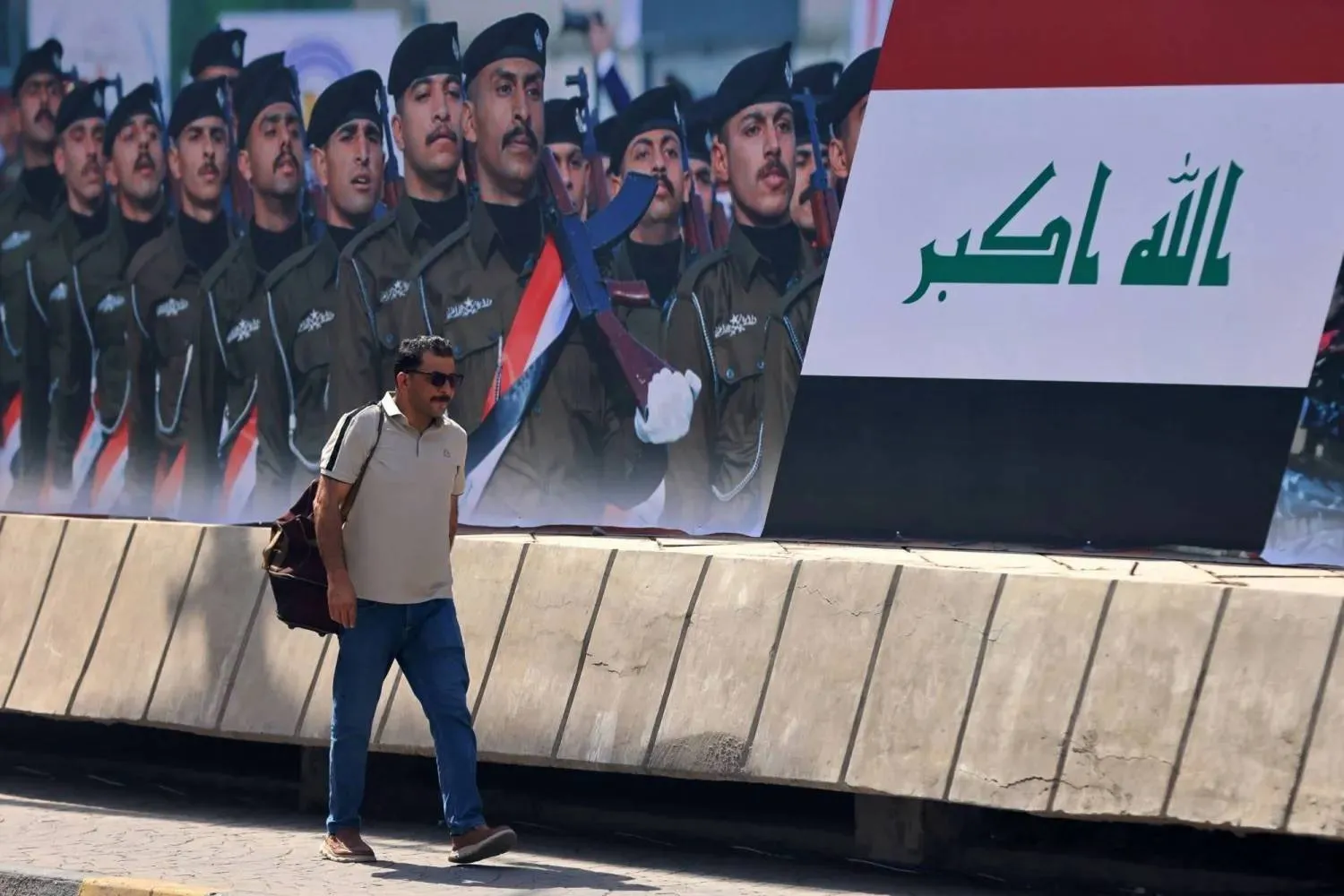
An Iraqi man walks past a sign posted along a street in Baghdad on Sept. 29, 2026, as the international coalition’s mission against ISIS comes to an end. (AFP) 
TT

Iraqi Factions Threaten to ‘Bring Down Government’ Over Iran Flight Ban

An Iraqi man walks past a sign posted along a street in Baghdad on Sept. 29, 2026, as the international coalition’s mission against ISIS comes to an end. (AFP) 

Baghdad has so far maintained its position of barring Iranian airlines from landing at Iraqi airports in compliance with US Treasury sanctions, but Tehran-allied groups are pushing to bring down the government and close Iraq’s land crossings with neighboring countries.

The Iraqi government has also revived the issue of Tehran’s refusal to grant Iraq an exemption allowing its oil exports to pass through the Strait of Hormuz, seeking to counter escalating campaigns and threats by Iran-aligned militias against Prime Minister Ali Falih al-Zaidi and their continued pressure to allow Iranian aircraft to land at Iraqi airports, according to sources.

US authorities have issued limited exemptions for Iraqi Airways flights between Iran and Najaf airport only, while the Transport Ministry announced that flights would operate from the Iraqi side.

Ban and International Companies

Although the government has attributed the ban on Iranian flights to international regulations and systems, a former Transport Ministry official told Asharq Al-Awsat that the government could adapt those regulations to allow Iranian aircraft to land because Iraq has sovereignty over its airspace.

“The government is relying on international aviation regulations to put forward its position of complying with the US sanctions decision,” the official said.

Government spokesman Haider al-Aboudi stressed that “the government did not decide to ban Iranian aviation,” noting that airports operate within an international system similar to the oil sector and are bound by global requirements.

He explained that the international system includes companies providing services such as ground handling, monitoring and insurance, as well as ensuring the safety of airspace and passengers.

Companies operating at Baghdad and Basra airports have a presence at no fewer than 200 airports worldwide, maintain financial accounts and conduct transactions in dollars, prompting them to stop providing services to Iranian companies to avoid US sanctions, al-Aboudi added.

Kataib Hezbollah Threats

Despite the official explanations, armed factions have continued threatening the government since Iranian flights to Iraqi airports were suspended.

Hundreds of faction supporters demonstrated outside Najaf airport on Monday, denouncing the ban and demanding that it be lifted.

Kataib Hezbollah has emerged as one of the most hard-line factions on the issue. Its security official, Abu Mujahid al-Assaf, threatened to bring down Zaidi’s government unless the restrictions on Iranian flights were lifted.

“Zaidi and those behind him should know that a government that does not work in the interests of the people will be brought down by all means,” al-Assaf said in a statement.

He warned that if the air restrictions on Iran remained in place after Oct. 1, Iraqis could take a position “that may extend to closing the border crossings of countries participating in the blockade of the Iranian people.”

Firas Elias, a political science professor at the University of Mosul, said the pressure was “not only about aviation and restricting weapons to state control, but about preserving Tehran’s influence and its Iraqi cards at a sensitive moment in negotiations with Washington.”

US Treasury Exemption

Amid escalating Iranian pressure on Baghdad, the US Treasury Department on Tuesday issued a special license allowing Iraqi Airways to conduct transactions normally required to operate passenger services between Iraq and Iran through Najaf airport, subject to specific conditions and restrictions.

The license expires upon completion of the authorized transactions or on Oct. 28, 2026, while the Treasury Department retains the right to revoke or modify it at any time.

Its scope is narrow: flights must depart exclusively from Najaf International Airport and return there, and may carry only Iranian passengers traveling for religious tourism.

It also prohibits bulk cash transfers, shipments intended for Iranian intelligence, military or law enforcement agencies, and sanctioned individuals, including Iranian government officials and members of Iran-aligned militias.

Government-linked sources had previously indicated that Zaidi’s government asked Washington for an exemption to resume some flights between Iraq and Iran, particularly those carrying patients, students and religious pilgrims.

Following the US exemption, Iraq’s Transport Ministry announced that Iraqi Airways had secured authorization to operate flights to Iran, paving the way for their resumption in October. Flights will operate from the Iraqi side and through Najaf only, while the ban on Iranian airlines remains in place.



Gen-Gvir Threatens to Burn Sinwar’s Body, Blames Netanyahu for Oct. 7 Attack

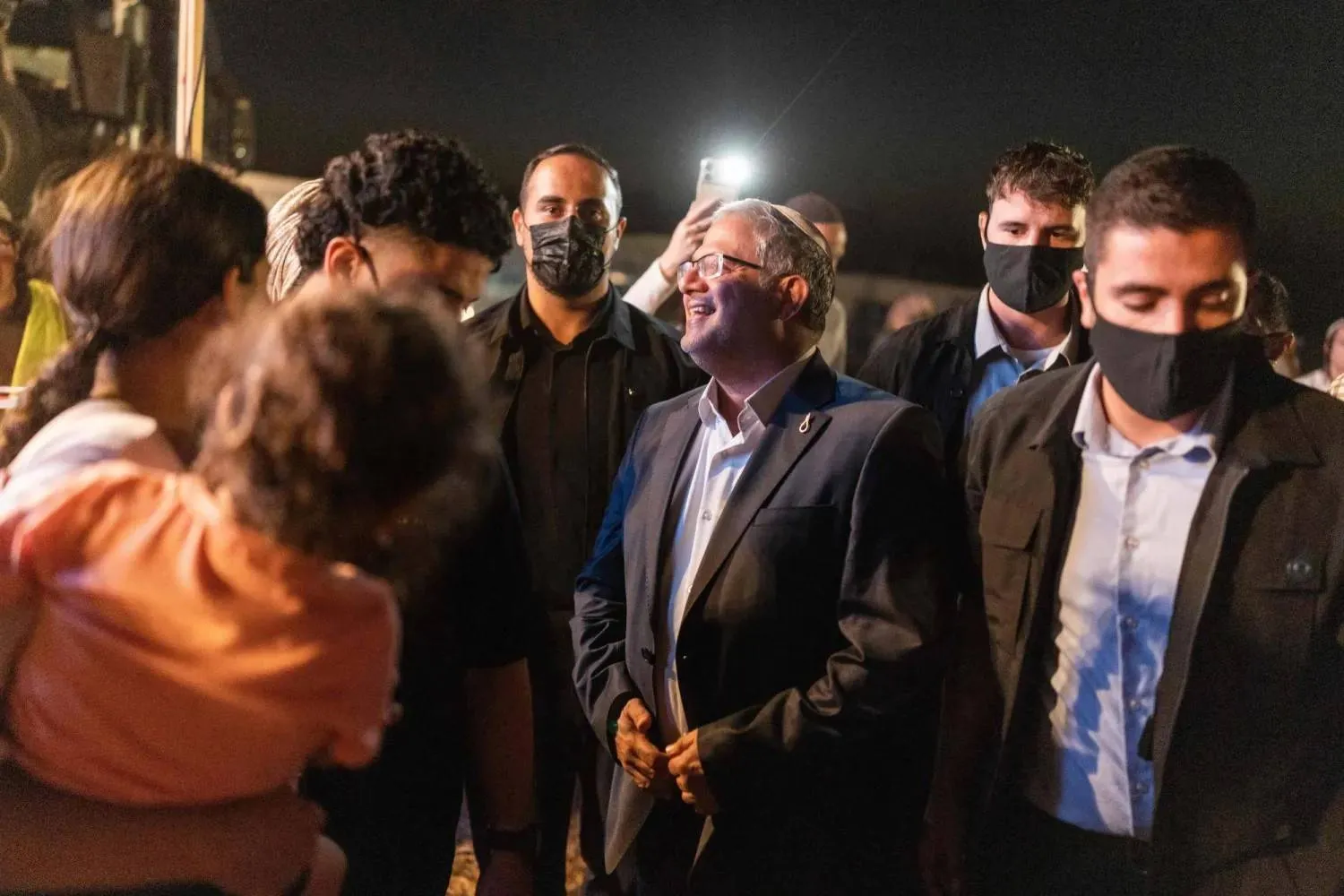
Israeli National Security Minister Itamar Ben-Gvir attend a Sukkot gathering and political rally held outside Kibbutz Nir Am, near the separation fence with the Gaza Strip (AFP) 
TT

Gen-Gvir Threatens to Burn Sinwar’s Body, Blames Netanyahu for Oct. 7 Attack

Israeli National Security Minister Itamar Ben-Gvir attend a Sukkot gathering and political rally held outside Kibbutz Nir Am, near the separation fence with the Gaza Strip (AFP) 

Israeli National Security Minister Itamar Ben-Gvir on Tuesday blamed Israeli Prime Minister Benjamin Netanyahu for the failure of the October 7, 2023 attack, also accusing former Israeli Chief of Staff Herzi Halevi and former Shin Bet chief Ronen Bar of misleading the PM and failing to provide him with sufficient intelligence regarding Hamas’ intentions.

In an interview with Israel’s public radio, Ben-Gvir reiterated his demand to receive the defense portfolio following Israel’s upcoming election.

“After I get the defense portfolio, I will make sure to burn Sinwar’s body and the bodies of the October 7th terrorists. As Defense Minister, I will lead a significant change in approach,” he said.

Ben-Gvir said of Netanyahu: “I also have criticisms of him, which is why I am in the Jewish Power party and not Likud.”

He said, “Before October, I presented a different vision for Gaza, but it was met with contempt by senior officials. They belittled me as national security minister, while Netanyahu also dismissed me, saying that security professionals believed nothing would happen from Gaza. That was just one week before October 7.”

Ben-Gvir also responded to accusations that Netanyahu had facilitated the transfer of millions of dollars to the Gaza Strip, saying the decision had not been made within the government or the security cabinet.

Had he been in office at the time, he said, he would have “turned the table” and rejected such a decision.

The minister noted that he previously resigned from the government after objecting to some of its decisions. “In the end, it turned out I was right about everything I said. No one believed me, and no one listened to me.”

On September 22, Ben-Gvir said he will seek the post of defense minister in the next government, as the country prepares for next month's elections.

“The reason I am putting myself forward is that the time has come to change the mindset within the army,” Ben Gvir said, at a press conference in Jerusalem.

The minister put forward a “security plan” that includes the “encouragement of voluntary emigration” of Palestinians from both Gaza and the occupied West Bank.

On Tuesday, Ben-Gvir threatened to make sure the body of former Hamas leader Yahya Sinwar, who was killed by Israeli forces in October 2024, would be burned.

Sinwar, who headed Hamas in Gaza during the Hamas-led October 7, 2023 attack and later became chairman of the group’s political bureau, was killed by Israeli forces in Rafah in October 2024.