A Big Chunk of Greenland’s Ice Cap Has Broken off

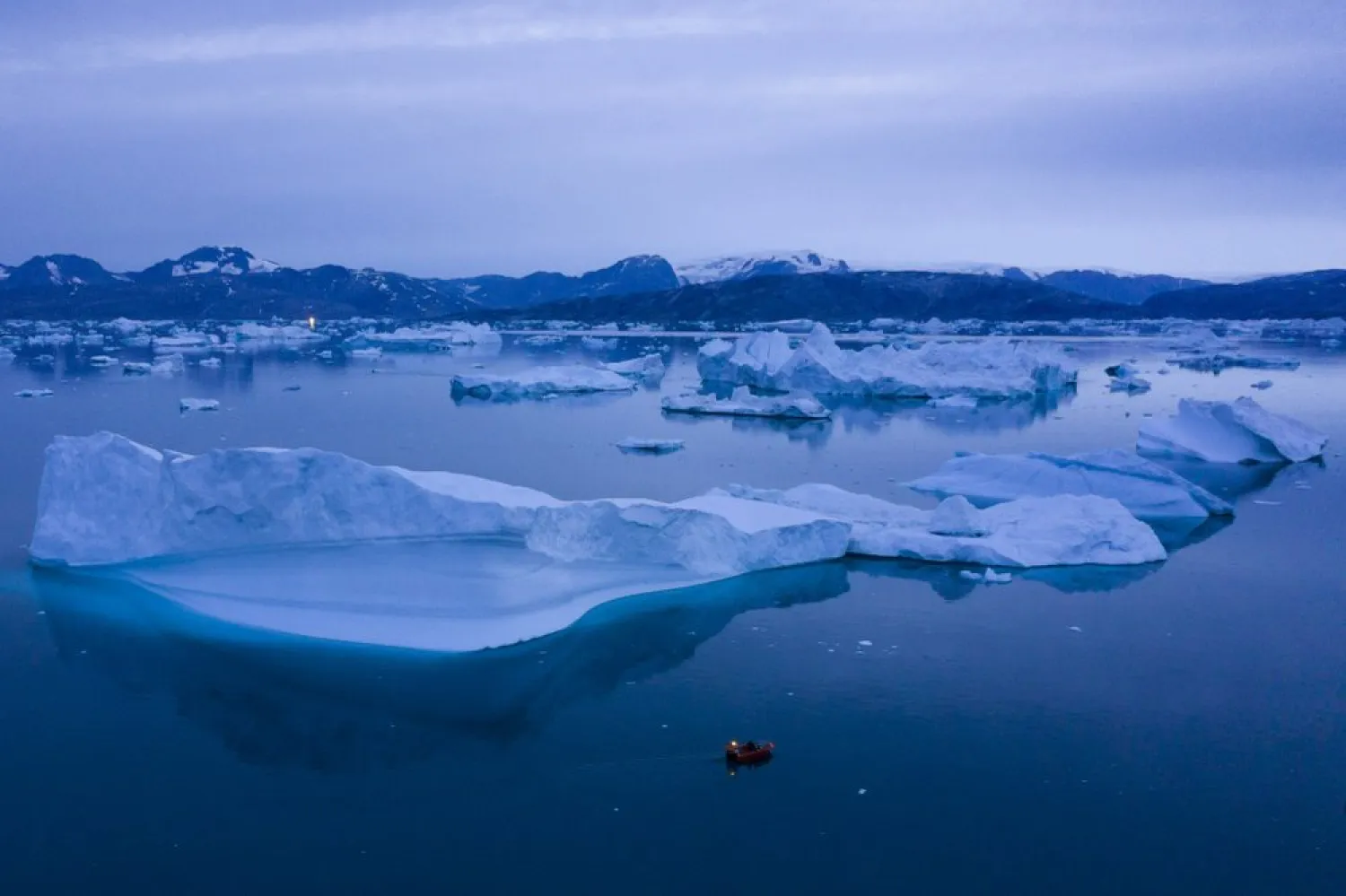
In this Aug. 15, 2019, photo, a boat navigates at night next to large icebergs near the town of Kulusuk, in eastern Greenland. (AP)
TT

A Big Chunk of Greenland’s Ice Cap Has Broken off

In this Aug. 15, 2019, photo, a boat navigates at night next to large icebergs near the town of Kulusuk, in eastern Greenland. (AP)

A big chunk of Greenland’s ice cap, estimated to be some 110 square kilometers (42.3 square miles), has broken off in the far north east Arctic which scientists say is evidence of rapid climate change.

The glacier section broke off the fjord called Nioghalvfjerdsfjorden, which is roughly 80 kilometers (50 miles) long and 20 kilometers (12 miles) wide, the National Geological Survey of Denmark and Greenland said Monday. The glacier is at the end of the Northeast Greenland Ice Stream, where it flows off land and into the ocean.

Annual end-of-melt-season changes for the Arctic’s largest ice shelf in Northeast Greenland are measured by optical satellite imagery, the survey known as GEUS said. It shows that the area losses for the past two years each exceeded 50 square kilometers (19 square miles). The ice shelf has lost 160 square miles (62 square miles), an area nearly twice that of Manhattan Island, New York, since 1999.

“We should be very concerned about what appears to be progressive disintegration at the Arctic’s largest remaining ice shelf,” said GEUS professor Jason Box.

“Another massive chunk of vital sea ice has fallen into the ocean,” said Greenpeace spokeswoman Laura Meller who is aboard the organization's ship Arctic Sunrise at the edge of the sea ice. “This is yet another alarm bell being rung by the climate crisis in a rapidly heating Arctic.”

Last week, Ruth Mottram, an ice scientist at the Danish Meteorological Institute in Copenhagen, said, “again this year, the ice sheet has lost more ice than has been added in the form of snow.”

“What is thought-provoking is that if we ... had seen this meltdown 30 years ago, we would have called it extreme. So in recent years, we have become accustomed to a high meltdown.”

In August, a study showed that Greenland lost a record amount of ice during an extra-warm 2019, with the melt massive enough to cover California in more than 1.25 meters (4 feet) of water.


After Milestone-Rich Lunar Flyby, Astronauts Start Trip Home

 In this photo provided by NASA, Artemis II commander and NASA astronaut Reid Wiseman looks out one of the Orion spacecraft's main cabin windows at the Moon ahead of the crew's lunar flyby on April 6, 2026. (NASA via AP)
In this photo provided by NASA, Artemis II commander and NASA astronaut Reid Wiseman looks out one of the Orion spacecraft's main cabin windows at the Moon ahead of the crew's lunar flyby on April 6, 2026. (NASA via AP)
TT

After Milestone-Rich Lunar Flyby, Astronauts Start Trip Home

 In this photo provided by NASA, Artemis II commander and NASA astronaut Reid Wiseman looks out one of the Orion spacecraft's main cabin windows at the Moon ahead of the crew's lunar flyby on April 6, 2026. (NASA via AP)
In this photo provided by NASA, Artemis II commander and NASA astronaut Reid Wiseman looks out one of the Orion spacecraft's main cabin windows at the Moon ahead of the crew's lunar flyby on April 6, 2026. (NASA via AP)

The Artemis II astronauts wrapped up their lunar flyby as they continue their journey back to Earth on Tuesday, bringing with them rich celestial observations including little-known lunar craters, a solar eclipse and meteor strikes that scientists hope will open doors.

Their eyes glued to the spacecraft windows for nearly seven hours, the team of four who spent their day breaking records and making history were treated to a view of the Moon unlike any other.

"Humans probably have not evolved to see what we're seeing," said Victor Glover. "It is truly hard to describe. It is amazing."

The crew reported in vivid detail features of the lunar surface and later witnessed a solar eclipse, when the Moon passed in front of the Sun.

They also described flashes of light -- meteor strikes -- on the Moon's surface.

"I can't say enough how much science we've already learned," Kelsey Young, lead scientist for the Artemis II mission, told the astronauts.

"You really brought the Moon closer for us today, and we cannot say thank you enough."

- Trump praises 'modern-day pioneers' -

But even after becoming the furthest humans ever to travel from Earth, their day was not over: the bleary-eyed astronauts remained in good spirits as they took a late-night call from US President Donald Trump.

Unlike the Artemis astronauts and NASA administrator Jared Isaacman, Trump at age 79 is old enough to remember the Apollo program.

"You've really inspired the entire world," Trump said, calling them "modern-day pioneers" who have "a lot of courage doing what you're doing."

"America will be second to none in space and everything we're doing, and we will continue to lead the whole thing into the stars, this incredible journey into the stars."

He probed the astronauts about their favorite moments and asked what it was like to lose connection with Earth for some 40 minutes during an expected communications blackout and even experienced his own signal glitch while calling into space.

"Might have gotten cut off," Trump said as he waited a full minute for the signal to return. "It is a long distance."

- Historic trip -

The journey wrapped up late Monday and had plenty of milestones including when the Artemis II team broke the distance record set by the 1970 Apollo 13 mission, which they surpassed by more than 4,000 miles (more than 6,000 kilometers) when they reached the journey's furthest distance from Earth 252,756 miles (406,771 kilometers).

Astronaut Jeremy Hansen said the moment should "challenge this generation and the next, to make sure this record is not long-lived."

And as noted by Trump, the crew lost contact with planet Earth for about 40 minutes as their spacecraft passed behind Earth's satellite.

The blackout period was expected but still notable: they were the first people in more than 50 years to lose contact with the rest of humanity.

"It is so great to hear from Earth again," said astronaut Christina Koch, as the crew regained connection with their home planet.

"We will always choose Earth."

- Moon memorials -

The Orion capsule will now travel back to Earth in a so-called "free-return trajectory," a trip that will take about four days.

Adding to the historic nature of the mission led by Reid Wiseman, the Artemis II crew includes several firsts.

Glover was the first person of color to fly around the Moon, Koch was the first woman, and Canadian Hansen the first non-American.

The celestial workday Monday included a poignant moment just after the crew broke the distance record, when they proposed designating two previously unnamed craters.

The first they requested to name in honor of their spacecraft's nickname, "Integrity."

They offered a second name, "Carroll," for another crater, which they asked be named after the late wife of mission commander Reid Wiseman, who died of cancer.

"It's a bright spot on the Moon," said Hansen, his voice breaking with emotion. "And we would like to call it Carroll."

The astronauts embraced, and mission control in Houston held a moment of silence.

"Integrity and Carroll crater, loud and clear. Thank you," said Gibbons.

NASA said they would formally submit the name proposals to the International Astronomical Union, the body charged with naming celestial bodies and surface features.



Saudi Arabia Advances Global Environmental Leadership with IUCN Green List Milestone

Several of the Kingdom's reserves have earned certification on the International Union for Conservation of Nature (IUCN) Green list - SPA
TT

Saudi Arabia Advances Global Environmental Leadership with IUCN Green List Milestone

Several of the Kingdom's reserves have earned certification on the International Union for Conservation of Nature (IUCN) Green list - SPA

Saudi Arabia Advances Global Environmental Leadership with IUCN Green List MilestoneThe Kingdom of Saudi Arabia continues to strengthen its international standing in environmental protection and sustainability, underpinned by the wise leadership’s prioritization of environmental affairs within national development priorities, in line with Saudi Vision 2030, SPA reported.

These efforts are reinforced by the Saudi Green Initiative, which targets the protection of 30% of the Kingdom's terrestrial and marine areas by 2030.

In a milestone reflecting effective natural resource management, several of the Kingdom's reserves have earned certification on the International Union for Conservation of Nature (IUCN) Green List following a rigorous evaluation process, demonstrating the Kingdom's sound governance, effective management, and measurable conservation outcomes.

Saudi Arabia's environmental achievements represent a comprehensive institutional framework that has transformed natural reserves from restricted geographical zones into an integrated national system balancing environmental stewardship with development imperatives, serving as a model for future generations.


KFSH Performs World First Single-Port Robotic Living Donor Liver Resection

‏The achievement further reinforces KFSH’s position as a global leader in robotic surgery - SPA
TT

KFSH Performs World First Single-Port Robotic Living Donor Liver Resection

‏The achievement further reinforces KFSH’s position as a global leader in robotic surgery - SPA

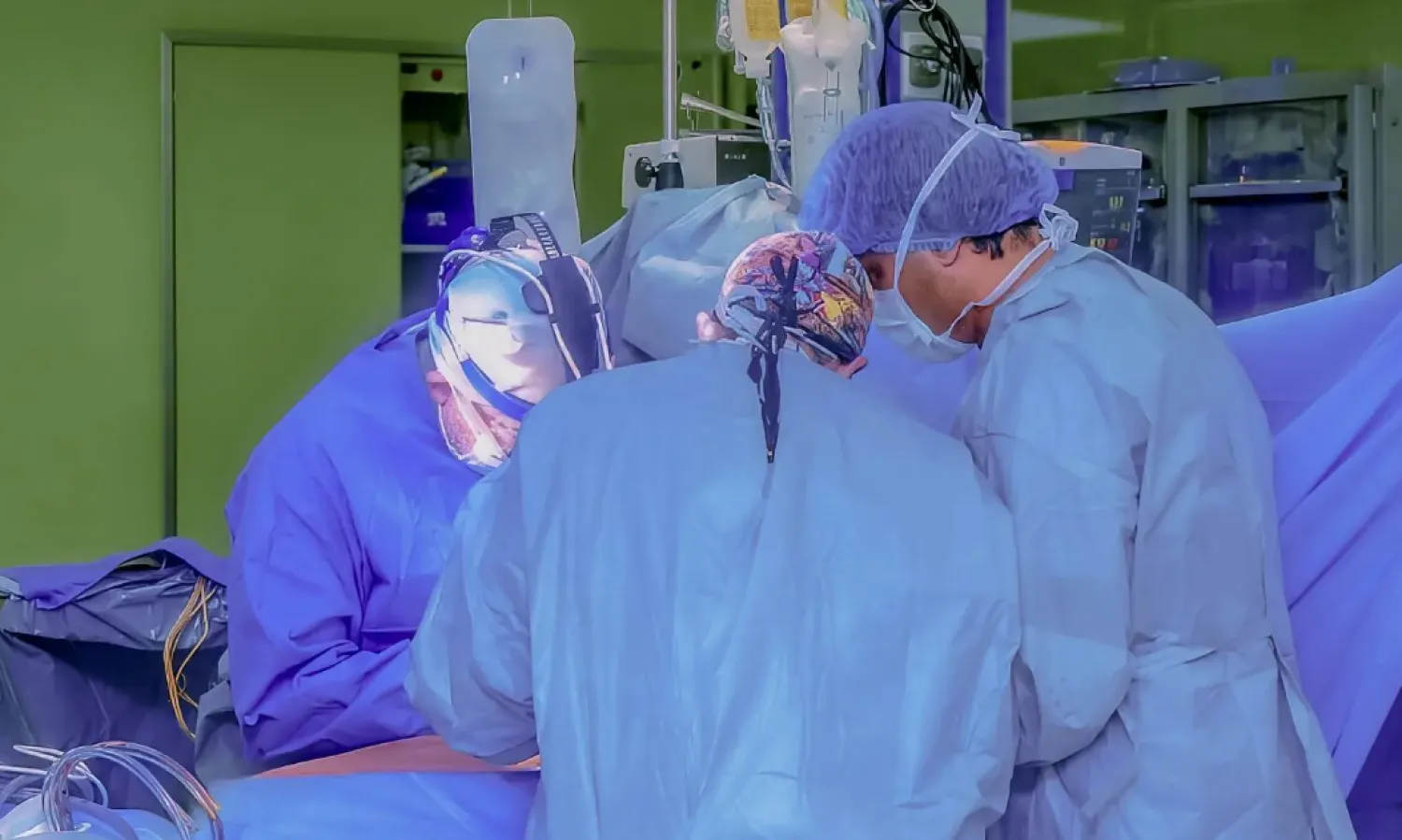
King Faisal Specialist Hospital and Research Center (KFSH) has performed the world’s first series of single-port robotic liver resections from living donors, marking a major advancement in organ transplantation.

The procedures were conducted through a single incision not exceeding 3.5 cm, replacing the multiple incisions required in conventional robotic surgery, reducing surgical pain and accelerating recovery while maintaining high safety standards, SPA reported.

‏The milestone, said a KFSH press release issued today, is particularly significant for donor safety, as living donors are healthy individuals undergoing surgery for the benefit of others. Procedures performed on six donors resulted in minimal blood loss without complications, with low pain levels and discharge within two to three days.

‏The approach also makes liver donation safer for pediatric recipients, as it typically involves the left lateral segment, which represents around 20% of total liver volume, making it well suited for single-port access while minimizing surgical burden on the donor.

Executive Director of the Organ Transplant Center of Excellence ‏Prof. Dieter Broering said the development reflects a structured expansion of robotic liver surgery built on extensive experience.


He noted that KFSH has performed more than 1,600 robotic living donor liver resections, the highest volume globally, supported by a progressive model integrating training, simulation, and phased clinical implementation.

‏The achievement, added the release, further reinforces KFSH’s position as a global leader in robotic surgery and organ transplantation, advancing care models that balance innovation with patient and donor safety, in line with the Health Sector Transformation Program and the hospital’s vision to deliver world-class specialized care.

‏King Faisal Specialist Hospital and Research Center ranks first in the Middle East and North Africa and 12th globally among the world’s top 250 Academic Medical Centers in 2026, and is the most valuable healthcare brand in Saudi Arabia and the Middle East according to Brand Finance 2025.


It is also listed by Newsweek among the World’s Best Hospitals 2026, World’s Best Smart Hospitals 2026, and World’s Best Specialized Hospitals 2026.