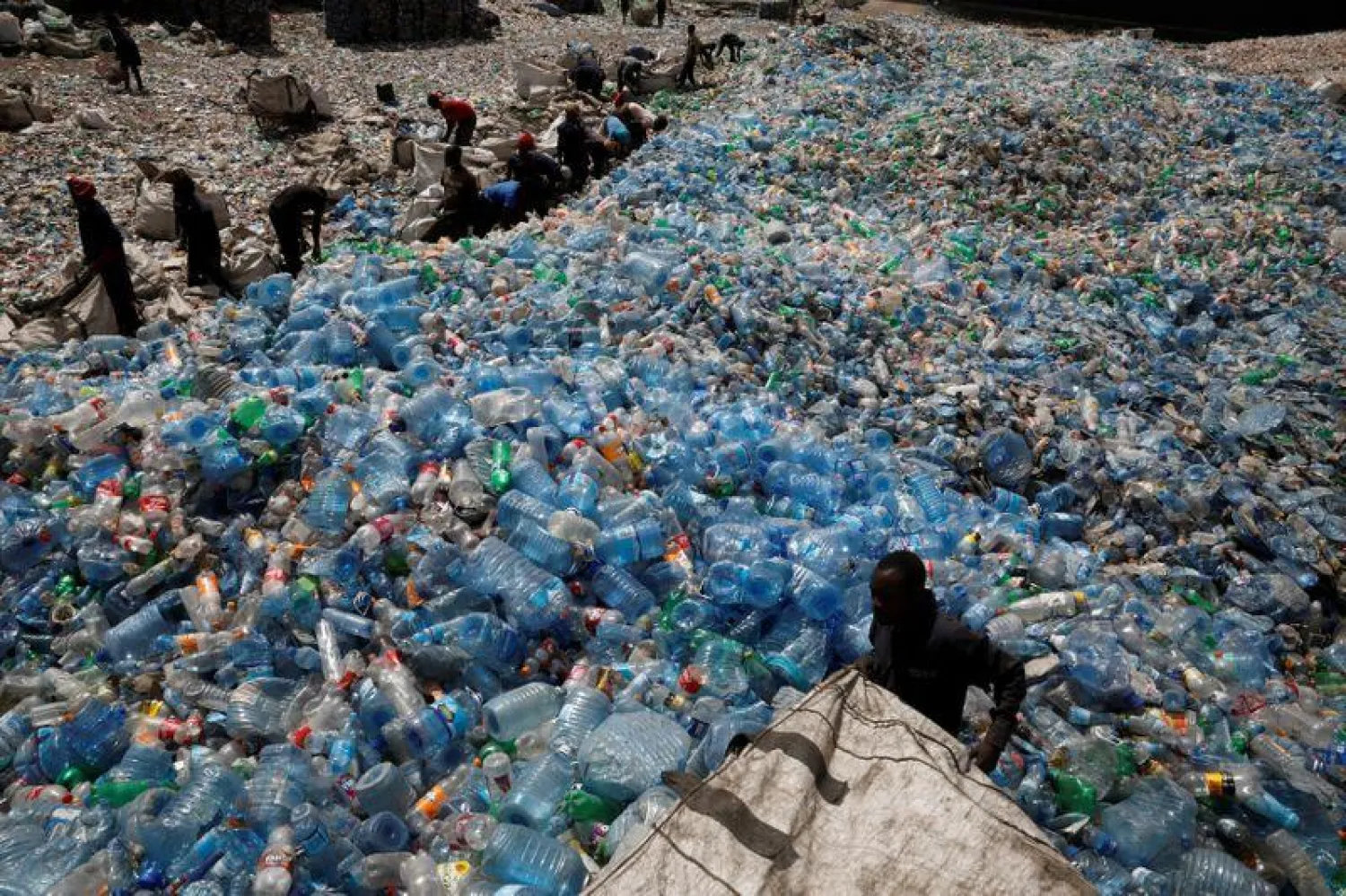

The coronavirus pandemic has sparked a rush for plastic.
From Wuhan to New York, demand for face shields, gloves, takeaway food containers, and bubble wrap for online shopping has surged. Since most of that cannot be recycled, so has the waste.
But there is another consequence. The pandemic has intensified a price war between recycled and new plastic, made by the oil industry. It's a war recyclers worldwide are losing, price data and interviews with more than two dozen businesses across five continents show.
"I really see a lot of people struggling," Steve Wong, CEO of Hong-Kong based Fukutomi Recycling and chairman of the China Scrap Plastics Association told Reuters in an interview. "They don't see a light at the end of the tunnel."
The reason: Nearly every piece of plastic begins life as a fossil fuel. The economic slowdown has punctured demand for oil. In turn, that has cut the price of new plastic.
Already since 1950, the world has created 6.3 billion tonnes of plastic waste, 91% of which has never been recycled, according to a 2017 study published in the journal Science. Most is hard to recycle, and many recyclers have long depended on government support. New plastic, known to the industry as "virgin" material, can be half the price of the most common recycled plastic.
Since COVID-19, even drinks bottles made of recycled plastic - the most commonly recycled plastic item - have become less viable. The recycled plastic to make them is 83% to 93% more expensive than new bottle-grade plastic, according to market analysts at the Independent Commodity Intelligence Services (ICIS).
The pandemic hit as politicians in many countries promised to wage war on waste from single-use plastics. China, which used to import more than half the world's traded plastic waste, banned imports of most of it in 2018. The European Union plans to ban many single-use plastic items from 2021. The US Senate is considering a ban on single-use plastic and may introduce legal recycling targets.
Plastic, most of which does not decompose, is a significant driver of climate change.
The manufacture of four plastic bottles alone releases the equivalent greenhouse gas emissions of driving one mile in a car, according to the World Economic Forum, based on a study by the drinks industry. The United States burns six times more plastic than it recycles, according to research in April 2019 by Jan Dell, a chemical engineer and former vice-chair of the US Federal climate committee.
But the coronavirus has accentuated a trend to create more, not less, plastic trash.
The oil and gas industry plans to spend around $400 billion over the next five years on plants to make raw materials for virgin plastic, according to a study in September by Carbon Tracker, an energy think tank.
This is because, as a growing fleet of electric vehicles and improved engine efficiency reduce fuel demand, the industry hopes rising demand for new plastic can assure future growth in demand for oil and gas. It is counting on soaring use of plastic-based consumer goods by millions of new middle-class consumers in Asia and elsewhere.
"Over the next few decades, population and income growth are expected to create more demand for plastics, which help support safety, convenience, and improved living standards," ExxonMobil spokeswoman Sarah Nordin told Reuters.
Most companies say they share concerns about plastic waste and are supporting efforts to reduce it. However, their investments in these efforts are a fraction of those going into making new plastic, Reuters found.
Reuters surveyed 12 of the largest oil and chemicals firms globally - BASF, Chevron, Dow, Exxon, Formosa Plastics, INEOS, LG Chem, LyondellBasell, Mitsubishi Chemical, SABIC, Shell, and Sinopec. Only a handful gave details of how much they are investing in waste reduction. Three declined to comment in detail or did not respond.
Most said they channel their efforts through a group called the Alliance to End Plastic Waste, which is also backed by consumer goods companies, and which has pledged $1.5 billion over the next five years on that effort. Its 47 members, most of whom are in the plastics industry, had combined annual revenue of almost $2.5 trillion last year, according to a Reuters tally of company results.
In total, commitments by the Alliance and the companies surveyed amounted to less than $2 billion over five years, or $400 million a year, the Reuters survey found. That's a fraction of their sales.
Plans to invest so heavily in new plastic are "quite a concerning move," said Lisa Beauvilain, Head of Sustainability at Impax Asset Management, a fund with $18.5 billion under management.
"Countries with often undeveloped waste management and recycling infrastructure will be ill-equipped to handle even larger volumes of plastic waste," she said. "We are literally drowning in plastics."
Since the coronavirus struck, recyclers worldwide told Reuters, their businesses have shrunk, by more than 20% in Europe, by 50% in parts of Asia and as much as 60% for some firms in the United States.
Greg Janson, whose St. Louis, Missouri, recycling company QRS has been in business for 46 years, says his position would have been unimaginable a decade ago: The United States has become one of the cheapest places to make virgin plastic, so more is coming onto the market.
"The pandemic exacerbated this tsunami," he said.
The oil and chemicals companies that Reuters surveyed said plastic can be part of the solution to global challenges related to a growing population. Six said they were also developing new technologies to reuse waste plastic.
Some said other packaging products can cause more emissions than plastics; because plastic is light, it is indispensable for the world's consumers and can help reduce emissions. A few called on governments to improve waste management infrastructure.
"Higher production capacities do not necessarily mean more plastic waste pollution," said a spokesman at BASF SE of Germany, the world's biggest chemicals producer, adding that it has been innovating for many years in packaging materials to reduce the resources required.
The new plastic wave is breaking on shores across the globe.
MAKE PLASTIC
Richard Pontillas, 33, runs a family-owned "sari-sari" or "sundries" store in Quezon City, the most populous metropolis in the Philippines. The liquid goods he sells used to be packaged in glass. Many customers, in fact, brought in their own bottles to be refilled.
Merchants like him are among key targets for the plastic industry, looking to extend a trend established after 1907, when Belgian-American chemist Leo Baekeland invented Bakelite. Since World War Two, mass-produced plastic has fuelled economic growth and spawned a new era of consumerism and convenience packaging.
"Many years ago ... we relied on goods repackaged in bottles and plastic bags," said Pontillas, whose store sells rice, condiments, and sachets of coffee, chocolate drink, and seasonings.
Today, thousands of small-scale vendors in the developing world stock daily goods in plastic pouches, or sachets, which hang in strips from the roofs of roadside shacks and cost a few cents a go.
Already, 164 million such sachets are used every day in the Philippines, according to the Global Alliance for Incinerator Alternatives, an NGO. That's nearly 60 billion a year.
Consumer goods firms including Nestle and P&G say they are working hard to make their packaging either recyclable or reusable. For example, P&G said it has a project in schools in the Manila region which aims to collect one million sachets for "upcycling."
But sachets are very difficult to recycle. They are just one form of pollution that the pandemic is adding to, clogging drains, polluting water, suffocating marine life and attracting rodents and disease-carrying insects.
So are face masks, which are made partly from plastic.
In March, China used 116 million of them - 12 times more than in February, official data show.
Total production of masks in China is expected to exceed 100 billion in 2020, according to a report by Chinese consultancy iiMedia Research. The United States generated an entire year's worth of medical waste in two months at the height of the pandemic, according to another consultancy, Frost & Sullivan.
Even as the waste mounts, much is at stake for the oil industry.
Exxon forecasts that demand for petrochemicals will rise by 4% a year over the next few decades, the company said in an investor presentation in March.
And oil's share of energy for transport will fall from more than 90% in 2018 to just under 80% or as low as 20% by 2050, BP Plc said in its annual market report in September.
Oil companies worry that environmental concerns may blunt petrochemical growth.
The UN said last year that 127 countries have adopted bans or other laws to manage plastic bags. BP's chief economist Spencer Dale said in 2018 that global plastic bans could result in 2 million barrels per day of lower oil demand growth by 2040 - around 2% of current daily demand. The company declined further comment.
USE PLASTIC
This year alone, Exxon, Royal Dutch Shell Plc, and BASF have announced petrochemical plant investments in China worth a combined $25 billion, tapping into rising demand for consumer goods in the world's most populous country.
An additional 176 new petrochemical plants are planned in the next five years, of which nearly 80% will be in Asia, energy consultancy Wood Mackenzie says.
In the United States since 2010, energy companies have invested more than $200 billion in 333 plastic and other chemical projects, according to the American Chemistry Council (ACC), an industry body.
Those investments have come as the US industry sought to capitalize on a sudden abundance of cheap natural gas released by the shale revolution.
The industry says disposable plastics have saved lives.
"Single-use plastics have been the difference between life and death during this pandemic," Tony Radoszewski, president and CEO of the Plastic Industry Association (PLASTICS), the industry's lobbying group in the United States, told Reuters. Bags for intravenous solutions and ventilators require single-use plastics, he said.
"Hospital gowns, gloves and masks are made from safe, sanitary plastic."
In March, PLASTICS wrote to the US Department of Health and Human Services, calling for a rollback of plastic bag bans on health grounds. It said plastic bags are safer because germs live on reusable bags and other substances.
Researchers led by the US National Institute of Allergy and Infectious Diseases, a US government agency, found later that month that the coronavirus was still active on plastic after 72 hours, compared with up to 24 hours on cardboard and copper.
The industry's letter was part of a long-standing campaign for single-use material.
The ACC's managing director for plastics, Keith Christman, said the chemicals lobby is opposed to plastic bans because it believes consumers would switch to using other disposable materials like glass and paper, rather than reusing bags and bottles.
"The challenge comes when you ban plastic but the alternative might not be a reusable product ... so it really wouldn't accomplish much," Christman said.
Plastic makes up 80% of marine debris, according to the International Union for Conservation of Nature, a global alliance backed by governments, NGOs and companies including Shell, which is also a member of the ACC.
Plastic pollution has been shown to be deadly to turtles, whales and baby seals and releases chemicals that we inhale, ingest or touch that cause a wide range of harms including hormonal disruption and cancer, the United Nations says.
RECYCLE?
Plastic recyclers have faced new problems in the pandemic.
Demand for recycled material from packaging businesses fell by 20% to 30% in Europe in the second quarter compared with the previous year, ICIS says.
At the same time, people who stayed at home created more recycling waste, said Sandra Castro, CEO of Extruplas, a Portuguese recycling firm which transforms recycled plastics into outdoor furniture.
"There are many recycling companies that may not be able to cope," she said. "We need the industry to be able to provide a solution to the waste we produce."
In the United States, QRS's Janson said that for two months after the pandemic lockdowns, his orders were down 60% and he dropped his prices by 15%.
And the pandemic has added to costs for big consumer companies that use recycled plastic.
The Coca-Cola Co told Reuters in September it missed a target to get recycled plastic into half its UK packaging by early 2020 due to COVID-19 delays. The company said it hopes now to meet that by November.
Coca-Cola, Nestle, and PepsiCo have been the world's top three plastic polluters for two years running, according to a yearly brand audit by Break Free From Plastic, an NGO.
These companies have for decades made voluntary goals to increase recycled plastic in their products. They have largely failed to meet them. Coke and Nestle said it can be hard to get the plastic they need from recycled sources.
"We often pay more for recycled plastic than we would if we purchased virgin plastic," a Nestle spokesperson said, adding that investment in recycled material was a company priority.
Asked how much they were investing in recycling and waste cleanup programs, the three companies named initiatives totaling $215 million over a seven-year period.
At current investment levels in recycling, brands will not meet their targets, analysts at ICIS and Wood Mackenzie say.
TOSS
Even if existing recycling pledges are met, the plastic going into the oceans is on course to rise from 11 million tonnes now to 29 million by 2040, according to a study published in June by Pew Trusts, an independent public interest group.
Cumulatively, this would reach 600 million tonnes - the weight of 3 million blue whales.
In response to mounting public concerns, the Alliance to End Plastic Waste says it will partner existing small-scale NGOs that clean up waste in developing countries.
One venture, which helps women earn money from selling plastic scrap in Ghana, says it has successfully diverted 35 tonnes of plastic from becoming litter since March 2017.
That's less than 0.01% of the annual plastic waste generated in Ghana, or 2% of the plastic waste that the United States exported to Ghana last year, according to the World Bank and US trade data.
"We do realize change won't happen overnight," said Alliance president and CEO Jacob Duer. "What is important for us is that our projects are not seen as the end, but the beginning."
In the Philippines, Vietnam, and India, as much as 80% of the recycling industry was not operating during the height of the pandemic. And there was a 50% drop in demand for recycled plastic on average across South and Southeast Asia, according to Circulate Capital, a Singapore-based investor in Asian recycling operations.
"The combination of the impact of COVID-19 and low oil prices is like a double whammy" for plastic recycling, said Circulate's CEO, Rob Kaplan.
"We're seeing massive disruption."