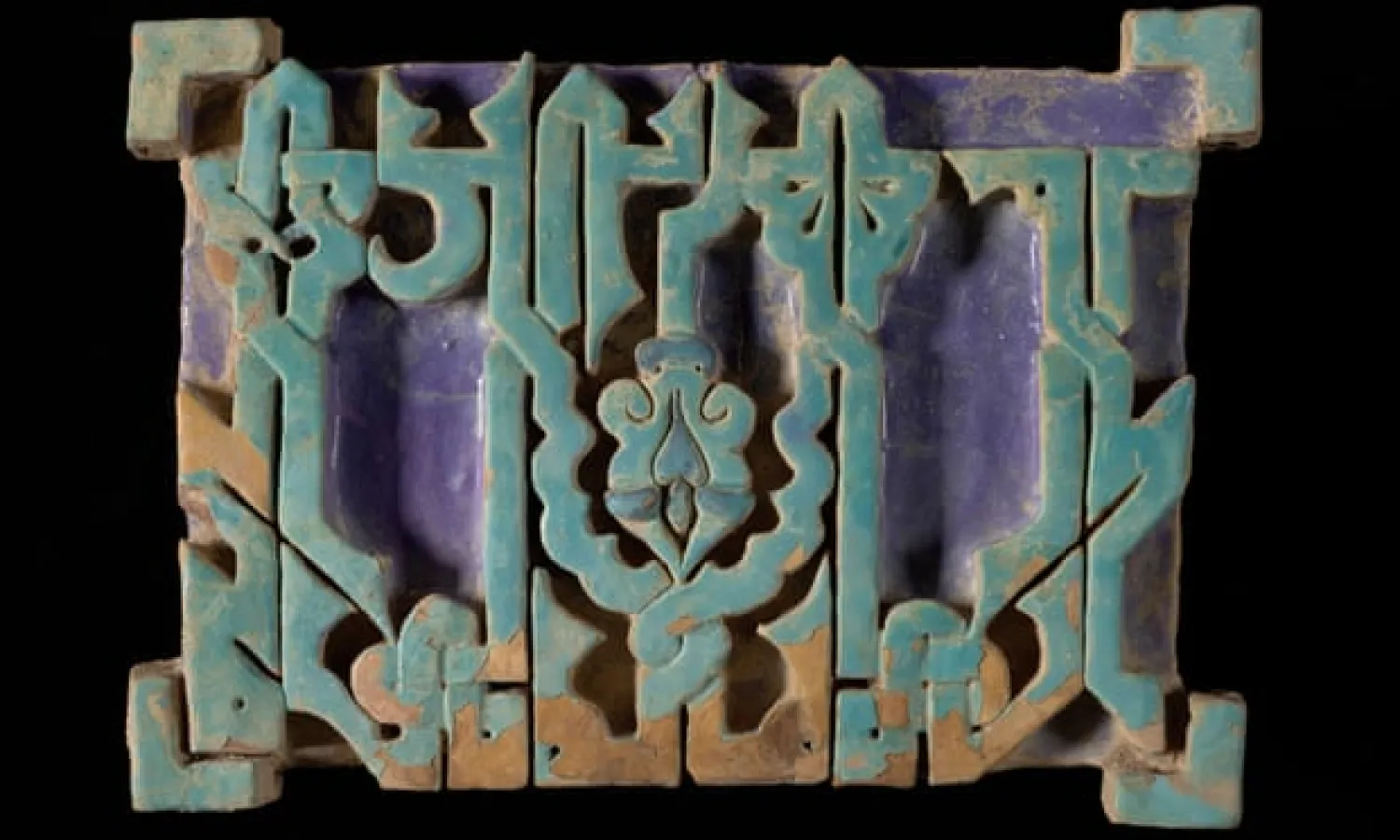

The British Museum is to help repatriate six glazed tiles from a medieval memorial complex on the edge of Samarkand, which were brought into Heathrow in a suitcase, The Guardian reported.
The man who smuggled them in after a flight from Dubai in January even forged paperwork declaring them as replicas that were “made to look old”. He produced a receipt that claimed they had been bought in Sharjah the previous day for 315 dirham, about £70. In fact, the tiles are worth many tens of thousands of pounds and are culturally important to their original country of origin, Uzbekistan.
St John Simpson, a senior curator in the British Museum’s Middle East department, said the tiles were stunning objects.
“They’re very attractive, very collectable … you can see why they would attract the criminal element.”
As is usual in suspected cases of antiquity smuggling, the museum was contacted by the UK’s Border Force authorities to establish whether the tiles were genuine – and if so, where were they from.
In May, Simpson sought the help of about a dozen experts from countries in the Middle East and central Asia as well as the US and Russia.
“It was really fantastic in this case to enlist such a wide range of specialists in a very short space of time and across the world, despite the global pandemic,” he said.
The “made to look old” tiles have been dated to between the end of the 13th and the mid-14th centuries. They belong to a period that began with the establishment of a khanate under Chagatai Khan, second son of Chinggis (more commonly called Genghis) Khan, in about 1227 and lasting until 1363.
They have three colors of glaze – white, turquoise and cobalt blue – and each has Qur’anic inscriptions, but only one is complete.
Uzbek specialists have confirmed the tiles come from the Shah-i Zinda memorial complex near Samarkand. They said excavations and restoration work was carried out in 1996 and early 2000 and a number of glazed artefacts found then remain unaccounted for.
Simpson said Shah-i-Zinda was an important set of tombs and monuments on the edge of Samarkand, a world heritage site and popular tourist destination.