


Nabataean, Contemporary Architecture Brought Together at Sharaan Nature Reserve in AlUla

Nabataean, Contemporary Architecture Brought Together at Sharaan Nature Reserve in AlUla
TT

Nabataean, Contemporary Architecture Brought Together at Sharaan Nature Reserve in AlUla

Nabataean, Contemporary Architecture Brought Together at Sharaan Nature Reserve in AlUla

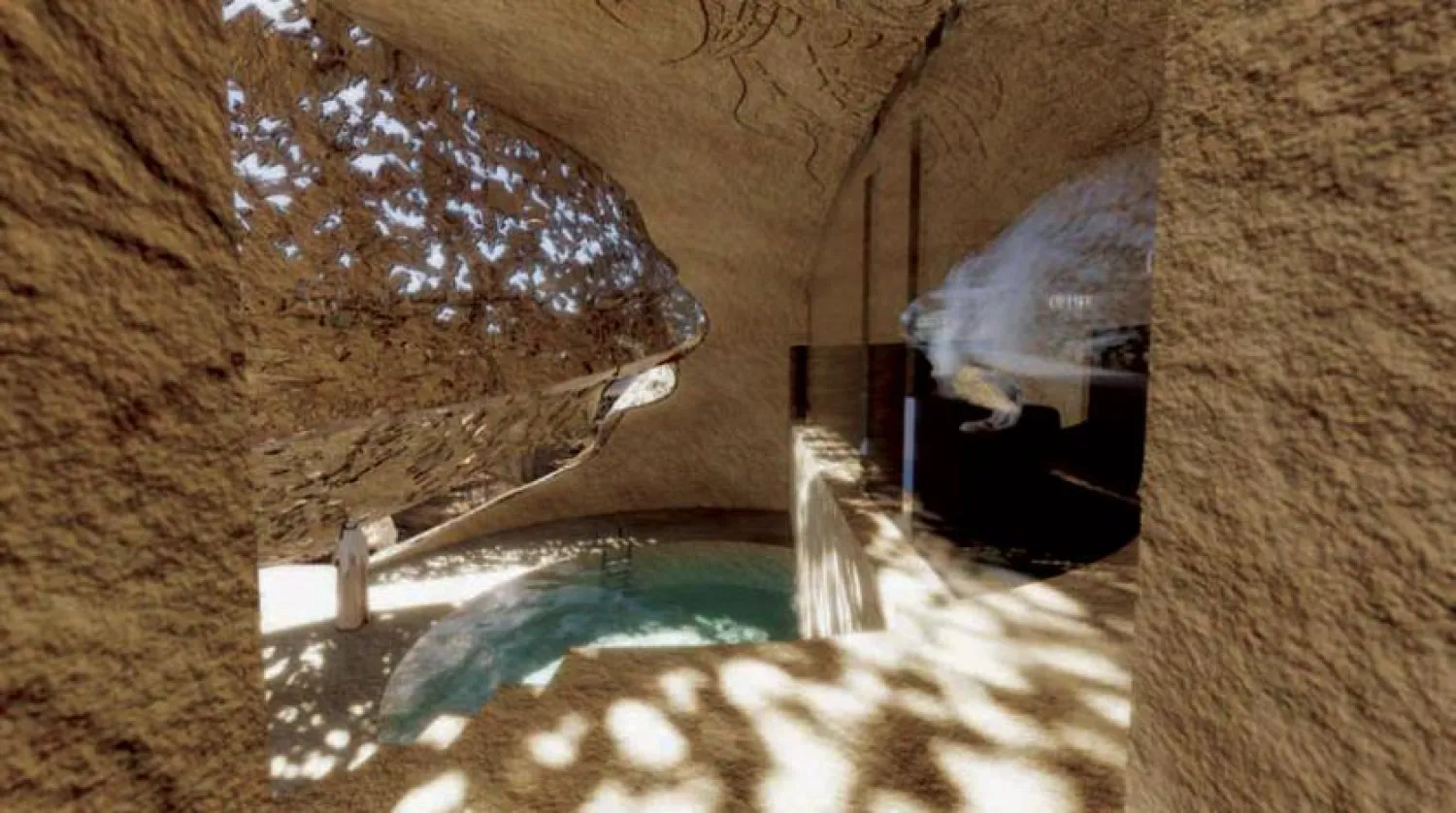
The Royal Commission for AlUla (RCU) announced the launch of a project for a resort at the Sharaan Nature Reserve. Jean Nouvel presented his concept designs, which draw on Nabataean architecture, for the resort.

Through the resort, scheduled to be complete by 2024 and include 40 wings for hosting guests, as well as three villas, and a conference center equipped with 14 entertainment wings, Jean Nouvel, the project’s architect, aims to revive the Nabataean’s architectural legacy and become the first person to do so since the Nabataeans carved into the region’s ancient rocks.

RCU’s CEO Amr AlMadani said: “This project’s launch and its design’s announcement affirm our commitment to the vision for AlUla (...) to develop into a global touristic destination and preserve the province’s history, heritage and landscape. We are working enthusiastically with Jean Nouvel to see our vision turn into a reality on the ground.”

Describing AlUla, Nouvel says: “It is the coming together of a landscape and history; the history of past civilizations in an extraordinary landscape – the only place to create such a masterpiece.”

Emphasizing the importance of preserving its unique landscape, he adds: “AlUla is a museum. Every valley and escarpment, every stretch of sand and rocky outline, every geological and archeological site deserves the greatest consideration. It’s vital that we preserve its distinctiveness and conserve its beauty, which largely rests on its remote and occasionally archaic character. We have to safeguard a little mystery as well as the promise of discoveries to come.”

“AlUla deserves to acquire a degree of modernity,” he adds. “Envisioning the future is a never-ending obligation that requires us to be fully alive to places in the present as well as conjuring up the past.”
Nouvel explains how he reconciles old ways of life with our modern world and minimizes the impact on the natural and urban landscapes. He introduced a new typology of architecture never seen before; he abstracts, building within the landscape itself rather than competing with it.

Inspired by the Nabateans, it plays on old ways of life to build on the present and meet the future challenges. Nouvel integrates the way Nabateans interacted with their environment to reconnect to the earth and build sustainable habitats, allowing them to evade the summer’s heat and the cold of the winter.

Nouvel views this resort as an opportunity to bring to life a strong spatial, sensorial and emotional experience on the borders of nature, architecture and art – where the sound, musicality, harshness, tactility, power and complexity of nature are everywhere.

From finely carved stones on balconies to the singular granularity of each rock wall, each becomes an artwork in itself. He stresses: “Our project should not jeopardize what humanity and time have consecrated;” it celebrates the Nabateans’ spirit without caricaturing it. This creation genuinely becomes a cultural act.”

Taking on a curatorial approach in the musical sense, Jean Nouvel has created public spaces geared towards the joy of living there, by day, by night, with all the various colors, light, shadow, wind, torrential rain, and the passage of time. He invites travelers to embark on a journey through thousands of years of civilizations and geographical strata within every detail of his designs, from the permanent feel of the rocks to the soft comfort of the armchairs, sofa, and seats.

Guests will be immersed deep within in a memorable journey through time and space, offering a genuine discovery of AlUla’s essence. Through immersive experiences in Sharaan’s wilderness, visitors will have personalized exposure to the hundreds of archaeological sites within AlUla.

Despite the luxury it offers, however, the new resort will draw on emission-free power and new sustainability standards. It is a key part of the RCU’s strategy to develop AlUla as a global destination for culture, heritage, and eco-tourism. It is designed in accordance with the Charter of AlUla, a framework document that includes 12 guiding principles committed to long-term development.



Best Time to Take Vitamin D for Muscle Strength

Vitamin D tablets (file photo – AP)
TT

Best Time to Take Vitamin D for Muscle Strength

Vitamin D tablets (file photo – AP)

Vitamin D is an essential nutrient that plays a central role in both bone and muscle health.

With growing interest in dietary supplements, a key question arises: what is the best time to take vitamin D to support muscle strength?

This article reviews the latest scientific evidence on vitamin D timing and its impact on muscle health, offering practical recommendations based on recent research.

The optimal time to take vitamin D is with or after a meal that contains fat- preferably in the morning or at lunchtime. Taking it with food enhances absorption, supporting bone health and contributing more effectively to muscle strength. It is also advisable to take it at the same time each day for best results.

How Vitamin D Works in Muscles

Vitamin D is a fat-soluble vitamin, meaning its absorption in the intestine depends heavily on dietary fat. When taken with a fat-containing meal, micelles form, facilitating its transport across the intestinal wall into the bloodstream. It then reaches muscle cells, where it helps promote muscle protein synthesis and improve muscle fiber function.

Scientific Evidence on Timing

A randomized controlled trial published in Nutrients (2022) found that taking a combination of whey protein and vitamin D3 either before sleep or after waking led to beneficial increases in muscle mass in young men undergoing resistance training.

Importantly, no statistically significant differences were found between the groups in terms of muscle gains, suggesting that vitamin D’s benefits for muscle health are not dependent on a specific time of day, but rather on consistent intake.

Effects on Sleep and Melatonin

Some research indicates a link between vitamin D levels and sleep quality, with low levels associated with a higher risk of sleep disorders.

Certain recommendations suggest that taking vitamin D in the evening may interfere with melatonin production—the hormone that regulates the sleep-wake cycle. For this reason, experts generally recommend taking vitamin D in the morning or at midday to avoid potential sleep disruption.

Vitamin D and Athletic Performance

A systematic review published in the Journal of Human Sport and Exercise (2025), analyzing 13 studies on vitamin D and athletic performance, found:

  • Vitamin D supplementation consistently increases blood levels in athletes
  • Noticeable improvements in performance among those initially deficient
  • Mixed effects on muscle recovery and blood markers across studies
  • Seasonal fluctuations in vitamin D levels highlight the importance of supplementation timing

Taking vitamin D with main meals and maintaining daily consistency are key to maximizing its benefits for muscle health. Consulting a healthcare provider is recommended to determine the appropriate dosage based on individual health status and blood levels.


Taif Rose Harvest Season Produces over 550 Million Roses

Rose farms are spread across the highlands of Al-Hada and Al-Shafa - SPA
TT

Taif Rose Harvest Season Produces over 550 Million Roses

Rose farms are spread across the highlands of Al-Hada and Al-Shafa - SPA

Taif rose farms are witnessing a notable abundance of production during the current harvest season, amid favorable climatic conditions that have contributed to improved crop quality and increased quantities. Taif Governorate is home to more than 910 farms, comprising around 1.14 million rose shrubs, which produce approximately 550 million roses annually during a season lasting around 45 days.

Rose farms are spread across the highlands of Al-Hada and Al-Shafa, between the slopes of the Sarawat Mountains, in a natural setting characterized by moderate temperatures and abundant water, with fertile valleys that create an ideal environment for Taif roses, SPA reported.

Farmer Khalaf Jaber Al Tuwairqi stated that moderate weather and the availability of irrigation sources contributed to increased flower density and quality this season, thereby positively impacting harvesting and production. He noted that farms produce thousands of roses daily during peak periods, with around 12,000 roses required to produce one unit of rose oil, one of the world's most precious aromatic oils.

Tourism guide Abdullah Al Zahrani affirmed that the abundant rose production has boosted tourism activity in Taif, as rose farms in Al-Hada and Al-Shafa attract growing numbers of visitors during the harvest season to witness harvesting and distillation stages and learn about this traditional craft that forms part of the governorate's agricultural identity.


Artemis Astronauts to Study the Moon’s Surface Using Mainly Their Eyes

 This photo provided by NASA shows the moon seen from a window on the Orion spacecraft Integrity during the Artemis II mission on Friday, April 3, 2026. (NASA via AP)
This photo provided by NASA shows the moon seen from a window on the Orion spacecraft Integrity during the Artemis II mission on Friday, April 3, 2026. (NASA via AP)
TT

Artemis Astronauts to Study the Moon’s Surface Using Mainly Their Eyes

 This photo provided by NASA shows the moon seen from a window on the Orion spacecraft Integrity during the Artemis II mission on Friday, April 3, 2026. (NASA via AP)
This photo provided by NASA shows the moon seen from a window on the Orion spacecraft Integrity during the Artemis II mission on Friday, April 3, 2026. (NASA via AP)

More than 50 years after humans first flew around the Moon, Artemis astronauts will repeat the feat on Monday and use the most basic instrument to study it: their eyes.

Despite the technological advancements since the Apollo missions, NASA still relies on the eyesight of its astronauts to learn more about the Moon.

"The human eye is basically the best camera that could ever or will ever exist," Kelsey Young, the lead scientist for the Artemis 2 mission, told AFP.

"The number of receptors in the human eye far outweighs what a camera is able to do."

Although modern cameras may be superior to human eyesight in some respects, "the human eye is really good at color, and it's really good at context, and it's also really good at photometric observations," Young said.

Humans can understand how lighting changes surface details, like how angled lighting reveals texture but reduces visible color.

In just the blink of an eye, humans can detect a subtle color shift and understand how lighting changes the contours of a landscape like the Moon's surface, details which are scientifically useful but difficult to ascertain from photos or videos.

Artemis 2 astronaut Victor Glover, who pilots the Orion spacecraft, said before liftoff this week that eyes were a "magical instrument."

- Field scientists -

To ensure they made the most of their proximity to the Moon, the four Artemis 2 crew members underwent more than two years of training.

Young said the goal was to turn the astronauts into "field scientists" via a combination of classroom lessons, geological expeditions to Iceland and Canada, and multiple simulated flybys of the Moon, just like the mission they are on.

The three American astronauts -- commander Reid Wiseman, pilot Glover and mission specialist Christina Koch -- along with Canadian astronaut Jeremy Hansen, all had to memorize the Moon's "Big 15," or the 15 features of the Moon that will allow them to orient themselves.

Using an inflatable Moon globe, they practiced seeing how the angle of the sun changed the colors and textures of the lunar surface, honing their observation and note-taking skills for the big moment.

"I can tell you, they are excited and they are ready," Young said with a smile.

- 'About the size of a basketball' -

The Artemis astronauts' mission is to study certain lunar sites and phenomena as part of 10 objectives chosen by NASA and ranked in priority order based on scientific interest.

During the Moon flyby, which will last for several hours, the crew will have to observe the celestial body with their naked eyes, along with cameras they have on board.

Noah Petro, head of NASA's planetary geology lab, told AFP that the Moon will look to the astronauts "about the size of a basketball held at arm's length."

"The question I'm most interested in is, are they going to be able to see color on the lunar surface," Petro said.

"I don't mean rainbow colors, but you know, dark browns or tan colors because that tells us something about the composition, and that tells us something about the history of the Moon."

David Kring of the Lunar and Planetary Institute told AFP he is not expecting any earth-shattering discoveries because of the multiple lunar probes and high-resolution images of the Moon taken since the Apollo missions.

Nevertheless, "having astronauts describing what they're seeing... That is an occurrence that at least two generations of people on Earth have never heard before," he said.

The Artemis 2 flyby will be broadcast live by NASA, save for a period for when the spacecraft is behind the moon.

"Just listening to their practice descriptions in the mission simulations... It brings chills up my arms," Young said.

"I am absolutely confident that these four people are going to deliver some incredible descriptions."