COVID-19 Trauma Can Force Sport to Change for Good

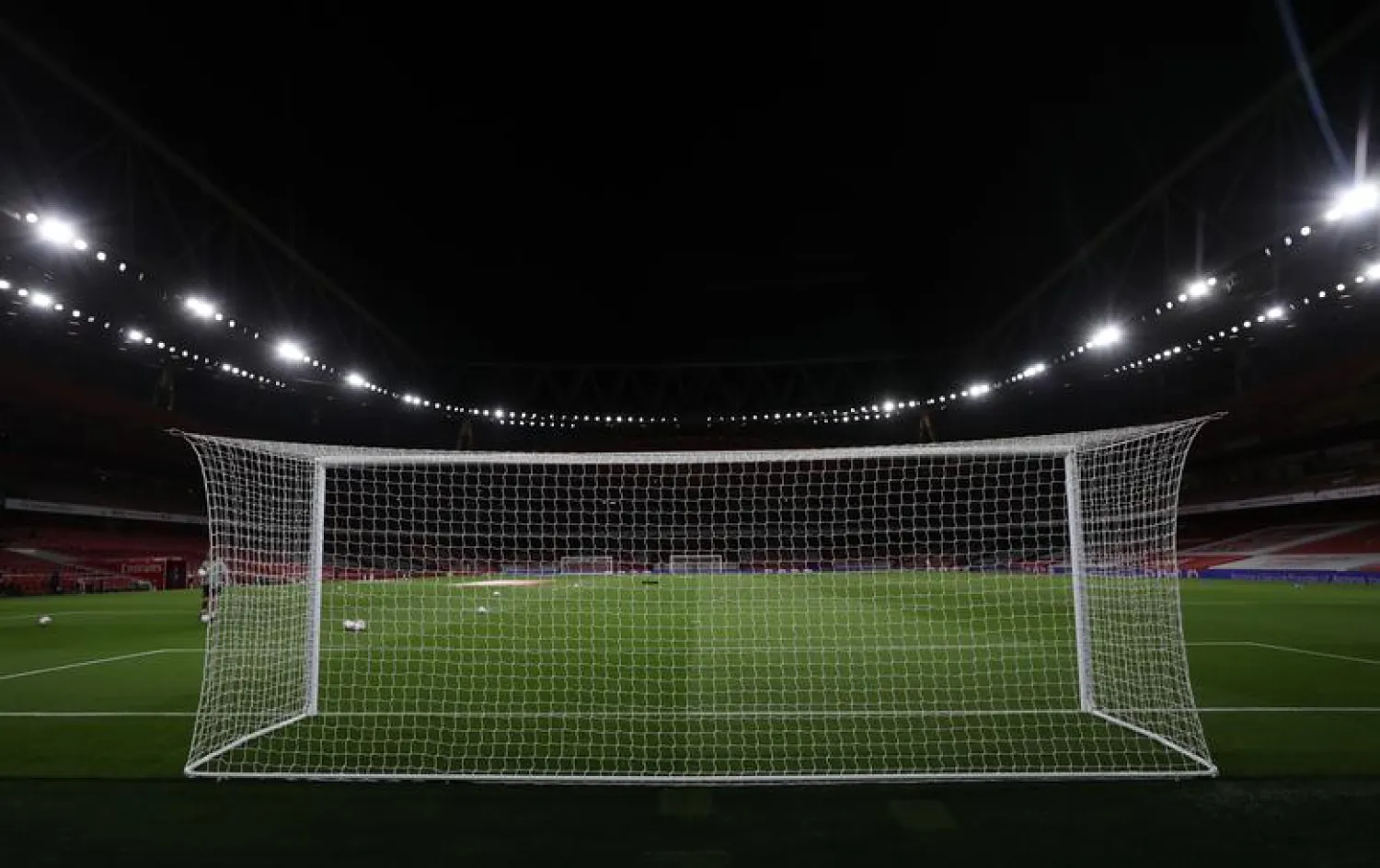
Arsenal v Leicester City - Emirates Stadium, London, Britain - October 25, 2020 General view inside the stadium before the match Pool via REUTERS/Catherine Ivill
TT

COVID-19 Trauma Can Force Sport to Change for Good

Arsenal v Leicester City - Emirates Stadium, London, Britain - October 25, 2020 General view inside the stadium before the match Pool via REUTERS/Catherine Ivill

Pack up the flags. Close the turnstiles. Cover the plastic seats with an inspirational tarpaulin. The gates are being closed. And frankly it is anyone’s guess when they might be open again.

The news this week that the government has withdrawn its mandate for the staged return of spectators to professional sport has been greeted with dismay, and at times a barely contained sense of anger, among those whose job it is to keep the industry wheels clanking along.

Football has spoken loudest in the last couple of days, with the EFL chairman Rick Parry stating that clubs stand to lose a further £200m if the entire season is given over to ghost games. The talk in Premiership Rugby is already of bankruptcy or even a reversion to amateur status should the current disaster-scenario timeline continue. Point to a sport, any sport, and the story is the same: crisis, collapse, a chasm of debt.

There have been suggestions already of a government bailout, a possibility that comes with two significant caveats. First, the chancellor is not minded to include the Premier League or Championship in any financial aid, understandably so given the endless spume of TV rights payments and the inanity of player salaries.

And secondly, well, have you actually seen the government recently? Or indeed the prime minister himself, who these days resembles an increasingly confused elderly labrador dressed up in a suit and pushed out in front of the cameras to talk about graph-based infection trends, which is only now, 10 minutes into its TV spot, realizing it shouldn’t actually be able to talk.

There is no certainty here, no long-term promise that can be guaranteed to last the next few policy lurches. Professional sport is facing a crisis of unprecedented urgency. It must be prepared to face it largely alone.

At which point it is worth being clear on exactly what is at stake. This is a moment of peril that should raise questions far beyond simply survival or sustaining the status quo. Questions such as: what is sport actually for? And more to the point, what do we want it to look like when this is all over?

It helps to define the terms of all this jeopardy. There has been a lot of emotive rhetoric about sport being on the verge of extinction, as though the basic ability to participate, support, and spectate could be vaporized out from beneath us.

This is incorrect. What is being menaced is the current financial management of professional sport, its existing models, and cultural practices, much of which is pretty joyless and dysfunctional in the first place.

Even within this there are layers. The top tier will carry on regardless, constrained but far from imperiled. Manchester United could lose £120m should the plague-hiatus extend to the spring. Big deal. Budgets will be shaved and new signings restricted. But half that was thrown away just paying Alexis Sánchez’s wages. The pandemic has reinforced an obvious truth: football at this level isn’t operating on any recognizable human scale.

The real jeopardy applies to the levels of professional sport below. It is here, from Football League to county cricket to racing and athletics, that there is a genuine threat of long-established institutions going to the wall. In many cases this is the result of a deadly interplay with pre-existing greed and flaky accounting. Only one Premiership rugby union club failed to make a loss last year. Reading FC spent a sum equivalent to 194% of its turnover on player wages two seasons ago. Nobody could have foreseen the precise outline of a bat-derived global pandemic. But events – human history suggests – do tend to intervene at some stage.

Bale could keep every League Two club in business by paying their combined wage bill out of his annual salary
Even well-run institutions at amateur level will be vulnerable to the impossible maths of the situation. It may be an auditing process is required for any bailout fund, with loans and grants parcelled out on merit.

It is to be hoped the system is lenient. The sums are likely to be small in the context of the overall Covid debt. The institutions involved are part of a patchwork sporting culture that deserves protection no matter how iffy their current administration.

This has been one upshot of the crisis, a laying bare of certain key truths. This is not always a bad thing. For a start, it turns out the absence of crowds is a genuine drag to the brand value of the Premier League, a key part of its eminently saleable fan culture has often been rather carelessly used. The absence of supporters has clarified their value.

Newcastle’s manager, Steve Bruce, spoke this week about players and managers feeling demotivated by empty stands. Perhaps clubs and administrators might try to nurture this a little when supporters do return. There is plenty that can be done, from ensuring younger fans can afford to come to fighting the urge to retain the new late-night kick-offs. A year away is a long time.

Indeed, for all the trauma, this is also an opportunity for sporting organizations to engage in a profound period of introspection. Some structures have proved surprisingly resilient. Cricket is run by a single dictatorial governing body. It turns out this is a pretty good way to manage a financial crisis.

In elite professional football good sense would demand player salaries are capped or controlled relative to income. It is an absurdity that this small group, the sport’s single outstanding cost, are threatening to kill the industry that supports them. Good sense, as ever, may have to join the back of the queue.

As for the idea of trickle down , here is a non-fun fact: Gareth Bale could keep every club in League Two in business by paying their combined wage bill out of his annual salary. This probably won’t happen. The point is just that he could.

Again: what is sport for exactly? Step down to the bottom tier in this structure and amateur and recreational sport will carry on regardless. The base elements of participation and support, the basic soul of sport, will survive all this.

In many ways recreational sport has been defiantly alive during lockdown. Amateur cricket found its season crammed into a six-week summer romance and has been a tour de force, drawing on its deep reserves of community and volunteer culture. More people have taken up or returned to cycling and running. The campaign to restart indoor sports such as badminton and netball has emphasized their vitality.

It is here, not in the professional ranks, that taxpayers’ resources should be focused. The government is said to be hesitating over a grassroots resurrection plan. It should be doing precisely the opposite of hesitating. The nation’s health, physical and mental, demands a regeneration of these shared resources.

In the meantime professional sport will survive, just as football went on during the blitz, and just as crowds came flocking back in the summers and winters of the postwar Golden Age.

But it has also been clear that the system isn’t working as it should. Sport will no doubt find itself falling into that much-referenced “abyss” over the next few months. It also has the freedom to start climbing out.

(The Guardian)


‘Not Competitive’ Brazil Can Improve, Insists Ancelotti

Brazil's head coach Carlo Ancelotti looks on before the Mizuho Blue Challenge – The Kallang Football Series international friendly match between Japan and Brazil at the National Stadium in Singapore, 14 November 2026. (EPA)
TT

‘Not Competitive’ Brazil Can Improve, Insists Ancelotti

Brazil's head coach Carlo Ancelotti looks on before the Mizuho Blue Challenge – The Kallang Football Series international friendly match between Japan and Brazil at the National Stadium in Singapore, 14 November 2026. (EPA)

Brazil coach Carlo Ancelotti on Monday promised an improved performance in the year-ending clash against Singapore, admitting that his squad was "currently not competitive."

The Selecao lost 3-2 against Japan in a friendly in Singapore on Saturday, where Ancelotti and skipper Raphinha were red-carded after Japan scored the dramatic clincher in stoppage time.

"Given that the team is currently not competitive, I want to do more," Ancelotti told reporters in Singapore, where Brazil play on Tuesday.

The Italian, Brazil's first-ever permanent foreign coach, said: "I want to do more because I enjoy being here, so that the team can become more competitive on the global stage.

"The priority is to play well first (tomorrow) and to do well."

Ancelotti, 67, is coming under increasing pressure, following a string of underwhelming performances including two defeats, two wins and a draw in Brazil's last five international outings.

Japan avenged a 2-1 defeat by Brazil in their previous meeting at this year's World Cup, when the South Americans beat them in a round-of-32 clash.

After Saturday's loss, Ancelotti faced a barrage of criticism, including from former Brazilian national team star Romario.

Ancelotti brushed off Romario's remarks, saying "like anyone he has the right to express an opinion."

But the former Real Madrid coach, who reacted with fury after Brazil appealed for a foul in the build-up to Japan's winning goal on Saturday -- which was upheld by VAR -- said that his team "didn't deserve to lose" against Japan.

Japan face Paraguay on Tuesday in the second match of the double-header at Singapore's National Stadium.


Vinicius Says Less Training and Transfer Distractions May Explain Dip in Form

 Brazil's Vinicius Junior celebrates after goal during a friendly soccer match between Japan and Brazil in Singapore, Saturday, Nov. 14, 2026. (AP)
Brazil's Vinicius Junior celebrates after goal during a friendly soccer match between Japan and Brazil in Singapore, Saturday, Nov. 14, 2026. (AP)
TT

Vinicius Says Less Training and Transfer Distractions May Explain Dip in Form

 Brazil's Vinicius Junior celebrates after goal during a friendly soccer match between Japan and Brazil in Singapore, Saturday, Nov. 14, 2026. (AP)
Brazil's Vinicius Junior celebrates after goal during a friendly soccer match between Japan and Brazil in Singapore, Saturday, Nov. 14, 2026. (AP)

Real Madrid winger Vinicius Junior says ‌his reduced training schedule, and transfer interest, may have affected his performances in an underwhelming start to his Real Madrid season.

The Brazilian signed a new contract until 2032 in August, but so far his output on the pitch has fallen short of his own previous standards. Press scrutiny in Spain has been intensified by the impressive start of Ivorian signing Yan Diomande, who has eclipsed Vinicius in his preferred left-sided role.

“I don’t think I prepared as well as I could have after the World Cup, because ‌the impact of ‌that tournament is so significant for all ‌Brazilians," ⁠he told a ⁠press conference in Singapore on Monday.

"Being knocked out so early was something we hadn’t expected. So, I took advantage of my holidays to enjoy myself, rest, relax, and spend more time with my family. I ended up training less than in previous years," he said.

“That may have affected my start to the season."

Vinicius' future ⁠at Real Madrid was a talking point in ‌Spain for months as he entered ‌the final year of his contract before re-signing in August. Premier ‌League champions Arsenal were said to be interested at the ‌time.

"On top of that, regarding my contract renewal, with so many clubs showing interest last summer, I felt truly overwhelmed, as with the situation at Real Madrid. But it’s a very long season.”

The 26-year-old said he ‌had a track record of hitting top form in the decisive moments of the season, ⁠and that he ⁠was on a positive trajectory.

“Maintaining such a high level for so long is always very difficult," said Vinicius.

"I think only Cristiano Ronaldo and (Lionel) Messi have managed to do this for so many years, reaching the same kinds of numbers."

"I am human, I often make mistakes, but I always try to improve.”

This season Vinicius has scored one goal and given three assists in his 12 Real Madrid appearances. Coach Jose Mourinho has only used him for a full 90 minutes on three occasions.

Nevertheless, he did score twice on Saturday in Brazil's 3-2 loss to Japan, and is likely to feature in another friendly against Singapore on Tuesday.


Belgium’s Lukaku Retires from International Football

Belgium's forward #09 Romelu Lukaku celebrates after scoring his team third goal during the UEFA Nations League, League A - Group 1, football match between Belgium and Turkey at the Maurice Dufrasne stadium, in Liege, eastern Belgium on October 2, 2026. (AFP)
TT

Belgium’s Lukaku Retires from International Football

Belgium's forward #09 Romelu Lukaku celebrates after scoring his team third goal during the UEFA Nations League, League A - Group 1, football match between Belgium and Turkey at the Maurice Dufrasne stadium, in Liege, eastern Belgium on October 2, 2026. (AFP)

Belgium forward Romelu Lukaku on Monday retired from international football after scoring 94 goals in 135 games for his country, saying he was "at peace" with his decision.

Lukaku featured in four World Cups for the Red Devils and helped them reach the quarter-finals of this year's tournament before losing to eventual winners Spain.

The 33-year-old, who now plays for Turkish club Fenerbahce, made his debut in 2010 as a teenager and was an unused substitute in Sunday's 4-1 Nations League win over Italy.

"These 16 years I gave all I had for the national team. It was a nice ride and I enjoyed every single moment," Belgium's record goal scorer said on Instagram.

"To the Belgium fans, thank you for the support you gave our team. I am proud to have represented my country in 4 World Cups and 3 European Championships.

"I will never forget those moments. I'm at peace with my decision to stop here," Lukaku said.

The former Chelsea, Manchester United and Inter Milan forward was part of Belgium's so-called "golden generation".

Lukaku, alongside Kevin De Bruyne, Thibaut Courtois and Eden Hazard, finished third at the 2018 World Cup, a best-ever finish for Belgium in the tournament but they failed to lift a trophy during the period.

"I played with amazing teammates that I will always be grateful for," Lukaku said.

"I want to thank them all. I want to thank all the coaches as well for pushing and trusting me to help the team," he added.

- 'Legend, my brother' -

A host of fellow Belgian players paid tribute to Lukaku.

"Legend, my brother," midfielder Axel Witsel said on Instagram.

"Thank you for everything my bro," Courtois said.

"So many amazing memories," the Real Madrid goalkeeper added.

Lukaku's last appearance for his country came in October's 4-1 loss to France.

"Beyond his exceptional performances on the pitch, he has been a true leader, with a strong personality and an essential role in the dressing room," Lukaku's former team-mate and now Belgium's technical director Simon Mignolet said in a statement from the Belgian football association.

"We respect his decision and are deeply grateful to him for everything he has brought to our national team," the former Liverpool goalkeeper added.

Belgium's first game without Lukaku will be a Nations League last-eight fixture in March.

"We must now turn our attention to the future and prepare for the Nations League quarter-finals," Mignolet said.

"With the ambition of continuing to make progress as a team," he added.