Tunisian PM Warns of 3 Difficult Years Ahead

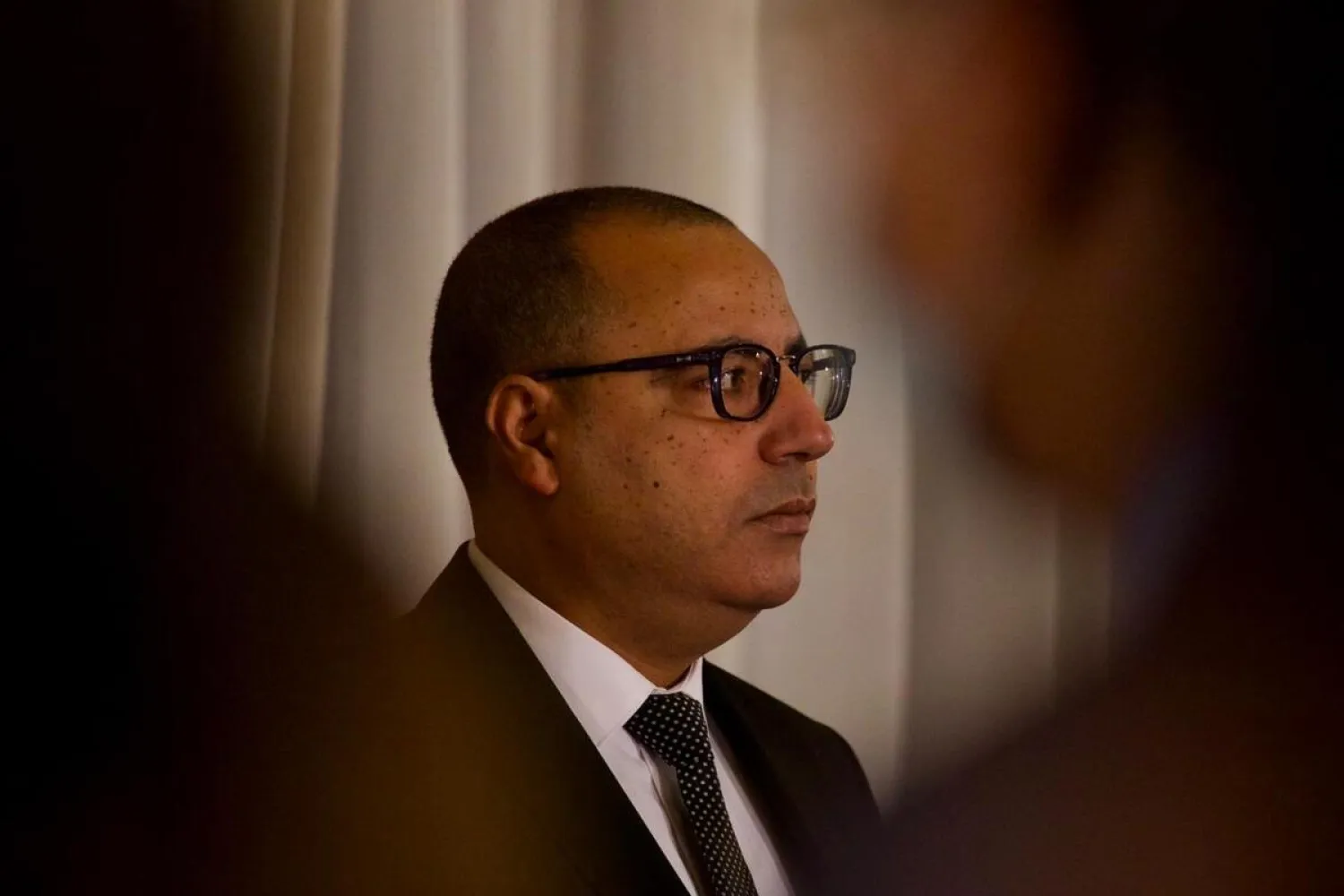
Tunisian Prime Minister Hichem Mechichi in Tunis, Tunisia on September 3, 2020. Nacer Talel/Anadolu Agency
TT

Tunisian PM Warns of 3 Difficult Years Ahead

Tunisian Prime Minister Hichem Mechichi in Tunis, Tunisia on September 3, 2020. Nacer Talel/Anadolu Agency

Prime Minister Hichem Mechichi affirmed that the economic situation has aggravated, saying "Tunisia has not witnessed any similar economic and social crisis.”

The impact of the crisis will not be temporary, he warned during a press conference on Tuesday, saying the pandemic’s economic repercussions will last for two or three years.

Mechichi said he would again ask the Central Bank to finance a deficit of TND3 billion dinars (USD1.1 billion) by buying treasury bonds, noting the country "will reduce the current year's budget deficit from 14 to 12 percent.”

On the prospect of rescheduling foreign debt, Mechichi tried to reassure the public, stressing that “Tunisia has always honored its commitments and will undoubtedly continue to do so.”

“We can no longer tolerate the blocking of petroleum production and phosphate transport, whatever the pretext,” he warned, saying Tunisians “must be aware of the extent of the damage” that has been inflicted.

Since mid-July, demonstrators have been staging sit-ins and cutting off production to demand the state follow through on promises to create thousands of jobs under deals ending previous rounds of protests.

The International Monetary Fund (IMF) has expected a historic decline in Tunisia's GDP to -7 percent by 2020, due in particular to the consequences of the COVID-19 pandemic. The current situation can be attributed to the accumulation of several years of economic, social and political instability.

The IMF's four-year financing plan came to an end in the spring, with no prospects for the future, while Tunis, which has relied heavily on international donors in recent years, is struggling to complete its budget for 2020.


Oil Hovers Near Six-month High with Nuclear Talks and US Tariffs in Focus

Oil platforms and pumpjacks at Lake Maracaibo, in Cabimas, Venezuela, January 26, 2026. REUTERS/Leonardo Fernandez Viloria/File Photo
TT

Oil Hovers Near Six-month High with Nuclear Talks and US Tariffs in Focus

Oil platforms and pumpjacks at Lake Maracaibo, in Cabimas, Venezuela, January 26, 2026. REUTERS/Leonardo Fernandez Viloria/File Photo

Oil prices steadied near a six-month high on Monday as the US and Iran prepared for a third round of nuclear talks while increased economic uncertainty was also in focus after the latest US tariff upheaval.

Brent crude futures were up 9 cents at $71.85 a barrel by 1308 GMT while US West Texas Intermediate crude gained 15 cents to $66.63, Reuters reported.

Growing concern over potential military conflict between the US and Iran pushed Brent prices up more than 5% last week to their highest since July 2025 at $72.34.

"With the next, and possibly last, round of the Iranian nuclear talks not until Thursday, focus is on the US Supreme Court’s decision to strike down import tariffs and the subsequent reaction from the government," said PVM Oil Associates analyst Tamas Varga.

The US Customs and Border Protection agency said it would halt collections of tariffs imposed under the International Emergency Economic Powers Act at 12:01 a.m. EST (0501 GMT) on Tuesday.

However, Trump said on Saturday that he would raise a temporary tariff from 10% to 15% on US imports from all countries, the maximum allowed under the law, after the US Supreme Court struck down his previous tariff program.

"This morning’s weakness is a defensive move, and needless to say, with the uncertainty surrounding a US military intervention in Iran, the ongoing Russian-Ukrainian war and now the US Supreme Court’s decision, oil price direction is not (clear), but volatility is guaranteed," PVM's Varga said.

Iran has indicated it is prepared to make concessions on its nuclear program in return for the lifting of sanctions and recognition of its right to enrich uranium, a senior Iranian official told Reuters ahead of Thursday's third round of nuclear talks between the two nations.

While prices on paper had moved higher, softer prompt spreads and weaker physical differentials pointed to pricing being based on geopolitical concerns rather than an actual lack of oil in the market, Morgan Stanley analysts said in a note.


Chevron, Iraq Agree to Exclusive Talks Over West Qurna 2 Oilfield 

A view of West Qurna oilfield is seen in Basra, southeast of Baghdad, March 29, 2014. (Reuters)
TT

Chevron, Iraq Agree to Exclusive Talks Over West Qurna 2 Oilfield 

A view of West Qurna oilfield is seen in Basra, southeast of Baghdad, March 29, 2014. (Reuters)

Chevron has entered into exclusive talks with Iraq over the giant West Qurna 2 oilfield, moving closer to acquiring the field from sanctioned Russian oil firm Lukoil.

The talks, which Chevron said will include the exchange of confidential data, could expand the US oil major's footprint in ‌Iraq after ‌the country decided to nationalize the West ‌Qurna 2 ⁠field and unwind ⁠Lukoil's interest in the project.

Iraq nationalized the field last month after the US imposed sanctions on Lukoil to put pressure on Russia to end its war in Ukraine.

EXCLUSIVE NEGOTIATION RIGHTS FOR ONE YEAR

Iraqi Prime Minister Mohammed Shia al-Sudani's office confirmed the signing of the deal between Chevron and the Basra Oil Company.

The agreement between ⁠BOC, Lukoil and Chevron allows for the temporary ‌transfer of the West Qurna ‌2 contract to BOC, which will subsequently assign it to Chevron after ‌terms of the new contract are agreed, al-Sudani's office said in ‌a statement.

Chevron will have exclusive negotiation rights for one year, al-Sudani's office said.

Iraq's government must approve the agreements, and certain steps are contingent upon other approvals including from the US Office of Foreign ‌Assets Control, Chevron said.

Competitive economic terms will be essential to upcoming negotiations, Chevron added.

'AMICABLE SETTLEMENT' WITH ⁠LUKOIL

The Iraqi ⁠cabinet approved last week an "amicable settlement" with Lukoil over the transfer of operations of the oilfield to BOC. Lukoil has until February 28 to sell its assets under the sanctions.

West Qurna, one of the world's largest oilfields, accounts for about 0.5% of global oil supply and nearly 10% of Iraq's output.

A deal for Chevron in West Qurna 2 would mark a further push into Iraq for the US oil major.

It has agreed to develop several fields in the country as part of an international expansion since completing a deal to acquire US oil producer Hess for $53 billion in 2025.


EU Reportedly Set to Freeze US Trade Deal Approval Over Trump Tariff Risk

FILE PHOTO: Containers are loaded on freight trains at the railroad shunting yard in Maschen near Hamburg, Germany November 14, 2019. REUTERS/Fabian Bimmer/File Photo
TT

EU Reportedly Set to Freeze US Trade Deal Approval Over Trump Tariff Risk

FILE PHOTO: Containers are loaded on freight trains at the railroad shunting yard in Maschen near Hamburg, Germany November 14, 2019. REUTERS/Fabian Bimmer/File Photo

The European Union is poised to freeze the ratification process of its trade deal ‌with the ‌US and is ‌seeking ⁠more details from ⁠President Donald Trump’s administration on its new tariff program, Bloomberg News reported on Monday.

Zeljana ⁠Zovko, the lead ‌trade ‌negotiator in the ‌European People’s Party group ‌on the US deal, told Bloomberg in an interview that the ‌EU has "no other option" but to ⁠delay ⁠the approval process to seek to clarity on the situation.

The center-right EPP group is the largest political bloc in the European parliament.

Trump said Saturday that he wants a global tariff of 15%, up from the 10% he announced a day earlier.

American and EU officials sealed a trade deal last year that imposes a 15% import tax on 70% of European goods exported to the United States. The European Commission handles trade for the 27 EU member countries.

The value of EU-US trade in goods and services amounted to 1.7 trillion euros ($2 trillion) in 2024, or an average of 4.6 billion euros a day, according to EU statistics agency Eurostat.