‘Digital Health’ Tops Saudi Arabia’s Medical Projects

‘Digital Health’ Tops Saudi Arabia’s Medical Projects
TT

‘Digital Health’ Tops Saudi Arabia’s Medical Projects

‘Digital Health’ Tops Saudi Arabia’s Medical Projects

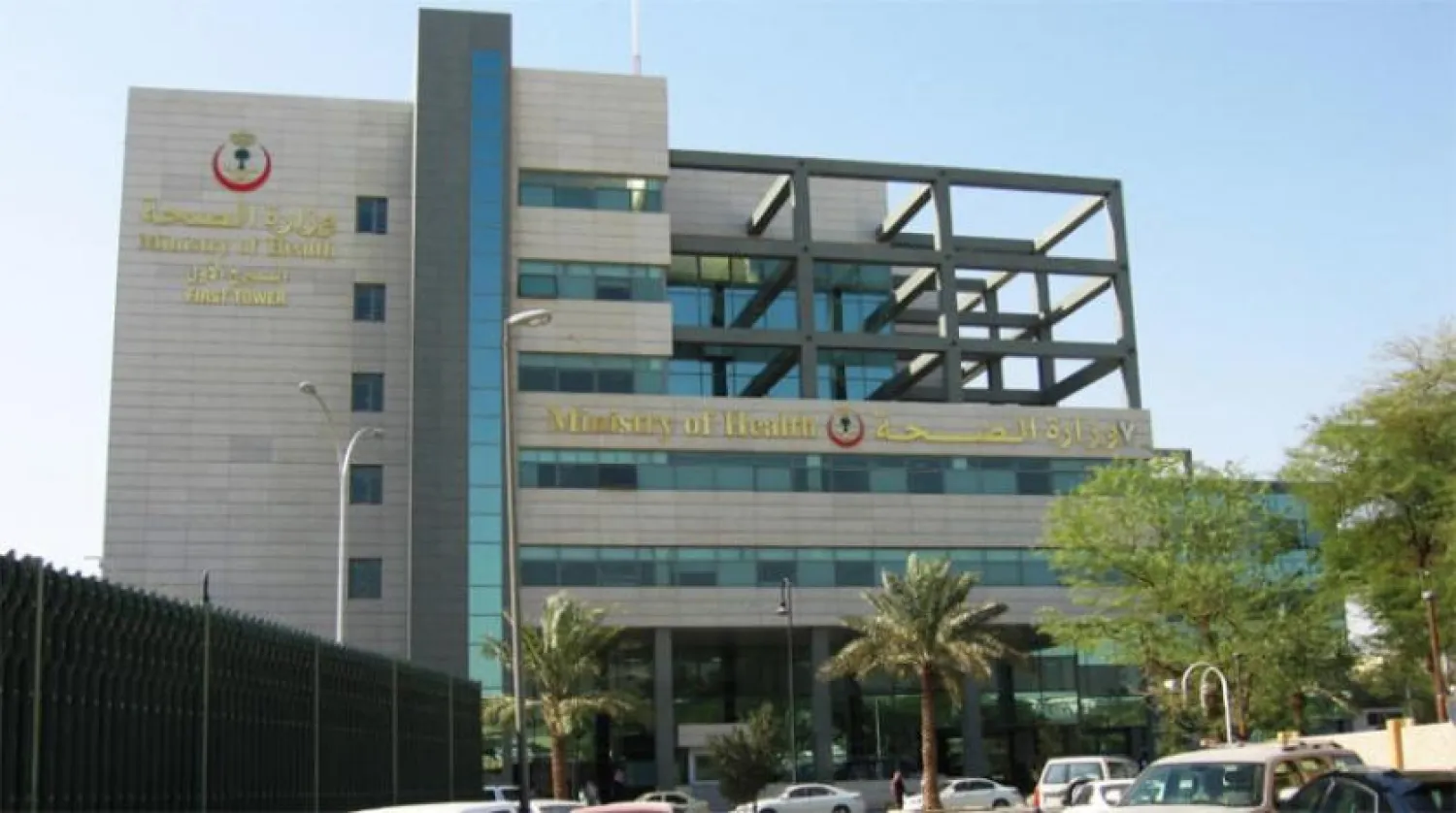
Saudi Arabia has made digital health a top priority for the development of the Kingdom’s health services, said Saudi Health Minister Tawfiq Al-Rabiah.

Speaking during the opening ceremony of HIMSS & Health 2.0 Middle East Digital Health Conference & Exhibition, he explained that a number of projects were launched, including the “Mawid” application, which provides a central reservation service.

A total of 14 million people registered via this application and more than 60 million appointments have been booked through it.

In addition, the telehealth service app, "Sehha", allows anyone to communicate with a doctor remotely, the minister said, adding that app has been providing a health service to many patients for more than two years now.

"There are many projects underway, including the ‘Nafees’ project, which includes an integrated health system and a unified health file, whose results will appear soon. It is a huge project and is expected to take several years to complete,” he continued.

Al-Rabiah pointed to the ministry's intention to unify its applications through “Sehhaty” app, expecting it to be launched at the beginning of 2021.

Artificial intelligence (AI) will have an active role in making a paradigm shift by linking different devices in digital health, he stressed.

“We, in the Kingdom, believe that digital health will make a huge difference in providing health services. so, it is one of the pillars of the fundamental transformation that we are working on in the health sector,” he remarked.


NextEra Expands Google Cloud Partnership, Secures Clean Energy Contracts with Meta

Electric power transmission pylon miniatures and Nextera Energy logo are seen in this illustration taken, December 9, 2022. REUTERS/Dado Ruvic/Illustration
TT

NextEra Expands Google Cloud Partnership, Secures Clean Energy Contracts with Meta

Electric power transmission pylon miniatures and Nextera Energy logo are seen in this illustration taken, December 9, 2022. REUTERS/Dado Ruvic/Illustration

NextEra Energy expanded its partnership with Alphabet's Google Cloud to scale up data center capacity, while securing over 2.5 gigawatts of clean energy contracts from Meta across the US, the company said on Monday.

Shares of NextEra were up 2.7% in premarket trading.

Under the expanded deal with Google Cloud, the companies will develop multiple new gigawatt-scale (GW) data centre campuses, each with accompanying generation and capacity, Reuters reported.

NextEra and Google Cloud plan to launch an AI-powered product by mid-2026 to predict equipment issues, optimize crew scheduling and boost grid reliability amid storms, aging assets, and rising demand.

The deal comes as US electricity demand grows due to rapid AI adoption, prompting cloud companies and utilities to secure land, grid connections and new generation to support large data center loads.

In October, the company had partnered with Google to restart an Iowa nuclear power plant shut down five years ago.

The technology industry's quest for massive amounts of electricity for AI processing has renewed interest in the country's nuclear reactors.

NextEra said it had signed 11 power purchase agreements and two energy storage agreements with Meta, totaling over 2.5 GW of clean energy contracts. The projects are scheduled to come online between 2026 and 2028.

The utility also reached an agreement with WPPI Energy to continue supplying 168 megawatts of the output from the Point Beach Nuclear Plant in Two Rivers into the 2050s.

Separately, NextEra forecast higher adjusted profit in 2026 as well as the current-year as it continues to benefit from the surge in power demand.

NextEra now expects adjusted earnings for 2025 of between $3.62 and $3.70 per share, compared with its prior view of between $3.45 and $3.70 per share.

For 2026, it expects adjusted profit between $3.92 and $4.02 per share, compared with its prior view of between $3.63 and $4.00 per share.


Albudaiwi: GCC States Pledge Active Role in Global Digital Security, Stability 

Secretary-General of the GCC Jasem Albudaiwi speaks at the Doha Forum on Sunday. (GCC)
TT

Albudaiwi: GCC States Pledge Active Role in Global Digital Security, Stability 

Secretary-General of the GCC Jasem Albudaiwi speaks at the Doha Forum on Sunday. (GCC)

The Gulf Cooperation Council (GCC) will remain a proactive and effective partner in supporting international efforts to achieve global and comprehensive digital security, contributing to the enhancement of security and stability in cyberspace, according to Secretary-General of the GCC Jasem Albudaiwi.

He made these remarks during his participation in the roundtable event organized by the Digital Cooperation Organization (DCO) at the 23rd Doha Forum on Sunday.

He highlighted the world's increasing reliance on digital infrastructures that underpin modern economies, essential services, and communications.

He cautioned that any disruption to these systems could lead to instability and the disruption of vital services. This reality mandates that the international community strengthen solidarity and build common frameworks to maintain international digital legitimacy during cyber crises.

He reaffirmed the GCC's commitment, noting that the member states have taken significant strides through the Unified Gulf Strategy for Cybersecurity. This includes massive investments in cloud infrastructure, the development of human capital, the organization of joint cyber exercises that simulate real-world risks, and the development of digital platforms for early warning and coordination during cyber incidents.

He underlined the importance of mutual support between nations when essential digital systems collapse, achieved through technical and operational cooperation frameworks, joint incident response mechanisms, and the temporary utilization of digital infrastructure from neighboring countries when necessary, while strictly respecting national sovereignty and systemic privacy.

Albudaiwi emphasized that several digital sectors must receive stringent international protection to prevent escalation and protect civilian lives, specifically mentioning energy and fuel control systems, telecommunications networks, submarine cables, healthcare and emergency systems, financial networks and digital payment systems, government services, and logistics and transportation networks.


Meta Reportedly Delays Release of Phoenix Mixed-reality Glasses to 2027

FILE PHOTO: The logo of Meta is seen at Porte de Versailles exhibition center in Paris, France, June 11, 2025. REUTERS/Gonzalo Fuentes/File Photo
TT

Meta Reportedly Delays Release of Phoenix Mixed-reality Glasses to 2027

FILE PHOTO: The logo of Meta is seen at Porte de Versailles exhibition center in Paris, France, June 11, 2025. REUTERS/Gonzalo Fuentes/File Photo

Meta is delaying the release of its Phoenix mixed-reality glasses until 2027, aiming to get the details right, Business Insider reported on Friday, citing an internal memo.

The delay from an initially planned release in the second half of 2026 is because the company wants a fully polished device, the report said.

Meta did not immediately respond to a Reuters request for comment on the report.

Meta executives Gabriel Aul and Ryan Cairns said moving the release date back is "going to give us a lot more breathing room to get the details right," the report added.

The goggles, previously code-named Puffin, weigh around 100 grams (3.5 ounces) and have lower-resolution displays and weaker computing performance than high-end headsets like Apple’s Vision Pro, the Information reported in July.

Mixed reality merges augmented and virtual reality and allows real-world and digital objects to interact.

Meta is expected to make budget cuts of up to 30% for its metaverse initiative, Bloomberg News reported on Thursday.

The metaverse group sits within Reality Labs, which produces the company's Quest mixed-reality headsets, smart glasses made with EssilorLuxottica's Ray-Ban and upcoming augmented-reality glasses.