Yemen’s Hadi Says Military Operations to Continue Until Houthis Defeated

Yemeni President Abdrabbuh Mansur Hadi, Asharq Al-Awsat
TT

Yemen’s Hadi Says Military Operations to Continue Until Houthis Defeated

Yemeni President Abdrabbuh Mansur Hadi, Asharq Al-Awsat

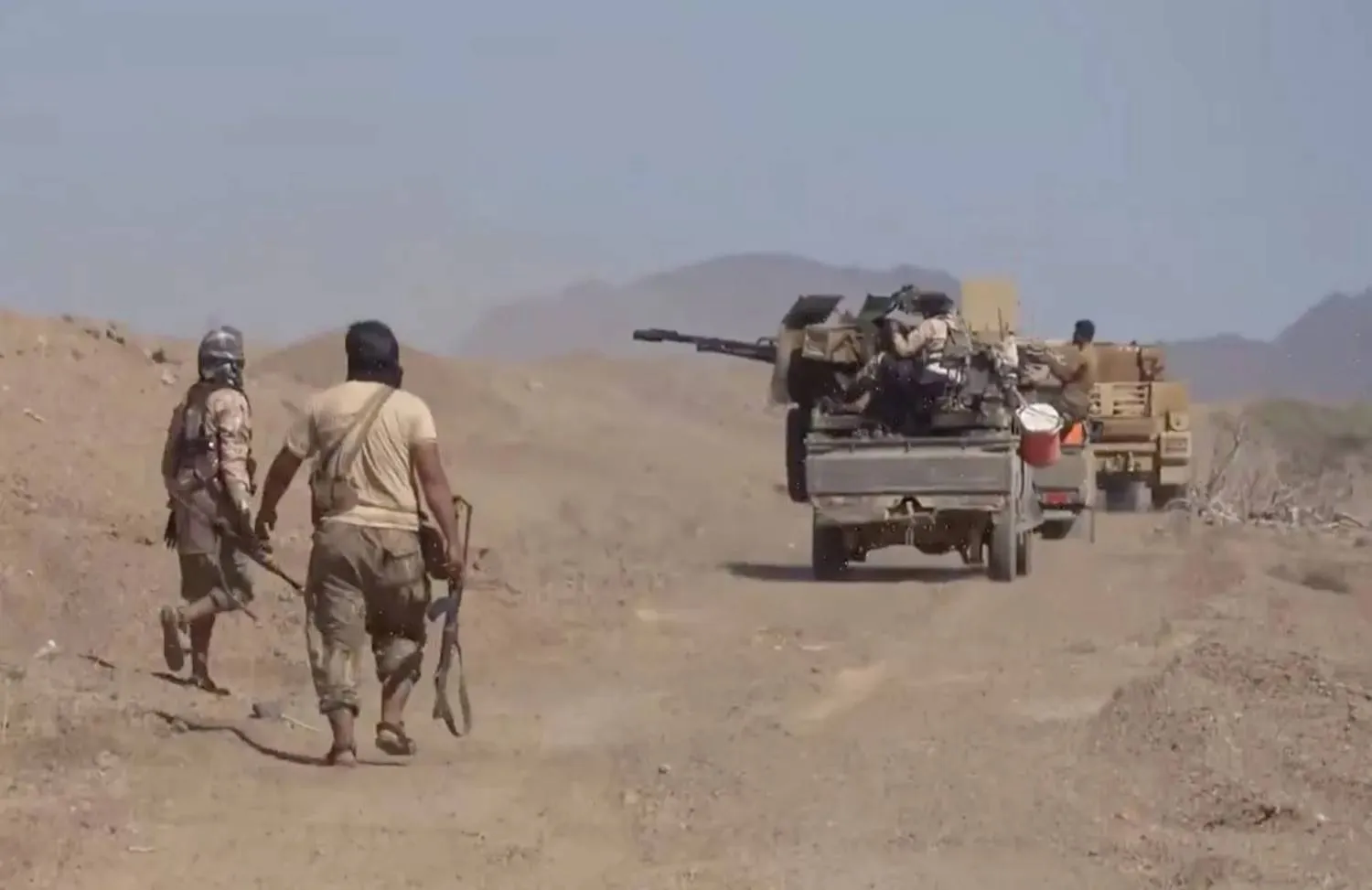
Yemeni President Abdrabbuh Mansur Hadi stressed on Tuesday that military operations in the war-torn country will continue until Sanaa, which is run by Houthi militias, is liberated and the Iranian project is defeated.

Houthi mines and assaults have been claiming the lives of Yemenis for nearly six years. The Iran-backed group has also been stepping up its attacks in al-Jawf and Marib governorates.

Official Yemeni sources reported that Hadi’s comments came during a briefing he attended by Vice President General Ali Mohsen al-Ahmar in Riyadh.

Ahmar briefed Hadi on the status of ongoing military operations in a number of governorates that included Marib, al-Jawf, Taiz, Sanaa, Hodeidah, Al Bayda', Saadah and Dhale.

Hadi, for his part, underlined the need to continue to secure victories against Iran-backed Houthis, the state-owned Saba news agency reported.

The Yemeni leader also emphasized the importance of providing qualitative training to troops. He expressed keenness on ensuring that strong support is given to the national army which is spearheading the campaign to free Yemen from Houthi hold.

More so, Hadi appreciated efforts spent by the Arab Coalition on restoring power to legitimate state institutions in Yemen and thwarting the violent Iranian agenda being advanced by Houthis.

Hadi, according to Saba, urged the uniting of ranks, efforts and capacities fighting against Iranian greed in Yemen.

The president’s statements coincided with the scale up of fighting on multiple battlefronts in the country. Houthis, disregarding the substantial human losses they incurred among their ranks, ratcheted attacks in an attempt to advance towards Marib governorate.

Military field reports documented Houthis losing a number of fighters on Tuesday east of al-Hazim city in al-Jawf governorate.

According to field reports, army personnel thwarted an attack launched by Houthi militias towards the Dahida mountains, a strategic outpost that fell under the control of pro-government forces in recent weeks.


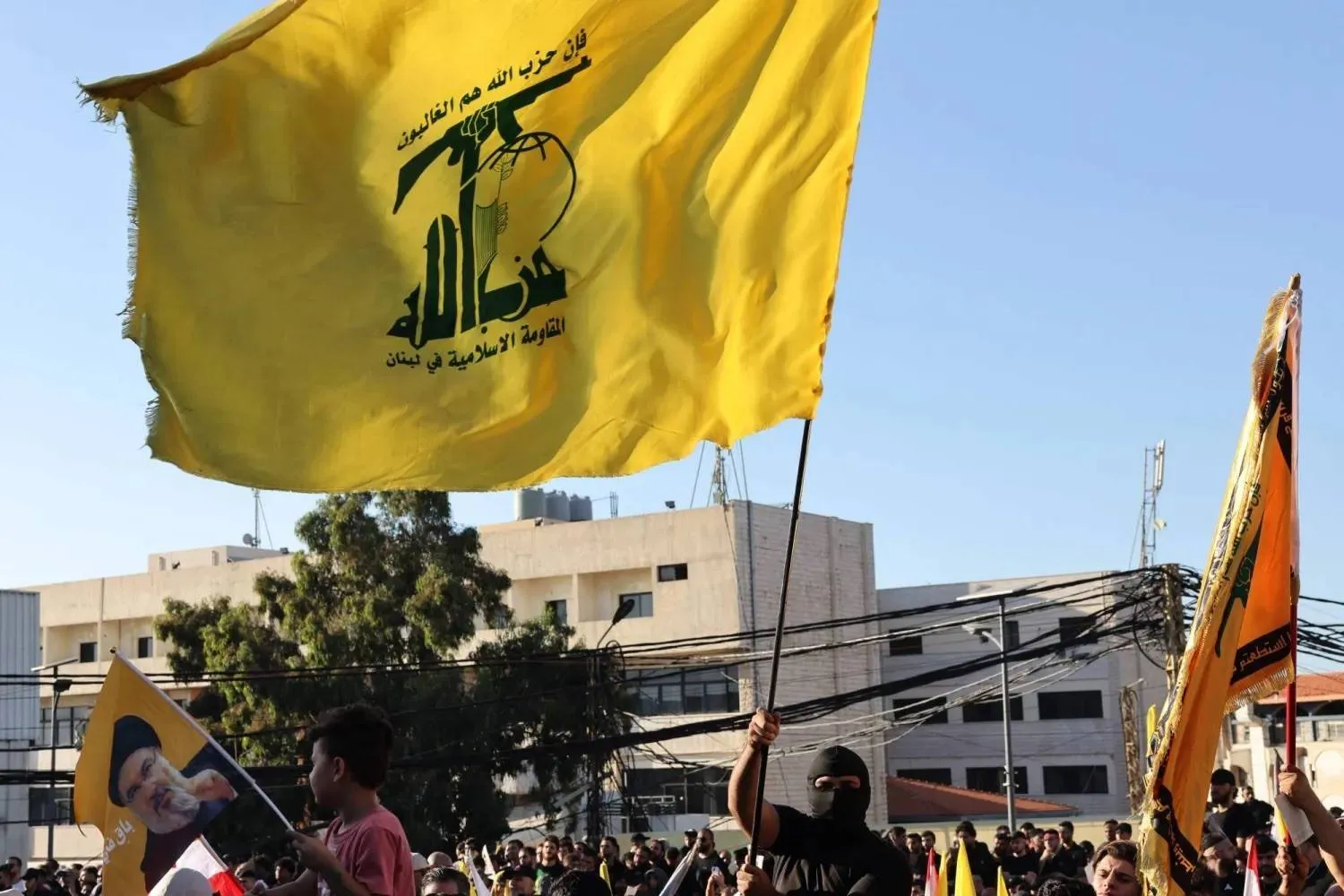
New US Sanctions Tighten Grip on Hezbollah, Test Lebanon

17 April 2026, Lebanon, Jiyyeh: A displaced Lebanese woman flashes the victory sign and displays Hezbollah and Iranian flags as they drive along the highway linking Beirut to southern Lebanon in the Jiyyeh area. (dpa)
TT

New US Sanctions Tighten Grip on Hezbollah, Test Lebanon

17 April 2026, Lebanon, Jiyyeh: A displaced Lebanese woman flashes the victory sign and displays Hezbollah and Iranian flags as they drive along the highway linking Beirut to southern Lebanon in the Jiyyeh area. (dpa)

New US sanctions on Hezbollah go beyond targeting money-transfer networks, signaling a broader shift in Washington’s approach to the group and its relationship with the Lebanese state.

By relisting Hezbollah on its sanctions list and targeting a network accused of moving millions of dollars to the group, Washington is stepping up pressure on Hezbollah while putting Lebanese institutions to a sensitive test: whether they can tighten oversight of money flows and transfers and meet their obligations without worsening the country’s internal crisis.

The US Treasury Department’s Office of Foreign Assets Control (OFAC) announced sanctions on 10 people “that are part of a network responsible for transferring cash to Hezbollah.”

“The network utilizes couriers travelling on commercial airline flights between Lebanon, Türkiye, the UAE, and Iran to move up to hundreds of millions of dollars between jurisdictions, providing an avenue outside the formal financial system for Hezbollah to obtain foreign currency and evade sanctions,” it said.

OFAC also re-designated Hezbollah “for service to the Iranian regime under the command of Iran’s Revolutionary Guard Corps-Quds Force (IRGC-QF).”

Lebanese institutions under scrutiny

The US move is unlikely to stop with the targeted individuals and entities. It puts Lebanese banks, financial institutions, and regulatory bodies under closer US scrutiny, testing their ability to detect financial activity that could be linked to Hezbollah, its institutions, or its networks.

An official Lebanese source told Asharq Al-Awsat that the sanctions “pose challenges for the Lebanese state and its security, judicial and financial institutions.”

The source said the “tough US measures require tighter oversight of any assets linked to Hezbollah and its institutions, because any delay in doing so could leave the state facing consequences it can ill afford.”

OFAC said that “Hezbollah and its allies exploit financing schemes including oil smuggling, illicit shipping, commodities sales, and bulk cash smuggling to generate and move funds across the region.”

The US Treasury linked the targeted network to Behnam Shahriyari, a former Quds Force finance official, saying it was “one example of the methods used to funnel support to terrorist proxy groups throughout the region.”

Beyond Lebanese framework

But the strongest message in the sanctions, according to one Lebanese political reading, is directed at Lebanon itself.

Sami Nader, director of the Levant Institute for Strategic Affairs, said the latest measures differ from previous sanctions because Washington is “dealing with Hezbollah under a new classification that places it outside the traditional Lebanese framework and presents it as an Iranian faction and part of the broader US confrontation with Iran.”

Nader told Asharq Al-Awsat that the shift “will have repercussions inside Lebanon and for the authorities and official institutions, particularly in light of the political and even financial relationship linking the group to some Lebanese factions.”

Under the new US approach, he said, Hezbollah “is no longer viewed as a representative of the Shiite community, but as an Iranian faction occupying Lebanon.”

He said the implications could extend well beyond financial sanctions.

“Any party dealing with Hezbollah could be viewed by the United States as being involved in dealings with Iran’s Revolutionary Guards,” Nader said, adding that this could trigger “political and legal repercussions that go beyond direct financial sanctions.”

The effects of the new approach also extend into the political and diplomatic sphere, particularly Lebanese-Israeli negotiations.

Nader said tougher sanctions “could give Washington greater room to manage negotiations with Israel, allowing it to pressure Hezbollah” and “keeping the issue of ending Hezbollah’s influence part of the broader US confrontation with Iran.”

Europe’s response in focus

Attention is also turning to Europe and whether it will follow Washington’s lead.

Nader pointed to what he called “the recent hardening of the French and British positions toward Iran.”

“If the US approach extends to Europe, Lebanon could find itself entering a more complicated phase,” he said.

In that case, compliance with international sanctions would become “not merely a political choice, but an additional test of the state’s ability to protect its financial system and institutions from the repercussions of a regional and international conflict that extends beyond its borders,” he explained.

Hezbollah rejects US designation

Hezbollah rejected the US position, saying the claim that it is under the control of the Quds Force was merely a pretext for relisting it under sanctions.

The party described the move as “part of the continued policies of US administrations to target the resistance, its community, its support base and to besiege them and exert political, financial and security pressure on them.”

Hezbollah said Washington “continues to deal with Lebanon from a position of tutelage.”

It accused the US of choosing, instead of pressuring Israel to withdraw from southern Lebanon and halt its attacks, to “besiege the Lebanese and work to strip Lebanon of all sources of strength.”

On its relationship with Iran, Hezbollah said: “Our close and brotherly relationship with Iran is one we cherish and take pride in.”

But it stressed that it “does not await anyone’s certification of its Lebanese identity or patriotism.”

The party said sanctions and designations “will not deter us from adhering to the option of resistance and to the right of Lebanon and the Lebanese people to defend their land, sovereignty, and resources.”


Rights Group Says Israeli Settler Violence Heads to Established Palestinian Cities

 Israeli flags raised by settlers as seen on a main road to Jenin City, 21 August 2026. (EPA)
Israeli flags raised by settlers as seen on a main road to Jenin City, 21 August 2026. (EPA)
TT

Rights Group Says Israeli Settler Violence Heads to Established Palestinian Cities

 Israeli flags raised by settlers as seen on a main road to Jenin City, 21 August 2026. (EPA)
Israeli flags raised by settlers as seen on a main road to Jenin City, 21 August 2026. (EPA)

An Israeli group that collects information about potential human rights violations against Palestinians says reported incidents of Israeli settler violence have moved from the rural West Bank toward larger, more populated Palestinian cities and towns.

The establishment of new settlements and outposts throughout the West Bank has emboldened extremist settlers, who are now encroaching on larger communities that previously were far from the front lines of settler violence, Yesh Din said in its report released Friday titled “The Next Frontier.”

The uptick in violence corresponds with the Israeli government’s approval of new settlements and the expansion of outposts that it doesn’t authorize but often leaves in place, according to the report.

“As outposts advance deeper into Palestinian territory, violence, harassment and terror follow,” Yesh Din wrote.

Some 3 million Palestinians live under Israeli military rule in the West Bank alongside roughly 560,000 Israeli settlers.


Palestinian Teen Killed by Israeli Settlers After Rock Throwing Incident

 Relatives of killed Palestinian Karim Shalaldeh, 17, cry after his body was transferred to a hospital in the West Bank city of Hebron, Friday, Aug. 21, 2026. (AP)
Relatives of killed Palestinian Karim Shalaldeh, 17, cry after his body was transferred to a hospital in the West Bank city of Hebron, Friday, Aug. 21, 2026. (AP)
TT

Palestinian Teen Killed by Israeli Settlers After Rock Throwing Incident

 Relatives of killed Palestinian Karim Shalaldeh, 17, cry after his body was transferred to a hospital in the West Bank city of Hebron, Friday, Aug. 21, 2026. (AP)
Relatives of killed Palestinian Karim Shalaldeh, 17, cry after his body was transferred to a hospital in the West Bank city of Hebron, Friday, Aug. 21, 2026. (AP)

A 17-year-old Palestinian was killed and another man wounded by Israeli settler gunfire after rocks were thrown Friday in Sa’ir, north of Hebron in the occupied West Bank, the Palestinian Health Ministry said.

The ministry identified the teenager as Karim Sanad Raja Shalaldeh.

The teenager’s father told The Associated Press at the hospital that Israeli settlers had killed his son.

The Israeli military said soldiers were dispatched to Sa’ir after Palestinians threw rocks at Israeli civilians who were in the area without prior authorization. Some Israelis were injured and a security official opened fire.

Separately, the Palestinian General Authority for Civil Affairs informed the Health Ministry that 58-year-old Fathi Khazem was fatally shot by Israeli forces early Friday in Jenin.

An Israeli army official speaking on condition of anonymity in line with military rules said Khazem attempted to stab an Israeli soldier during an overnight operation. No Israeli soldiers were injured.

The Israeli official said Khazem was the father of Raed Khazem, who carried out a shooting attack in Tel Aviv in April 2022.

Violence has escalated in the West Bank where at least 87 Palestinians have been killed in almost 1,500 attacks by Israeli settlers and soldiers this year, according to Palestinian officials.