Iraq Resorts to Light Crude Oil to Increase Financial Resourceshttps://english.aawsat.com/home/article/2667326/iraq-resorts-light-crude-oil-increase-financial-resources
Iraq Resorts to Light Crude Oil to Increase Financial Resources
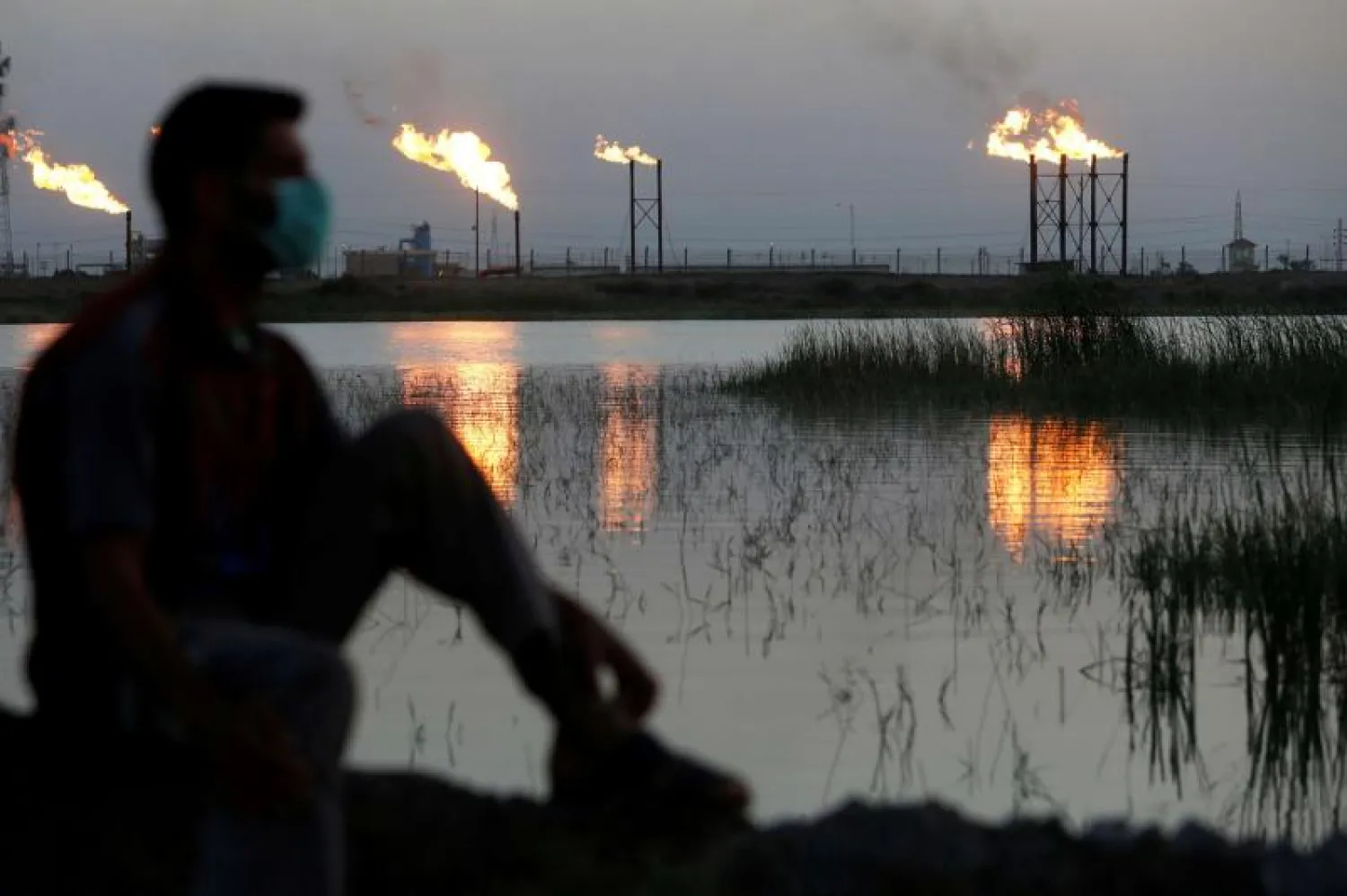
Flare stacks at Nahr Bin Umar oil field north of Basra, Iraq. (File photo: Reuters)
Iraqi Oil Minister Ihsan Abdul Jabbar called for maximizing the production of light crude oil to achieve additional financial revenues that support the treasury and the national economy.
Light crude oil is liquid petroleum of low density and flows freely at room temperature.
The American Petroleum Institute (API) classifies light crude oil as having low viscosity, low specific gravity and high gravity due to the presence of a high proportion of light hydrocarbon fractions.
In a press statement, Abdul Jabbar stressed the necessity of expediting projects to improve the specifications of crude oil, given its importance in the global markets.
He explained that the country will benefit from foreign expertise and cooperation to implement the joint goals of boosting national oil and gas industry.
Iraq has a major financial crisis as a result of low oil prices, and the country is moving towards developing refineries to obtain more profits.
Crude oil sales during September reached more than $3 billion in revenues. The average of oil exports in November was 2.613 million barrels per day (bpd), with the majority of exports from the southern fields.
Meanwhile, the Governor of the Central Bank of Iraq (CBI), Mustafa Ghaleb, stated that the drop in crude oil prices and the decision of the Organization of the Petroleum Exporting Countries (OPEC) and its allies to reduce production rates led to a decrease in Iraq's oil revenues.
Last month, Ghaleb said the decline in crude oil revenues lead to a decrease in dollars sold by the Ministry of Finance to the Central Bank in exchange for the Iraqi dinar.
The governor explained that most of the current spending will turn into a consumer demand that ultimately represents a demand for the dollar.
The Central Bank will try to meet the demand to finance imports, however, foreign reserves are expected to witness a decline in addition to a drop in oil revenues if the current situation persists.
Global Diesel Supply to Stay Tight Through Winter, Industry Execs Sayhttps://english.aawsat.com/business/5315852-global-diesel-supply-stay-tight-through-winter-industry-execs-say
Global Diesel Supply to Stay Tight Through Winter, Industry Execs Say
Diesel prices are displayed at a gas station as prices hit a record high in the US, Friday, Sept. 4, 2026 in Minneapolis. (AP Photo/Ellen Schmidt)
Global diesel supply will remain tight due to a lack of spare refining capacity, Russia's ban on exports and the approach of peak winter demand, senior industry executives said on Tuesday.
The wars in Ukraine and Iran have impacted refineries in Russia and the Middle East, pushing diesel margins to record levels in Europe and the US, while reducing crude supplies to Asia.
"There's really a shortage of products because we're missing 2 million barrels a day from Russia, and we're missing nearly 2 million barrels a day from the Middle East," Vitol CEO Russell Hardy told the APPEC conference on Tuesday.
According to Reuters, Hardy said crude is in a better supply position than products as the Middle East is exporting about 9 million bpd of crude and 1 million bpd of products.
"We're still not running enough refining capacity to prevent those draws," he said.
"We keep eating into the surplus that exists around the world, and we're pretty much at the bottom of our stockpiles."
Mark Senn, senior vice president of global trading at Phillips 66, said most US refineries were already running flat out.
"When you're looking forward to a winter season coming where diesel stocks are quite deficit, you're setting up for an environment where that strength could continue in those markets," he added.
US diesel prices jumped to record highs late last week, while the product's crack spread, a measure of refining profitability, surged to a record intraday high of $108.02 a barrel on Wednesday.
Vitol's Hardy said high prices and the lack of available fuel supplies are expected to reduce global oil demand by about 1.5 million bpd in 2026 versus 2025.
He added that the gap between China's crude imports in 2025 and 2026 at 5 million to 6 million bpd is unsustainable and he expects the gap to narrow towards the end of the year so China will have sufficient fuel for winter.
Saudi PIF Launches Company to Develop Coastal Destination in Al-Khafjihttps://english.aawsat.com/business/5315846-saudi-pif-launches-company-develop-coastal-destination-al-khafji
Saudi PIF Launches Company to Develop Coastal Destination in Al-Khafji
Aerial view of Al-Khafji Governorate (King Abdulaziz Foundation)
Saudi Arabia's Public Investment Fund (PIF) said it has launched a real estate company to create an integrated tourist and residential destination on the Al-Khafji coastline on the Arabian Gulf.
Gulf Coast Development Company will develop the project in partnership with the private sector and local and regional investors, PIF said in a statement on Monday.
The project, spanning around 20 square kilometers with a 10-km waterfront, is expected to accommodate more than 16,000 housing units alongside hotels and other commercial facilities.
“The Al-Khafji Governorate’s strategic location offers seamless access for residents and visitors from Saudi Arabia, Kuwait, and other Gulf Arab states and will contribute to creating both direct and indirect opportunities for the local community,” said the statement.
“Within its Urban Development and Livability ecosystem, PIF is investing in real estate projects in partnership with the private sector to maximize long-term value realization and advance urban innovation,” it said.
“Projects in this ecosystem will further enhance quality of life, modernize living, and create people-centered and sustainable cities through coordinated investments,” PIF added.
According to the statement, the project’s development will unfold in three phases. The first phase, which is scheduled for completion in 2030, will deliver three neighborhoods and lay the foundation for an integrated tourism-residential community.
"Through its local real estate projects, PIF continues to unlock the potential of strategic sectors, deepen their integration within the six ecosystems outlined in PIF’s 2026 2030 strategy, and strengthen the private sector’s role as an effective partner in economic growth,” said PIF’s Head of Local Real Estate Investments Saad Alkroud.
“The company’s project will generate new opportunities for the region’s residents, upgrade the city’s infrastructure and deepen private sector partnerships that maximize value and deliver sustainable returns,” he added.
PIF’s Urban Development & Livability ecosystem is one of six new ecosystems revealed in PIF’s 2026-2030 strategy.
Saudi Arabia and Serbia Expand Partnership in Energy, Technology and Tradehttps://english.aawsat.com/business/5315634-saudi-arabia-and-serbia-expand-partnership-energy-technology-and-trade
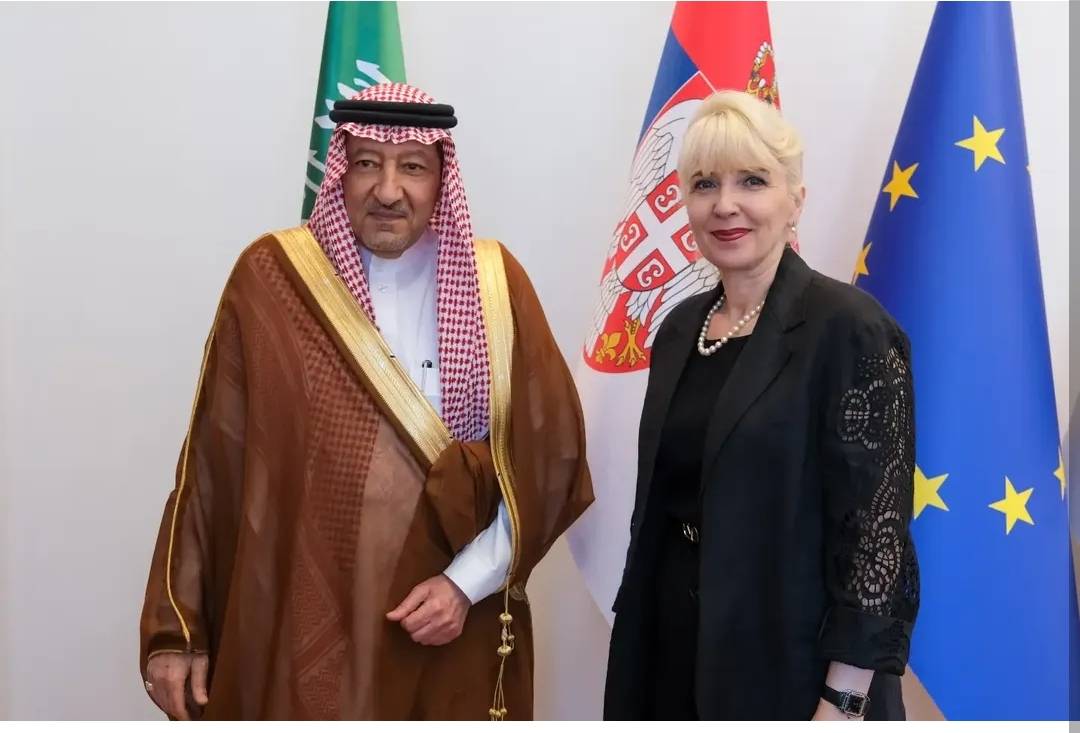
Serbian Foreign Minister and Saudi Deputy Foreign Minister sign an agreement waiving visa requirements for holders of diplomatic and official passports. (X)
Saudi Arabia and Serbia Expand Partnership in Energy, Technology and Trade
Serbian Foreign Minister and Saudi Deputy Foreign Minister sign an agreement waiving visa requirements for holders of diplomatic and official passports. (X)
Saudi-Serbian relations are moving toward a new phase of economic and diplomatic cooperation, as Riyadh and Belgrade work to expand their partnership in the energy, technology, agriculture and food industries sectors, alongside rapid growth in trade between the two countries. This comes as the hosting of EXPO 2027 in Belgrade and EXPO 2030 in Riyadh by Serbia and Saudi Arabia, respectively, opens additional avenues for exchanging expertise and building new partnerships and projects.
A meeting held last week in Belgrade between Saudi Deputy Minister of Foreign Affairs Waleed A. M. Elkhereiji and Serbian Minister of Foreign Affairs Marko Đurić saw the signing of an agreement to cancel visa requirements for holders of diplomatic and official passports, in a step expected to support official contacts and strengthen cooperation between the two countries.
The two sides discussed ways to develop cooperation in the energy sector through joint projects, as well as in information and communications technology, advanced technologies, agriculture and the food industry. They also discussed strengthening the presence of Serbian companies in the Saudi market and increasing investment by Saudi partners in Serbia. Serbia is scheduled to participate in the Saudi Food exhibition in Jeddah later this month with more than 50 companies.
Three new initiatives for cooperation between the two countries were also launched during the meeting: "Digital Non-Aligned," the Film Festival of the Non-Aligned Movement, and an international seminar for young diplomats from member states of the movement. The initiatives are part of commemorations marking the 65th anniversary of the First Conference of the Non-Aligned Movement, which was hosted by Belgrade in 1961.
The meeting was held on the sidelines of a gathering marking the anniversary. Saudi Arabia was among the countries that participated in the founding conference and was represented at the time by Minister of Foreign Affairs Ibrahim bin Abdullah Al Suwaiyel, who planted the first "tree of peace."
Bizenic: Riyadh Is an Important Economic Partner
Serbian Ambassador to Saudi Arabia Dragan Bizenic told Asharq Al-Awsat that last Wednesday's meeting gave the Serbian foreign minister an opportunity to once again thank the relevant Saudi institutions for their "exceptional cooperation and support" during the evacuation of Serbian citizens from Riyadh following the recent events in the Middle East.
Bizenic affirmed his country's commitment to deepening comprehensive cooperation with Saudi Arabia, with a particular focus on the economic side. He said he was impressed by the results achieved by the Kingdom under Vision 2030, which he saw during his visit to Riyadh to participate in the Future Investment Initiative conference last year.
According to the Serbian foreign minister, Belgrade is interested in strengthening trade cooperation with Saudi Arabia, increasing exports of Serbian products, and benefiting from the expertise and knowledge of Saudi experts in the fields of science and technology. The two sides also discussed expanding partnership and cooperation through EXPO, in addition to increasing the volume of trade and mutual investments.
EXPO: A New Bridge for Partnership
Bizenic considers Saudi-Serbian cooperation through EXPO 2027 and EXPO 2030 to be a highly important area for deepening relations between the two countries, pointing to the meeting between Saudi Deputy Minister of Foreign Affairs Waleed Elkhereiji and Minister of Foreign Trade, Mrs. Jagodom Lazarevic, who is also the commissioner of the EXPO 2027 exhibition in Belgrade.
He explained that Belgrade and Riyadh hosting two world expos in the coming years, EXPO 2027 Belgrade and EXPO 2030 Riyadh, represents a unique opportunity to turn the experience, knowledge and networks the two countries will gain through these events into new forms of cooperation and concrete projects.
He revealed that Saudi Arabia has already signed a contract to participate in EXPO 2027 Belgrade and will have one of the largest national pavilions at the exhibition, in a prominent location at the entrance to the EXPO area. He said the pavilion will provide the Kingdom with an opportunity to showcase its development potential, innovations, culture and business opportunities, as well as promote EXPO 2030 Riyadh.
Saudi Deputy Foreign Minister during his meeting with Serbian Minister of Internal and External Trade Jagoda Lazarević (X)
Trade Surges 152%
Bizenic noted that the Serbian foreign minister affirmed during his Wednesday meeting in Belgrade with Elkhereiji that Saudi Arabia could be "one of Serbia's key economic and political partners in the Arab world," given its membership in the Group of Twenty and OPEC+, as well as its weight in global energy markets. Saudi Arabia holds about 16 percent of the world's oil reserves.
The ambassador believes that strengthening Saudi-Serbian relations, opening the way for more investments and business projects, and expanding contacts between the business communities of the two countries would bring significant benefits to Serbia and support its economic presence in the region.
As an indicator of the growing economic ties, Bizenic said trade between Serbia and Saudi Arabia has recorded significant growth in recent years, reaching $121 million at the end of 2025, nine times its 2012 level. Trade continued to grow this year, reaching $130.4 million in the first half of 2026, an increase of 152 percent compared with the same period last year.
لم تشترك بعد
انشئ حساباً خاصاً بك لتحصل على أخبار مخصصة لك ولتتمتع بخاصية حفظ المقالات وتتلقى نشراتنا البريدية المتنوعة