


Jadaan: Saudi Arabia Seeks to Empower Private Sector, Restore Economic Vitality

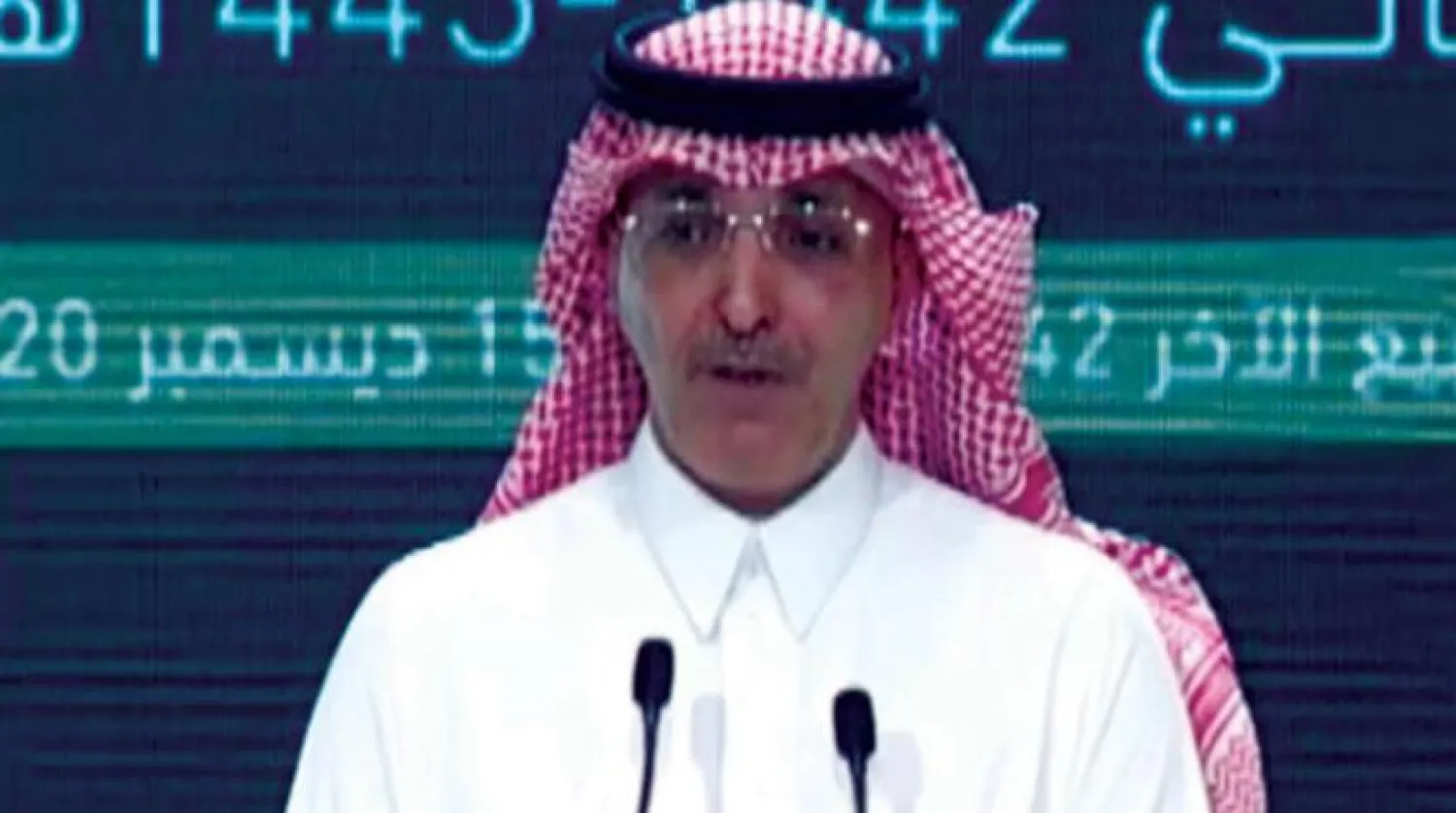
 Saudi Minister of Finance Mohammad Al-Jadaan speaks at a press conference after the Saudi Cabinet approved the 2021 budget (Asharq Al-Awsat).
Saudi Minister of Finance Mohammad Al-Jadaan speaks at a press conference after the Saudi Cabinet approved the 2021 budget (Asharq Al-Awsat).
TT

Jadaan: Saudi Arabia Seeks to Empower Private Sector, Restore Economic Vitality

 Saudi Minister of Finance Mohammad Al-Jadaan speaks at a press conference after the Saudi Cabinet approved the 2021 budget (Asharq Al-Awsat).
Saudi Minister of Finance Mohammad Al-Jadaan speaks at a press conference after the Saudi Cabinet approved the 2021 budget (Asharq Al-Awsat).

Saudi Minister of Finance Mohammad Al-Jadaan said his government was seeking to empower the private sector and to provide it with new opportunities. He also pointed to a positive rebound with the resumption of economic activities.

Speaking at an annual conference of the State’s public budget, Jadaan, who is currently appointed Minister of Economy and Planning, noted that the industrial sector has lost a number of jobs during the pandemic, but added that a significant improvement was expected in the labor market in the post-Covid-19 phase, in parallel with an increase in job opportunities

In response to a question by Asharq Al-Awsat, the Saudi minister said that the current year would end with an inflation of 3.7 percent, adding that the rate would return to normal levels of 2 percent over the next two years.

The Minister of Finance emphasized that the government’s strategy was very clear in supporting and empowering the private sector. He stressed that the government did not intend to compete with the private sector, but rather to open the way for boosting its investments.

Jadaan added that Saudi Arabia’s achievements in recent years through Vision 2030 have helped to deal with the pandemic with high efficiency, pointing in this regard to the investments in digital infrastructure.

Regarding privatization projects, the minister said that those had a set of goals, including raising the quality of the services provided and increasing the private sector’s contribution to the economy, in addition to reducing government costs.

The Minister of Finance emphasized the Kingdom’s keenness to improve the citizens’ income and expand the economic base to create more jobs and investment opportunities for young men and women.

When the basic priorities are achieved, the citizen’s income will be the main focus of concern, he remarked.



Egypt's January-March Current Account Deficit Widens to $5.1 billion

The headquarters of the Central Bank of Egypt in downtown Cairo (Asharq Al-Awsat)
TT

Egypt's January-March Current Account Deficit Widens to $5.1 billion

The headquarters of the Central Bank of Egypt in downtown Cairo (Asharq Al-Awsat)

Egypt's current account deficit more than doubled to $5.1 billion in the January-March quarter from $2.3 billion a year earlier, central bank data showed on Sunday.

Net foreign direct investment inflows edged down to $3.7 billion from $3.8 billion in the same period of 2025, Reuters reported.

The central bank attributed the wider July-March current account deficit mainly to a larger merchandise trade deficit, partly offset by higher remittances, tourism revenue and Suez Canal receipts.

Remittances from Egyptians working abroad rose to $12.8 billion from $9.3 billion in the same quarter last year, Reuters reported.

Tourism revenue increased to $4.2 billion from $3.8 billion in the same period last year. Suez Canal revenues rose to $1 billion from $800 million a year earlier.

Oil imports increased to $5.7 billion in the same quarter, from $4.8 billion a year earlier, while exports rose slightly to $1.6 billion from $1.2 billion.


Focus Turns to Building Stronger Institutions in Africa to Speed Shift to Renewable Energy

A solar power plant in Burkina Faso (Reuters)
TT

Focus Turns to Building Stronger Institutions in Africa to Speed Shift to Renewable Energy

A solar power plant in Burkina Faso (Reuters)

Africa’s biggest clean energy challenge is shifting from building projects to building the institutions, markets and regulatory systems needed to deliver them at scale, experts say.

That challenge is emerging even as clean energy reaches a historic milestone globally.

Renewables generated 34% of the world’s electricity in 2025, overtaking coal’s 33% share. Together with nuclear power, renewables are expected to provide half of global electricity by 2030.

As industrialization, artificial intelligence and electrification push demand higher, experts say the bottleneck in transitioning to cleaner energy has shifted from technology to the systems supporting it, including funding.

Overcoming such obstacles is vital for securing access to power for the 600 million people in Africa who are yet to be connected.

“Clean energy is now cheaper than fossil fuels in virtually every part of the world,” former New York City Mayor Michael R. Bloomberg, the UN Secretary-General’s Special Envoy on Climate Ambition and Solutions, said in late June while announcing a new $285 million Bloomberg Philanthropies initiative to strengthen clean energy industries in emerging and developing economies.

“But fixable obstacles are still slowing down deployment, and with energy demand rising at an unprecedented speed, we can’t allow those obstacles to continue standing in the way,” The Associated Press quoted him as saying.

Rather than financing solar farms or wind projects directly, the initiative will invest in strengthening market design, regulatory capacity, technical expertise and industry institutions, areas increasingly viewed as essential for attracting private investment and accelerating use of renewable energy.

It reflects a growing consensus that Africa’s energy transition is constrained less by a lack of renewable resources or viable technologies than by the institutional capacity needed to turn those advantages into financially viable projects and electricity on the grid.

Many projects remain delayed by weak market design, limited grid planning, slow permitting processes and fragmented regulatory systems.

“What has been missing is not the potential, but the institutional infrastructure and capabilities to unlock it,” said Saliem Fakir, executive director of the African Climate Foundation.

“Philanthropy that targets those gaps directly is the kind of intervention that can shift the trajectory of a continent’s energy system.”

Across Africa, renewable energy costs have fallen sharply while investment appetite continues to grow. However, investors say policy uncertainty, slow permitting processes and limited regulatory capacity are hindering projects.

Wangari Muchiri, founder and chief executive of RE.Think Energy, said the commitment signals that “the next phase of the energy transition is not about proving clean energy works, it’s about removing the barriers preventing it from scaling fast enough.”

The Bloomberg initiative is looking beyond ambitious renewable energy targets to focus on helping projects attract long-term investments and connect to national grids.

“The next chapter of Africa's renewable energy story will not be only by the projects it builds, but the institutions that make these projects possible,” Muchiri said.


Volkswagen CEO Looks to Avoid Plant Closures as Automaker Moves to Cut Costs

FILE PHOTO: Oliver Blume, CEO of Volkswagen AG and Porsche AG, speaks during the annual Volkswagen Group press conference in Wolfsburg, Germany March 11, 2025. REUTERS/Liesa Johannssen/File Photo
TT

Volkswagen CEO Looks to Avoid Plant Closures as Automaker Moves to Cut Costs

FILE PHOTO: Oliver Blume, CEO of Volkswagen AG and Porsche AG, speaks during the annual Volkswagen Group press conference in Wolfsburg, Germany March 11, 2025. REUTERS/Liesa Johannssen/File Photo

Volkswagen's CEO indicated in comments published Sunday that he's trying to avoid closing plants as he seeks to turn around the automaker's performance.

The Wolfsburg, Germany-based company faces pressure to cut costs at home and increasingly intense competition in the lucrative Chinese market, in particular.

Last week, Volkswagen said its “fundamental realignment” over the past three years had reached its next phase, announcing plans to streamline the model lineup by up to half.

It didn't provide specifics, and questions remain over how else it will cut costs. There has been renewed speculation about the future of several plants in Germany.

“There are more intelligent solutions than closing plants,” CEO Oliver Blume told the Bild am Sonntag newspaper, according to The Associated Press.

He added that a cost-cutting program in Germany already is producing effects. “We were able to improve our factory costs in Germany by an average 20% last year alone,” he said, describing that as “strong progress.”

Blume argued that Volkswagen's products are very popular, but “we just earn too little money with them. So we must continue to reduce our costs. In all kinds of costs.”