Syria: Iran Renames Streets in Sayyidah Zaynab Area

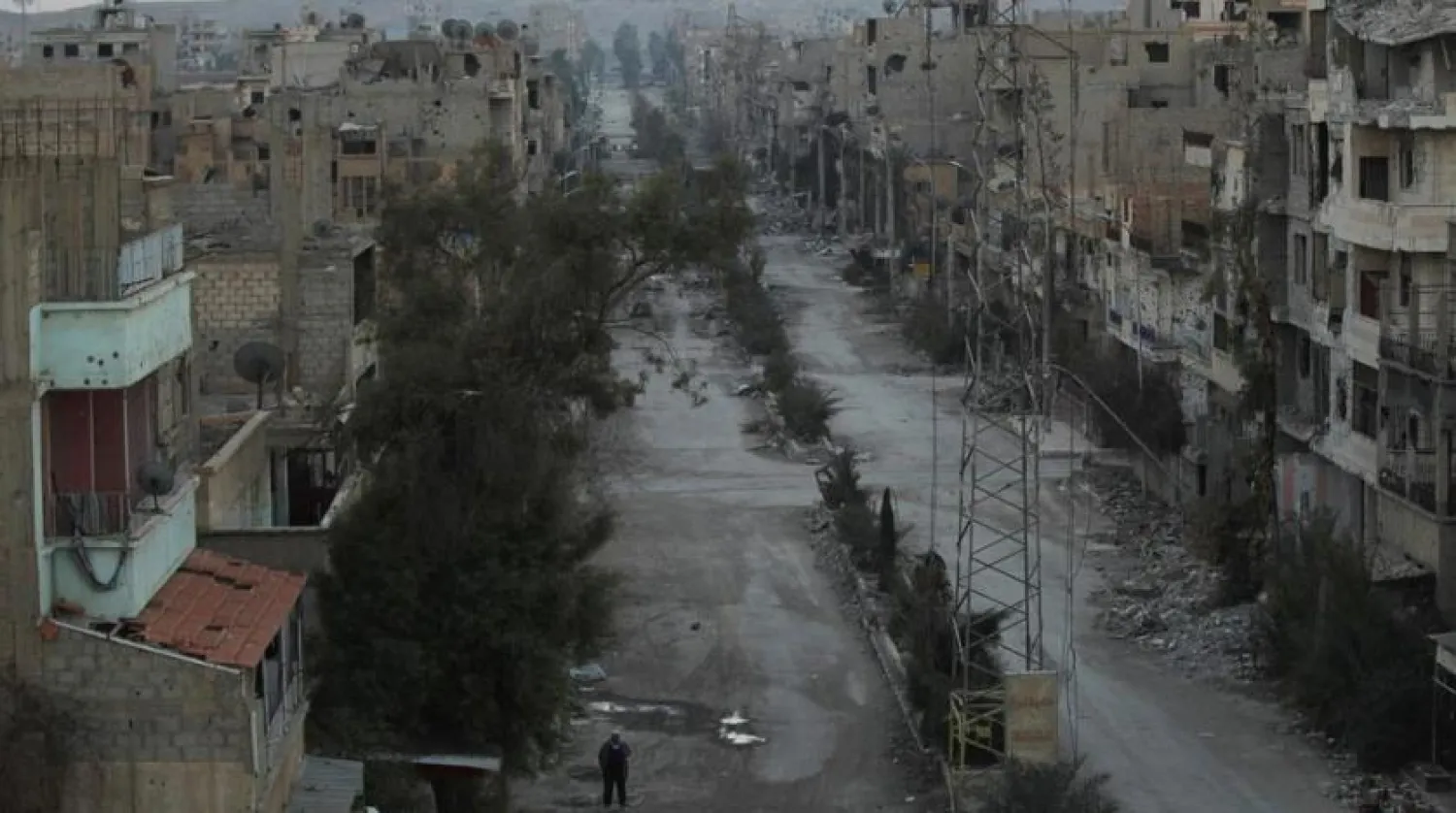
A man walks along a deserted street filled with debris in Deir Ezzor, eastern Syria February 14, 2014. REUTERS/Khalil Ashawi/File Photo
TT

Syria: Iran Renames Streets in Sayyidah Zaynab Area

A man walks along a deserted street filled with debris in Deir Ezzor, eastern Syria February 14, 2014. REUTERS/Khalil Ashawi/File Photo

Iranian-affiliated organizations have obtained approvals from the Syrian authorities to change street names in Sayyidah Zaynab area, southern Damascus, according to sources with knowledge of the matter.

The opposition Shaam network explained on Saturday that Iranian parties have implemented a project to repair road junctions and roundabouts in Sayyidah Zaynab area, noting that it included renaming them in agreement with their project in the area.

These changes included several streets and public facilities. “Al-Tin” Street has become “Al-Hawra” Street, “Al-Qaws” Street is now named “Basil al-Assad” Street and “Al-Maghasil” Roundabout has become “Al-Buti” Roundabout. They also named a street “Fatimiyah”.

The site further pointed out that the team assigned by the Iranian Revolutionary Guards Corps in Syria obtained approvals from higher regime authorities to rename “Qabr Essit” area to become “Sayyidah Zainab” city.

Earlier in October, Iran changed the names of a number of ancient streets in the eastern countryside of Deir Ez-Zour, replacing them with the names of their leaders and symbols written in Arabic and Persian.


Yemen: Houthi Losses Near 3,000 in Four Days

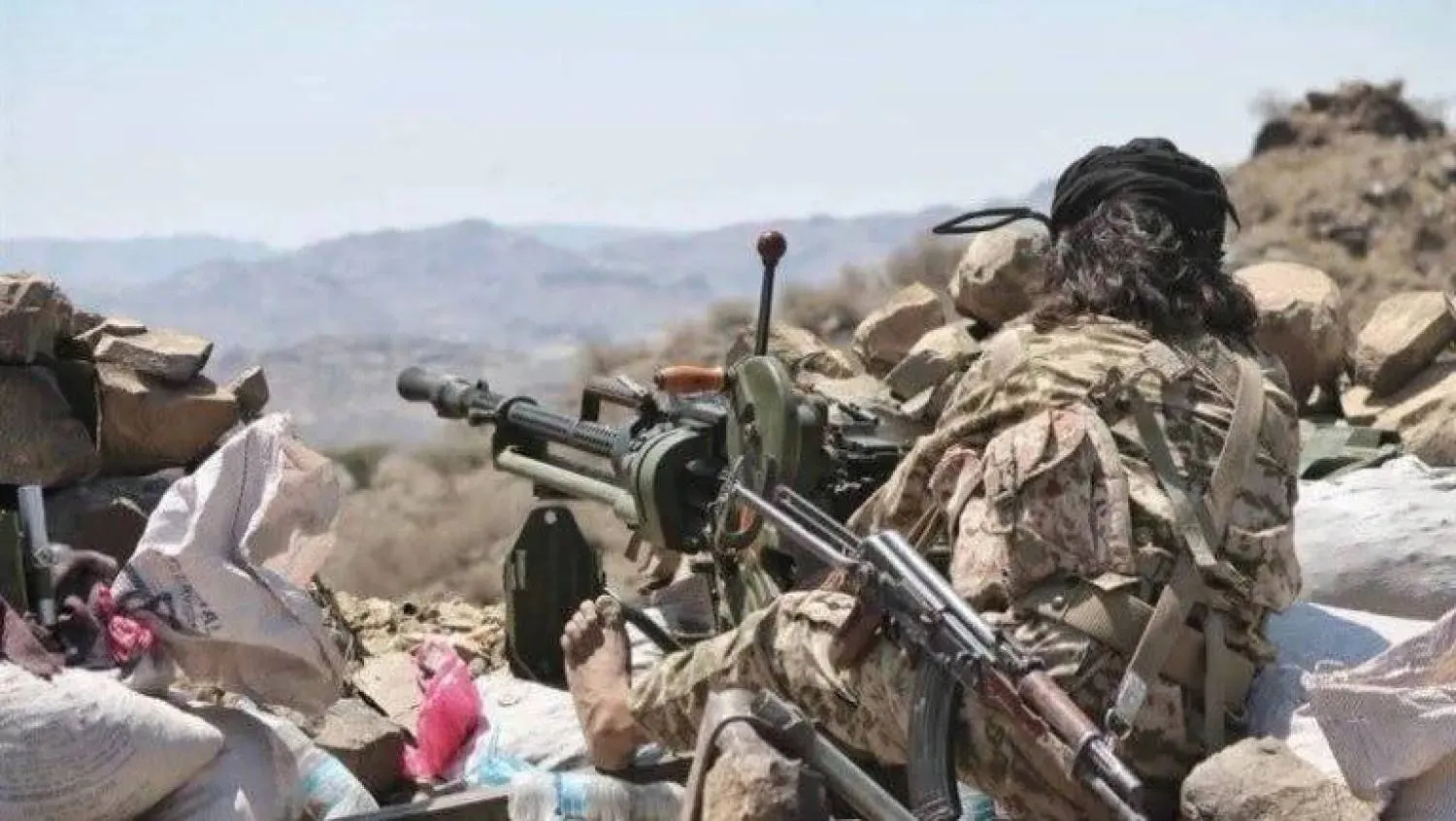
Fierce Houthi attacks on the Taiz and Lahj fronts are countered by Yemeni government forces (Military Media) 
TT

Yemen: Houthi Losses Near 3,000 in Four Days

Fierce Houthi attacks on the Taiz and Lahj fronts are countered by Yemeni government forces (Military Media) 

Losses inflicted on the Iran-aligned Houthis have risen to nearly 3,000 killed and wounded over four days, according to figures announced by Yemen’s armed forces, as fighting continues on several fronts and attacks, infiltration attempts and flanking maneuvers intensify, particularly in Taiz, Lahj and Bab al-Mandab.

The latest toll came after the Yemeni armed forces announced 356 strikes over 24 hours, which they estimated had killed or wounded 476 Houthi fighters and destroyed command-and-control centers, weapons and artillery depots and dozens of military vehicles.

Armed forces spokesman Col. Majed Al-Nuzaili said Sunday evening that 2,316 Houthis had been killed or wounded over 72 hours in 756 strikes on fronts in Kitaf, Al-Buqa, the Alab axis, Al-Jawf, Marib, Al-Bayda, Lahj and Taiz.

The figures brought the announced four-day toll to more than 2,792 killed and wounded, before accounting for additional losses reported by other field sources during the same period.

Much of the latest fighting was concentrated in western Taiz and areas linking the province with Lahj and Bab al-Mandab. Government forces battled Houthis in Al-Wazi’iyah, thwarted an infiltration attempt north of Taiz with artillery fire and repelled a flanking maneuver on the Kahbub front.

In Jabal Habashi, government forces said they repelled a Houthi attack on the Bani Bakari front, while clashes and exchanges of fire were reported on the Rasin and Al-Alaqma fronts south of Taiz.

Military sources said government forces carried out air and artillery strikes on Houthi positions and reinforcements in Al-Rubaie, Al-Ja’sha, Al-Zaybiyah and Al-Bahabah, while a Houthi drone was downed over Al-Kadahah.

The Taiz Military Axis Media Center reported 12 Houthis killed and 13 wounded across the axis’s fronts, as well as an armored vehicle and a military vehicle set ablaze in Al-Kadahah and a tank destroyed in Al-Rubaie.

Warplanes also targeted a ballistic missile launch platform on Jabal Oman east of Taiz, while government forces said they eliminated a Houthi group attempting to infiltrate the Air Defense front northwest of the city. Airstrikes also hit the Jalilah camp near Taiz airport in Al-Hawban.

Fighting extended to the Al-Subaiha fronts in Lahj, where Houthis launched simultaneous attacks on the Al-Muhawala and Al-Aghbarah fronts. Field sources said government forces, backed by tribesmen, repelled the advances and captured two Houthi fighters.

The Houthis continued sending reinforcements toward the front lines, particularly around Mawiyah Junction, Rasin and Al-Alaqma, from Sanaa, Amran, Dhamar and Ibb.

Government forces, meanwhile, intensified air and artillery strikes on supply lines and assembly points in an effort to contain Houthi attacks and prevent limited breaches from being consolidated into fixed positions.


US-led Coalition Ends Mission in Iraq

The Iraqi government believes the coalition's withdrawal removes the excuse powerful Tehran-backed militant factions have used to retain their weapons. AHMAD AL-RUBAYE / AFP
TT

US-led Coalition Ends Mission in Iraq

The Iraqi government believes the coalition's withdrawal removes the excuse powerful Tehran-backed militant factions have used to retain their weapons. AHMAD AL-RUBAYE / AFP

After more than a decade, the US-led coalition is ending its mission in Iraq, having helped save the country from extremists while causing persistent friction.

Coalition troops deployed to Iraq and Syria in 2014 to fight the ISIS group, which had seized large swathes of both countries and committed massacres and atrocities, AFP said.

The group was defeated in Iraq in 2017 and in Syria in 2019, but coalition forces stayed on to battle the group's remnants.

Baghdad and Washington agreed in 2024 to wind down the coalition's mission, and its troops withdrew gradually from bases across the country, restricting their presence to the autonomous northern Kurdistan region.

Their final withdrawal from there is scheduled on Wednesday.

The Iraqi government believes the coalition's withdrawal removes the excuse powerful Tehran-backed militant factions have used to retain their weapons.

Iraqi Prime Minister Ali al-Zaidi declared that October 1, the day following the coalition's departure, should be celebrated as Sovereignty Day.

It is "a national occasion that affirms the completion of Iraq's path toward sovereignty and consolidates the presence of the state and its institutions", the heads of the executive, legislative and judicial branches said on Monday.

They added that "the presence of weapons outside state authority must be addressed... in line with timelines set by the government, in a manner that strengthens state sovereignty".

- For the good of its people -

Zaidi, who came to power this year with the US's blessing, has vowed to reinforce the state's monopoly on arms and ensure that armed factions hand over their weapons to the state.

His government initially set September 30 as the deadline for factions to disarm, but later withdrew the time limit as talks continued to "regulate" weapons -- an issue that has fueled tensions and is expected to take much longer to resolve.

With several powerful groups refusing to disarm, senior politicians have intervened and are now hoping to work out a compromise deal.

Factions have put forward conditions that include not only the withdrawal of foreign troops, but also an end to American political and economic interference.

The powerful Kataeb Hezbollah group said in a statement Monday that the withdrawal of "the occupation forces... is a start towards achieving full sovereignty".

But the group also threatened Zaidi's government.

"A government that doesn't work for the good of its people will be brought down by all possible means," it said.

During the battle against ISIS, both the US-led coalition and Tehran-backed factions fought the extremists, their common enemy.

But after ISIS's defeat, the presence of the coalition turned into a persistent point of contention between Iraqi authorities and the factions.

Those groups demanded the withdrawal of US troops and began targeting them with drones and missiles, triggering US retaliatory strikes that killed several faction commanders over the years.

During the Middle East regional war, Iran and its allied factions intensified their attacks, targeting US-led troops in the Kurdistan region.

Kurds in Erbil, capital of the Kurdistan region, told AFP they are increasingly anxious about who will protect them from drones that have repeatedly targeted their autonomous canton, once the coalition interceptors leave.

The coalition left Syria earlier this year.


Syria Says Arrested Hezbollah-Affiliated Cell Planning Attacks

Syrian Internal Security Forces during the security operation against the Hezbollah cell. (Syrian Internal Security Forces on X)
TT

Syria Says Arrested Hezbollah-Affiliated Cell Planning Attacks

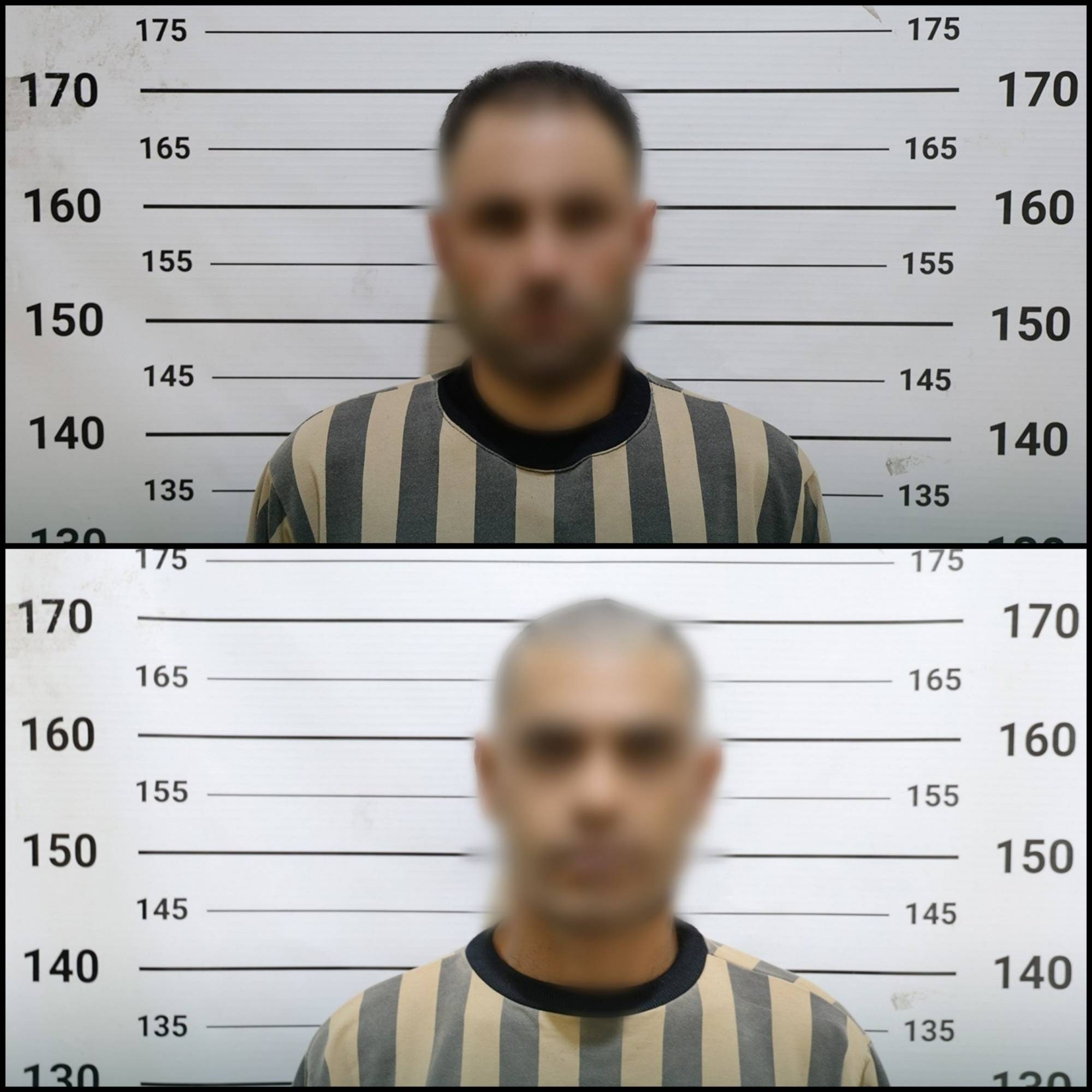
Syrian Internal Security Forces during the security operation against the Hezbollah cell. (Syrian Internal Security Forces on X)

Syrian authorities said on Tuesday that they had arrested a Hezbollah-affiliated cell in the country's south near the Israeli-occupied Golan Heights, accusing it of planning attacks on unspecified targets.

The new authorities in Damascus, who ousted longtime ruler Bashar al-Assad in 2024, are hostile to the Lebanese group, which is a sworn enemy of Israel and fought on Assad's side during the Syrian civil war.

Tuesday's announcement came hours after Israeli Prime Minister Benjamin Netanyahu said there were "indications" that Israel's enemies could try to attack ahead of elections scheduled for late October.

Syrian intelligence services and security forces "thwarted a sabotage plot in the Yarmuk basin in Daraa (province) and arrested a Hezbollah-affiliated cell composed of three individuals", Syrian state television reported, quoting a statement from the internal security forces.

A suspect detained in the security operation. (Syrian Internal Security Forces on X)

The Yarmuk basin area, where state media has previously reported Israeli incursions and shelling, borders the Israeli-annexed Syrian Golan Heights, as well as Jordan.

"The operation followed careful monitoring of an attempt by the cell to prepare rocket launch platforms with the aim of carrying out attacks to destabilize security and stability," the statement said.

It did not specify the target of the alleged planned attacks and said investigations were ongoing.

Syrian authorities have previously said they dismantled several Hezbollah-linked cells preparing attacks in Syria, accusations the group has denied.

Authorities have also previously announced several seizures of weapons they said were bound for Hezbollah, which lost a key supply route from its backer Iran when Assad was toppled.

In recent weeks, Netanyahu and Israeli Defense Minister Israel Katz have issued repeated warnings to Iran and Hezbollah promising retaliation in case of any attack.

Hezbollah drew Lebanon into the Middle East war in March with rocket fire at Israel, which responded with airstrikes and a ground invasion.

Suspects detained in the security operation. (Syrian Internal Security Forces on X)

The latest war and a previous round of hostilities with Israel in 2023-2024 have weakened the group.

Israel has carried out hundreds of strikes in Syria since Assad's ouster and sent troops into a UN-patrolled buffer zone that had separated Israeli and Syrian forces in the Golan since 1974.

It has also carried out repeated incursions deeper into Syrian territory and has vowed to keep troops in a so-called "security zone" in southern Syria, where it seeks a broader demilitarized area.

Israel captured most of the Golan Heights from Syria in the 1967 Arab-Israeli War and later annexed the areas under its control, a move only recognized by the United States and Colombia.