


Arab Publishers: Bet on The E-Book

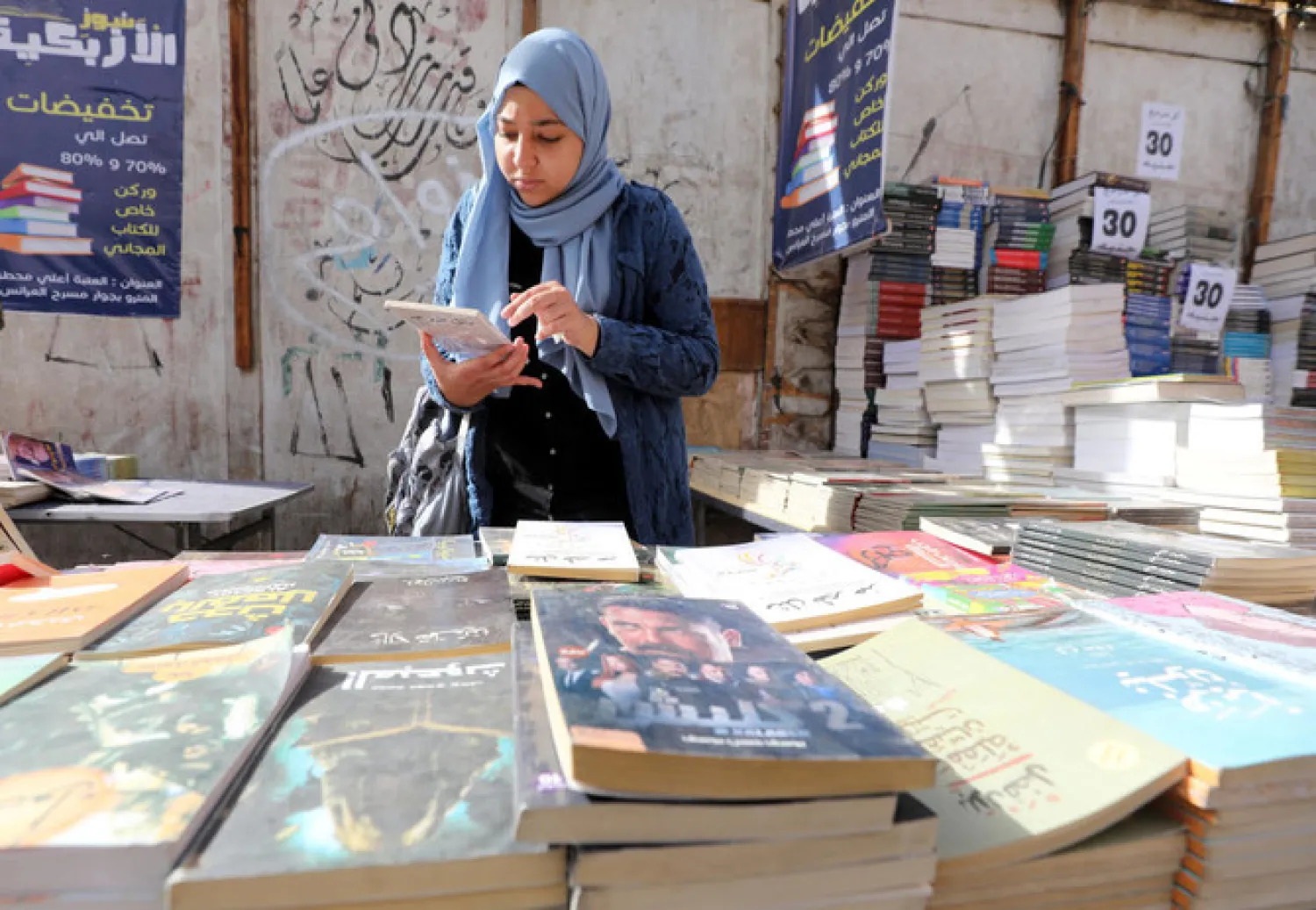
A woman checks a book at the historic Al-Azbakeya book market in Cairo, Egypt January 15, 2019. (Reuters)
TT

Arab Publishers: Bet on The E-Book

A woman checks a book at the historic Al-Azbakeya book market in Cairo, Egypt January 15, 2019. (Reuters)

Like many other trades that have been gravely impacted by the coronavirus pandemic, the Arab publishing industry faces serious questions on post-pandemic recovery, the birth of pandemic-inspired visions, and dealing with new demand.

Apart from new interests shaping readership trends in a post-Covid-19 world, the Arab publishing industry finds its policies challenged by developments brought about by the pandemic. Will the industry stick to publishing lists it had already prepared before the pandemic or will it revise all the material?

Abdulqadir Arabi, head of the Marrakesh-based Afaq Library for Studies, Publishing and Communication, said that Morocco’s national publishing industry will not recover before the end of 2021.

“Nothing is new in the publishing sector,” Arabi added, explaining that publishing houses have been struggling to push out accumulated material.

As for the pandemic triggering change in readership bases, Arabi said that there are no indicators showing transformation in the Moroccan reader’s interest.

Khaled Bin Abdulaziz al-Ateeq, the CEO of the “Mdarek” publishing and distribution company and member of the cultural and entertainment committee at the Riyadh Chambers, said that the Saudi publishing sector, for the time being and the near future, is trying hard to cut losses and avert damage.

Mdarek is seeking innovation in marketing and finding new ways to reach readers, al-Ateeq noted.

He revealed that the company is engaged in e-commerce and has been marketing its publications online.

Online sales for Mdarek have improved slightly during the last period, al-Ateeq confirmed, but went on to explain that it only covers 10% of what the company makes in a single international book fair.

Fahed al-Ouda, who is a representative of the Saudi-Kuwaiti “Kalemat” publishing house, emphasized that there has been a shift in direction caused by low sales in print books.

“We have boosted e-services and launched multiple awareness campaigns that promote reading,” al-Ouda said, adding that Kalemat also increased its social media presence.

Musfer al-Subaiye, general director of Saudi Arabia’s Arab Literature Center, also known as “Adab Book,” drew attention to increased demand for e-books which have taken the market by storm as a better and more cost-effective option compared to hard copies.


Greece’s Oldest Modern-Era Museum Reopens on the Acropolis After a Major Restoration

Visitors tour the Acropolis, with the old Acropolis Museum on the left and the Parthenon on the right, as Greece's Culture Ministry presents the museum's reopening following renovation and conversion to new uses, in Athens, Greece, Monday, Nov. 23, 2026. (AP)
TT

Greece’s Oldest Modern-Era Museum Reopens on the Acropolis After a Major Restoration

Visitors tour the Acropolis, with the old Acropolis Museum on the left and the Parthenon on the right, as Greece's Culture Ministry presents the museum's reopening following renovation and conversion to new uses, in Athens, Greece, Monday, Nov. 23, 2026. (AP)

A museum that has stood on the Acropolis since 1874, making it the oldest in modern Greece, reopened Monday after a high-tech makeover.

The squat stone building often goes unnoticed by visitors. It had been closed to the public since 2007, three years before the country was plunged into a massive financial crisis.

The seven-year restoration cost 6.2 million euros ($6.8 million), raised through public funds and private donations, Culture Minister Lina Mendoni said.

The site will host ancient artifacts never before exhibited, digital displays tracing the monuments’ 2,500-year history and a viewing gallery where Culture Ministry technicians will carry out restoration work on ancient objects.

The museum opened in 1874, making it the first museum purpose-built since modern Greece gained independence several decades earlier.

It closed in 2007, becoming an administrative building after cranes carefully lowered its renowned sculptures and other masterpieces to the new Acropolis Museum at the foot of the hill.

“For us, it was inconceivable, almost an affront, that this historic building, with its uniquely privileged location, should be converted into offices and storerooms,” Mendoni said.

“We therefore decided that the museum should reopen in accordance with its original purpose,” she said.

The Parthenon and other temples on the Acropolis remain Greece’s most visited ancient site, with more than 4.6 million admissions recorded last year.

Restoration work continues even during the peak summer months. The Parthenon recently shed its heavy scaffolding for the first time in years.

Prime Minister Kyriakos Mitsotakis attended Monday’s inauguration and described the reopening as another milestone for Greece’s cultural heritage.

He used the occasion to restate Greece’s long-running demand for the return of the Parthenon Sculptures held by the British Museum in London.

“The rightful home of these priceless masterpieces is here, beneath the Attic light and in direct proximity to the temple to which they belong,” he said, adding that Greece would not accept the return of the sculptures as a loan.

“No solution and no agreement can be based on the recognition of foreign ownership over our national treasures,” Mitsotakis said.

“I reaffirm my commitment that we will continue this effort with responsibility, seriousness and determination,” he added. “And in the end, we will succeed.”


Saudi Arabia's History, National Heritage Showcased at 'Bridge of Civilizations' Art Exhibition in Cairo

The exhibition features more than 60 visual artists from Saudi Arabia, Egypt, and Russia. (SPA)
TT

Saudi Arabia's History, National Heritage Showcased at 'Bridge of Civilizations' Art Exhibition in Cairo

The exhibition features more than 60 visual artists from Saudi Arabia, Egypt, and Russia. (SPA)

The "Bridge of Civilizations" art exhibition opened in Cairo, highlighting the power of art to foster closer ties between civilizations and peoples, reported the Saudi Press Agency on Monday.

The exhibition features more than 60 visual artists from Saudi Arabia, Egypt, and Russia, with prominent artists and art enthusiasts in attendance.

At the three-day exhibition, around 30 Saudi visual artists will present a diverse collection of works highlighting the Kingdom's history, national symbols, and heritage passed down through generations.

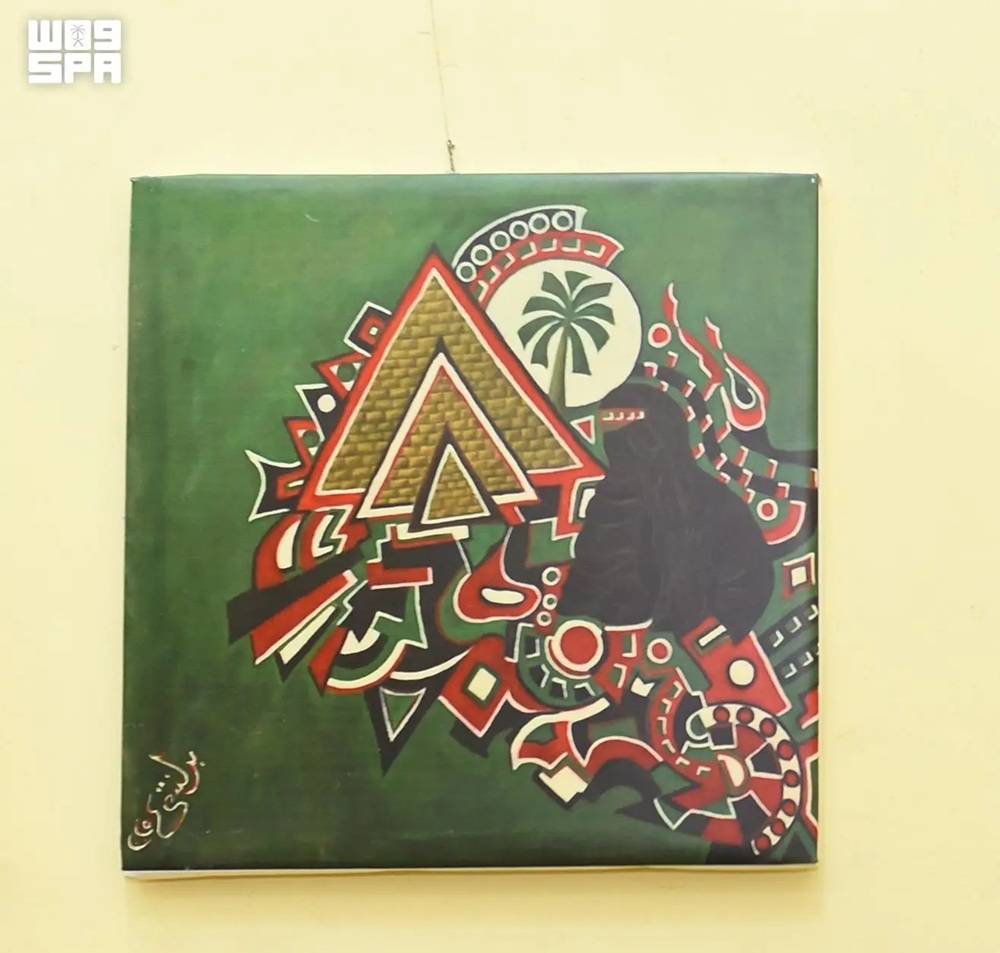
An artwork featured at the exhibition in Cairo. (SPA)

The Saudi artists' paintings document Islamic heritage, the Prophet Muhammad's biography, and historical sites associated with the Two Holy Mosques. They also highlight the Kingdom's development achievements, including the Haramain High Speed Railway, as well as its cultural and architectural heritage, such as Najdi Sadu weaving and Al-Masmak Palace.

Participating Saudi artists told SPA that they aim to introduce audiences to the Kingdom's history, identity, and heritage through contemporary artistic approaches while highlighting the development of visual arts in Saudi Arabia.


Red Sea Museum Showcases Jeddah's Black Coral Prayer-Bead Making Heritage

The gallery also features a wall displaying shells, molluscs and pieces of coral from the Red Sea - SPA
TT

Red Sea Museum Showcases Jeddah's Black Coral Prayer-Bead Making Heritage

The gallery also features a wall displaying shells, molluscs and pieces of coral from the Red Sea - SPA

The Red Sea Museum represents a valuable addition to Jeddah's cultural and tourism landscape, offering an educational experience that brings the history of the Red Sea to life and highlights Saudi Arabia’s rich civilization and cultural heritage associated with navigation, trade and Hajj.

As one of Saudi Arabia’s prominent cultural and educational destinations, the museum presents art exhibitions and cultural and educational programs that explore the history and civilization heritage of the Red Sea and document its connection with navigation, trade and human life through experiences that bring together visual arts, architecture, cinema and storytelling, SPA reported.

The Red Sea Museum showcases the craft of prayer-bead making. An identification label accompanying a set of prayer beads made from black coral on display at the museum bears the name of craftsman Ahmed Al-Halabi, who made the beads in Jeddah. The beads tell part of his family's history, as it is one of the oldest families known for this craft in the city.

The gallery also features a wall displaying shells, molluscs and pieces of coral from the Red Sea.

Visitors can observe coral in its natural form before seeing how the craftsman shaped black coral into beads, threaded them together to make a string of prayer beads, and designed them to pass smoothly between the fingers.
