Zlatan Ibrahimovic, the Lion of Milan: 'He's 90% of That Team'

Zlatan Ibrahimovic celebrates scoring Milan’s goal at Napoli last month. He scored twice in a 3-1 win.
Photograph: Ciro de Luca/Reuters
Zlatan Ibrahimovic celebrates scoring Milan’s goal at Napoli last month. He scored twice in a 3-1 win. Photograph: Ciro de Luca/Reuters
TT

Zlatan Ibrahimovic, the Lion of Milan: 'He's 90% of That Team'

Zlatan Ibrahimovic celebrates scoring Milan’s goal at Napoli last month. He scored twice in a 3-1 win.
Photograph: Ciro de Luca/Reuters
Zlatan Ibrahimovic celebrates scoring Milan’s goal at Napoli last month. He scored twice in a 3-1 win. Photograph: Ciro de Luca/Reuters

Sometimes Mino Raiola will walk over his client Zlatan Ibrahimovic. “While he’s doing a workout I just stand on him for a moment,” says the player’s agent, “and I’m not the lightest person. But Zlatan just continues with his push-ups.”

The Sweden striker is now 39 and for the vast majority of players who have played at the very top of the game over a long career retiring from a rigid training regime would be long overdue at such an age. But Ibrahimovic is playing at Milan this season as if he had just entered the spring of his career.

According to Raiola, Ibrahimovic is far from finished. “I won’t let him stop playing until he has to get carried off the pitch on a stretcher. He can continue until his 50th, but he only wants to play at the highest level,” says the agent. “You can see he can continue for the time being. He resuscitated all of Milan, he’s 90% of that team.”

Going into the weekend fixtures Milan are top of Serie A, one point ahead of the city rivals, Internazionale. Ibrahimovic has played 29 games since his return to San Siro in January. La Gazzetta dello Sport splashed him on its front page in royal costume. He was player of the month in October, when he struggled with Covid-19.

Shortly afterwards, a video appeared with Ibrahimovic warning the Lombardy region of the virus in his own way: “Corona challenged me but I won. But remember: you are not Zlatan, be careful.”

A year ago he was playing at LA Galaxy following a stint with Manchester United. The MLS is often regarded as the final hurrah for a top player. Yet he scored 52 goals in 56 appearances in the United States. And since his return to Milan for a second spell, he has revitalized the club. He has scored 20 goals in 24 games, including two critical goals in October’s Milan derby. He should be back from injury on Sunday when Milan take on Sassuolo.

In a sense, the veteran has become Milan’s figurehead. Udinese’s Dutch defender Bram Nuytinck is in awe of his impact. “Milan is Zlatan,” he says, echoing Raiola’s bold claim. “The squad has been incomparable since he returned. There is just really something special in the side now; a piece of power, quality, technique, and appearance.

“He still picks up balls from two meters high with his foot from the air like it’s nothing.”

Nuytinck says of Udinese’s match last month: “It was just as difficult to play against him as the times I played against him before [in 2013 and 2017]. Normally you force yourself to win man-on-man duels. You don’t have to do it with him, he just uses your body to win the ball.”

Nuytinck was missing against Milan because of an injury when Ibrahimovic scored an acrobatic late winner. Without fans in the stadium, it was possible for the defender to hear Ibrahimovic urging his teammates: “Don’t play that ball back, I need it here,” Nuytinck says: “All the players listen to him. He enforces that by winning so much, still being so motivated and still having such an impressive physique.”

Jörgen Becke, Ibrahimovic’s fitness coach at his first club, Malmö, believed that the then 18-year-old “extremely lazy” Zlatan could deliver more power than the rest of his teammates and that his impressive trunk and side muscles were already on par with some of the best sprinters and high jumpers in Sweden at that time.

Over the years, Ibrahimovic became addicted to training. “I love to suffer through my training,” he told the Swedish newspaper Dagens Nyheter in 2015. “It has to be hard, preferably every day. It’s like driving a fast car. It doesn’t want to drive slow, it wants to go fast. That pressure comes from me and no one else. As soon as I don’t achieve what I want to achieve, I get disappointed. Everything I do has to be perfect.”

Raiola says: “He knows his body very well, has only become more extreme in that department. It is almost exact science the way he lives for his sport. He can work with any fitness coach, but is above all his own personal trainer.”

And those of others, too. Raiola recalls when he had agreed with a teammate to take a helicopter tour. “They were due to fly at 11 in the morning, had played a game the night before. So that teammate says: ‘OK then, I’ll be with you at half past 10.’ ‘No,’ said Zlatan, ‘you’ll be there at half past eight.’ ‘What do you mean?’ the teammate said. ‘Well,’ said Zlatan, ‘we’re going to train for two hours first.’”

Such commitment influences his much younger teammates, believes Ruud Gullit. “The others don’t want to be left behind when he’s ahead,” he says. “That is why his arrival has been so important to Milan.

“I was raised as a young player by Martin Haar at Haarlem, by Cruyff and Van Hanegem at Feyenoord. You don’t have that kind of leader on the field any more. But they are so important.”

In the US, Ibrahimovic missed “the intrinsic discipline”, Raiola says. “Those years were a pity, really. He wanted to live in LA with his family, but had difficulties there. They didn’t want to win there as much as he did. Even if he plays a computer game, Zlatan has to win.”

Gullit, a former LA Galaxy coach, says: “It’s hard to build a good team in that league. A number of players can earn more but the rest must remain below a salary ceiling. That gives you big differences in quality.”

Pele van Anholt had just left LA Galaxy when Ibrahimovic, on his arrival, took out an advertisement in the LA Times congratulating the city. “Dear Los Angeles,” it read, “you’re welcome.”

Van Anholt believes such an attitude did not go down well with all his fellow players: “What I understood from former teammates was that they had trouble with the stamp he was trying to put on everyone, including off the field. That was suffocating. In America people are very careful with their dealings, Zlatan is straightforward.”Anyone who opens up finds an ally for life. Mark van Bommel clashed regularly with Ibrahimovic during games. At half-time in a game between Sweden and the Netherlands, Ibrahimovic kicked a ball at the Dutchman and told him to be careful. When they became teammates at Milan, Ibrahimovic helped the equally fiery Dutchman to settle in. They became such good friends that Zlatan attended Van Bommel’s farewell game and the Dutchman called his dog, a burly Rhodesian ridgeback, Ibra.

Ibrahimovic has struck up a close connection with the young Alkmaar striker Myron Boadu, another of Raiola’s clients. “When they were in America for knee surgery, Myron saw Zlatan doing abdominal exercises already the day after his surgery,” says Raiola.

Boadu says Ibrahimovic treated him like a friend and Raiola adds: “Zlatan is like a fruit bowl but you have to get the fruit yourself.” What he means is that Zlatan has a lot of advice and knowledge to offer but you have to be open to it: the fruit is there, but it doesn’t walk up to you by itself. You have to go and get it.

Zlatan’s public statements are certainly not short on self-confidence. In 2020 he compared himself on social media with a shark (once), a lion (five times) and God (10 times, once calling himself half devil, half God). But such displays of bravado do not reveal the true Ibrahimovic, Raiola says. “There is a wink in everything he does. And there is a serious undertone to all winks.

“He challenges himself with those statements. He is unimaginably self-critical. Failure does not suit him, it will drive him crazy. He doesn’t want to play well once, he has to play well all the time. And not only him, the whole team has to. And he succeeds.

“Where was Paris Saint-Germain before he came? Where was Milan? He sets the standard those clubs will benefit from for years to come. Also because of the way he deals with adversity. He always finds the strength to keep going.”

A striking example was the recent game against Verona last month, he missed a penalty but made amends by scoring the equalizer in injury time. “After that goal,” Nuytinck says, “his head was full of disappointment because of that missed penalty kick. You think: ‘He’s 39 years old, won more than 30 trophies, has plenty of money but still so down over that miss …’”

Gullit also sees another side of Ibrahimovic. “He’s not arrogant at all, simply a very nice, friendly guy to deal with, but on the pitch he’s a phenomenon, a beast. I understand he wants to continue playing football. It is the best thing there is when you are still fit. Stress? No, Zlatan has no stress. He only gets better.”

Raiola believes Ibrahimovic still has much to offer the game, let alone a Milan side who are seeking to maintain their status as Serie A frontrunners. “He still has the strength, but because of his acquired reputation, he also has the power to pass something on to the next generation. That’s why he has to go on as long as possible.’

(The Guardian)


Saudi PIF Rewrites the 'Global Sports Economy'

The summit’s business and leadership platform brought together a group of prominent decision-makers and specialists. (Asharq Al-Awsat)
TT

Saudi PIF Rewrites the 'Global Sports Economy'

The summit’s business and leadership platform brought together a group of prominent decision-makers and specialists. (Asharq Al-Awsat)

Saudi Arabia’s investment presence in international sporting events is no longer limited to traditional forms of commercial sponsorships or one-off acquisitions. It has evolved into intellectual and strategic leadership that is reshaping the foundations of the global sports economy.

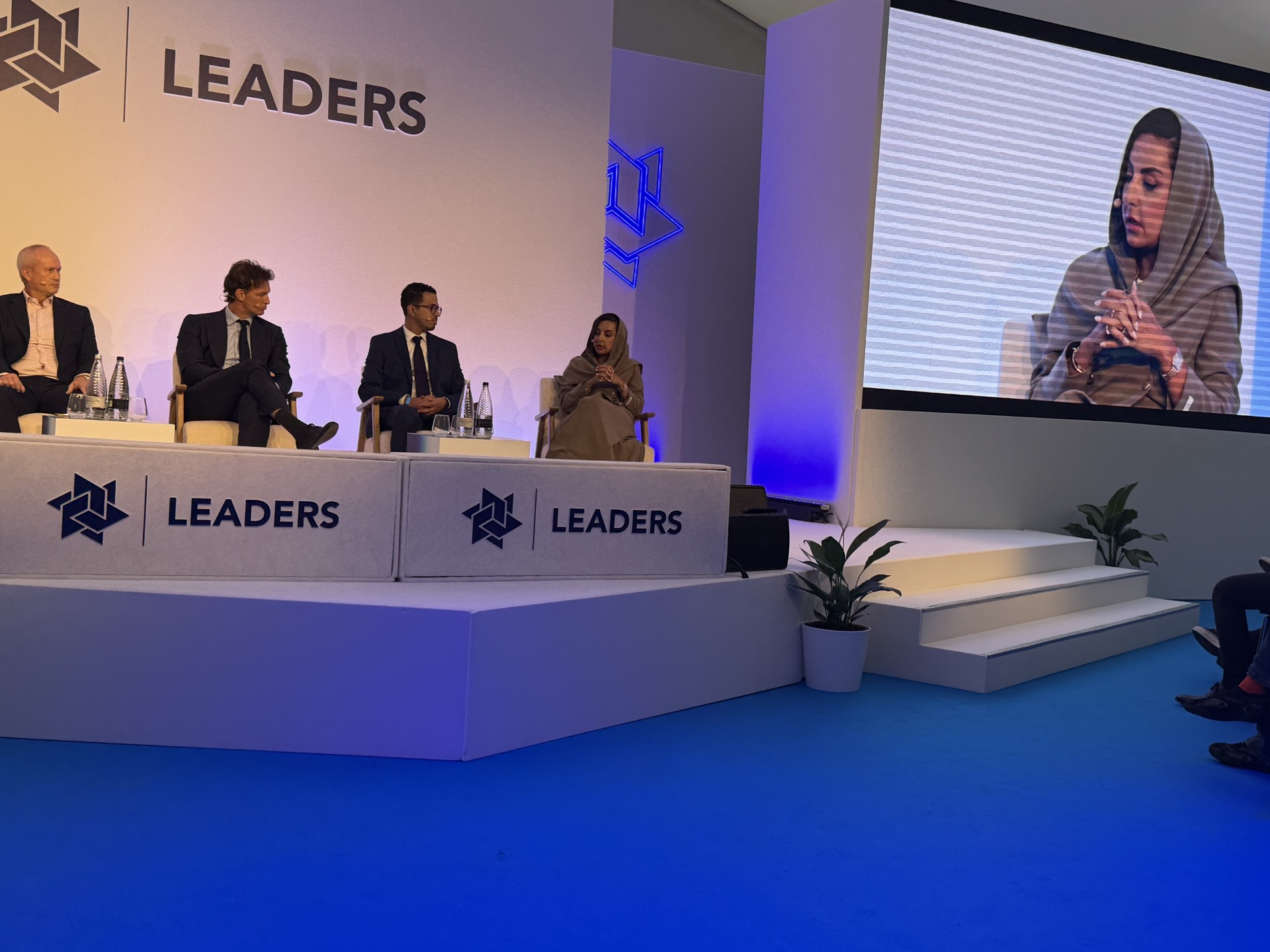
From the heart of the British capital, London, specifically at the historic Stamford Bridge stadium, which hosts the annual Leaders Week London summit, the high-level Saudi session reflected the depth of the structural transformation being led by the Kingdom and its effective shift from hosting seasonal events to creating a sustainable investment and development environment capable of shaping the future of the sector globally.

The special session, sponsored by the Public Investment Fund, highlighted how a “sporting superpower” can be built through a unique strategic integration of smart sovereign financing, major infrastructure development, and unprecedented operational excellence. This has made the Saudi experience a new economic benchmark aligned with the ambitions and targets of Saudi Vision 2030.

The summit’s business and leadership platform brought together a group of decision-makers and specialists leading this strategic transformation on the ground. Participants included Alanoud Althonayan, Head of Sponsorships and Events at the Public Investment Fund, and Feras Sheraiff, Head of Sports Investments for the Middle East and North Africa at the fund, who discussed the Kingdom’s financing dimensions and long-term economic vision.

On structural development and operational excellence at facilities, the session featured an extensive discussion with Xavier Campbell, CEO of radia, and Marc Archer, Executive Director of Sports Strategy and Partnerships at Qiddiya, highlighting how ambitious engineering and investment plans can be transformed into active assets that maximize returns and create sustainable opportunities.

Historically, most major investments in sports have focused on acquiring broadcasting rights or sponsoring the jerseys of major clubs to achieve rapid and temporary brand exposure. The current Saudi strategy, however, prioritizes investment in physical infrastructure to establish solid foundations for the sector. This transformation involves injecting unprecedented capital into the construction of modern stadiums, advanced training centers, and surrounding entertainment districts, based on an economic vision that considers ownership of advanced physical assets the only guarantee of attracting sporting elites, rights holders, and global sponsorship groups over the long term.

Qiddiya stands out as a key pillar and a living example of this structural vision. The construction of high-quality facilities such as the world-class racing circuit and the National Tennis Center, built to advanced engineering specifications, is not aimed merely at hosting a passing tour or tournament. Rather, it seeks to create a permanent infrastructure environment capable of hosting training camps and continental tournaments throughout the year, thereby increasing the investment efficiency of the real estate and sporting asset and transforming it into a productive and sustainable sector that generates tangible returns.

Countries that host major sporting events have historically faced a challenge known as “abandoned stadiums,” referring to large facilities that lose their function and vitality after competitions end and become a financial and administrative burden on governments. The Saudi model, however, has anticipated this challenge by focusing on operational excellence years before hosting major competitions.

This system was strengthened through the launch of radia, a company affiliated with SURJ Investment, which is owned by the fund, in partnership with global leaders in operations and entertainment such as Live Nation and Oak View Group, to ensure the continuity and vitality of events on a permanent basis.

The core philosophy of radia is to transform stadiums and sports arenas from facilities that operate only on seasonal match days into vibrant entertainment, cultural, and commercial destinations operating year-round without interruption.

This smart integration of sports and entertainment ensures sustainable financial flows that protect assets from declines in market value. At the same time, it contributes to creating thousands of permanent jobs for young Saudi talent in management, marketing, and hospitality, strengthening the local impact of sovereign investments.

Alanoud Althonayan, Head of Sponsorships & Events at the Public Investment Fund, speaks during the session (Asharq Al-Awsat)

Redefining Return Standards and Engineering Legacy Toward 4302

The Public Investment Fund’s investment vision has moved beyond traditional concepts of direct financial returns limited to ticket sales. The new Saudi benchmark is centered on making sports a major contributor to non-oil GDP, stimulating the sports tourism sector, and increasing the attractiveness of the domestic market to foreign investors.

This financial return is linked to a sustainable social impact, as investments contribute to increasing community participation in sports locally and developing an ideal environment for practicing them, which in turn improves the public health of citizens and creates a vibrant and active society.

The 2034 FIFA World Cup represents the most prominent milestone in these ambitions. However, the event is not viewed as a final objective whose implementation ends with the closing match. Instead, it is treated as a comprehensive development accelerator serving future generations.

All current investments discussed at the London summit, from stadiums to entertainment districts, are being designed to align with a clear and strict post-tournament plan, so that sports infrastructure will be immediately ready to support the growth of domestic leagues, make the Kingdom the Middle East’s leading regional hub for sports business, and create an integrated ecosystem capable of growing on its own.


Tsitsipas Advances to Shanghai Masters 2nd Round, Hurkacz Lines Up Djokovic

Greece's Stefanos Tsitsipas hits a return to Belgium's Kimmer Coppejans during their men's singles match at the Shanghai Masters tennis tournament in Shanghai on October 8, 2026. (Photo by Hector RETAMAL / AFP)
TT

Tsitsipas Advances to Shanghai Masters 2nd Round, Hurkacz Lines Up Djokovic

Greece's Stefanos Tsitsipas hits a return to Belgium's Kimmer Coppejans during their men's singles match at the Shanghai Masters tennis tournament in Shanghai on October 8, 2026. (Photo by Hector RETAMAL / AFP)

Two-time major finalist Stefanos Tsitsipas beat qualifier Kimmer Coppejans 6-3, 7-5 in the Shanghai Masters first round on Thursday, continuing his slow climb back up the ATP rankings.

Tsitsipas reached a career-high No. 3 ranking in 2021. He lost in qualifying at last week’s Japan Open. At his previous tournament, the US Open, he lost in the fourth round to eventual finalist Ben Shelton.

After slipping to No. 87 mid-year, Tsitsipas has worked his way up to 43. He next faces 18th-seeded Luciano Darderi.

Big-serving Polish player Hubert Hurkacz had 19 aces in a 6-3, 7-6 (4) win against James Duckworth and next plays No. 10 seed Djokovic, who won the China Open on Tuesday for a 102nd career title, The Associatec Press reported.

Bernard Tomic, a former world No. 16 whose ranking dropped to as low as 825 four years ago, qualified for an ATP 1000 main draw for the first time in seven years. He lost his first-round match to Matteo Arnaldi 6-3, 6-1.

The top seeds including Djokovic, US Open champion Alexander Zverev and third-ranked Carlos Alcaraz received first-round byes and were not scheduled to play until the weekend or later.

No. 1 Jannik Sinner withdrew from Shanghai this week when he announced he was taking the rest of 2026 off due to a right knee injury.


FIA to 'Strengthen' Software Testing after F1 Cars Stopped on Track in Malaysia

Air pollution is seen across the skyline as people prepare the street circuit before the Formula One Singapore Grand Prix night race in Singapore on October 8, 2026. (Photo by Lillian SUWANRUMPHA / AFP)
TT

FIA to 'Strengthen' Software Testing after F1 Cars Stopped on Track in Malaysia

Air pollution is seen across the skyline as people prepare the street circuit before the Formula One Singapore Grand Prix night race in Singapore on October 8, 2026. (Photo by Lillian SUWANRUMPHA / AFP)

The FIA has defended its handling of the Formula 1 car software bug which delayed the start of the Bahrain Grand Prix in Malaysia last weekend and pledged it will “strengthen” how the code is tested in future.

Several drivers, including seven-time champion Lewis Hamilton, were left stuck on track when their cars lost power and had to be restarted on formation laps before Sunday's race.

The on-board software failed to cope with drivers taking a more cautious approach ahead of the first wet race for the 2026 cars, which have a near 50-50 split between engine and electrical power.

The FIA, the governing body for F1, on Thursday said its investigation found that cars “experienced a loss of power beyond the original intent and that could not be recovered.”

After the cars were stuck on track, the start was suspended as the FIA rushed out a software update. The race eventually started almost an hour later, with no obvious software-related incidents, though the track had dried much more by then.

The FIA says that update will be used again if it rains at this week's Singapore Grand Prix — the forecast says that's likely — with more changes at the following race on Oct. 25.

“As a result, the configuration established for the Sepang event will be reinstated for the Singapore Grand Prix should similar weather conditions be expected,” The Associated Press quoted the FIA as saying.

“Additionally, a further update to the wet weather software will be released for the United States Grand Prix.”

The FIA added that it, the teams and engine manufacturers “will continue to strengthen power unit software testing and verification capabilities, enhancing the overall validation process through independent assessment and collaborative feedback.”

Drivers were scathing of the software bugs last week in Malaysia. Hamilton likened driving the sluggish cars to gimmicky pre-race exhibitions the drivers have done previously and four-time champion Max Verstappen called for a “lesson learned.”

The FIA said it had conducted testing on the software which failed last week, but that took place in two practice sessions which were largely dry ahead of races in Belgium and the Netherlands.