

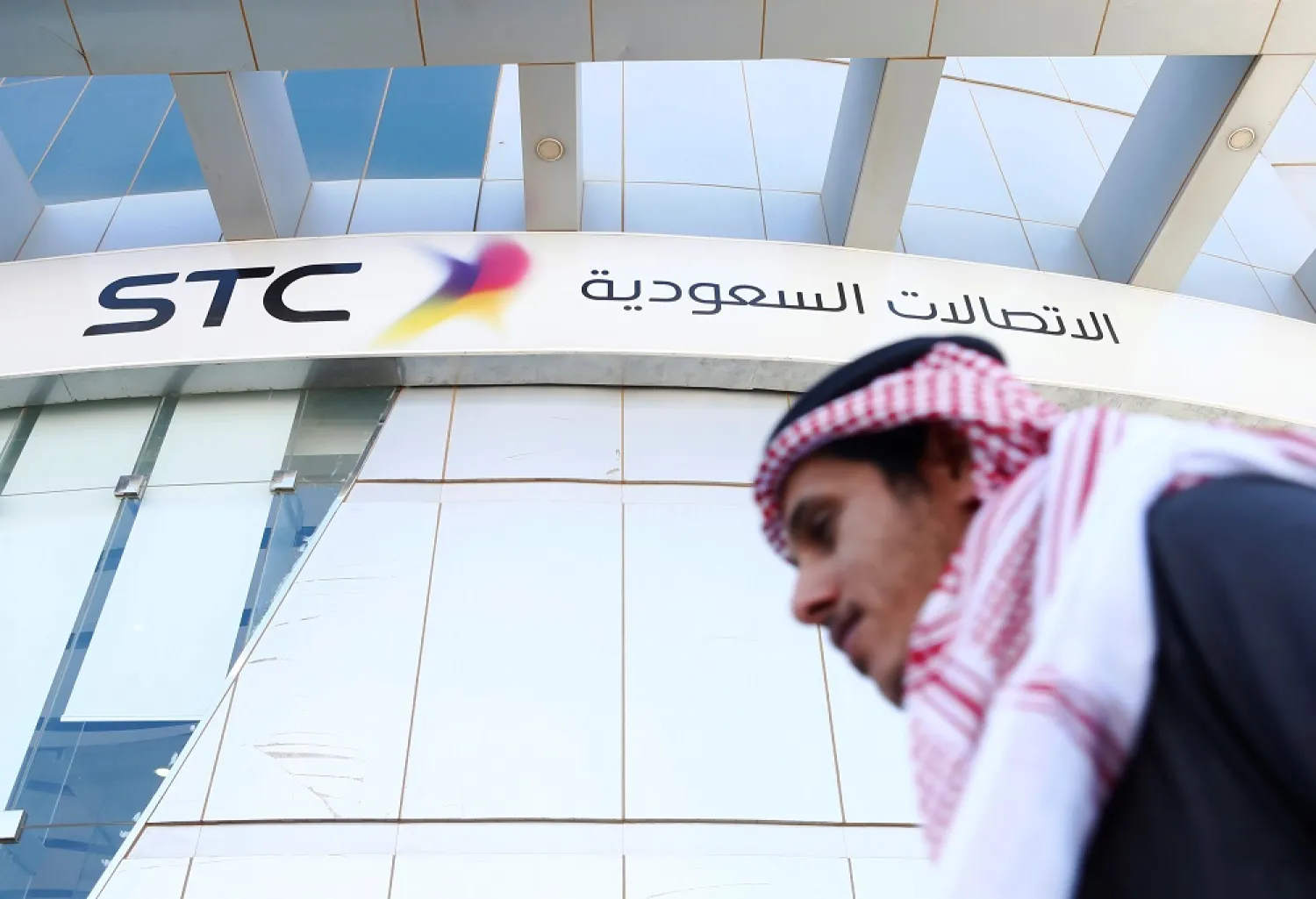

Saudi STC to Invest up to $500 Mln in Cloud Services with Partners

STC will invest up to $500 million over five years in cloud services in partnership with eWTP Arabia Capital fund and Alibaba Cloud company. (Reuters)
TT

Saudi STC to Invest up to $500 Mln in Cloud Services with Partners

STC will invest up to $500 million over five years in cloud services in partnership with eWTP Arabia Capital fund and Alibaba Cloud company. (Reuters)

Saudi Telecom Company (STC), the largest telecom operator in the Kingdom, and eWTP Arabia Capital, one of the largest venture capital funds in the region, jointly announced on Monday that they will partner with Alibaba Cloud, the digital technology and intelligence backbone of Alibaba Group to provide the high-performance public cloud service in Saudi Arabia.

The company views the Kingdom as the strategic epicenter of its operations in the region and is keen to make its contribution to Saudi Arabia’s Vision 2030.

Under this partnership, STC will be able to leverage the proven cloud-based technologies and services of Alibaba Cloud to accelerate the growth of local technology ecosystem, reported the Saudi Press Agency (SPA).

Alibaba Cloud is planning to invest in the Kingdom, up to USD 500 million over the next five years. The investment will including provide world-class comprehensive resources to help build sustainability and ensure localization.

In addition, a new office will be set up in Riyadh, to provide better services to local customers, also be the regional training and management center for next chapter.

As one of the world’s top cloud providers, Alibaba Cloud’s public cloud offerings will cover the latest advancements on the public cloud platform which have been used to support the business of Alibaba Group, taking the digitalization of local enterprises and SMEs to the next level.

“Saudi Arabia is a strategic market for us. Alibaba Cloud is committed to delivering our best-in-class services, solutions as well as our business practices in digital transformation to the partners and customers we work with in the Kingdom. We will invest and provide a wide range of resources to support our partners locally,” said Jeff Zhang, CEO of Alibaba Cloud Intelligence, Partner of Alibaba Group.

Minister of Communications and Information Technology Abdullah Amer Al-Swaha commented that MCIT would like to support companies with wise foresight such as Alibaba Cloud, and they look forward to Alibaba Cloud’s future performance and contribution to Saudi Arabia’s Vision 2030.

“This collaboration is a significant milestone for STC in our efforts to contribute to Saudi Arabia’s Vision 2030 by introducing a trusted cloud service partner,” he added. “It is pivotal for companies to deploy and maintain an elastic, scalable and secure IT infrastructure to keep competitive and innovative in the digital era.”

Nasser Bin Sulaiman Al Nasser, CEO of STC Group, said: “We are excited to partner with Alibaba Cloud to bring their expertise to our customers.”

Jerry Li, Managing Partner of eWTP Arabia Fund, said: “eWTP Arabia Capital is committed to ensure that this partnership makes a strong effort towards realization of Vision 2030 goals.”



OPEC+ Agrees in Principle on Theoretical Oil Output Hike amid Iran War Paralysis

FILE PHOTO: A model of an oil pump is seen in front of the OPEC logo in this illustration taken January 9, 2026. REUTERS/Dado Ruvic/Illustration/File Photo
TT

OPEC+ Agrees in Principle on Theoretical Oil Output Hike amid Iran War Paralysis

FILE PHOTO: A model of an oil pump is seen in front of the OPEC logo in this illustration taken January 9, 2026. REUTERS/Dado Ruvic/Illustration/File Photo

OPEC+ has agreed in principle to raise its oil output quotas by 206,000 barrels per day for May, three sources with knowledge of the group's talks said ahead of its meeting later on Sunday, a rise that will largely exist on paper as its key members are unable to raise production due to the US-Israeli war with Iran.

The war has effectively shut the Strait of Hormuz - the world's most important oil route - since the end of February and cut exports from OPEC+ members.
Some group members such as Russia are unable to increase output due to Western sanctions and damage to infrastructure inflicted during the war with Ukraine.

Inside the Gulf, damage to infrastructure from missile and drone attacks has also been severe. Several Gulf officials have said it would take months to resume normal operations and reach production targets even if the war stopped and Hormuz reopened immediately, according to Reuters.
Iran on Saturday said Iraq was exempt from any restrictions to transit the vital route, and shipping data on Sunday showed a tanker loaded with Iraqi crude passing through the strait. Still, it remains to be seen if more vessels will take the risk involved, a source close to the issue said.

Sunday's OPEC+ talks are set to start at around 1300 GMT with a gathering of ministers called the Joint Ministerial Monitoring Committee, which does not decide on output policy.

After this, eight members of OPEC+ hold separate talks having agreed in principle to raise output quotas by 206,000 bpd for May, the three sources said. This would be the same as the increase decided for April at their last meeting held on March 1, just as the war began to disrupt oil flows. A month later, the largest oil supply disruption on record is estimated to have removed as many as 12 to 15 million bpd or up to 15% of global supply. Crude prices have soared to a four-year high close to $120 a barrel. Oil prices could spike above $150 - an all-time high - if flows via Hormuz remain disrupted into mid-May, JPMorgan said on Thursday. A quota increase will have little immediate impact on supply but would signal readiness to raise output once Hormuz reopens, OPEC+ sources have said. Consultancy Energy Aspects called the increase "academic" as long as disruptions in the strait persist.


War Weighs on Egypt’s Private Sector as PMI Hits Near Two-Year Low in March

People walk past a closed cinema as shops close early under a government-ordered curfew aimed at reducing energy costs in downtown Cairo on April 2, 2026. (AFP)
TT

War Weighs on Egypt’s Private Sector as PMI Hits Near Two-Year Low in March

People walk past a closed cinema as shops close early under a government-ordered curfew aimed at reducing energy costs in downtown Cairo on April 2, 2026. (AFP)

Egypt's non-oil private ‌sector deteriorated at its sharpest pace in almost two years in March, as the Middle East war drove up costs and dampened client demand, a closely watched business survey showed on Sunday.

The headline S&P Global Egypt Purchasing Managers' Index fell for a fourth consecutive month, dropping to 48.0 in March from 48.9 in February — its lowest reading since April 2024.

The ‌figure remained below ‌the 50.0 threshold that ‌separates growth ⁠from contraction, though ⁠it was broadly in line with the survey's long-run average of 48.2.

Output and new orders were the chief drags on the index, with both measures also hitting their lowest levels for nearly two years. Firms frequently blamed ⁠the Middle East conflict for dampening client ‌demand, partly through ‌intensifying price pressures.

In a first, business expectations for the ‌coming 12 months slipped into negative territory, with ‌companies citing uncertainty over the war as a key reason for pessimism, though the degree of gloom was described as mild.

David Owen, senior economist at ‌S&P Global Market Intelligence, nevertheless noted that "the latest figure of 48.0 still relates ⁠to ⁠annual GDP growth of around 4.3%," adding that "recent data suggests the domestic non-oil sector is on a solid underlying growth path."

Cost pressures remained a serious concern, however. Input prices surged at their joint-sharpest pace in one-and-a-half years, as firms cited fuel costs and other war-related commodity price increases, compounded by a stronger US dollar.

In response, companies raised their selling prices at the fastest rate in 10 months, though the increase remained modest overall.


Middle East War Presents ‘Serious Risk’ for Africa, Warns Report

Festus Mwirotsi, 34, scouts for pests and diseases in roses meant for export at Isinya Roses farm in Kajiado, Kenya, March 24, 2026, as Kenya's flower industry is losing up to $1.4 million a week as the Iran war cuts demand and disrupts shipping. (AP)
TT

Middle East War Presents ‘Serious Risk’ for Africa, Warns Report

Festus Mwirotsi, 34, scouts for pests and diseases in roses meant for export at Isinya Roses farm in Kajiado, Kenya, March 24, 2026, as Kenya's flower industry is losing up to $1.4 million a week as the Iran war cuts demand and disrupts shipping. (AP)

The Middle East war "presents a serious risk to Africa", the African Union and the African Development Bank (AfDB) said in a report seen by AFP Saturday.

The conflict threatens to increase the cost of living and curtail growth on the continent, the report warned.

The Middle East accounts for 15.8 percent of Africa's imports and 10.9 percent of its exports, the report noted.

"The conflict, which already has triggered a trade shock, could quickly turn into a cost-of-living crisis across Africa through higher fuel and food prices, rising shipping and insurance costs, exchange rate pressures, and tighter fiscal conditions," it added.

The growth rate of most African countries continues to be slower than before the Covid pandemic, it noted.

"A loss in output growth of 0.2 percentage points on Africa's GDP is projected for 2026 if it (the conflict) exceeds six months," it said.

"The longer the conflict lasts and the more severe the disruption to shipping routes and energy and fertilizer supplies, the greater the risk of a significant growth slowdown across the continent."

Reduced deliveries of liquefied natural gas (LNG) from the Gulf will impact fertilizer production, limiting its availability during the crucial planting period up to May, it added.

- Currencies hit -

The report was compiled by the UN Development Program (UNDP) and the United Nations Economic Commission for Africa (UNECA).

According to recent data from the AfDB, the currencies of 29 African countries have already depreciated, increasing the cost of servicing external debt, making imports more expensive and reducing foreign exchange reserves,

Some countries could see some short-term gains, such as Nigeria for its oil exports or Mozambique for its LNG.

The rerouting of ships around Cape of Good Hope could benefit ports in Mozambique, South Africa, Namibia and Mauritius.

Kenya is establishing itself as a logistics hub in East Africa, while Ethiopian Airlines, the leading carrier in Africa, is serving as an "emergency air bridge" between the continent, Asia, and Europe, the report noted.

But these gains are likely to be uneven and will not offset the consequences for inflation, budgets, and food security in Africa, they warned.

Above all, the current crisis could hit the costs of humanitarian aid and divert donor funds towards other priorities.