


German Power Export Surplus Shrank 46.2% in 2020

German Power Export Surplus Shrank 46.2% in 2020
TT

German Power Export Surplus Shrank 46.2% in 2020

German Power Export Surplus Shrank 46.2% in 2020

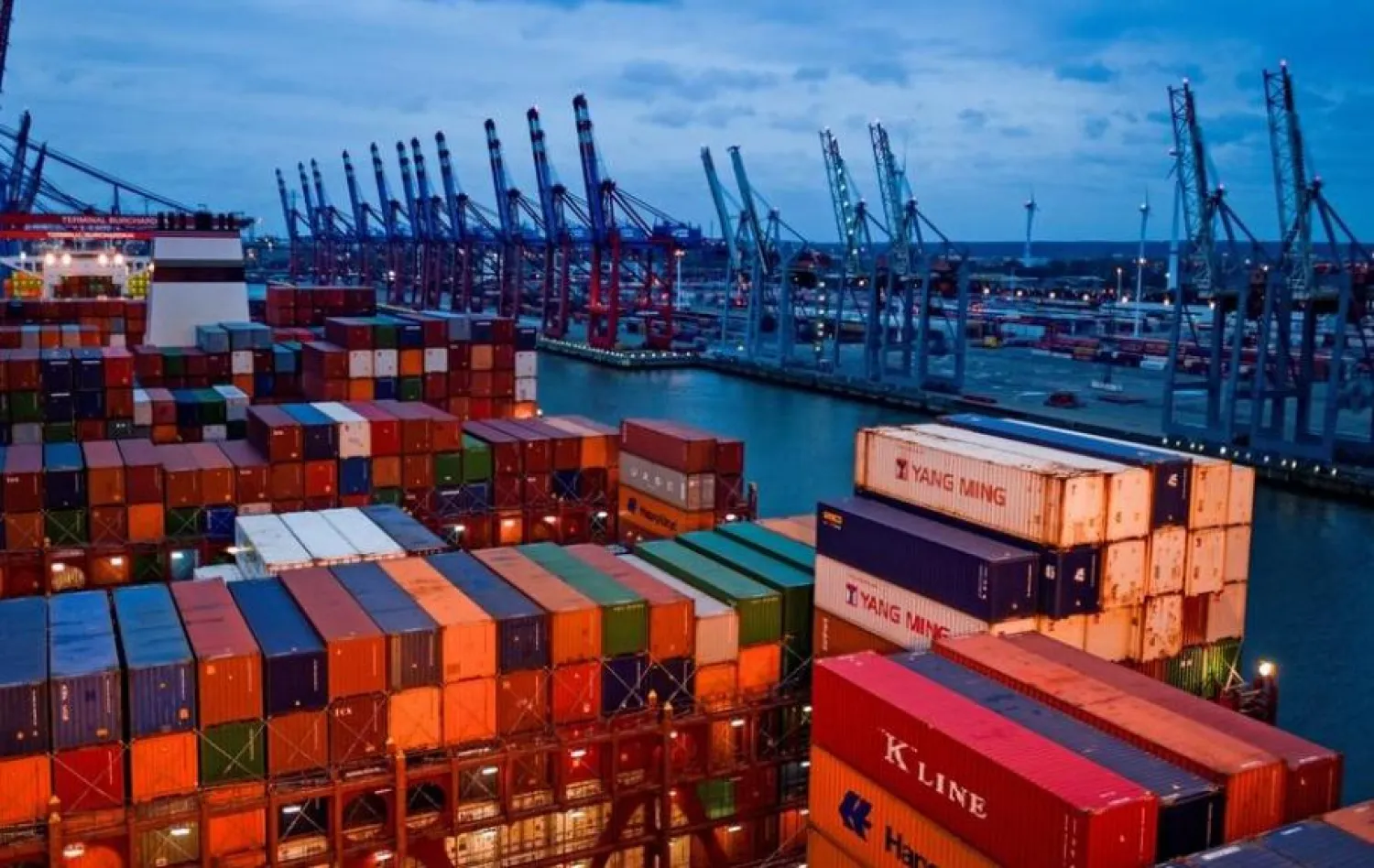
Germany saw its electricity export surplus shrink by 46.2% in 2020 to 18.9 terawatt hours (TWh), raising the prospect that its dependency on neighbors could rise in future as it switches off more coal and nuclear power stations, official data showed.

Power exports by Europe's biggest economy, which shares borders with nine countries, fell 11.6% to 52.5 TWh last year compared with 59.4 TWh in 2019, the energy regulator, called the Bundesnetzagentur, said in a publication on Saturday.

Meanwhile, electricity imports into Germany in 2020 increased by 38.8% to 33.6 TWh, compared with 24.2 TWh in the prior year.

Cross-border trade is especially strong with France, which still bets on nuclear power - shunned in Germany for safety concerns which resulted in its plan for a scheduled withdrawal.

Under the nuclear exit, three reactors out of Germany's remaining six are due to close at the end of 2021.

The country has also committed itself to ditching carbon-polluting coal generation by 2038 to meet climate protection obligations and decarbonize its energy systems.

Under exit deals agreed between the government and coal utilities last year, a total 4.8 GW of hard coal capacity stopped marketing its output as of Jan. 1, while the plants' existing delivery obligations will be worked off in early 2021.

Under a separate deal to pull out of brown coal, RWE decommissioned its Niederaussem D 300 MW lignite plant on Dec. 31.

Berlin's strategy entails rolling out more renewable capacity such as wind turbines and solar panels and to improve cross-border flows to spread localized and temporary supply risks.

Renewables did increase their share of power by 3.2 percentage points last year, arriving at 49.3%, the Bundesnetzagentur noted.

Germany also started up an interconnector with Belgium last November and a direct power cable link with Norway in December.



Euro Zone Inflation Soars Further Above ECB Target

FILE -Clouds cover the sky over the headquarters of the European Central Bank in Frankfurt, Germany, Sept. 11, 2025. (AP Photo/Michael Probst, File)
TT

Euro Zone Inflation Soars Further Above ECB Target

FILE -Clouds cover the sky over the headquarters of the European Central Bank in Frankfurt, Germany, Sept. 11, 2025. (AP Photo/Michael Probst, File)

Euro zone inflation surged further in April on soaring energy costs, Eurostat data showed on Thursday, adding to the case for interest rate hikes, even if benign underlying price growth figures ease the urgency of any move.

Inflation in the 21 countries sharing the euro currency jumped to 3.0% this month from 2.6% in March, moving further above the European Central Bank's 2% target, with energy costs accounting for the vast majority of the increase.

A closely watched figure ⁠on underlying or 'core' ⁠inflation, which excludes volatile food and energy prices, meanwhile slowed to 2.2% from 2.3% a month earlier.

Services inflation, a stubbornly high component of the price basket over the past several years, slowed to 3.0% from 3.2% while inflation for non-energy industrial ⁠goods, a key drag on prices picked up to 0.8%.

The figures are a mixed bag for the ECB, which is meeting on Thursday and will likely keep interest rates unchanged, even if it signals that policy tightening is increasingly likely, Reuters reported.

The high headline inflation print strengthens the argument for interest rate hikes but the underlying figures suggest that the initial energy shock is not yet creating major ⁠second round effects.

The ⁠ECB is largely powerless against an energy shock but must step in if these second round effects become visible as they risk creating a hard-to-break self-sustaining inflation spiral.

This is why investors expect the ECB to hike its 2% deposit rate already in June and see at least two more moves before the end of the year.

This outlook is volatile, however, and largely depends on developments in the Iran war and oil prices, which hit a four-year-high of $124 on Thursday.


TotalEnergies and Nextnorth Begin Building $300 Million Philippine Solar Farm

FILE PHOTO: The logo of French oil and gas company TotalEnergies is seen on a building in Rueil-Malmaison, near Paris, France, April 14, 2025. REUTERS/Stephanie Lecocq/File Photo
TT

TotalEnergies and Nextnorth Begin Building $300 Million Philippine Solar Farm

FILE PHOTO: The logo of French oil and gas company TotalEnergies is seen on a building in Rueil-Malmaison, near Paris, France, April 14, 2025. REUTERS/Stephanie Lecocq/File Photo

French oil major TotalEnergies and Philippine renewables developer Nextnorth have secured financing for a 440 megawatt-peak solar park in the Asian country and started construction, they said on Thursday.

The $300 million site is expected to come online by end-2027, and produce 1.2 ⁠terawatt-hours of electricity ⁠over 20 years. Half that amount will be sold to industrial clients, with the remainder going to the national grid as part of the country's fourth renewable tender round, Reuters reported.

Unlike other oil ⁠companies that have walked back their renewable commitments, Total has continued to expand its green portfolio, most recently by forming a joint venture with Emirati firm Masdar to develop wind, solar and batteries in Asian countries that are heavily dependent on imported natural gas.

"Energy security has never been as crucial for the Philippines as ⁠it ⁠is today.

Faced with rising demand and a heavy reliance on imported fuels, the country needs large-scale, affordable domestic renewable energy capacity," Nextnorth CEO Miguel Mapa said in a statement.

Financiers include Sumitomo Mitsui Banking Corporation, ING Bank NV and Standard Chartered.

TotalEnergies will place its 65% stake in the project into its renewable joint venture with Masdar, with Nextnorth holding 35%.


SABIC Swings to Q1 Profit

A SABIC manufacturing site in Jubail (SABIC)
TT

SABIC Swings to Q1 Profit

A SABIC manufacturing site in Jubail (SABIC)

Saudi Basic Industries Corporation (SABIC), a global leader in chemicals, said on Wednesday it returned to profit in the first quarter of 2026, posting net earnings of SAR13.2 million ($3.52 million) compared to a SAR1.21 billion ($322 million) loss a year earlier.

This increase is mainly attributed to a SAR1.05 billion decline in non-recurring restructuring costs, and a SAR384 million reduction in general, administrative, research and development expenses, the company said in a filing to the Saudi bourse, Tadawul, on Wednesday.

Although revenue declined 11% year-on-year to SAR26.15 billion ($6.97 billion) due to lower sales volumes, the company said it increased its operating profit by 338% to reach SAR1.45 billion ($386.6 million), mainly due to a SAR1.05 billion ($280 million) decline in operating expenses.

“In Q1 2026, we continued to make meaningful progress according to our strategic agenda of portfolio optimization, corporate transformation, and selective growth,” said SABIC CEO and executive board member Dr. Faisal Alfaqeer.

“We are following through on the two agreements announced at the start of the quarter to divest our European Petrochemicals business and our Engineering Thermoplastics business in the Americas and Europe,” he noted.

“These decisive actions are aligned with our strategy to enhance capital allocation, strengthen SABIC’s financial resilience, and position the company for growth in profitable markets,” Alfaqeer added.

At the same time, he said SABIC’s transformation journey continues to deliver performance improvements that unlock greater value for our shareholders.

“We realized $220 million at the EBITDA level on a recurring basis during the first quarter of 2026, in line with our planned improvement rate. This keeps us on track toward our cumulative 2030 annual target of $3 billion, consisting of $1.40 billion in cost excellence and $1.60 billion in value creation.”

In terms of selective growth, Alfaqeer also said the company is advancing a number of capital projects in a disciplined way. The execution of the SABIC Fujian project continues as planned, now reaching approximately 98% completion.

He noted that the Ministry of Energy’s announced feedstock-allocation approval “enables the potential expansion of our annual urea production capacity from approximately 4.8 million tons to 7.4 million tons—a 54% increase.”

SABIC has forecast a capital investment of $3.5 to $4 billion in 2026.

Alfaqeer said the company signed a strategic agreement with the Public Investment Fund–Pirelli joint venture, enabling the joint venture to manufacture 3.5 million tires annually in the Kingdom.

“This agreement supports the localization agenda of our NUSANED program, while contributing to long-term economic growth and industrial development in Saudi Arabia,” he affirmed.