

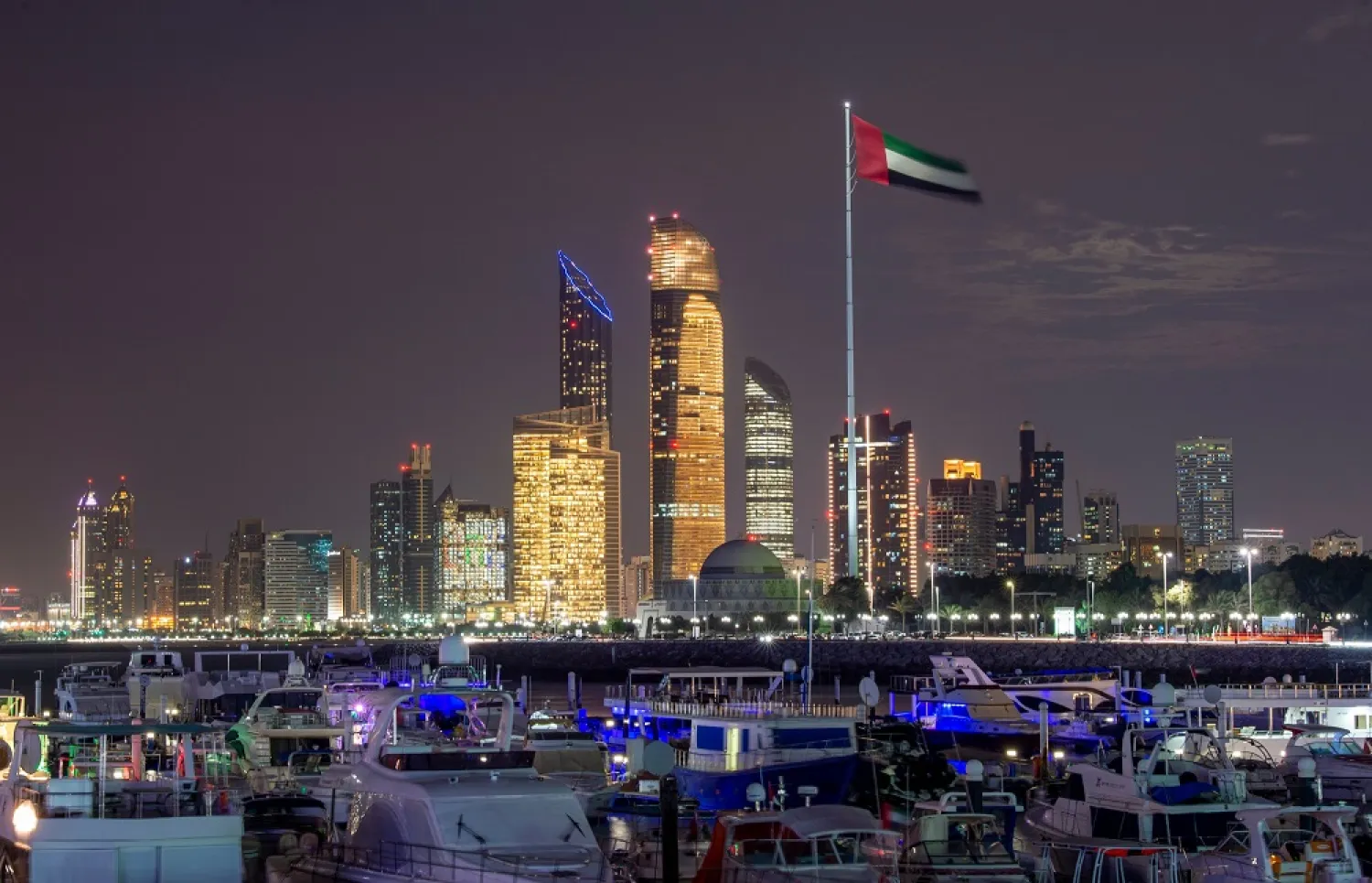

Abu Dhabi Plans to Develop Hydrogen Alliance

A general view of Abu Dhabi, UAE. (WAM)
TT

Abu Dhabi Plans to Develop Hydrogen Alliance

A general view of Abu Dhabi, UAE. (WAM)

Abu Dhabi National Oil Company (ADNOC), Mubadala and industrial holding company ADQ signed an agreement to form a hydrogen alliance, focusing on low-carbon green and blue hydrogen as part of the UAE’s continued energy diversification efforts.

Under the terms of the agreement, the alliance will develop a roadmap to accelerate the UAE’s adoption and use of hydrogen in major sectors such as utilities, mobility and industry, through their respective operating companies and with international partners.

Mubadala, ADNOC and ADQ will also align on their approach to international markets, for projects developed under the alliance, with the aim of positioning Abu Dhabi as a reliable and secure supplier of hydrogen and its carriers to customers around the world as demand grows.

During a virtual ceremony, the MoU was signed by Khaldoon Khalifa Al Mubarak, managing director and Group chief executive officer of Mubadala Investment Company, Dr. Sultan Ahmed Al Jaber, UAE minister of industry and advanced technology and ADNOC Group CEO, and Mohamed Hassan Alsuwaidi, chief executive officer of ADQ.

ADNOC plans to explore "green hydrogen opportunities" and will place "special emphasis" on pursuing blue hydrogen projects by expanding on its existing hydrogen capacity, leveraging significant gas reserves and infrastructure, said Al Jaber.

Al Mubarak said: “As a responsible investor, we are actively engaged in a number of new energy investments that will contribute to more efficient and lower emission energy solutions. Hydrogen offers significant potential in this regard and with the renewables expertise and experience of Masdar, we are well placed to develop leadership in the green hydrogen value chain.”

Alsuwaidi commented: “With Abu Dhabi’s largest portfolio of energy and utilities investments, ADQ would play an important role in the transition to cleaner energy while shaping the future of this economic cluster leading to Abu Dhabi longer-term sustainability.”
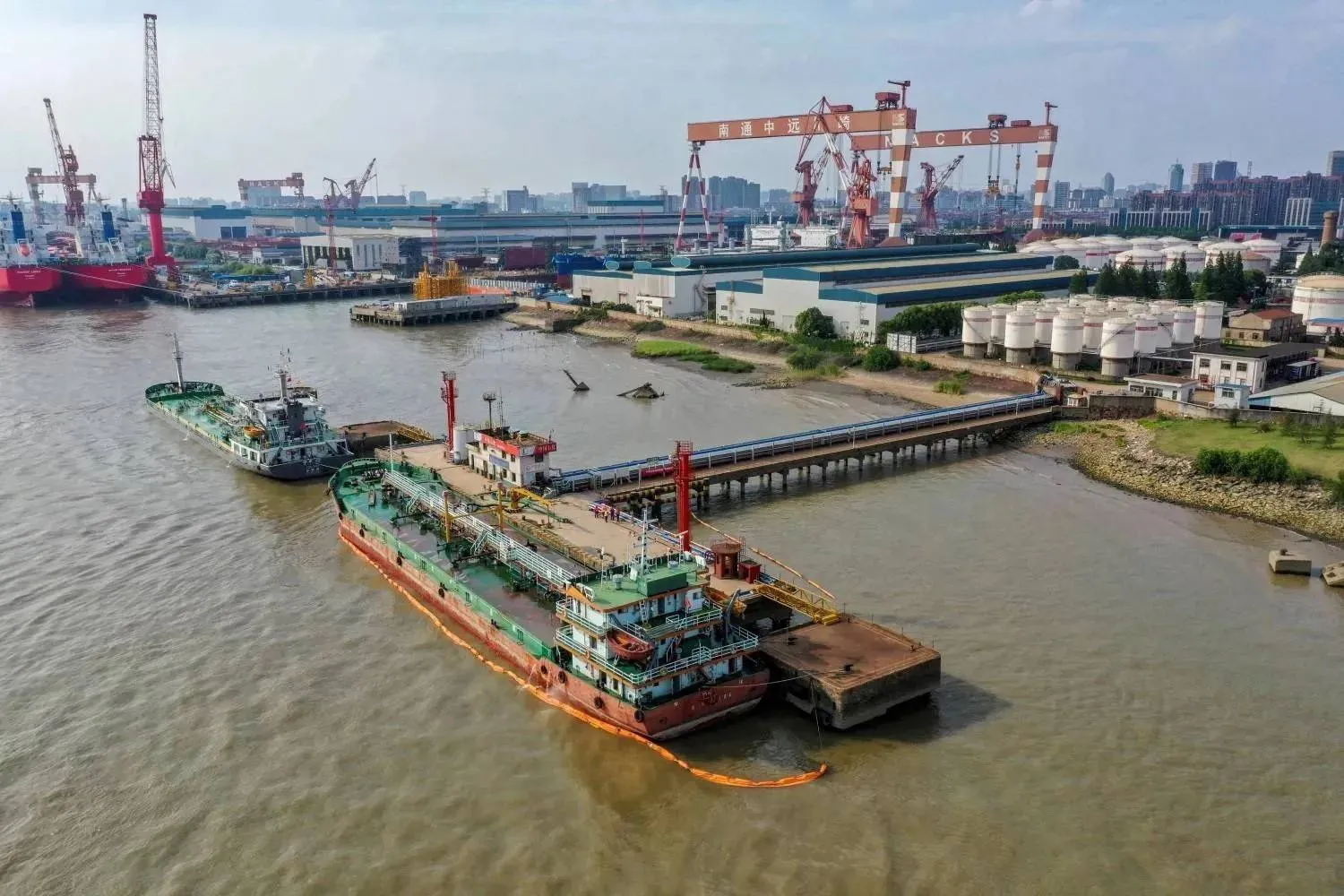



China's Russian Oil Imports to Hit New Record in February as India Cuts Back

Oil tankers are seen at a terminal of Sinopec Yaogang oil depot in Nantong, Jiangsu province, China (Reuters) 
TT

China's Russian Oil Imports to Hit New Record in February as India Cuts Back

Oil tankers are seen at a terminal of Sinopec Yaogang oil depot in Nantong, Jiangsu province, China (Reuters) 

China's Russian oil imports are set to climb for a third straight month to a new record high in February as independent refiners snapped up deeply discounted cargoes after India slashed purchases, according to traders and ship-tracking data.

Russian crude shipments are estimated to amount to 2.07 million barrels per day for February deliveries into China, surpassing January's estimated rate of 1.7 million bpd, an early assessment by Vortexa Analytics shows.

Kpler's provisional data showed February imports at 2.083 million bpd, up from 1.718 million bpd in January, according to Reuters.

China has since November replaced India as Moscow's top client for seaborne shipments as Western sanctions over the war in Ukraine and pressure to clinch a trade deal with the US forced New Delhi to scale back Russian oil imports to a two-year low in December.

India's Russian crude imports are estimated to fall further to 1.159 million bpd in February, Kpler data showed.

Independent Chinese refiners, known as teapots, are the world's largest consumers of US sanctioned oil from Russia, Iran and Venezuela.

“For the quality you get from processing Russian oil versus Iranian, Russian supplies have become relatively more competitive,” said a senior Chinese trader who regularly deals with teapots.

ESPO blend last traded at $8 to $9 a barrel discounts to ICE Brent for March deliveries, while Iranian Light, a grade of similar quality, was last assessed at $10 to $11 below ICE Brent, the trader added.

Uncertainty since January over whether the US would launch military strikes on Iran if negotiations for a nuclear deal failed to yield Washington's desired results curbed buying from Chinese teapots and traders, said Emma Li, Vortexa's China analyst.

“For teapots, Russian oil looks more reliable now as people are worried about loadings of Iranian oil in case of a military confrontation,” Li said.

Part of the elevated Russian oil purchases came from larger independent refiners outside the teapot hub of Shandong, Li added.

Vortexa estimated Iranian oil deliveries into China – often banded by traders as Malaysian to circumvent US sanctions - eased to 1.03 million bpd this month, down from January's 1.25 million bpd.


Oil in Spotlight as Trump's Iran Warning Rattles Sleepy Markets

FILE - In this Oct. 21, 2013, file photo, smoke billows from an oil refinery in Kawasaki, southwest of Tokyo. (AP Photo/Koji Sasahara, File)
TT

Oil in Spotlight as Trump's Iran Warning Rattles Sleepy Markets

FILE - In this Oct. 21, 2013, file photo, smoke billows from an oil refinery in Kawasaki, southwest of Tokyo. (AP Photo/Koji Sasahara, File)

Oil prices stabilized on Tuesday as investors assessed supply disruption risks after Iran conducted naval exercises near the Strait of Hormuz ahead of nuclear talks with the United States later in the day.

US President Donald Trump said on Monday that he would participate "indirectly" in the Geneva talks, adding that he believed Tehran wanted to reach an agreement. Trump said at the end of the week that regime change in Iran would be the "best thing that could happen."

Brent crude futures fell 0.2 percent to $68.59 a barrel by 01:06 GMT, after rising 1.3 percent on Monday.

US West Texas Intermediate crude was at $63.73 a barrel, up 84 cents, or 1.34 percent, but that gain incorporated all price movement on Monday, as the contract was not settled that day due to the US Presidents Day holiday.

Many markets were closed on Tuesday for the Lunar New Year, including China, Hong Kong, Taiwan, South Korea and Singapore.

"The market remains jittery amid ongoing geopolitical uncertainty," Daniel Hynes, an analyst at ANZ Bank, said in a research note.

He added: "Should tensions in the Middle East ease, or tangible progress be made on the Ukrainian situation, the risk premium currently embedded in oil prices may quickly dissipate. However, any negative outcome or further escalation could be positive for oil prices."

Iran began military exercises on Monday in the Strait of Hormuz, a vital international waterway and a major oil export route from Gulf countries, which have called for diplomacy to end the conflict.

Meanwhile, Citigroup said that if Russian supply disruptions continue to keep Brent crude within a range of $65 to $70 a barrel in the coming months, OPEC+ is likely to respond by increasing production from spare capacity.

Three sources in OPEC+ said the organization is inclined to resume increasing oil production from April, as the group prepares for peak summer demand, and higher prices are reinforced by tensions over US-Iranian relations.

"We expect, in the base case, that two oil deals will be reached, one with Iran and the other with Russia and Ukraine, by or during the summer of this year, which will contribute to a decline in prices to $60-62 a barrel of Brent," Citigroup said.


Greece… Chevron’s Gateway to Strengthening Europe’s Energy Security

The lease allows Chevron to lead the search for gas in four deep-sea blocks, south of the Peloponnese peninsula and the island of Crete (AFP)
TT

Greece… Chevron’s Gateway to Strengthening Europe’s Energy Security

The lease allows Chevron to lead the search for gas in four deep-sea blocks, south of the Peloponnese peninsula and the island of Crete (AFP)

A consortium led by US oil major Chevron signed exclusive lease agreements on Monday to look for natural gas off southern Greece, expanding the United States' presence in the eastern Mediterranean. The deal doubles the amount of Greek maritime acreage available for exploration and is the second in months involving a US energy major as the European Union seeks to phase out supplies from Russia and the US seeks ‌to replace them.

Exxon ‌Mobil in November joined Energean and Helleniq to search ‌for ⁠gas in another ⁠offshore block in Western Greece. Monday's agreement allows Chevron - which also plans to expand production in Israel - to lead the search for gas in four deep-sea blocks, south of the Peloponnese peninsula and the island of Crete, stretching across 47,000 square kilometers (18,147 square miles). It follows Chevron and Helleniq Energy, Greece's biggest oil refiner, last year winning an international tender.

GREECE SEEKS TO BE A GATEWAY FOR US GAS

Greece, which ⁠has no gas production and relies on gas imports ‌for power generation and domestic consumption, has revived ‌its quest for gas exploration after a 2022 energy price shock driven by Russia's ‌invasion of Ukraine. It also aims to be a gateway for US ‌liquefied natural gas transported via the Vertical Gas Corridor, a route that carries gas from Greece to central Europe and Ukraine. US Ambassador to Greece Kimberly Guilfoyle said US LNG flowing through Greece had strengthened the alliance between the United States and Europe.

"It redraws, ‌quite simply, the energy map of Europe, creating a durable alternative to Russian gas not just for one season ⁠but for generations ⁠to come," Guilfoyle said during a presentation of the contracts in Athens. The European Union is building renewables capacity to cut greenhouse emissions, but has acknowledged the need for natural gas as a transition fuel to help stabilize the grid when intermittent wind and solar energy are not available.

The Greek parliament will need to approve the lease contracts before the Chevron-led consortium can start seismic research later this year. Greece has said the consortium has up to five years to locate potential recoverable deposits and any test drilling would not take place before 2030-2032.