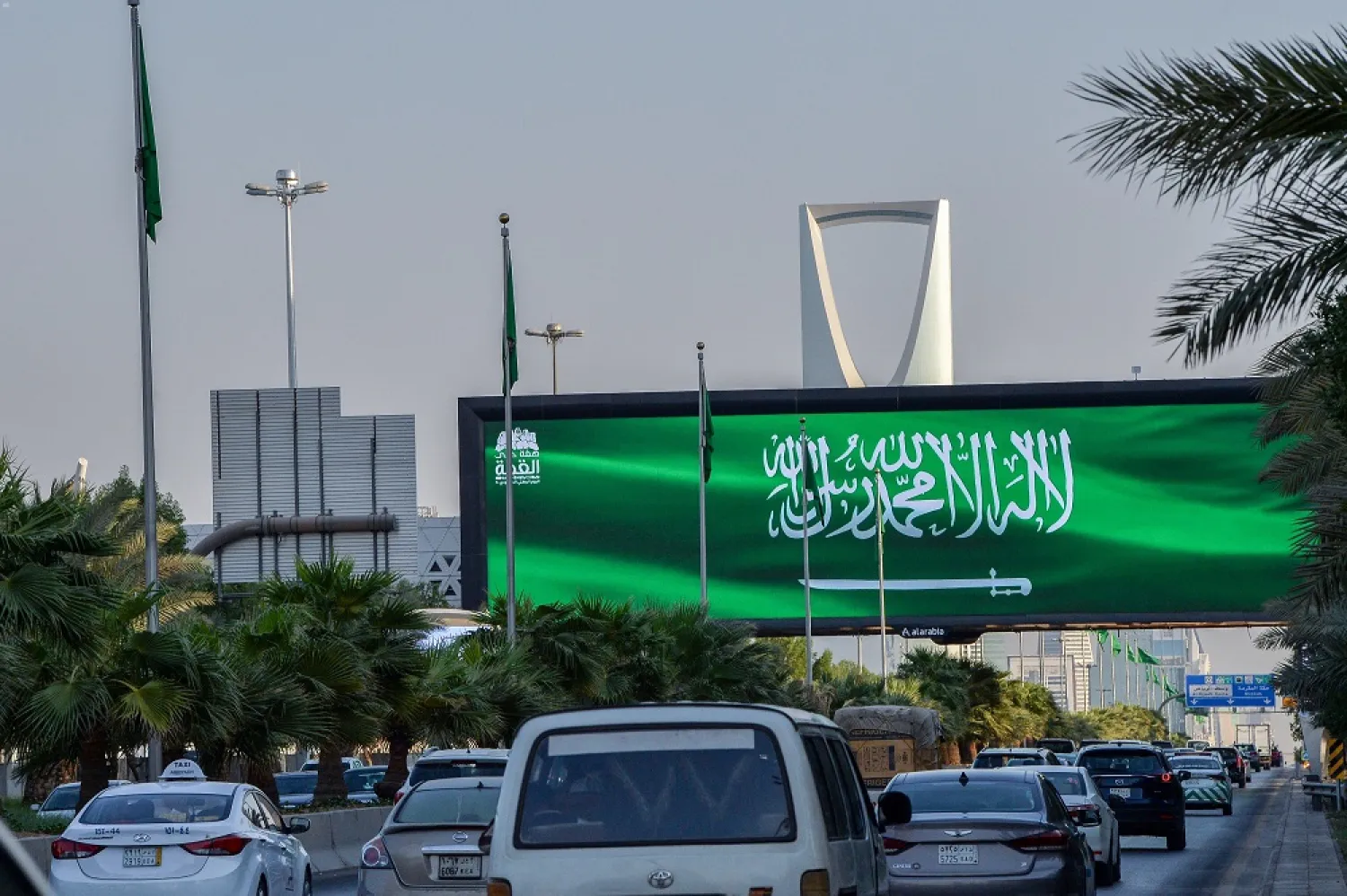
Gulf States Slam Failed Houthi Attack against Riyadh

Gulf countries condemned the failed Houthi attack against Riyadh. (SPA file photo)
TT

Gulf States Slam Failed Houthi Attack against Riyadh

Gulf countries condemned the failed Houthi attack against Riyadh. (SPA file photo)

The United Arab Emirates strongly condemned the Iranian-backed terrorist Houthi militias’ attempts to target civilian areas in Riyadh, Saudi Arabia, with a missile intercepted by Saudi air defenses, read a statement carried by the state news agency WAM.

In a statement by the Ministry of Foreign Affairs and International Cooperation on Monday, the UAE renewed its “full solidarity with the Kingdom over these subversive terrorist attacks and reiterated its stance against all threats to the Kingdom's security, stability and the safety of its citizens and residents.”

The statement emphasized that “the security of the UAE and Saudi Arabia are indivisible, and that any threat facing the Kingdom is considered by the Emirates a threat to its security and stability.”

The ministry re-affirmed that the UAE considers this attack “new evidence of terrorist groups' endeavors to undermine security and stability in the region.”

Kuwait condemned “in the strongest of terms” the failed attack.

The Foreign Ministry said on Monday that the ongoing attacks by the Houthis “are a direct threat to the security of Saudi Arabia and stability of the region and flagrant violation of international laws because they target civilians and civilian areas.”

Such threats demand “immediate action by the international community to put a stop to these violations.”

The ministry stressed that Kuwait completely stands by Saudi Arabia and supports all measures it takes to preserve its security and stability.

Qatar vehemently condemned the failed attack, saying it was a “dangerous act against civilians that violates all international laws and norms.”

In a statement, the Foreign Minister renewed Doha’s firm rejection of violence and criminal acts regardless of their motives and reasons.

Gulf Cooperation Council Secretary-General Dr. Nayef al-Hajraf condemned on Monday the Houthi attack, saying it not only targets the security of the Kingdom, but that of the entire Gulf region.

The attack is a blatant violation of international laws and norms that bar attacks against civilians and their areas, he added in a statement.

He hailed the Saudi defenses for destroying the rocket before it reached its target, stressing that the GCC stands by the Kingdom and all the measures it takes to preserve its security and stability and safety of its people.

He declared that the security of the Gulf is indivisible, calling on the international community to assume its responsibilities and firmly stand against the Houthis and their attempts to destabilize the region.

The Saudi-led Arab coalition said on January 23 that it had thwarted an aerial attack by the Houthis towards Riyadh.

The Houthis were designated by the Trump administration this month as a foreign terrorist organization in a move welcomed by the legitimate Yemeni government.


Saudi Leadership Congratulates Brazilian President on Re-election

Brazil's President and presidential candidate Luiz Inacio Lula da Silva waves a Brazilian flag as he delivers a speech to supporters after winning the presidential runoff election in Sao Paulo, Brazil, on October 25, 2026. (AFP)
TT

Saudi Leadership Congratulates Brazilian President on Re-election

Brazil's President and presidential candidate Luiz Inacio Lula da Silva waves a Brazilian flag as he delivers a speech to supporters after winning the presidential runoff election in Sao Paulo, Brazil, on October 25, 2026. (AFP)

Custodian of the Two Holy Mosques King Salman bin Abdulaziz Al Saud sent on Monday a cable of congratulations to Brazil’s President Luiz Inacio Lula da Silva on his re-election to a new term.

King Salman extended his sincere congratulations and best wishes for the president's continued success, as well as continued progress and prosperity for the friendly people of Brazil.

Prince Mohammed bin Salman bin Abdulaziz Al Saud, Crown Prince and Prime Minister, sent Lula a similar cable.


Saudi Foreign Minister Receives Phone Call from South African Foreign Minister

Saudi Minister of Foreign Affairs Prince Faisal bin Farhan bin Abdullah in Moscow on July 4, 2025. (Reuters)
TT

Saudi Foreign Minister Receives Phone Call from South African Foreign Minister

Saudi Minister of Foreign Affairs Prince Faisal bin Farhan bin Abdullah in Moscow on July 4, 2025. (Reuters)

Saudi Minister of Foreign Affairs Prince Faisal bin Farhan bin Abdullah received a phone call from South African Minister of International Relations and Cooperation Ronald Lamola.

During the call, the two sides reviewed relations between Saudi Arabia and South Africa and discussed ways to strengthen cooperation across various fields to serve the mutual interests of both countries, SPA reported.

They also exchanged views on the latest regional and international developments and efforts to address current challenges in ways that support regional and international security and stability.


Lockheed Martin to Asharq Al-Awsat: We Support Saudi Arabia's Defense Systems Against Missile Threats

Retired Brig. Gen. Joseph “Joe” Rank, head of Lockheed Martin Saudi Arabia (Asharq Al-Awsat)
TT

Lockheed Martin to Asharq Al-Awsat: We Support Saudi Arabia's Defense Systems Against Missile Threats

Retired Brig. Gen. Joseph “Joe” Rank, head of Lockheed Martin Saudi Arabia (Asharq Al-Awsat)

Retired Brig. Gen. Joseph "Joe" Rank, chief executive of Lockheed Martin Saudi Arabia, revealed that the Kingdom's participation in the US company's global supply chains quadrupled over the past year, reflecting the growing role of Saudi defense industries in global manufacturing and a shift from meeting domestic needs to producing components for international defense systems.

Speaking to Asharq Al-Awsat on the sidelines of a forum organized by the General Authority for Military Industries (GAMI) in Riyadh, Rank said Saudi Arabia had become one of the few Middle Eastern countries integrated into Lockheed Martin's global supply chains.

He noted that the Kingdom's participation was expanding rapidly as part of efforts to strengthen local industrial capabilities and enhance their international competitiveness.

Rank said the goal is no longer limited to manufacturing products to meet the Kingdom's needs. It extends to integrating Saudi industries into the company's global supply chains.

Rank stressed that this approach would create new jobs, generate revenue for the Saudi economy and strengthen the Kingdom's position in the global defense industry.

From Imports to Manufacturing

Rank said the industrial relationship between Lockheed Martin and Saudi Arabia had undergone a fundamental transformation in recent years.

Previously focused on supplying defense systems and equipment, the partnership now includes manufacturing key components in the Kingdom, as well as providing local maintenance and technical support.

"In the past, we simply sold products to the Kingdom. Today, we manufacture products there and maintain them locally as well. In the future, we will move beyond this stage to even greater opportunities," he said.

Rank described Saudi Arabia as Lockheed Martin's most important partner in the Middle East, noting that cooperation with the Ministry of Defense and GAMI forms a cornerstone of efforts to expand industrial investment and transfer advanced defense technologies.

He described the current period as one of significant opportunity, given the transformation underway in Saudi Arabia's military industries sector and efforts to develop a national industrial base capable of participating in the production and maintenance of defense systems.

Local Manufacturing of THAAD Components

The Lockheed Martin Saudi Arabia chief executive highlighted several projects demonstrating progress in local defense manufacturing, foremost among them the production of key components for the Terminal High Altitude Area Defense (THAAD) ballistic missile defense system.

He explained that Lockheed Martin is working with Saudi industrial partners to manufacture components for the system in the Kingdom, including launcher components at Arabian International Company for Steel Structures (AIC Steel) in Jeddah and interceptor missile canisters at Middle East Propulsion Company (MEPC) in Riyadh.

Rank said THAAD is one of the principal defense systems used to counter missile threats, including those originating from Yemen or Iran, stressing that localizing the manufacture of its components reflects the advancement of Saudi Arabia's defense industrial capabilities.

He added that these two projects are only examples of a broader portfolio of industrial initiatives undertaken by Lockheed Martin with its partners in the Kingdom to expand local manufacturing and integrate it into global production operations.

Technology Transfer and Workforce Development

Rank emphasized that Lockheed Martin's strategy in Saudi Arabia extends beyond transferring manufacturing operations to include technology and technical knowledge transfer, as well as training Saudi personnel to operate advanced defense systems.

He said developing human capital is among the most important factors in successfully localizing military industries, explaining that acquiring advanced technologies cannot deliver the intended benefits without qualified personnel capable of operating and developing them.

"You can have the greatest technology in the world, but if you don't have the people who can use it, it's useless," he said.

Rank reaffirmed Lockheed Martin's commitment to developing the skills of the next generation of Saudi professionals, helping establish a sustainable base of technical and engineering expertise in the defense industry.

Strategic Partnership

Rank said Lockheed Martin's participation as a gold sponsor of the GAMI forum for the second consecutive year reflected the importance of the Saudi market to the company's regional strategy.

He explained that partnerships with GAMI and the Ministry of Defense play a central role in enabling Lockheed Martin to expand its industrial presence in the Kingdom and deepen cooperation with Saudi companies.

The expansion comes as Saudi Arabia seeks, under Vision 2030, to localize more than 50% of its spending on military equipment and services by building a domestic industrial ecosystem encompassing manufacturing, maintenance, research and development, and knowledge transfer.

The increase in Saudi participation in Lockheed Martin's global supply chains reflects a shift beyond localization focused on domestic consumption toward building production capabilities that can help meet global demand.

This approach strengthens the added value of Saudi industries and opens new opportunities for Saudi companies in international markets.

60 Years of Partnership

During his address at the military industries forum, the Lockheed Martin Saudi Arabia chief executive noted that the F-35 fighter jet deal had passed the congressional notification stage in the United States, describing it as an important milestone.

Rank said Lockheed Martin's relationship with Saudi Arabia spans 60 years, beginning with the delivery of C-130 aircraft and evolving from product sales to local manufacturing and support for maintenance and sustainment capabilities.

He noted that strengthening local supply chains had become increasingly important following the disruptions experienced during the COVID-19 pandemic and amid rising political and military risks affecting global trade and shipping.