


Moscow, Tehran Call for 'Rescue' of Iran Nuclear Deal

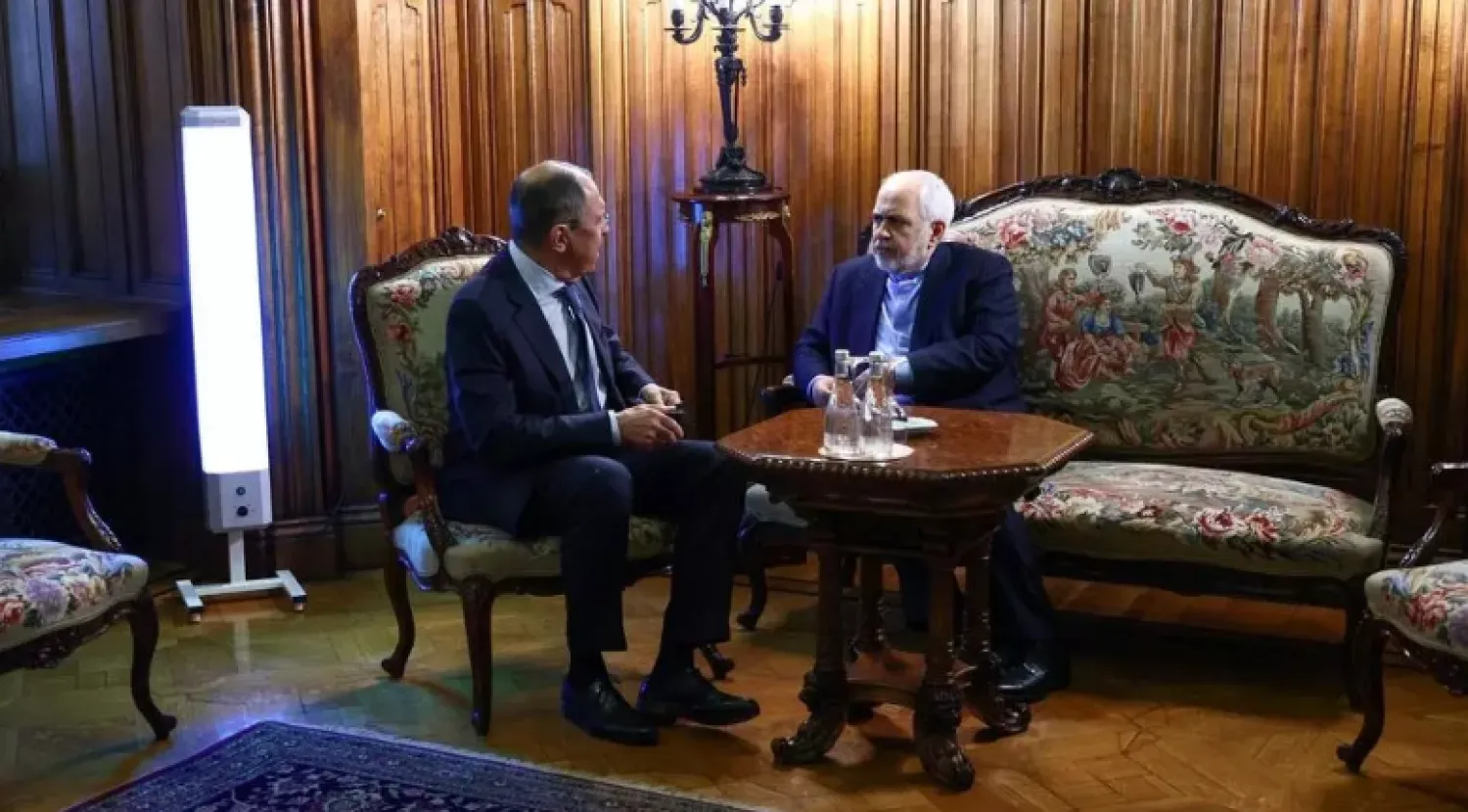
Russian Foreign Minister Sergei Lavrov (L) met with his Iranian counterpart Mohammad Javad Zarif in Moscow Handout RUSSIAN FOREIGN MINISTRY/AFP
TT

Moscow, Tehran Call for 'Rescue' of Iran Nuclear Deal

Russian Foreign Minister Sergei Lavrov (L) met with his Iranian counterpart Mohammad Javad Zarif in Moscow Handout RUSSIAN FOREIGN MINISTRY/AFP

Moscow and Tehran called for the rescue of the Iran nuclear deal Tuesday, as their top diplomats held their first talks since Joe Biden's election raised hopes of Washington returning to the agreement.

Russian Foreign Minister Sergei Lavrov said ahead of the talks in Moscow that "one of the most pressing topics is the task of rescuing the Joint Comprehensive Action Plan (JCPOA)".

Iranian Foreign Minister Mohammad Javad Zarif thanked Moscow for its efforts to repair the JCPOA after the US exit in 2018 and for Russia's "constructive and principled" position on the deal.

Zarif urged unity between Moscow and Tehran "in order to save the JCPOA from the risks and fears that arose after the United States left this plan."

The talks in Moscow come days after Zarif urged the United States to make the "fundamental choice" to lift sanctions and reverse the "failed policies" of the previous administration, which took a hard line on Tehran.

He cautioned that any efforts from Washington to extract additional concessions would ultimately end in failure, AFP reported.

"Iran wants the nuclear deal it made," Zarif wrote in an op-ed in the Foreign Affairs magazine.

The agreement was largely left in tatters after former US president Donald Trump unilaterally withdrew and ordered officials to reimpose tough penalties against Tehran as part of his administration's "maximum pressure" policy.

The deal was agreed in 2015 between Iran, the United States, China, Russia, Britain, France and Germany.

It offered sanctions relief in exchange for curbs on Tehran's nuclear ambitions and guarantees it would not seek an atomic bomb. Iran maintains it has only pursued a civilian nuclear energy program.

A new wave of US sanctions have hit hard Iran's vital oil sector and its international banking ties, plunging the economy into a recession.

But Tehran has signaled it could be willing to engage the new White House administration while rhetoric from officials in Moscow has suggested a change in tack in Washington from the Trump administration.

Joe Biden's pick for secretary of state, Anthony Blinken, said at a Senate confirmation hearing this month that Trump's policies had made Iran "more dangerous".

While Blinken confirmed Biden's desire for Washington to return to the nuclear agreement, both sides have said the other must return to full compliance before the accord is implemented again.

Since the deal began unraveling with the US exit, Russia and European signatories have advocated efforts to salvage the accord and cautioned Iran against bolstering its nuclear enrichment.

Russia's Deputy Foreign Minister Sergei Ryabkov in December urged Iran to take "maximum responsibility" after Tehran announced plans to install advanced centrifuges in its main nuclear enrichment plant.

The ministry earlier this month blamed Iran's departure from norms of the nuclear deal on "systematic crude violations" by the United States and praised the Islamic republic for its stated willingness to rejoin its obligations.

Moscow appears cautiously optimistic over the fate of the deal under the new White House administration after its arms negotiator described Washington's position as "businesslike and pragmatic".

"It means there is a chance to move forward," Mikhail Ulyanov told state-run television last week.

But time is running out for signatories to restore the nuclear deal and bring all parties back on track.

Legislation passed by Iran's parliament in December requires Tehran to boost uranium enrichment and limit UN inspections if sanctions are not removed by February.



Rubio Says Iran Deal Still Possible Monday

Government supporters hold Iranian flags and pictures of Iran's Supreme Leader, Mojtaba Khamenei, during a ceremony honoring the armed forces and those killed in the war with Israel and the US in Tehran, Iran, Sunday, May 24, 2026. (AP)
TT

Rubio Says Iran Deal Still Possible Monday

Government supporters hold Iranian flags and pictures of Iran's Supreme Leader, Mojtaba Khamenei, during a ceremony honoring the armed forces and those killed in the war with Israel and the US in Tehran, Iran, Sunday, May 24, 2026. (AP)

US Secretary of State Marco Rubio said Monday that a deal to end the war with Iran could materialize "today", adding that Israel had the right to defend itself against attack.

"We thought we might have some news last night, maybe today, I wouldn't read too much into it," Rubio said in New Delhi, referring to the potential agreement.

"We have what I think is a pretty solid thing on the table in terms of their ability to open up the straits, get the straits open," he told reporters as he departed the Indian capital, where he has been on an official visit.

"It has a lot of support... every country that we've walked through it (with) understands it's not just very reasonable, but it's the right thing for the world to get done."

Rubio also voiced confidence that Iran would "enter into a very real, significant, time-limited negotiation on the nuclear matter".

He addressed reporters ahead of the next leg of his India visit, which will see him travel to Agra, the northern city famous for the Taj Mahal.

Rubio's remarks came after US President Donald Trump tempered expectations of a deal, saying on Sunday he had told his negotiators not to "rush".

"He's not in a hurry, he's not going to make a bad deal, and the president's not going to make a bad agreement," Rubio said of Trump.

The war erupted after the United States and Israel attacked Iran on February 28, and Iran responded with missile and drone attacks across the region. Washington and Tehran have observed a ceasefire since April 8.

Rubio told reporters that "Israel always has a right to protect itself".

"If Hezbollah is going to launch missiles or launches missiles at them, Israel has every right to respond to that, or to prevent that from happening," he said.

"That's always been understood. It's being understood during the ceasefire."


Israel PM Says Trump Agreed Any Final Iran Deal Must End ‘Nuclear Threat Entirely’

US President Donald Trump points his finger towards Israeli Prime Minister Benjamin Netanyahu during a press conference after meeting at Trump’s Mar-a-Lago club in Palm Beach, Florida, US, December 29, 2025. (Reuters)
TT

Israel PM Says Trump Agreed Any Final Iran Deal Must End ‘Nuclear Threat Entirely’

US President Donald Trump points his finger towards Israeli Prime Minister Benjamin Netanyahu during a press conference after meeting at Trump’s Mar-a-Lago club in Palm Beach, Florida, US, December 29, 2025. (Reuters)

Israeli Prime Minister Benjamin Netanyahu said on Sunday he and US President Donald Trump had agreed that any final deal with Iran must fully end the Islamic republic's "nuclear threat".

Netanyahu was referring to a conversation between the two leaders on Saturday night, which Trump had earlier said "went very well".

"President Trump and I agreed that any final agreement with Iran must eliminate the nuclear threat entirely. This means dismantling Iran's uranium enrichment facilities and removing enriched nuclear material from its territory," Netanyahu said in a statement.

"My policy, like that of President Trump, remains unchanged: Iran will not obtain nuclear weapons," he added.

Netanyahu said the two also discussed the memorandum of understanding on the reopening of the Strait of Hormuz.

"The partnership between our two nations has been proven on the battlefield, and it has never been stronger," the Israeli leader said, adding that Trump had reaffirmed his support for Israel's right to defend itself against threats on all fronts, "including in Lebanon".


Protesters in Spain Condemn Police Handling of Gaza Flotilla Activists

People hold Palestinian flags during a press conference organized by Basque Delegation within the Global Sumud Flotilla, in Bilbao, northern Spain, 24 May 2026. (EPA)
TT

Protesters in Spain Condemn Police Handling of Gaza Flotilla Activists

People hold Palestinian flags during a press conference organized by Basque Delegation within the Global Sumud Flotilla, in Bilbao, northern Spain, 24 May 2026. (EPA)

Around two thousand protesters ‌took to the streets of the Spanish city of Bilbao on Sunday to condemn the Basque police's treatment of activists from a Gaza aid flotilla on their return from detention in Israel.

When a relative of one of the six returning activists tried to approach them at Bilbao airport on Saturday, a police officer forcefully prevented him from doing so, leading to scuffles between both sides, images from state broadcaster TVE showed.

Images showed police striking people ‌with batons and ‌pinning others to the ground while being ‌jeered ⁠by onlookers. Before this, ⁠activists appeared to have blocked the exit for other passengers and police tried to move them.

The Basque regional police force said in a statement on Sunday it had launched an investigation to determine if officers complied with procedures. Reuters has reached out to the Spanish government for ⁠comment.

On Sunday's march, pro-Palestinian demonstrators carried banners ‌criticizing the Basque police force ‌and accusing the local government of being complicit with Zionism.

The ‌activists were released from Israeli custody after being detained ‌on a flotilla trying to bring aid to Gaza. Organizers alleged on Friday that the activists were subjected to abuse while in Israeli detention, with several hospitalized with injuries and at least ‌15 reporting sexual assaults, including rape.

Israel's prison service denied the allegations, and Reuters was not ⁠able to ⁠verify the activists' claims independently.

Spain was among a series of Western governments on Thursday which expressed their anger after Israeli minister Itamar Ben-Gvir posted a video of himself mocking the activists as they were pinned to the ground in a prison.

Francesca Albanese, a UN expert on the Palestinian territories, has called for those responsible for events at Bilbao airport to be held responsible, while Amnesty International has demanded a thorough investigation.

The Israeli Embassy in Spain has demanded an "explanation" from the Spanish government over the events at Bilbao airport.