



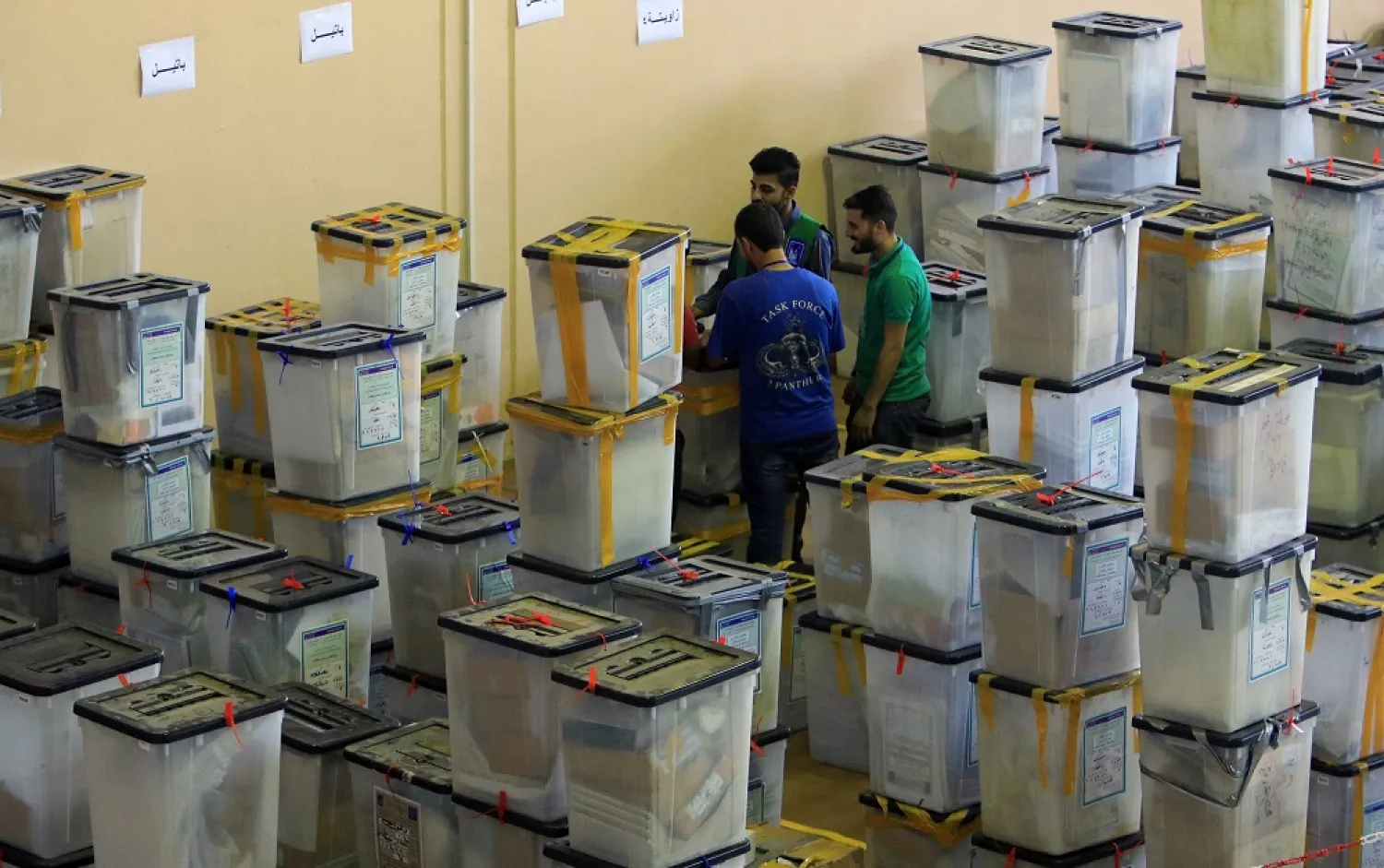

Iraqi Foreign Minister Fuad Hussein’s request for international monitors to oversee this year’s parliamentary elections has sparked debate in the country.
The minister had submitted the request to the United Nations Security Council last week.
Despite his clarifications of the concept of supervision, several political blocs and forces announced their rejection of the move, saying it violates their country’s sovereignty.
Observers were quick to dismiss their allegations, saying they were concerned that international monitors would thwart these forces’ attempts to commit voter fraud, which was rampant during all elections that were held between 2005 and 2018.
Some observers, however, said that the UN’s representatives in Iraq themselves were complicit in the fraud, by simultaneously acknowledging them while hailing the elections or expressing concern over the low turnout.
The Iraqi government has been exerting efforts to block attempts at fraud by resorting to international monitors and adopting a biometric identification card instead of an electronic one.
Prime Minister Mustafa al-Kadhimi’s aide on electoral affairs, Abdul Hussein al-Hindawi, dismissed claims that international monitors would violate Iraq’s sovereignty.
In a statement on Sunday, he said that such monitors are used in elections throughout the world.
Moreover, he stressed that the UN and international community support Iraq in its pursuit to hold transparent elections.
International monitors do not manage polls, they simply observe them, he clarified, adding that an international team also follows up on the process with the electoral commission.
The commission, he stressed, is responsible for planning and staging the elections, which is a purely Iraqi affair that concerns Iraqis alone.
Meanwhile, Chairman of the Iraq Advisory Council Farhad Alaaldin attributed the postponement of the elections from June to October to pressure exerted by various political forces.
He explained that these forces had not carried out any preparations to hold the elections, even though more than six months had passed their initial June date was announced.
He said that they had not worked on removing obstacles hindering the polls, such as resolving the dispute over the federal court and international monitors, setting a date for dissolving the parliament or allocating the necessary funds to hold them.
Ultimately, he stressed: “Traditional political powers are concerned that the elections would lead to the introduction of new faces at parliament, namely representatives of the October revolution.”
“There is a real concern that the majority of the current political powers will be unable to garner enough votes” due to the amended electoral law, he added.


