

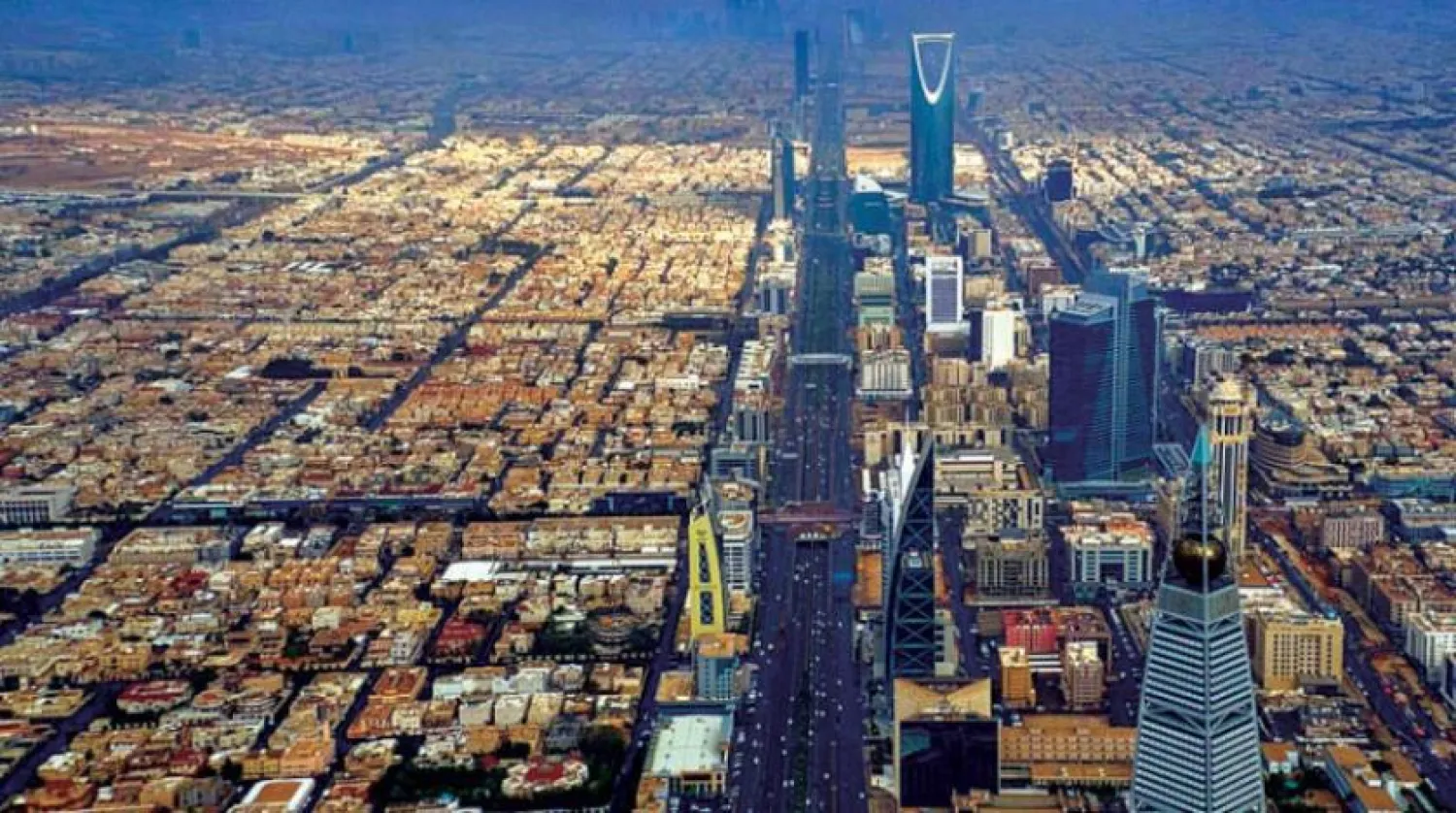

Riyadh Strategy Sees 24 Multinational Firms Establishing Regional Offices in Saudi Capital

Efforts to attract regional offices of international companies comes as an element of the Riyadh Strategy. Asharq Al-Awsat
TT

Riyadh Strategy Sees 24 Multinational Firms Establishing Regional Offices in Saudi Capital

Efforts to attract regional offices of international companies comes as an element of the Riyadh Strategy. Asharq Al-Awsat

Reflecting global confidence in the Saudi market and presenting an important first step for the recently announced Riyadh Strategy, 24 multinational companies have announced their decision to establish regional headquarters in the Saudi capital.

Efforts to attract regional offices of international firms comes as an element of the Riyadh Strategy, which aims to double the size of the economy and achieve major leaps in generating jobs, improving the quality of life, and attracting and expanding investments to place Riyadh among the ten largest city economies in the world by 2030.

It is expected that attracting regional headquarters will contribute to the national economy with a value of 61 to 70 billion riyals ($16 - $18.6 billion) by 2030 through salaries, operating and capital expenditures of these companies.

The 24 firms have signed agreements to establish main regional offices in Riyadh in the presence of Investment Minister Khalid Al-Falih and Chief Executive Officer of the Royal Commission for Riyadh City Fahd Al-Rasheed.

The signing ceremony was also attended by CEOs of major international companies such as PepsiCo; Schlumberger; Deloitte; PWC; Tim Hortons; Bechtel; Bosch; Boston Scientific and others. This step reflects the importance and confidence in the Saudi market regionally and globally.

As part of the strategy recently announced by Crown Prince Mohammed bin Salman bin Abdulaziz, Saudi Arabia plans to increase the residents of Riyadh from 7.5 million to 15-20 million in 2030.

The strategy also aims to improve Riyadh in terms of quality of life, tourism, education by various initiatives covering different sectors.

Attracting regional headquarters is not an end, but rather one of the economic growth potentials that Riyadh aspires to achieve.

The Kingdom is currently working on many systemic amendments with the aim of developing an investment environment for international companies.

Saudi Arabia will work to provide many incentives that improve its competitiveness regionally and globally, to attract the companies and give them sufficient time to move and operate in their new headquarters without affecting their business.

The incentives offered will be limited to regional headquarters, excluding their operations outside.

The Royal Commission for Riyadh City will work with these companies on programs and initiatives to qualify young Saudi leaders to work in the regional offices.

Attracting regional headquarters will result in more than 35,000 jobs for young men and women in the Kingdom.



Trump to Be Guest of Honor at Saudi Arabia’s Future Investment Initiative Summit in Miami

Trump delivers a speech at last year's edition of the event. (Asharq Al-Awsat)
TT

Trump to Be Guest of Honor at Saudi Arabia’s Future Investment Initiative Summit in Miami

Trump delivers a speech at last year's edition of the event. (Asharq Al-Awsat)

The Future Investment Initiative (FII) Institute announced that US President Donald Trump will participate as a guest of honor and speaker at the fourth edition of the “Priority Future Investment Initiative” summit in Miami, scheduled to be held from March 25 to 27.

Trump is scheduled to deliver a keynote speech in person during the summit's closing session on March 27. The appearance marks the second time Trump has addressed this international gathering of leaders, investors, and decision-makers on the platform, reflecting the growing strategic importance of this summit in global economic circles.

Trump's participation comes at a very sensitive time for the global economy, which is reeling under the weight of escalating energy crises and sharp jumps in oil prices that have exceeded the $100 mark.

The global audience in Miami will be waiting to see Trump's vision on how to manage these developments and his philosophy towards the movement of capital in light of current geopolitical conflicts.

In last year's edition, Trump reaffirmed that the golden age of the United States had officially begun, considering the economic progress that had occurred since he took office to be "amazing."

This year's summit is being held under the slogan "Capital in Motion," where it seeks to explore how capital moves, adapts, and leads in a rapidly fragmenting world.

The agenda focuses intensively on the role of investment, technology, and policies in achieving sustainable and inclusive growth, while highlighting Latin America region and the Americas as a center of the current global transformation.

The summit brings together an elite group of senior officials, investors, and innovators, and prominent from the Saudi side is a high-level presence that includes the Governor of the Public Investment Fund and Chairman of the Board of Directors of the Future Investment Initiative Foundation Yasir Al-Rumayyan, Minister of Finance Mohammed Al-Jadaan, Minister of Tourism Ahmed Al-Khateeb, and the Ambassador of the Custodian of the Two Holy Mosques to the United States, Princess Reema bint Bandar Al Saud.

The list of speakers also includes prominent names, such as Steve Witkoff, the US envoy to the Middle East, and Dina Powell McCormick, Vice President of Meta, in addition to the participation of Donald Trump Jr.

The slogan of the fourth edition, "Capital in Motion," reflects an accelerated global reality that knows no stillness, where resources, talents, and ideas flow across borders, industries, and technologies at an unprecedented pace. In light of slowing global growth, persistently high interest rates for longer, and sharp geopolitical rifts, the summit is redrawing the map of investment returns.

The summit is expected to attract more than 1,500 delegates from around the world, forming an economic bridge linking the Middle East, the United States, and the emerging Latin American markets.


IMF Says Gulf Buffers, Export Flexibility Can Absorb War Shock

IMF spokeswoman Julie Kozack speaks during a press conference. (Reuters file)
TT

IMF Says Gulf Buffers, Export Flexibility Can Absorb War Shock

IMF spokeswoman Julie Kozack speaks during a press conference. (Reuters file)

The International Monetary Fund said that the economic impact of the ongoing conflict on Gulf Cooperation Council (GCC) states will depend on its duration, scope and intensity, with strong financial buffers and export flexibility expected to limit the fallout.

IMF spokeswoman Julie Kozack noted that outcomes will vary by country, largely depending on geographic location and the ability to resume exports. She explained that higher oil prices could help some countries offset production losses either partially or fully, depending on how quickly export flows recover.

She pointed to the Gulf’s substantial sovereign buffers and solid economic foundations, built through years of structural reforms aimed at diversifying income and strengthening logistics infrastructure. These measures have improved the region’s resilience to external shocks.

The IMF’s assessment broadly aligns with recent analysis by ratings agency Standard & Poor’s, which highlighted Saudi Arabia’s East–West pipeline as a strategic alternative export route that reduces reliance on key maritime chokepoints.

Elevated oil prices may also compensate for declining output, while the region’s large financial reserves are expected to support a swift recovery once the conflict subsides.

Kozack also highlighted pressure on regional financial markets, with Gulf stock indices declining and bond spreads widening in line with global volatility driven by inflation concerns and rising geopolitical risks.

Economists broadly view the region’s ample financial assets and foreign reserves as a buffer that will support a quicker rebound. Lessons from past energy crises have also helped Gulf states develop more flexible financial and logistics systems.

Standard & Poor’s recently underscored Saudi Arabia’s strong fiscal position and stable credit rating, citing substantial financial buffers and prudent policies. It also noted that alternative export routes such as the East–West pipeline allow the Kingdom to bypass the Strait of Hormuz, reducing risks to trade and growth.

Inflation risk

At the global level, the IMF is closely monitoring disruptions to energy markets, warning that sustained price increases could drive inflation higher and slow economic growth.

Oil and gas prices have surged by more than 50 percent over the past month, with Brent crude rising above $100 per barrel. If maintained for a year, this could push global inflation up by about 40 basis points and reduce economic output by between 0.1 and 0.2 percent, according to the Fund.

The IMF has signaled it stands ready to support member states, although no requests for emergency financing have been received so far.

It remains in close contact with finance ministers and central bank governors as the conflict enters its third week with no clear end in sight.

Kozack added that central banks should closely monitor whether inflation pressures extend beyond energy prices and whether inflation expectations remain stable.

The Fund is expected to incorporate the impact of the conflict into its updated global economic forecasts, due in mid-April during its Spring Meetings with the World Bank.


Italy in Talks with US, Azerbaijan, Algeria to Offset Loss of Gas from Qatar

A general view shows cisterns at the deposit of an oil site, in Rome on March 19, 2026. (Photo by Andreas SOLARO / AFP)
TT

Italy in Talks with US, Azerbaijan, Algeria to Offset Loss of Gas from Qatar

A general view shows cisterns at the deposit of an oil site, in Rome on March 19, 2026. (Photo by Andreas SOLARO / AFP)

Italy is talking to several countries, including the United States, Azerbaijan and Algeria, to secure gas supplies now that Iranian strikes on Qatar appear to have halted its exports for an extended period, Energy Minister Gilberto Pichetto Fratin said.

Iranian attacks have knocked out 17% of Qatar's liquefied natural gas (LNG) export capacity, causing an estimated $20 billion in lost annual revenue and ⁠threatening supplies to Europe ⁠and Asia, QatarEnergy's CEO told Reuters on Thursday.

"The very fact that Qatar's LNG plant that had been shut down was also bombed had a devastating impact on prices," Pichetto Fratin said on Friday attending ⁠an event in Milan.

Edison, an Italian unit of French power company EDF, has a long-term contract with QatarEnergy for the supply of 6.4 billion cubic meters of gas per year to Italy, nearly 10% of the country's annual gas consumption.

Qatar had already declared force majeure on gas exports earlier this month, flagging to Edison it would not be ⁠able ⁠to fulfill its contractual obligations concerning April.

The pause in supplies is likely be longer-lasting after its gas infrastructures were hit hard this week, QatarEnergy's CEO said.

Pichetto Fratin said on Friday that despite the disruption in supplies from the Middle East, Italy had agreed with the European Union that the bloc should not return to buying its gas from Russia.