


Turkish Finance Minister Defends Predecessor's Forex Reserves Policy

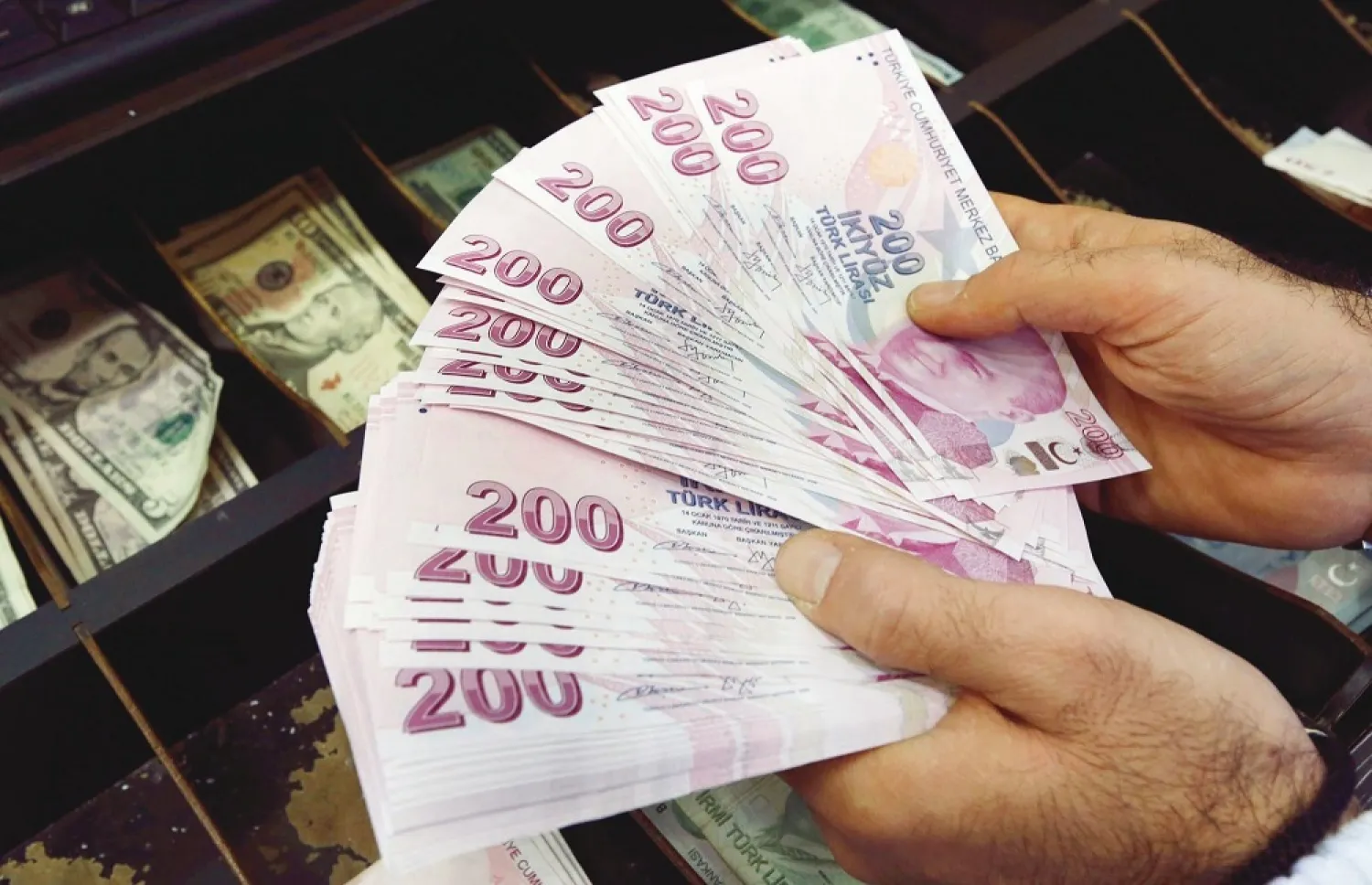
A money changer counts Turkish lira bills at a currency exchange office in Istanbul. (Reuters)
TT

Turkish Finance Minister Defends Predecessor's Forex Reserves Policy

A money changer counts Turkish lira bills at a currency exchange office in Istanbul. (Reuters)

Turkey's finance minister has defended the foreign exchange reserve policy of his predecessor Berat Albayrak, saying transactions that had led to a sharp fall in reserves were a response to the extraordinary demands of the COVID-19 pandemic.

Albayrak, who is President Recep Tayyip Erdogan's son-in-law, abruptly resigned in November shortly after Erdogan replaced the central bank governor. In his two-year term as finance minister, the lira slumped to record lows while forex reserves dwindled.

In a social media campaign blaming Albayrak for economic woes, the main opposition Republican People's Party (CHP) demanded to know what had happened to the $128 billion it says were sold from the central bank's reserves.

"I strongly condemn the unjust and rude rhetoric used by the CHP over forex reserves against our former Treasury and Finance Minister Mr. Berat Albayrak," Finance Minister Lutfi Elvan said on Twitter late on Sunday.

"It is unacceptable to distort the foreign exchange reserves transactions carried out in line with the goal of financial stability amid the 2020 pandemic circumstances in an environment necessitated by extraordinary fluctuations in the global markets," he added.

A lawyer for Albayrak said at the weekend the CHP's campaign comprised "ugly slander and attempts at smearing" the former minister, adding that they would file a 500,000 lira ($71,000) damages lawsuit over the campaign.

"Transactions over the central bank's reserves were carried out in accordance with the existing regulation and in line with the goals of financial and price stability, in a manner befitting the balance of payments requirements," Albayrak's lawyer said in a statement.

"Since the day he resigned from his post, Mr. Berat Albayrak has been spending time with his wife and children at home, like in any normal Turkish family."



World Bank Approves $700 Million for Pakistan's Economic Stability

A view of traffic circulating amid dense fog in Islamabad, Pakistan, 18 December 2025. EPA/SOHAIL SHAHZAD
TT

World Bank Approves $700 Million for Pakistan's Economic Stability

A view of traffic circulating amid dense fog in Islamabad, Pakistan, 18 December 2025. EPA/SOHAIL SHAHZAD

The World Bank said on Friday that it has approved $700 million in financing for Pakistan under a multi-year initiative aimed at supporting the country's macroeconomic stability and service delivery.

The funds will be released under the bank's Public Resources for Inclusive Development - Multiphase Programmatic ⁠Approach (PRID-MPA), which could provide up to $1.35 billion in total financing, the lender said. Of this amount, $600 million will go for federal programs and $100 million will ⁠support a provincial program in the southern Sindh province.

The approval follows a $47.9 million World Bank grant in August to improve primary education in Pakistan's most populous Punjab province.

In November, an IMF-World Bank report, uploaded by Pakistan's finance ministry, said Pakistan's fragmented ⁠regulation, opaque budgeting and political capture are curbing investment and weakening revenue. Regional tensions may surface over international financing for Pakistan.

In May, Reuters reported that India would oppose World Bank funding for Pakistan, citing a senior government source in New Delhi.


Oil Set for Second Straight Weekly Decline on Supply Outlook

A view of an oil pump jack on the prairies near Claresholm, Alberta, Canada January 18, 2025. REUTERS/Todd Korol
TT

Oil Set for Second Straight Weekly Decline on Supply Outlook

A view of an oil pump jack on the prairies near Claresholm, Alberta, Canada January 18, 2025. REUTERS/Todd Korol

Oil prices rose on Friday but were poised for a second straight weekly decline as a potential supply glut and prospects of a Russia-Ukraine peace deal limited gains driven by concerns over disruptions from a blockade of Venezuelan tankers.

Brent crude futures were up 52 cents, or 0.87%, at $60.34 a barrel by ‌1357 GMT ‌while US West Texas Intermediate crude ‌rose ⁠51 ​cents, ‌or 0.9%, to $56.66.

On a weekly basis, the Brent and WTI benchmarks were down 1.3% and 1.4% respectively, according to Reuters.

"That we're ⁠staying down at these levels indicates that the market is awash with ‌oil right now," said Ole Hansen, ‍head of commodity strategy at ‍Saxo Bank. "There's enough oil to mitigate any disruptions."

Uncertainty over ‍how the US would enforce President Donald Trump's intent to block sanctioned tankers from entering and leaving Venezuela tempered geopolitical risk premiums, IG analyst Tony Sycamore said.

Venezuela, which pumps about 1% ​of global oil supplies, on Thursday authorised two unsanctioned cargoes to set sail for China, said two ⁠sources familiar with Venezuela's oil export operations.

Optimism over a potential US-led Ukraine peace deal also eased supply risk concerns, Sycamore said.

However, Bank of America analysts said they expect lower oil prices to curb supply, which could stop prices from going into freefall.

Investors also watched developments in Russia's war in Ukraine after Kyiv ramped up attacks on Russia's energy infrastructure. Ukraine struck a "shadow fleet" oil tanker in the Mediterranean Sea with aerial drones for the first time, ‌a Ukrainian official said on Friday.


What are Shipping Companies' Plans for Return to Suez Canal?

Ships move through the Suez Canal, in Ismalia, Egypt, July 31, 2025. REUTERS/Mohamed Abd El Ghany/File Photo
TT

What are Shipping Companies' Plans for Return to Suez Canal?

Ships move through the Suez Canal, in Ismalia, Egypt, July 31, 2025. REUTERS/Mohamed Abd El Ghany/File Photo

Major shipping companies are devising strategies for a potential return to the Suez Canal after two years of disruptions due to security risks in ​the Red Sea.

They have been rerouting vessels via longer, costlier routes around Africa since November 2023, following attacks on commercial ships by Yemen's Houthi militants, reportedly in solidarity with Palestinians during warfare in Gaza.

A ceasefire agreement reached in October has led some companies to explore resumption plans, although security ‌remains a ‌key concern. Below are the latest ‌updates according to Reuters:

MAERSK

The ⁠Danish ​shipping ‌company said on Friday that one of its vessels successfully navigated the Red Sea and Bab el-Mandeb Strait for the first time in nearly two years.

Maersk said it has no immediate plans to fully reopen the route and it is not considering a wider ⁠East-West network change back to the trans-Suez corridor, but considers the ‌feat a "stepwise approach" to resuming ‍passage.

CMA CGM

The world's ‍third-largest container shipping line, which has made limited Suez ‍transits when security allows, will use the passage for its India-US INDAMEX service from January, according to a schedule published on its website.

HAPAG-LLOYD

Earlier in December, the German shipping ​group's CEO said the return of the shipping industry to the Suez Canal would be gradual ⁠and there would be a transition period of 60-90 days to adjust logistics and avoid sudden port congestion.

The world's fifth-largest container company did not immediately respond to Reuters' request for comment. Hapag-Lloyd and Maersk had called for caution in November, saying they were monitoring the situation for evidence of increased security.

WALLENIUS WILHELMSEN

The Norwegian car shipping group is still assessing the situation and will not resume sailing until certain conditions are met, ‌a company spokesperson said on Friday.