


Tensions High in Tripoli after Failed ‘Assassination Attempt’ against Bashagha

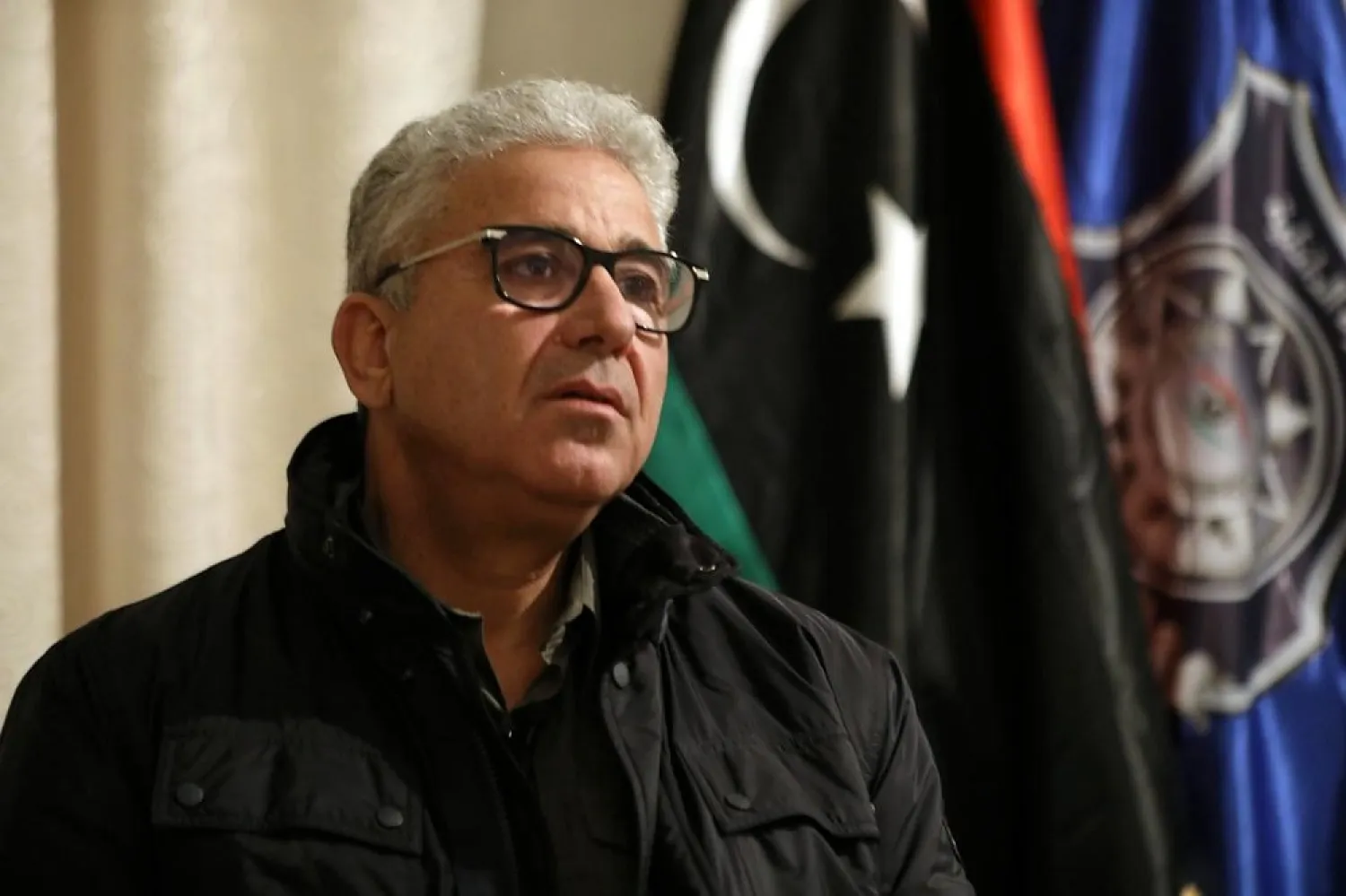
Government of National Accord (GNA) Interior Minister Fathi Bashagha. (Reuters)
TT

Tensions High in Tripoli after Failed ‘Assassination Attempt’ against Bashagha

Government of National Accord (GNA) Interior Minister Fathi Bashagha. (Reuters)

Military and security tensions were high in the Libyan capital, Tripoli, in wake of the failed “assassination attempt” against Government of National Accord (GNA) Interior Minister Fathi Bashagha on Sunday.

An ensuing shootout in wake of the attack left one member of the al-Zawiya militias dead.

Militia leaders loyal to Bashagha in the cities of Misrata and Zintan held a meeting on Sunday in order to coordinate their stance to retaliate against the Zawiya militants.

The Zawiya militias had suddenly deployed in central Tripoli hours after the alleged attempt on Bashagha’s life.

The militias took over Martyrs’ Square for a short period of time, opening fire into the air before withdrawing from the area.

Defense Minister Salah al-Namroush said the security of Tripoli and Libya as a whole was a “red line” that should not be crossed by any side.

“No one is above the law,” he declared, revealing that measures have been taken to secure the capital.

He said the Tripoli region military force has since been deployed in the capital to restore security and prevent any violations.

Bashagha’s claim that he was a victim of an attempt on his life did not hold water for very long.

The minister and his associates said that his convoy came under fire by three assailants, who hail from Zawiya, soon after his meeting with Mustafa Sanalla, head of Libya’s National Oil Corporation.

Several sources questioned the allegation.

The Stabilization Support Apparatus, an armed force set up by outgoing GNA chief Fayez al-Sarraj this year, said in a statement posted online that Bashagha's guards had opened fire on one of its vehicles as it passed his convoy along the Janzour coastal road.

One of the members of the apparatus was killed and another wounded.

A relative of the victim called on Bashagha to revoke his statement about the alleged assassination. He accused him of exploiting the issue to appeal to international players that are biased to him.

His account of incident “lacks reason and logic,” he added.

Speaking to Reuters on Sunday, Bashagha said a vehicle started encroaching on his convoy and people inside the vehicle opened fire, leading to an exchange of fire in which one of his guards and one of the attackers were killed.

“It is not an incident that came by chance, but was well-planned,” Bashagha said.

His guards pursued the vehicle and it overturned, he said, adding that they arrested two people, one of whom was wanted by police.

The Justice and Development Party, the political wing of the Muslim Brotherhood, condemned the failed “criminal attempt to assassinate Bashagha.”

He said the attack aimed to stoke instability and chaos.

UN envoy Jan Kubis condemned the incident and called for an investigation, saying on Twitter that “such reckless acts pose threats to stability and security and aim at derailing the political process”.

The incident comes as the GNA prepares to make way for a new interim government selected in a UN-led process aimed at unifying Libya’s warring factions.

All 3 Missing Indian Seafarers Dead after US Strike on Tanker Off Oman


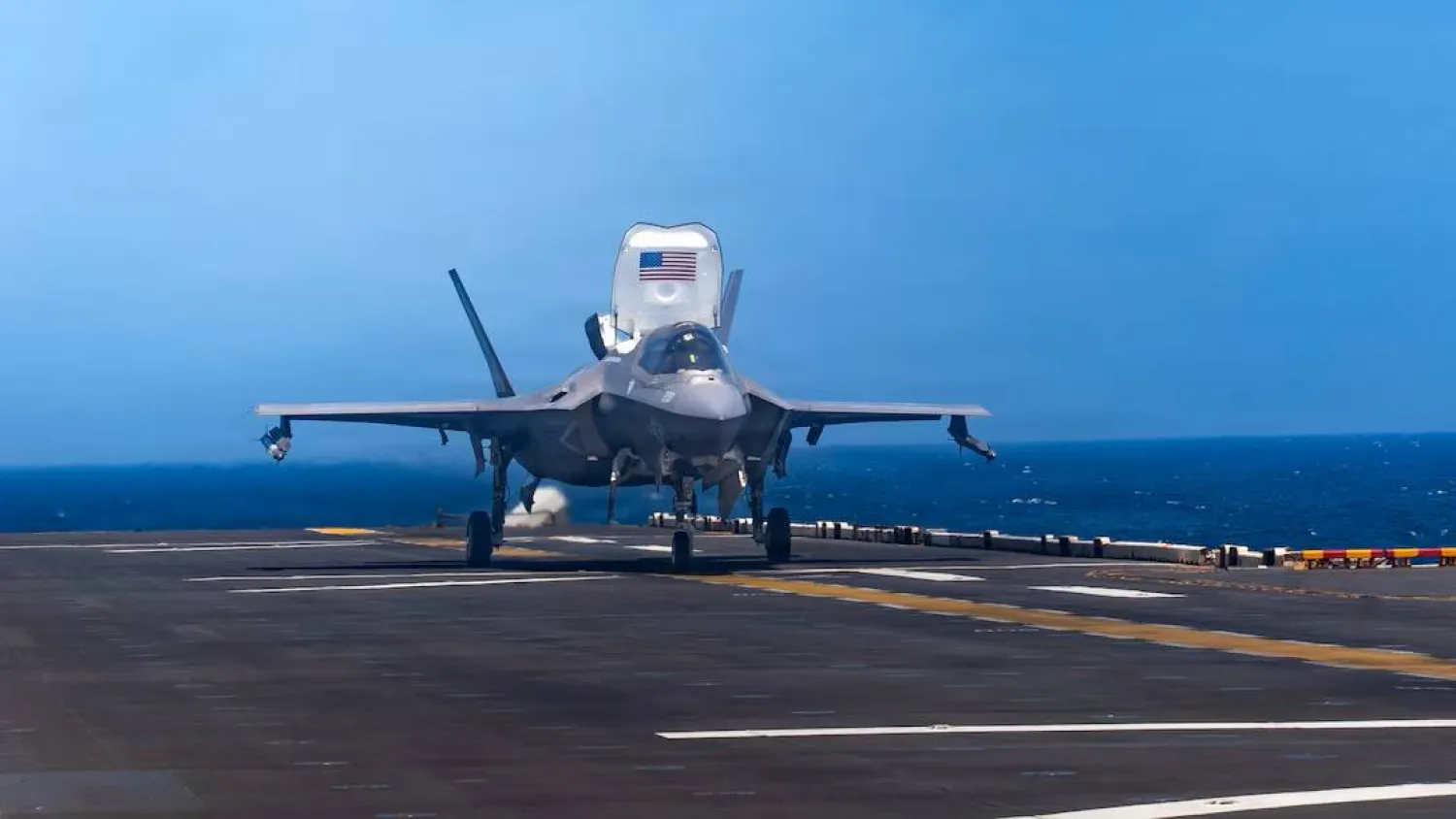
An F-35B Lighting II, attached to Marine Fighter Attack Squadron (VMFA) 121, prepares to take off from the flight deck of America-class amphibious assault ship USS Tripoli (LHA 7), May 13, 2026. (US Navy photo)
TT

All 3 Missing Indian Seafarers Dead after US Strike on Tanker Off Oman


An F-35B Lighting II, attached to Marine Fighter Attack Squadron (VMFA) 121, prepares to take off from the flight deck of America-class amphibious assault ship USS Tripoli (LHA 7), May 13, 2026. (US Navy photo)

All three missing Indian seafarers have died after a US military strike on a tanker in the Gulf of Oman, ⁠Indian Shipping Minister ⁠Sarbananda Sonoma said on Thursday.

The US said its military carried ⁠out a "precision" strike on the vessel that failed to follow its instructions and was carrying oil from Iran.

Indian sources told Reuters that ⁠New ⁠Delhi had summoned the US deputy chief of mission after lodging a "strong protest" on the strike.


Israeli Military Says Two 'Launches' Fall near Israeli Troops in Southern Lebanon

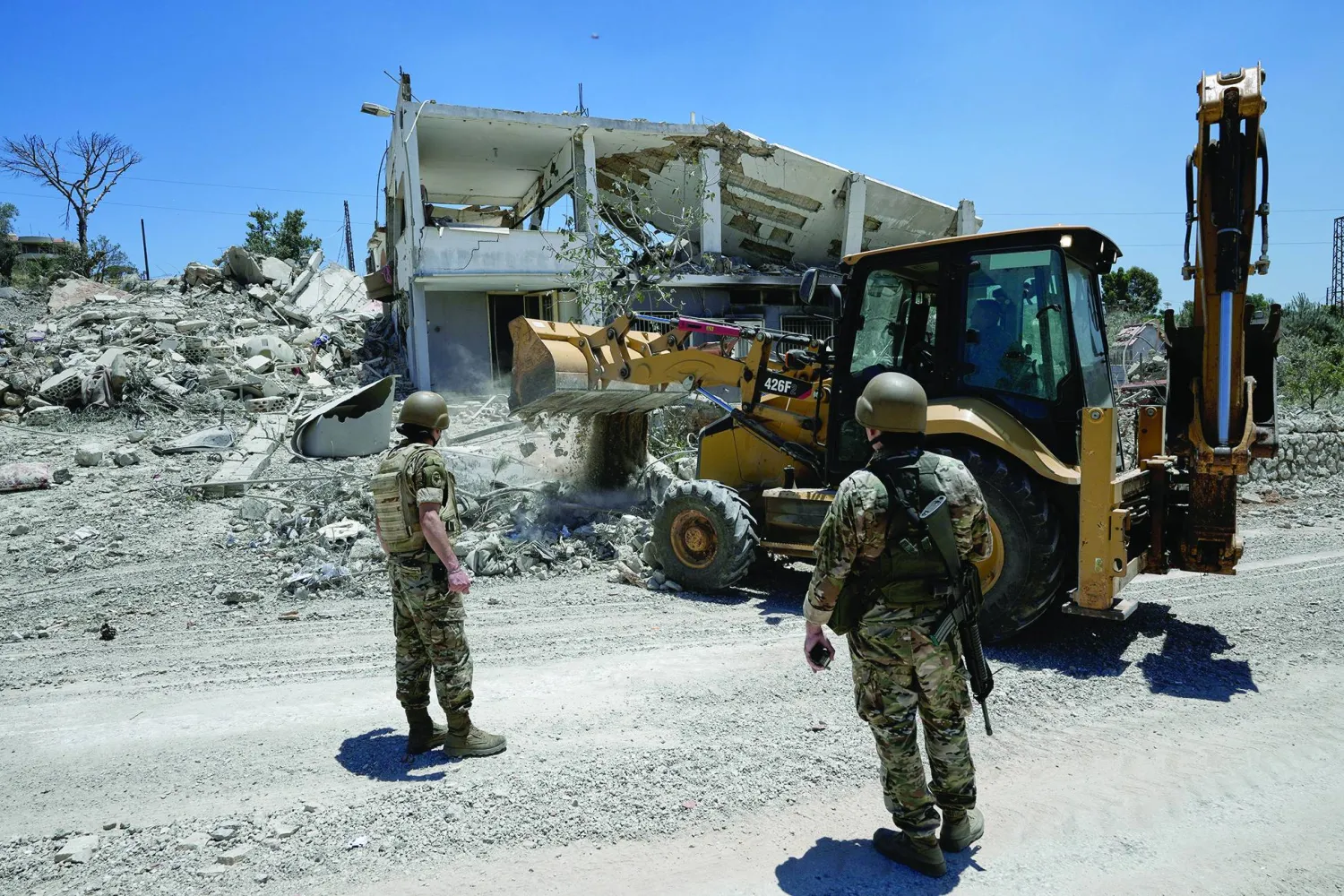
Lebanese army remove the rubble of a house that was destroyed in the recent clashes between Hezbollah fighters and Israeli troops in Dibbine village, southeast Lebanon, Friday, June 5, 2026, a day after Israeli forces withdrew. (AP Photo/Hussein Malla)
TT

Israeli Military Says Two 'Launches' Fall near Israeli Troops in Southern Lebanon

Lebanese army remove the rubble of a house that was destroyed in the recent clashes between Hezbollah fighters and Israeli troops in Dibbine village, southeast Lebanon, Friday, June 5, 2026, a day after Israeli forces withdrew. (AP Photo/Hussein Malla)

The Israeli military said on Thursday that two "launches" were identified falling adjacent to an ‌area where ‌Israeli troops ‌are ⁠operating in southern ⁠Lebanon, after sirens sounded in several areas of northern Israel.

Earlier, the military ⁠said Home Front ‌Command ‌had issued a precautionary ‌directive after detecting "launches" ‌from Lebanon toward several communities in northern Israel, urging residents to ‌enter protected spaces.

More than three ⁠months ⁠since the US-Israeli attack on Iran ignited conflict around the Middle East, Lebanon remains a major frontline in the war.


Report: Alleged Spy’s Escape in Lebanon Exposes Israel’s Shadow War on Hezbollah

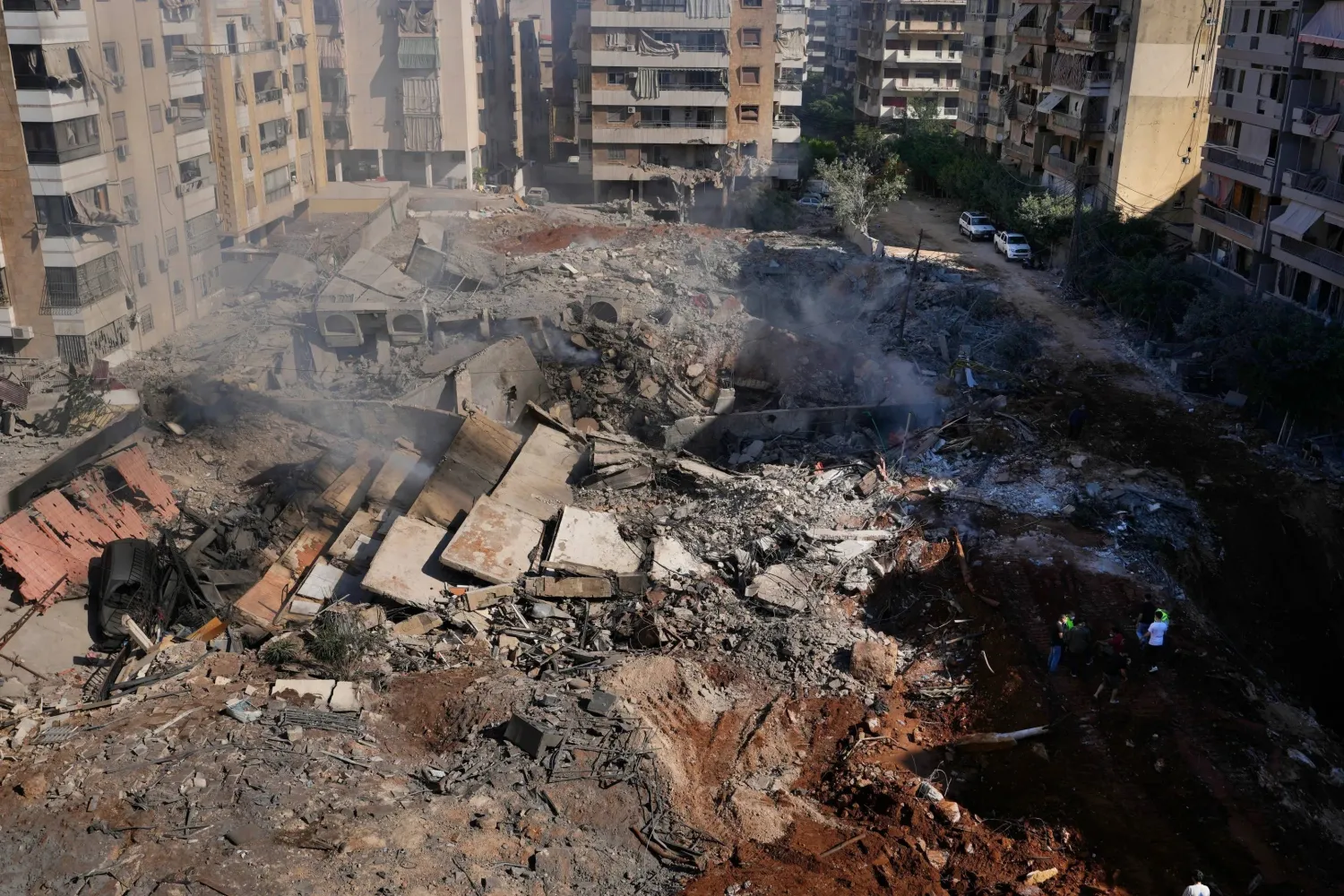
People gather at the site of the assassination of Hezbollah leader Hassan Nasrallah in Beirut’s Southern Suburbs, Sept. 29, 2024 (AP/File photo)
TT

Report: Alleged Spy’s Escape in Lebanon Exposes Israel’s Shadow War on Hezbollah

People gather at the site of the assassination of Hezbollah leader Hassan Nasrallah in Beirut’s Southern Suburbs, Sept. 29, 2024 (AP/File photo)

As Israeli warplanes pounded Beirut’s southern suburbs last March and residents fled in panic, one man found his opportunity.

Amid the chaos, he slipped out of his imprisonment in a Hezbollah cell and made his way to Baabda, the green, upscale diplomatic district overlooking the Lebanese capital, where he disappeared behind the gates of the Ukrainian Embassy.

His whereabouts remain unclear, according to The Associated Press, in a case that has become part of a broader intelligence battle as Hezbollah tries to identify alleged Israeli operatives they believe are linked to Israel.

The man identified by Lebanese officials as Khaled al-Aydi is said to be a Palestinian refugee from Syria who also holds Ukrainian citizenship.

He had been detained by Hezbollah in the Beirut suburbs and accused by Lebanese officials of being part of a thwarted Israeli intelligence plot to carry out bombings and assassinations.

Details of al-Aydi's escape and a Lebanese military court's case against him were provided by three judicial officials and two senior security officials in Lebanon who spoke on condition of anonymity because they were not authorized to comment publicly. A senior political official in Hezbollah also provided details.

Al-Aydi's disappearance could have political implications for the Lebanese government, which has largely remained silent about the case.

If evidence were to emerge that al-Aydi escaped Lebanon with help from the government, it could inflame tensions with Hezbollah's base. The government already faces scrutiny for directly negotiating with Israel, which has been engaged in fierce fighting with Hezbollah since the early days of the Iran war.

The Ukrainian Embassy asked Lebanese authorities in March to facilitate al-Aydi’s departure from the country after he escaped Hezbollah detention, according to a Lebanese official document obtained by The Associated Press. But Lebanon’s General Security agency refused, saying a judicial warrant for his arrest had been issued earlier, according to the document.

A Ukrainian official with knowledge of the case said al-Aydi is not in the Ukrainian Embassy or its compound in Lebanon. The official, who spoke on condition of anonymity because of the sensitivity of the situation, would not say where al-Aydi is — and out of concern for the security of the embassy and its personnel, would not say whether al-Aydi was ever in the embassy, or whether Ukraine helped him escape.

Using human and high-tech surveillance, Israel has cultivated far-reaching intelligence networks in Lebanon. That has helped it carry out dramatic operations against Hezbollah.

In the most elaborate example, Israel infiltrated Hezbollah’s supply chain and sent the party thousands of booby-trapped pagers and walkie-talkies. Israel remotely detonated the devices in September 2024, killing tens of people. Also, Israel's intelligence within Hezbollah allowed it to hit the group's senior leaders and field commanders “with relative ease,” analysts said.

In return, Hezbollah and Lebanese authorities have stepped up efforts against alleged spy networks.

Lebanese judicial officials said dozens of suspects have been convicted and are serving sentences, while others remain under investigation.

Cases filed in Lebanon’s military court describe operatives being paid to provide intelligence on Hezbollah weapons depots and political offices. Many of the alleged agents were recruited by Israeli handlers through social media, judicial officials said.

Other suspects are charged with providing the Mossad with maps and coordinates of key Hezbollah sites later struck in Israeli operations.

“It’s ironic that they (Hezbollah) were spending a lot of time accusing their opponents of being Israeli spies, and it turns out that the spies were actually from within the organization and its support base,” said Mohanad Hage Ali, a senior fellow at the Malcolm H. Kerr Carnegie Middle East Center in Beirut.

Al-Aydi’s Disappearance Complicates Situation

Conflicting reports emerged about the whereabouts of al-Aydi. Some security officials said the man is believed to have left Lebanon. It remains unclear whether he crossed into Syria or any other country.

The disappearance comes as relations between the Lebanese government and Hezbollah are at a low point.

The government was angered by Hezbollah’s unilateral decision to enter another war with Israel, while the party is furious the government has chosen to negotiate a ceasefire and potentially wider security and political agreement directly with Israel.

Al-Aydi’s escape could exacerbate tensions and put the Lebanese state in a difficult situation.
If Lebanese authorities refused to let al-Aydi leave the country, the US and Ukraine were “well-positioned to exert significant pressure” to secure his release, said Hage Ali.

On the other hand, if the state is seen to have let al-Aydi escape, it would inflame internal tensions, he said.