


Hi, Robot: Japan's Android Pets Ease Virus Isolation

Nami Hamaura says she feels less lonely working from home thanks to her singing companion Charlie, a Japanese robot. (AFP)
TT

Hi, Robot: Japan's Android Pets Ease Virus Isolation

Nami Hamaura says she feels less lonely working from home thanks to her singing companion Charlie, a Japanese robot. (AFP)

Nami Hamaura says she feels less lonely working from home thanks to her singing companion Charlie, one of a new generation of cute and clever Japanese robots whose sales are booming in the pandemic.

Smart home assistants such as Amazon's Alexa have found success worldwide, but tech firms in Japan are reporting huge demand for more humanlike alternatives, as people seek solace during coronavirus isolation.

"I felt my circle became very small," said 23-year-old Hamaura, a recent graduate who has worked almost entirely remotely since April 2020.

With socializing limited, life in her first job at a Tokyo trading company was nothing like she had imagined.

So she adopted Charlie, a mug-sized robot with a round head, red nose and flashing bow-tie, who converses with its owner in song.

Yamaha, which makes Charlie, describes it as "more chatty than a pet, but less work than a lover".

"He is there for me to chat with as someone other than family, or friends on social networks, or a boss I needed to produce a report for," Hamaura told AFP.

She is a pre-launch test customer for Charlie, which Yamaha plans to release later this year.

"Charlie, tell me something interesting," she asks while typing at her dining table.

"Well, well... balloons burst when you spray lemon juice!" he replies, cheerfully tilting his head to each side.

'Every object has a soul'
Sharp said sales of its small humanoid Robohon were up 30 percent in the three months to September 2020 compared with a year earlier.

"Not only families with children, but also seniors in their 60s and 70s" are snapping up Robohon, which talks, dances and is also a working phone, a Sharp spokesman told AFP.

But the adorable android -- first released in 2016 and only available in Japan -- does not come cheap, with regular models priced between $820 and $2,250.

Charlie and Robohon are part of a new wave of robot companions pioneered by firms such as Sony with its robot dog Aibo, on sale since 1999, and SoftBank's friendly Pepper, which hit shelves in 2015.

"Many Japanese people accept the idea that every object has a soul," said Shunsuke Aoki, CEO of robot firm Yukai Engineering.

"They want a robot to have a character, like a friend, family or a pet -- not a mechanical function like a dishwasher."

Yukai's robots include Qoobo, a fluffy pillow with a mechanical tail that wiggles like a real pet.

They will soon release their latest home assistant "Bocco emo", which looks like a miniature snowman and allows families to leave and send voice messages through their phones.

Kaori Takahashi, 32, bought a Yukai robot-building kit for her six-year-old son to keep him occupied during the pandemic.

Robots feel normal in everyday life because they are in so many Japanese children's films and cartoons, she said.

"I grew up watching anime shows 'The Astro Boy Essays' and 'Doraemon', which both feature robots, and my children love them too."

'Heartwarming feeling'
Studies have shown that therapeutic robot pets designed in Japan, such as fluffy mechanical seals, can bring comfort to dementia patients.

But the makers of Lovot -- a robot the size of a small toddler, with big round eyes and penguin-like wings that flutter up and down -- think everyone can benefit from a bot that just wants to be loved.

It has more than 50 sensors and an internal heating system, making it warm to touch, which it reacts to with squeaks of joy.

Manufacturer Groove X said monthly sales shot up more than tenfold after the coronavirus hit Japan.

A single Lovot costs around $2,800, plus fees for maintenance and software -- but those without deep pockets can visit the "Lovot Cafe" near Tokyo instead.

One customer there, 64-year-old Yoshiko Nakagawa, called out to one of the robots fondly by name, as if to a grandson.

During Japan's virus state of emergency, the capital became "stark and empty", she said.

"We need time to heal ourselves after this bleak period. If I had one of these babies at home, the heartwarming feeling would probably do the trick."



Meta, AMD Agree to Major AI Chips Deal

 A 3D printed Facebook's new rebrand logo Meta is seen in front of a displayed AMD logo in this illustration taken November 9, 2021. (Reuters)
A 3D printed Facebook's new rebrand logo Meta is seen in front of a displayed AMD logo in this illustration taken November 9, 2021. (Reuters)
TT

Meta, AMD Agree to Major AI Chips Deal

 A 3D printed Facebook's new rebrand logo Meta is seen in front of a displayed AMD logo in this illustration taken November 9, 2021. (Reuters)
A 3D printed Facebook's new rebrand logo Meta is seen in front of a displayed AMD logo in this illustration taken November 9, 2021. (Reuters)

American tech giant Meta has reached an agreement to purchase millions of powerful AI chips from processor manufacturer AMD, in which it could become a major shareholder, the two companies announced Tuesday.

The Facebook and Instagram giant is on a massive spending spree as it battles to keep up with Google, OpenAI and Microsoft in the generative AI race sparked by the release of ChatGPT in 2022.

Meta's deal with AMD comes only days after the company led by Mark Zuckerberg said it had agreed to deploy millions of processors over the next few years from AMD rival Nvidia.

The five largest US cloud and AI infrastructure providers - Microsoft, Alphabet, Amazon, Meta, and Oracle - have collectively committed to spending more than $650 billion on capital expenditure in 2026, nearly doubling 2025 levels.

AMD has committed to supplying Meta with up to six gigawatts worth of graphics processing units (GPUs), chips fundamental to powering artificial intelligence. AMD's stock jumped 6.5 percent at opening on Wall Street.

No dollar figure was provided in the joint communique, but the transactions represent a "double-digit" amount in billions of dollars, AMD CEO Lisa Su told analysts, according to Bloomberg.

"We're excited to form a long-term partnership with AMD to deploy efficient inference compute and deliver personal superintelligence," said Mark Zuckerberg, founder and CEO of Meta. "I expect AMD to be an important partner for many years to come."

In addition, AMD issued Meta a financial option that can be converted to shares that would make the social media giant a major shareholder if the chip company hits certain performance benchmarks in the coming years.

The Meta deal follows other major AI partnerships AMD has been striking as it seeks to gain ground on Nvidia, the AI chip powerhouse.

In October 2025, AMD and ChatGPT-maker OpenAI announced a very similar multibillion-dollar partnership, with OpenAI committing to purchasing six gigawatts worth of AMD chips.

Meta's doubling-down on AI is seen by some investors as a riskier bet than that of other tech giants.

Unlike Amazon, Microsoft, and Google, Meta doesn't have a cloud service and lacks a direct revenue stream tied to its AI investments. Meta says it benefits from AI through improved performance in its core digital ads business via better targeting.

The company has also been releasing AI features such as AI characters on its world-leading platforms, but in January Meta said it was temporarily suspending teenager access to them as it perfected the products.


YouTube Exec Says Goal Was Viewer Value Not Addiction 

Cristos Goodrow, vice president of engineering at YouTube, arrives outside the court to take the stand at trial in a key test case accusing Meta and Google's YouTube of harming kids' mental health through addictive platforms, in Los Angeles, California, US, February 23, 2026. (Reuters)
TT

YouTube Exec Says Goal Was Viewer Value Not Addiction 

Cristos Goodrow, vice president of engineering at YouTube, arrives outside the court to take the stand at trial in a key test case accusing Meta and Google's YouTube of harming kids' mental health through addictive platforms, in Los Angeles, California, US, February 23, 2026. (Reuters)

A landmark social media addiction trial resumed Monday with a YouTube executive insisting that the Google-owned company's aim was to give people value, not hook them on harmful binge-viewing.

YouTube vice president of engineering Cristos Goodrow was pressed to defend the company's self-styled "big, hairy, audacious goal," set more than a decade ago, to increase viewer time to more than a billion hours a day by 2016.

As he did last week when Meta chief executive Mark Zuckerberg testified in the same Los Angeles court, plaintiff's attorney Mark Lanier told jurors that Goodrow's compensation climbed with his company's share price, meaning he profited personally from ramping up user engagement.

"YouTube is not designed to maximize time," Goodrow replied, as he was shown company documents indicating that viewer engagement was a priority for performance at the platform.

"It's designed to give people the most value..."

As a counterpoint, Lanier had Goodrow detail the addition of features including viewing recommendations, auto-play for videos and ads, and a version of YouTube designed specifically for children.

The lawyer said these efforts enticed users to a "treadmill of continuous checking" for new content.

Goodrow contended "we don't want anybody to be addicted to anything" as Lanier pressed him about YouTube features crafted to keep viewers watching.

The executive pushed back against efforts by Lanier to put YouTube on par with social networks such as Facebook or Snapchat, stressing the platform was not a forum for friends to connect or for sharing vanishing messages.

And YouTube would see relentless scrolling by users as a failure, not a success, according to Goodrow.

"We want people to be able to watch what they want to watch as quickly as possible every time," Goodrow told jurors.

"If they scroll, they'll get kind of frustrated."

Lots of scrolling would also mean YouTube's vaunted recommendation software was not doing its job well, he added.

Lanier pointed to internal YouTube documents referencing outside research that found harmful effects from spending too much time watching videos.

Goodrow agreed that children should not be losing sleep watching YouTube, saying that is why the platform came up with features like view timers and prompts to take breaks.

- Kaley to testify -

The trial is set to last until late March, when the jury will decide whether Meta and YouTube bear responsibility for the mental health problems suffered by Kaley G.M., a 20-year-old California resident who has been a heavy social media user since childhood.

Kaley G.M. started using YouTube at age six, Instagram at nine, and later TikTok and Snapchat.

She is expected to testify this week - perhaps as early as Tuesday, according to her lawyers.

Zuckerberg testified last week that he regretted Meta's slow progress in identifying underage users on Instagram, as the plaintiff's legal team sharply criticized the company for deliberately targeting children.

The trial is the first in a series of lawsuits filed by American families against social media platforms and will determine whether Google and Meta deliberately designed their platforms to encourage compulsive use among young people.

The case is expected to set a standard for resolving thousands of lawsuits that blame social media for fueling an epidemic of depression, anxiety, eating disorders, and suicide.

TikTok and Snapchat, also named in the complaint, reached settlements with the plaintiff before the trial began.


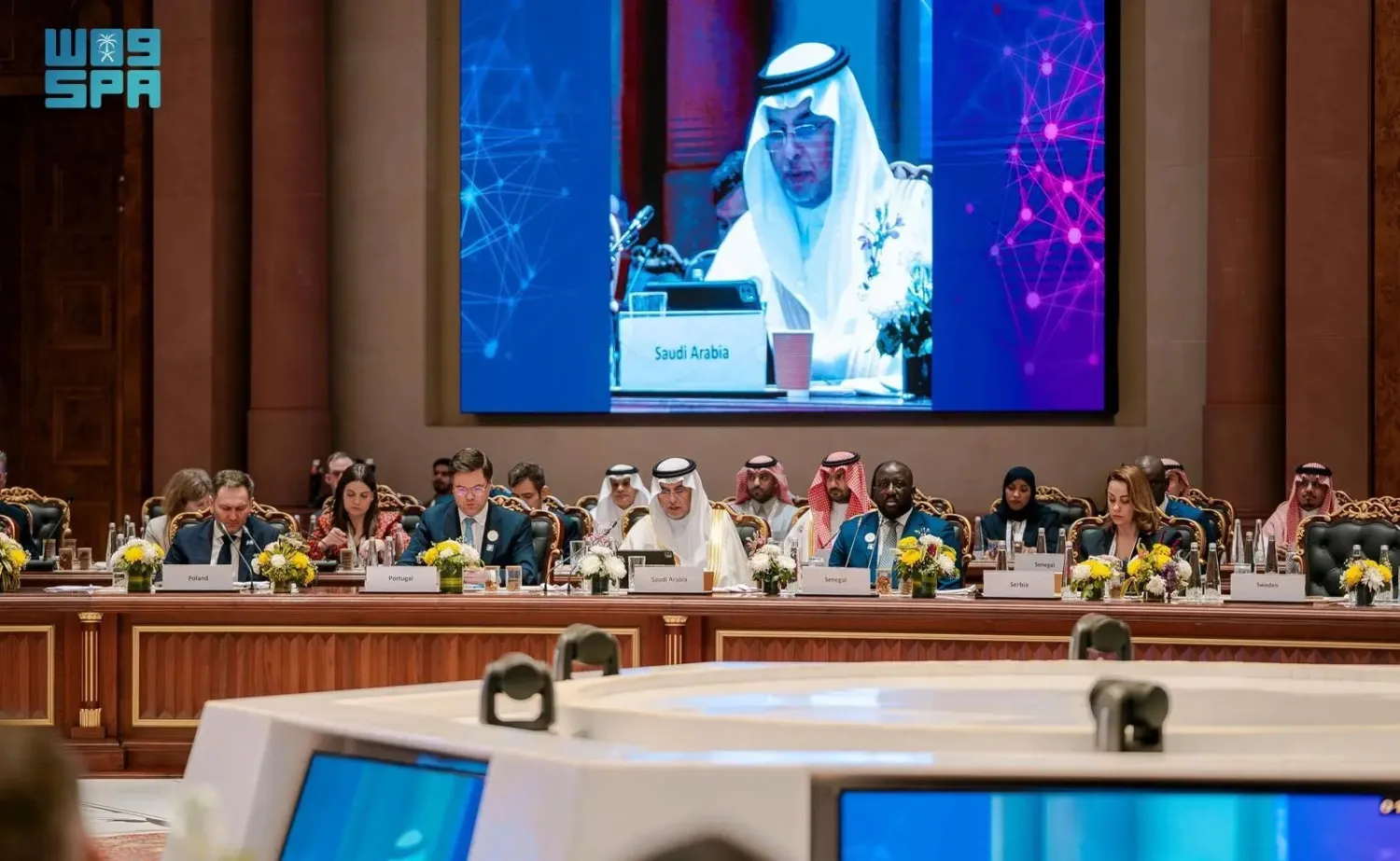
Saudi Arabia Joins Global Partnership on Artificial Intelligence

Saudi Data and Artificial Intelligence Authority (SDAIA) President Dr. Abdullah Al-Ghamdi speaks at the India AI Impact Summit 2026. (SPA)
TT

Saudi Arabia Joins Global Partnership on Artificial Intelligence

Saudi Data and Artificial Intelligence Authority (SDAIA) President Dr. Abdullah Al-Ghamdi speaks at the India AI Impact Summit 2026. (SPA)

Saudi Arabia has officially joined the Global Partnership on Artificial Intelligence (GPAI), an initiative hosted by the Organization for Economic Cooperation and Development and originating from the G7, reported the Saudi Press Agency on Saturday.

Saudi Data and Artificial Intelligence Authority (SDAIA) President Dr. Abdullah Al-Ghamdi made the announcement at the India AI Impact Summit 2026.

Al-Ghamdi emphasized that the accession to the GPAI underscores the Kingdom’s leadership in fostering the responsible and reliable use of AI. 

This strategic partnership aims to expand AI risk monitoring to the Middle East, aligning regional priorities with international standards and reinforcing the Riyadh Charter on AI to ensure ethical technological development for the benefit of humanity, he added.

Supported by Prince Mohammed bin Salman bin Abdulaziz Al Saud, Crown Prince and Prime Minister, the membership aligns with Vision 2030 goals to localize advanced technologies and boost the digital economy's contribution to GDP.

By joining over 40 nations, Saudi Arabia will actively shape international AI standards, promote ethical and responsible AI use, and attract high-quality global investments into its robust regulatory environment.

Saudi Arabia ranks third globally in contributions to the Organization for Economic Cooperation and Development AI Policy Observatory, having submitted over 60 policies to support international governance.