

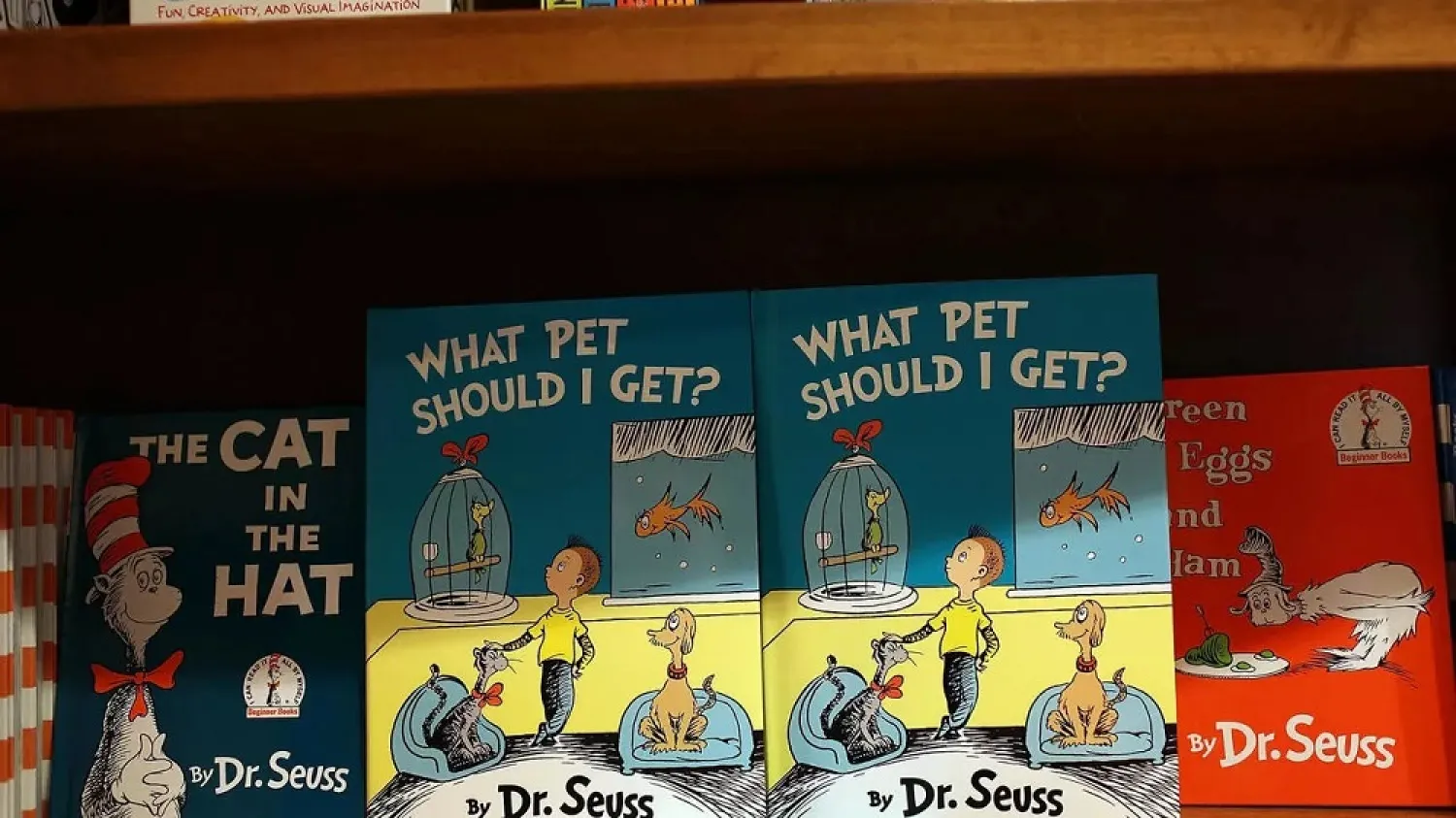

Dr. Seuss Pulls Six Books over Racist Imagery

Dr. Seuss books on display in a bookshop in Florida in 2015. (AFP)
TT

Dr. Seuss Pulls Six Books over Racist Imagery

Dr. Seuss books on display in a bookshop in Florida in 2015. (AFP)

They are beloved by generations of early readers for their wacky rhyming tales and mischievous plotlines, but six Dr. Seuss books are being pulled because of imagery now considered racist.

Dr. Seuss Enterprises -- the publisher of the bestselling children's books -- announced Tuesday that it is taking the six titles, which include "If I Ran the Zoo" and "The Cat's Quizzer," out of print.

The move comes as criticism grows in the United States over the way minority communities have been portrayed in many of his books.

Dr. Seuss Enterprises said it had made the decision after carrying out a review of its collection last year with the help of experts, including teachers.

"These books portray people in ways that are hurtful and wrong," the company said in a statement.

The other titles being consigned to history are "And to Think That I Saw It on Mulberry Street," "McElligot's Pool," "On Beyond Zebra!" and "Scrambled Eggs Super!"

"Ceasing sales of these books is only part of our commitment and our broader plan to ensure Dr. Seuss Enterprises’ catalog represents and supports all communities and families," the statement added.

Dr. Seuss Enterprises made the announcement on what would have been the birthday of the famous children's book author.

Seuss, born Theodor Seuss Geisel in Massachusetts in 1904, published more than 60 books during his lifetime, including some of the most popular children's books of all time.

His most famous works include "The Cat in the Hat," "Green Eggs and Ham" and "How the Grinch Stole Christmas."

Seuss's books have sold more than 650 million copies and have been translated into dozens of languages.

However, his books are being reevaluated over their portrayal of Black and Asian people.

A 2019 study published in the "Research on Diversity in Youth Literature" journal studied 50 of his books.

The report concluded that 43 of the 45 characters of color had characteristics aligning with the definition of Orientalism.

The two Black characters in the books were identified as "African" and both "align with the theme of anti-Blackness," the study said.

Stereotypical characters portrayed as "Arabian" appear in "If I Ran the Zoo," "On Beyond Zebra!" and "Scrambled Eggs Super!"

"The Cat's Quizzer" also features "Arabian" figures as well as a character portrayed as "a Japanese."

"And to Think That I Saw It on Mulberry Street," features a "Chinese boy" with a rice bowl and chopsticks.

The study also noted that Seuss published anti-Black and anti-Semitic cartoons in a magazine in the 1920s as well as racist anti-Japanese propaganda during World War II.

On Saturday, a school district in Virginia suggested it was moving away from Dr. Seuss books while not banning them completely.

"Research in recent years has revealed strong racial undertones in many books written/illustrated by Dr. Seuss," Loudoun County Public Schools said.

In 2017, a school librarian in Cambridge Massachusetts said she would not accept a gift of ten Dr. Seuss books from then first lady Melania Trump because many of his books were "steeped in racist propaganda, caricatures, and harmful stereotypes."



Culture Being Strangled by Kosovo's Political Crisis

The cinema has been waiting for much-needed repairs for years. Armend NIMANI / AFP
TT

Culture Being Strangled by Kosovo's Political Crisis

The cinema has been waiting for much-needed repairs for years. Armend NIMANI / AFP

Kosovo's oldest cinema has been dark and silent for years as the famous theater slowly disintegrates under a leaky roof.

Signs warn passers-by in the historic city of Prizren that parts of the Lumbardhi's crumbling facade could fall while it waits for its long-promised refurbishment.

"The city deserves to have the cinema renovated and preserved. Only junkies gathering there benefit from it now," nextdoor neighbor butcher Arsim Futko, 62, told AFP.

For seven years, it waited for a European Union-funded revamp, only for the money to be suddenly withdrawn with little explanation.

Now it awaits similar repairs promised by the national government that has since been paralyzed by inconclusive elections in February.

And it is anyone's guess whether the new government that will come out of Sunday's snap election will keep the promise.

'Collateral damage'

Cinema director Ares Shporta said the cinema has become "collateral damage" in a broader geopolitical game after the EU hit his country with sanctions in 2023.

The delayed repairs "affected our morale, it affected our lives, it affected the trust of the community in us," Shporta said.

Brussels slapped Kosovo with sanctions over heightened tensions between the government and the ethnic Serb minority that live in parts of the country as Pristina pushed to exert more control over areas still tightly linked to Belgrade.

Cultural institutions have been among the hardest-hit sectors, as international funding dried up and local decisions were stalled by the parliamentary crisis.

According to an analysis by the Kosovo think tank, the GAP Institute for Advanced Studies, sanctions have resulted in around 613 million euros ($719 million) being suspended or paused, with the cultural sector taking a hit of 15-million-euro hit.

'Ground zero'

With political stalemate threatening to drag on into another year, there are warnings that further funding from abroad could also be in jeopardy.

Since February's election when outgoing premier Albin Kurti topped the polls but failed to win a majority, his caretaker government has been deadlocked with opposition lawmakers.

Months of delays, spent mostly without a parliament, meant little legislative work could be done.

Ahead of the snap election on Sunday, the government said that more than 200 million euros ($235 million) will be lost forever due to a failure to ratify international agreements.

Once the top beneficiary of the EU Growth Plan in the Balkans, Europe's youngest country now trails most of its neighburs, the NGO Group for Legal and Political Studies' executive director Njomza Arifi told AFP.

"While some of the countries in the region have already received the second tranches, Kosovo still remains at ground zero."

Although there have been some enthusiastic signs of easing a half of EU sanctions by January, Kurti's continued push against Serbian institutions and influence in the country's north continues to draw criticism from both Washington and Brussels.

'On the edge'

Across the river from the Lumbardhi, the funding cuts have also been felt at Dokufest, a documentary and short film festival that draws people to the region.

"The festival has had to make staff cuts. Unfortunately, there is a risk of further cuts if things don't change," Dokufest artistic director Veton Nurkollari said.

"Fortunately, we don't depend on just one source because we could end up in a situation where, when the tap is turned off, everything is turned off."

He said that many in the cultural sector were desperate for the upcoming government to get the sanctions lifted by ratification of the agreements that would allow EU funds to flow again.

"Kosovo is the only one left on the edge and without these funds."


Saudi Culture Ministry Concludes Intangible Cultural Heritage Documentation Project in Al-Ahsa

Saudi Culture Ministry Concludes Intangible Cultural Heritage Documentation Project in Al-Ahsa
TT

Saudi Culture Ministry Concludes Intangible Cultural Heritage Documentation Project in Al-Ahsa

Saudi Culture Ministry Concludes Intangible Cultural Heritage Documentation Project in Al-Ahsa

The Saudi Ministry of Culture concluded the project to survey, document, and archive intangible cultural heritage in Al-Ahsa Governorate by holding a workshop in the governorate, attended by stakeholders and relevant entities, as part of the ministry’s efforts to preserve national cultural heritage and strengthen Saudi cultural identity, reported the Saudi Press Agency on Thursday.

The project included a field survey covering various cities and villages across Al-Ahsa, during which diverse elements of intangible cultural heritage were identified and documented. These included oral traditions, performing arts, skills associated with traditional cultural crafts, social practices, and knowledge related to nature and the local environment.

The work was carried out in cooperation with concerned entities, specialized experts, and local practitioners.

The workshop reviewed the project’s final outcomes and presented reports on documentation and digital archiving activities.

It discussed mechanisms to ensure the sustainability of these efforts and the transmission of this cultural legacy to future generations, contributing to greater community awareness of the value and importance of intangible cultural heritage.


Hail Region Pavilion Showcases Heritage Artifacts at Camel Festival

The pavilion aims to connect visitors to Hail's history and social legacy - SPA
TT

Hail Region Pavilion Showcases Heritage Artifacts at Camel Festival

The pavilion aims to connect visitors to Hail's history and social legacy - SPA

Hail Region pavilion at the Ministry of Interior’s Security Oasis exhibition, part of the 10th King Abdulaziz Camel Festival in Al-Sayahid, features heritage artifacts that reflect the region's renowned hospitality.

The display includes ancient trays and copperware from nearly seventy years ago.

According to SPA, these traditional food preparation and serving vessels have garnered significant interest from visitors. They document daily life in old Hail and its deep-rooted social traditions, particularly in gatherings and special occasions.

The pavilion aims to connect visitors to Hail's history and social legacy, fostering appreciation for national heritage and ensuring cultural preservation for future generations.