Morocco’s Ruling Party Calls for Studying Impact of Legalizing Cannabis

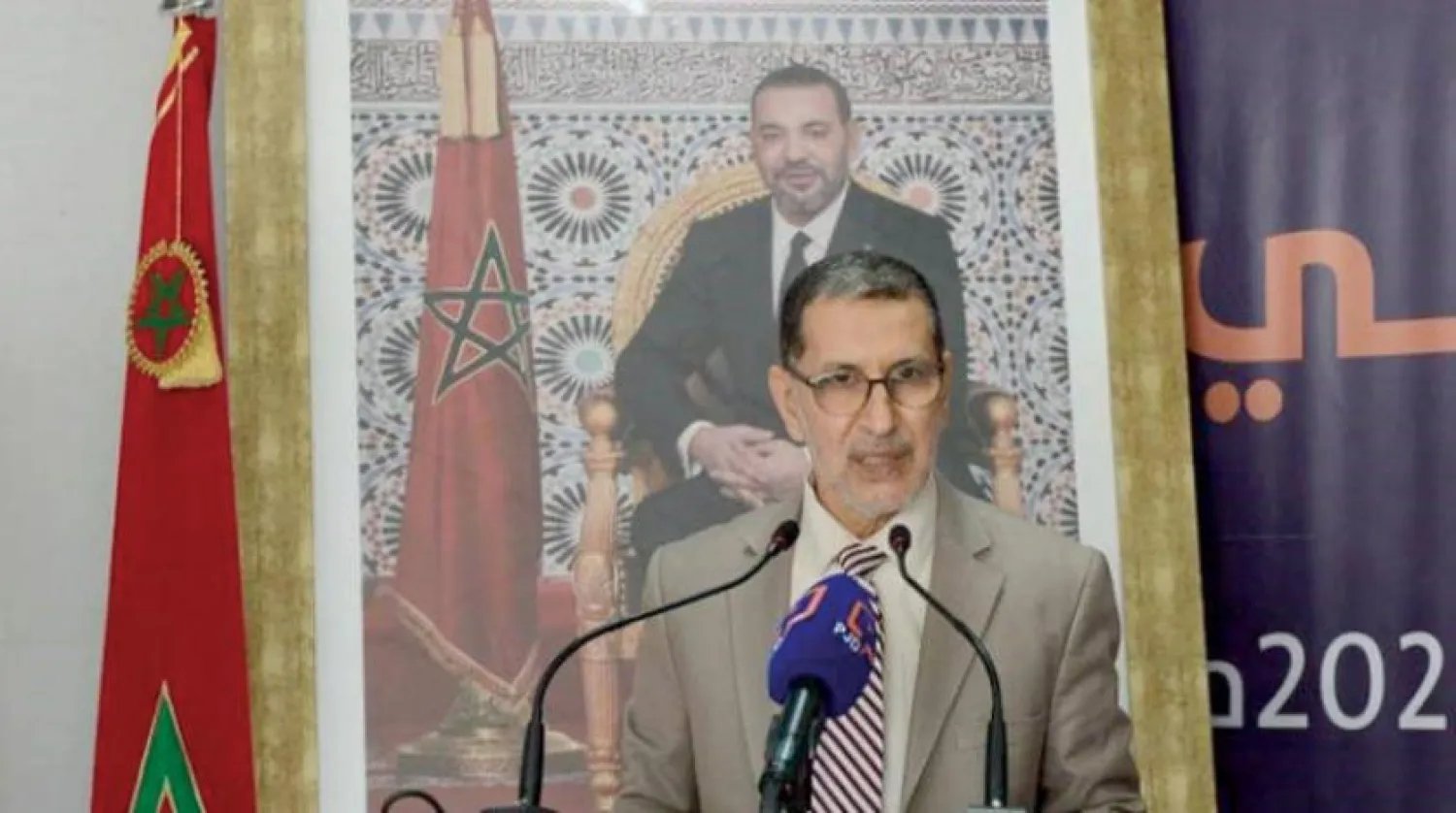
Prime Minister Saad Eddine El Othmani, Secretary-General of the Justice and Development Party. (MAP)
TT

Morocco’s Ruling Party Calls for Studying Impact of Legalizing Cannabis

Prime Minister Saad Eddine El Othmani, Secretary-General of the Justice and Development Party. (MAP)

Morocco’s Justice and Development Party (PJD) has called for carrying out a study on the impact of legalizing the use of cannabis in the country.

The party’s general-secretariat suggested opening a “public discussion” in this regard and expanding “institutional consultations” before making a final decision.

It explained in a statement Monday that its members have been considering the “implications of the bill on using cannabis for medical and industrial uses.”

The government will convene Thursday to continue examining the draft bill on the legal use of cannabis. The vote over the issue had been delayed on two separate occasions due to the controversy surrounding it.

The dispute had prompted the resignation of Idris al-Azmi, head of the PJD’s National Council.

Abdelilah Benkirane, the party’s former secretary-general, threatened to resign if its deputies voted in favor of the bill at parliament’s House of Representatives and House of Councilors.

The Interior Ministry had proposed the bill after the World Health Organization approved the use of cannabis for medical purposes and the United Nations Commission on Narcotic Drugs removed it from a list of dangerous drugs.


EU Looking at Options for Boosting Lebanon's Internal Security Forces

Lebanese army members stand on a military vehicle during a Lebanese army media tour, to review the army's operations in the southern Litani sector, in Alma Al-Shaab, near the border with Israel, southern Lebanon, November 28, 2025. REUTERS/Aziz Taher/File Photo 
TT

EU Looking at Options for Boosting Lebanon's Internal Security Forces

Lebanese army members stand on a military vehicle during a Lebanese army media tour, to review the army's operations in the southern Litani sector, in Alma Al-Shaab, near the border with Israel, southern Lebanon, November 28, 2025. REUTERS/Aziz Taher/File Photo 

The European Union is studying options for strengthening Lebanon’s Internal Security Forces (ISF) to help free up the Lebanese army to focus on disarming the armed group Hezbollah, according to a document seen by Reuters on Monday.

A 2024 truce between Lebanon and Israel remains fragile, with Israel carrying out regular strikes on Lebanese territory that it says are targeting Hezbollah’s efforts to rearm.

The document, produced by the EU’s diplomatic arm and circulated to the 27 member states, said it would pursue consultations with Lebanese authorities and that a scoping mission would take place in early 2026 on possible new assistance for the country’s ISF.

EU efforts could “focus on advice, training and capacity-building,” the paper said, adding that the bloc would not take over the tasks of the UN Interim Force in Lebanon (UNIFIL), whose mandate is set to expire at the end of 2026, when it is expected to begin a year-long drawdown and withdrawal.

Instead, the EU “could contribute to the gradual transfer of internal security tasks” from the Lebanese Armed Forces to the ISF, allowing the army to focus on its core defense tasks, the document said.

The UN secretary general is expected to produce a transition plan in June 2026 that will address risks stemming from UNIFIL’s departure.

The paper from the European External Action Service comes ahead of a planned meeting between senior EU and Lebanese officials in Brussels on December 15.

“Through a combination of advice, training and possibly the provision of certain equipment, the overall objective would be to enable the Police and the Gendarmerie to fulfil their mandates in cities and rural areas across the country,” it said, adding the EU could also help Lebanon to better secure its land border with Syria.

French President Emmanuel Macron’s special envoy on Lebanon, Jean-Yves Le Drian, was in Beirut on Monday to propose a roadmap that aims to assess independently Hezbollah’s disarmament, diplomatic sources told Reuters.

Lebanese Prime Minister Nawaf Salam said last week that Lebanon wanted to see a ceasefire monitoring mechanism play a more robust role in verifying Israel's claims that Hezbollah is rearming as well as the work of the Lebanese army in dismantling the armed group's infrastructure.

Asked whether that meant Lebanon would accept US and French troops on the ground as part of a verification mechanism, Salam said, “of course.”


Alimi to Ambassadors: STC’s Unilateral Actions Threaten Stability in Yemen

Chairman of Yemen’s Presidential Leadership Council Dr. Rashad al-Alimi. (Saba news agency)
TT

Alimi to Ambassadors: STC’s Unilateral Actions Threaten Stability in Yemen

Chairman of Yemen’s Presidential Leadership Council Dr. Rashad al-Alimi. (Saba news agency)

Chairman of Yemen’s Presidential Leadership Council Dr. Rashad al-Alimi said on Monday the Southern Transitional Council’s (STC) actions in eastern provinces in recent days undermine the legitimate government and the country’s security.

He met in Riyadh with ambassadors of countries that are sponsoring Yemen’s political process to brief them on the latest developments. Prime Minister Salem Saleh bin Braik was also present at the meeting.

Saudi Arabia has maintained intense efforts to restore calm in wake of the developments. Alimi hailed Riyadh’s “responsible role in sponsoring” the efforts in the Hadhramaut province, including reaching an agreement that would secure oil facilities and prevent the eruption of open clashes.

He lamented that the efforts were being undermined by the STC’s unilateral actions that have stoked tensions and mistrust, reported official media.

The STC’s actions are a “flagrant violation of the references of the transitional phase and a direct threat to the unity of military decision-making,” he warned.

He told the ambassadors that the “partnership with the international community is not limited to provision of aid, but also a joint responsibility in protecting the idea of the state, supporting its legitimate institutions and preventing the establishment of parallel authorities.”

Alimi warned of the economic consequences and negative impact on livelihoods, especially in Hadhramaut and al-Mahra, in wake of the STC’s actions, which could also lead to a loss of trust by donors in the legitimate government.

He called for a “unified, clear and frank international stance that rejects the unilateral measures and underscores a full commitment to the transitional phase and supports the legitimate government as the sole executive authority that can protect Yemen’s higher interests.”

The country and people cannot withstand the reopening of new battlefronts, he warned. “The real battle remains focused on restoring state institutions and ending the coup by the Iran-backed Houthi terrorist militias,” he stressed.

The PLC and government remain committed to the state and people and regional and international partnerships, led by Saudi Arabia that has long come to the aid of the Yemeni people, he declared.


Israeli Military Says It Struck Hezbollah Sites in Southern Lebanon

Smoke billows over the village of Aaichiyeh after Israeli strikes, as seen from Marjayoun in southern Lebanon, October 20, 2025. REUTERS/Karamallah Daher
TT

Israeli Military Says It Struck Hezbollah Sites in Southern Lebanon

Smoke billows over the village of Aaichiyeh after Israeli strikes, as seen from Marjayoun in southern Lebanon, October 20, 2025. REUTERS/Karamallah Daher

The Israeli military said on Tuesday that it struck infrastructure belonging to Hezbollah in several areas in southern Lebanon, including what it described as a training compound used by the armed group's Radwan forces.

Military structures and a launch site belonging to Hezbollah were also hit in the attacks, the military added in a statement.

The strikes come less than a week after Israel and Lebanon both sent civilian envoys to a military committee monitoring their ceasefire, a step towards a months-old US demand that the two countries broaden talks in line with President Donald Trump's Middle East peace agenda.

Israel and Lebanon agreed to a US-brokered ceasefire in 2024 that ended more than a year of fighting between Israel and Hezbollah. Since then, they have traded accusations over violations.

Lebanon's state news agency, NNA, reported that Israeli warplanes carried out a series of airstrikes targeting several places in the south.