


US, Iraq Reaffirm Continued Security Cooperation

US soldiers in Baghdad, Iraq (Reuters)
TT

US, Iraq Reaffirm Continued Security Cooperation

US soldiers in Baghdad, Iraq (Reuters)

While Washington and Baghdad failed in specifying a date for US forces exiting Iraq, the two countries were able to focus on key issues like healthcare, investment, security, energy, education and counterterrorism during their third round of strategic dialogue.

In a joint statement on the US-Iraq Strategic Dialogue released by the US State Department, both Washington and Baghdad reaffirmed the principles agreed upon by the two countries in the Strategic Framework Agreement (SFA), which was signed in 2008.

“The US reaffirmed its respect for Iraq’s sovereignty, territorial integrity, and relevant decisions of the Iraqi legislative and executive authorities,” read the statement.

It also said that the Iraqi delegation included representatives of the Kurdistan Regional Government (KRG) and was led by Foreign Minister Fuad Hussein, while the US delegation was led by State Secretary Anthony Blinken.

In the security and counterterrorism discussion, the US and Iraq reiterated their mutual intention to continue bilateral security coordination and cooperation and stressed that US forces are in Iraq at the invitation of Iraqi Government to support the Iraqi Security Forces (ISF) in their fight against ISIS.

The two sides “reaffirmed their mutual intention to continue bilateral security coordination and cooperation,” stressing that the redeployment of the US and coalition forces is based on "the increasing capacity of the Iraqi forces.”

“The mission of US and coalition forces has now transitioned to one focused on training and advisory tasks, thereby allowing for the redeployment of any remaining combat forces from Iraq, with the timing to be established in upcoming technical talks,” the statement added.

“The transition of US and other international forces away from combat operations to training, equipping, and assisting the ISF reflects the success of their strategic partnership and ensures support to the ISF’s continued efforts to ensure ISIS can never again threaten Iraq’s stability.”

The Iraqi government in turn committed to protecting the international coalition personnel, convoys, and diplomatic facilities, it said, adding that the two sides emphasized that the current military bases, on which US and coalition personnel are present, are Iraqi bases and their presence is only for supporting Iraq's efforts in the fight against ISIS.



Saudi Arabia, Pakistan Affirm Continued Joint Efforts to Confront Attacks

Saudi Minister of Defense Prince Khalid bin Salman bin Abdulaziz met with Pakistan's Chief of Army Staff and Chief of Defense Forces Field Marshal Asim Munir in Riyadh. SPA
TT

Saudi Arabia, Pakistan Affirm Continued Joint Efforts to Confront Attacks

Saudi Minister of Defense Prince Khalid bin Salman bin Abdulaziz met with Pakistan's Chief of Army Staff and Chief of Defense Forces Field Marshal Asim Munir in Riyadh. SPA

Saudi Defense Minister Prince Khalid bin Salman bin Abdulaziz said early on Saturday that he had affirmed with Pakistan's army chief, Field Marshal Asim Munir, in Riyadh continued joint efforts to confront attacks against the Kingdom in accordance with the Makkah Joint Defense Agreement.

The pact was signed by Saudi Arabia, Pakistan and Türkiye last month.

Prince Khalid met with Munir to discuss the attacks on Makkah and on civilian and economic facilities in Saudi Arabia, the Saudi Press Agency reported.

They commended the outcomes of the meeting of the chiefs of staff of the Makkah Joint Defense Agreement states and stressed the continuation of joint efforts to confront the attacks under the agreement, SPA said.

The meeting was attended by Minister of State, Cabinet Member, and National Security Adviser Dr. Musaed bin Mohammed Al-Aiban; Chief of the General Staff Gen. Fayyad bin Hamed Al-Ruwaili; and Adviser to the Minister of Defense for Intelligence Affairs Hisham bin Abdulaziz bin Saif, along with several Pakistani officials.

Hours earlier, the military chiefs of Saudi Arabia, Pakistan and Türkiye reviewed threats facing Saudi Arabia at ⁠a ⁠meeting in the Saudi capital.


Saudi Coalition Says it Intercepts Missiles, Drones

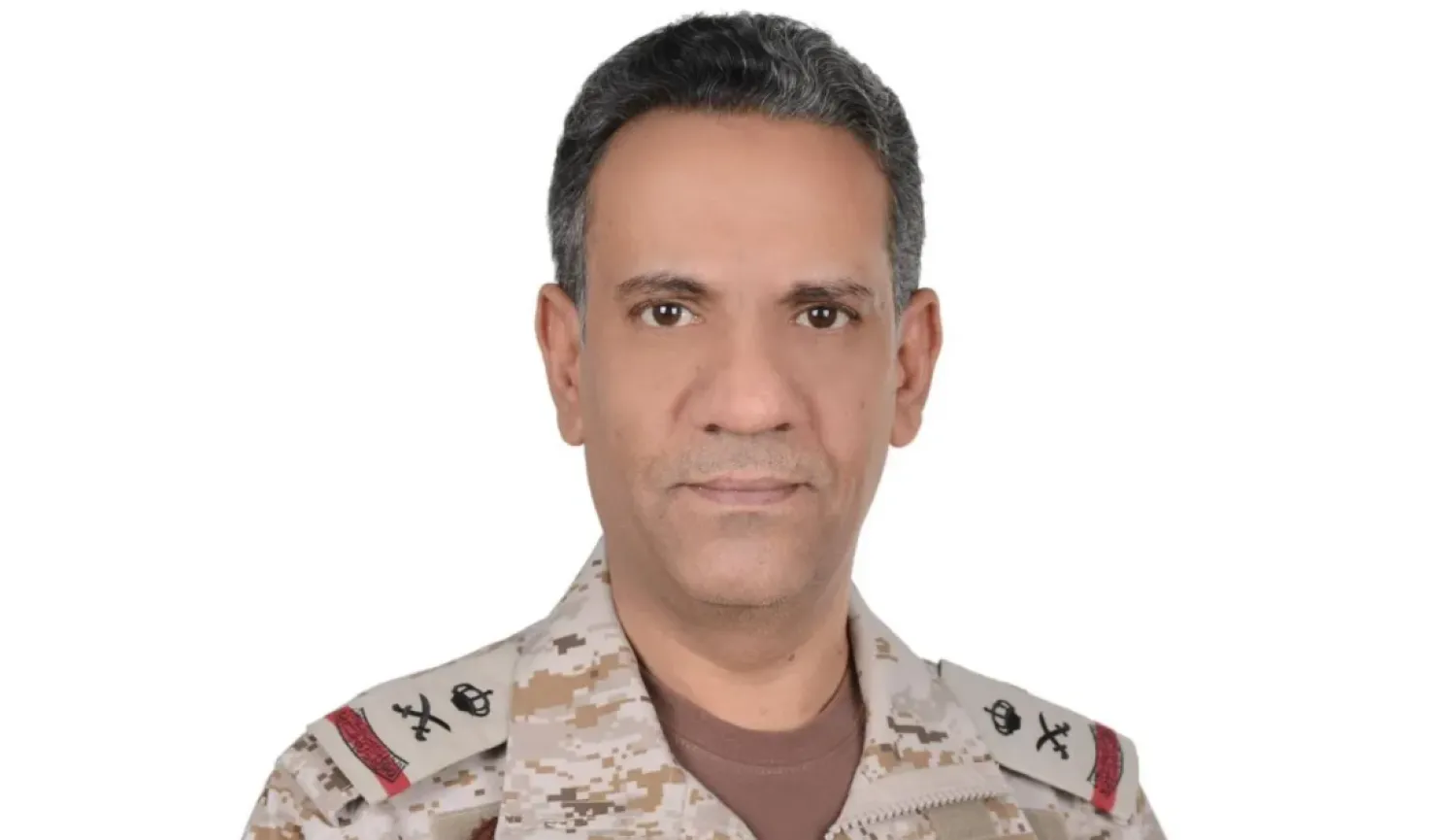
Official Spokesperson for the Coalition to Restore Legitimacy in Yemen Major General Turki Al-Malki
TT

Saudi Coalition Says it Intercepts Missiles, Drones

Official Spokesperson for the Coalition to Restore Legitimacy in Yemen Major General Turki Al-Malki

Official Spokesperson for the Coalition to Restore Legitimacy in Yemen Major General Turki Al-Malki said early on Saturday that the Coalition had intercepted two ballistic missiles and two drones launched by the Houthis towards the Kingdom.

Al-Malki said in separate statements that the missiles were headed towards Khamis Mushait and the drones towards the capital, Riyadh, adding that the Coalition was monitoring the missile threat and drones launched at the Kingdom.

The Saudi civil defense had ⁠sent alerts overnight ⁠for Khamis Mushait and Abha.


Albudaiwi: Water Security is Strategic Priority for Gulf Stability, Energy Security

Part of the "Water as a Strategic Imperative: From Global Challenges to Collective Action" session held on the sidelines of the 81st session of the UN General Assembly in New York (GCC)
TT

Albudaiwi: Water Security is Strategic Priority for Gulf Stability, Energy Security

Part of the "Water as a Strategic Imperative: From Global Challenges to Collective Action" session held on the sidelines of the 81st session of the UN General Assembly in New York (GCC)

Gulf Cooperation Council (GCC) Secretary-General Jasem Albudaiwi stressed that water security constitutes a strategic priority for GCC member states, directly intersecting with human security, economic prosperity, food security, and energy security as a fundamental pillar of stability.

Albudaiwi made the remarks during a panel titled "Water as a Strategic Imperative: From Global Challenges to Collective Action," organized by the Permanent Mission of the United Arab Emirates to the United Nations on the sidelines of the 81st session of the UN General Assembly in New York, SPA reported.

He noted that enduring regional water scarcity has driven GCC countries to innovate, invest, and build extensive expertise in desalination, wastewater recycling, demand management, and advanced technologies, while strengthening the water-energy-food-climate nexus.

Emphasizing that technology alone cannot guarantee water security, Albudaiwi highlighted ongoing GCC joint initiatives to establish a regional water grid interconnection. The project aims to bolster supply security, regional readiness, and emergency response capabilities during crises.

He also called for leveraging artificial intelligence, smart water management systems, and renewable energy, alongside collaborative financing models linking governments, development institutions, and the private sector to develop scalable infrastructure projects.

Albudaiwi concluded by pointing to the upcoming UN Water Conference, co-hosted by the UAE and Senegal in Abu Dhabi in December 2026, as a pivotal platform to advance multilateral water partnerships and tangible investments.