Turkey to Establish Military Base in Northern Iraq
Turkish Interior Minister Suleyman Soylu (Reuters)
Turkish Interior Minister Suleyman Soylu announced plans to establish a military base in northern Iraq, similar to that in northern Syria.
Ankara will establish the base in the Metina area in the northern Iraqi region of Dohuk to block the movement of Kurdistan Workers’ Party (PKK) fighters there, Soylu told members of the ruling Justice and Development Party’s executive board on Friday.
“The operations in northern Iraq will continue. Metina region is an important strategic place. Just like we did in Syria, we will establish bases and control the area,” Soylu stressed.
“This region is a route to Qandil mountains and we will control this route,” he added, referring to PKK hideouts in the Kurdistan Region’s mountains.
Last week, the Turkish army launched a new ground and air offensive against outlawed Kurdish militants’ bases in northern Iraq.
Commando forces landed in the Metina region from helicopters while warplanes dropped bombs on PKK targets.
Turkey considers the PKK as a terror group. The Turkish army regularly conducts cross-border operations and air raids against PKK bases in northern Iraq.
Police officers in Iraq's Anbar inspect projectiles and drones seized in the governorate. (Security media)
The Ukrainian Embassy in Iraq denied what it described as Iranian “allegations” that Kyiv had deployed thousands of drones in Iraq.
The tension between Tehran and Kyiv is primarily linked to the military support, specifically drones, that Iran has provided to Russia in its war against Ukraine, alongside Kyiv's alliance with the United States and Western nations.
The tension has manifested in accusations by Tehran and its allies in Iraq against Ukraine.
Kyiv's stance came via a statement from its embassy in Baghdad responding to reports published by the Iranian Tasnim news agency, which alleged that Ukraine had deployed drone units and thousands of drones in the Kurdistan Region of Iraq.
The embassy stressed that these allegations are completely baseless and are deliberate disinformation, noting that Kyiv has not deployed any drones, drone units, or associated personnel in either the Kurdistan Region or anywhere else in Iraq.
The statement noted that Ukraine fully respects the sovereignty and territorial integrity of Iraq, and deeply values the friendly relations that bind it to the Iraqi government and the Kurdistan Region Government.
On Tuesday, the Tasnim news agency, which is affiliated with the Iranian Revolutionary Guard Corps, cited a security source claiming that Ukraine had deployed specialized drone forces in areas surrounding Iran, and that “this move is part of the hostile actions by Europe and the NATO alliance against Tehran.”
Tasnim cited a security source alleging that Ukraine “has deployed specialized drone forces in areas surrounding Iran, particularly the Kurdistan Region, and that information regarding the countries hosting the Ukrainian forces and drones is confidential and will be revealed later.”
Iraq’s National Security Advisor Qasim al-Araji had announced last July the arrest of a number of cells and operatives who confessed to working for Ukraine and to their involvement in carrying out attacks against government installations and facilities inside Iraqi territory.
The issue caused major uproar at the time, and many said it was aimed at diverting attention from the attacks carried out by pro-Iranian armed factions inside and outside Iraq.
The Ukrainian Ministry of Foreign Affairs at the time issued a strongly worded response to Araji's statements, deeming them "irresponsible and baseless."
Tehran is carrying out intense security efforts in Iraq possibly tied to preparations to the renewal of the war with the US.
Several security delegations have arrived in Baghdad in recent days to discuss numerous security issues, including securing the borders between the two countries.
Houthis Attack Yemen's Aden Airport with Ballistic Missilehttps://english.aawsat.com/arab-world/5332055-houthis-attack-yemens-aden-airport-ballistic-missile
A truck loaded with firewood drives through the Al-Basateen neighborhood in Aden, Yemen, Tuesday, Oct. 13, 2026. (AP)
TT
TT
Houthis Attack Yemen's Aden Airport with Ballistic Missile
A truck loaded with firewood drives through the Al-Basateen neighborhood in Aden, Yemen, Tuesday, Oct. 13, 2026. (AP)
The Houthi group renewed its attacks on Aden International Airport with a ballistic missile on Wednesday, amid intensifying battles on the Taiz fronts.
Elsewhere, the Yemeni Armed Forces continue to deplete the personnel and equipment capabilities of the Iranian-backed group under Operation Dawn of Yemen across various fronts, most notably in Taiz and western Lahj.
Meanwhile, the humanitarian crisis in Taiz Governorate is worsening as the Houthis continue to block supply routes amid escalating clashes around the provincial capital, which is home to more than 600,000 civilians.
UN agencies have warned of severe repercussions threatening nearly three million people in the governorate, particularly children, women, and displaced persons, driven by declining food, water, and fuel supplies, and mounting pressure on healthcare facilities and basic services.
Families are rationing drinking water as diesel shortages hobble pumping stations and sanitation systems, said Akhil Iyer, UNICEF's representative in Yemen.
Water production in Taiz has fallen by about 50%, according to Save the Children.
“We find children in an extremely dangerous situation where they are not able to have their basic needs satisfied. They are not able to access sufficient food and water and healthcare,” said Rishana Haniffa, Save the Children's country director for Yemen.
Water Rationing, Rubbish Pile-up Raise Disease Fears in Yemen’s Besieged Taizhttps://english.aawsat.com/arab-world/5332047-water-rationing-rubbish-pile-raise-disease-fears-yemen%E2%80%99s-besieged-taiz
A woman and children wait to fill jerrycans with drinking water from a charity tank in the southwestern city of Taiz, Yemen, October 20, 2026. (Reuters)
TT
TT
Water Rationing, Rubbish Pile-up Raise Disease Fears in Yemen’s Besieged Taiz
A woman and children wait to fill jerrycans with drinking water from a charity tank in the southwestern city of Taiz, Yemen, October 20, 2026. (Reuters)
Families have started rationing water in and around Yemen's Taiz city, where renewed fighting has disrupted fuel supplies and access to water systems serving 3 million people, aid groups and UN agencies said.
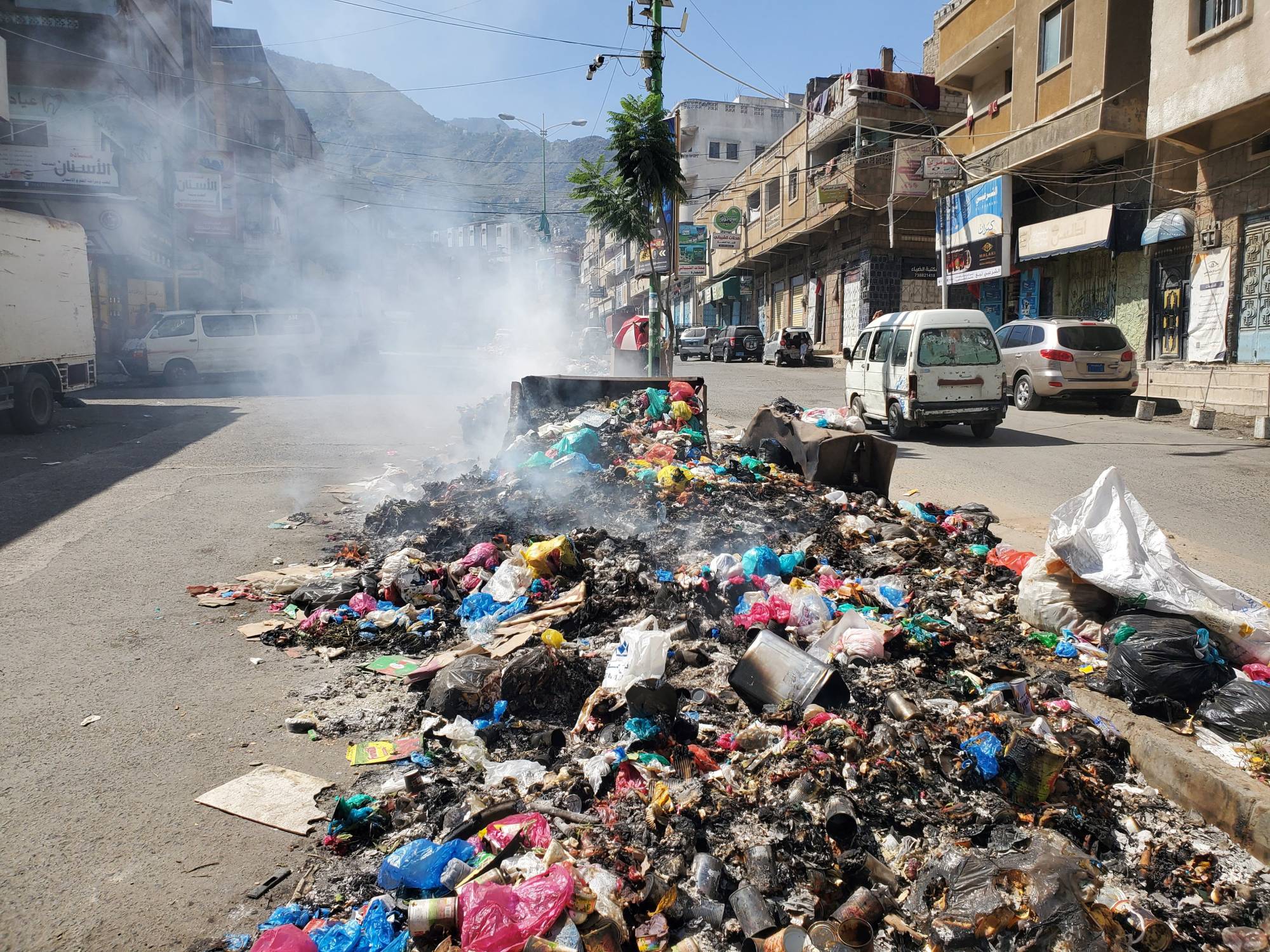
Meanwhile, mounting piles of rubbish along major roads are raising fears of disease outbreaks in the city, Yemen's third-largest.
Fighting between the legitimate government and the Iran-allied terrorist Houthi militia since September has cut key supply routes, including the Taiz-Aden corridor, worsening shortages of water, food and fuel in and around the city.
The lack of fuel is hampering the operation of water pumps and hospitals, while disruption to waste collection has left rubbish piled along roads of the city, a stronghold of anti-Houthi forces which is now under siege by the militants.
The Taiz governorate hosts nearly half of the 250,000 people displaced by the latest escalation, aid groups said.
"The state of the rubbish in the city is very wretched, and the build-up is terrible, like nothing before,” Taiz resident Abdelbari al-Qadi told Reuters.
Sanitation worker Ali Ahmed said authorities could no longer go to the main dumping site because of clashes, and they were forced to burn it in the streets.
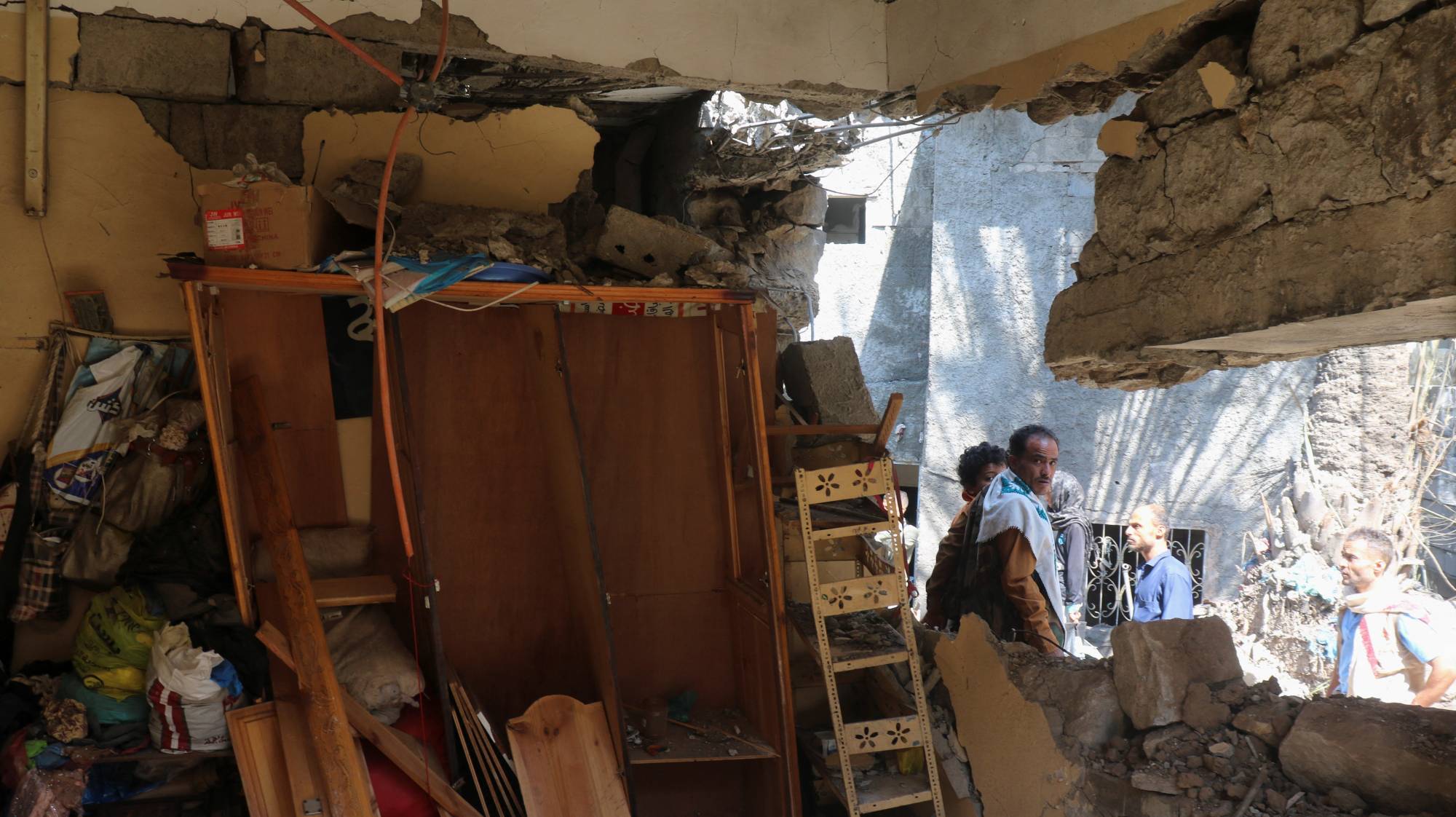
People inspect damage at a house hit by a Houthi missile in the southwestern city of Taiz, Yemen October 21, 2026. (Reuters)
'EXTREMELY DANGEROUS SITUATION' FOR CHILDREN, SAYS RELIEF OFFICIAL
Families are rationing drinking water as diesel shortages hobble pumping stations and sanitation systems, said Akhil Iyer, UNICEF's representative in Yemen.
"I get the water with difficulty. We wait in queues from the morning until our turn comes,” Alaa Khalil told Reuters while people queued to fill jerry cans in Taiz, where most residents depend on trucked water.
Access to the Al-Dhubab aquifer, a major source of trucked water for Taiz, has been restricted, while fuel disruptions have affected pumps, creating a severe water crisis, said Wathiq Aghbari, director general of the Local Water and Sanitation Authority in the governorate.
Water production in Taiz has fallen by about 50%, according to Save the Children.
“We find children in an extremely dangerous situation where they are not able to have their basic needs satisfied. They are not able to access sufficient food and water and healthcare,” said Rishana Haniffa, Save the Children's country director for Yemen.
Aid groups are exploring other sources, including a shallow aquifer west of the city. The cost of a water truck has tripled from about 23,000 Yemeni rials ($14.80) before the latest escalation to about 70,000 rials ($45), according to UNICEF.
CARE International says cash assistance is buying less food and water as prices rise.
“We feel the situation is really getting out of hand unless we able to negotiate access to have water tankers come in to the city,” said Iman Abdullahi, CARE Yemen country director.
A pile of garbage on a street in the southwestern city of Taiz, Yemen, October 19, 2026. Picture taken with a mobile phone. (Reuters)
RUBBISH BUILD-UP 'WILL CAUSE DISEASES', SAYS HEALTH OFFICIAL
"The build-up of rubbish is very harmful and will cause diseases, whether respiratory or otherwise," said Abdulrahman al-Sabri, director of Taiz Governorate's Health Office, adding that dengue fever and cholera cases were spreading.
Cholera cases have tripled since early September from 221 to 683 this month, while hospitals face medicine shortages and 12 facilities have fuel supplies sufficient for only about four days, the World Health Organization said.
A doctor who asked not to be named for security reasons said some families could not reach healthcare facilities because of fighting around the city.
The Danish Refugee Council said the impact of deteriorating water and sanitation conditions could spread beyond Taiz city. It pointed to overstretched resources in crowded displacement sites across the governorates of Taiz, Lahj, Abyan and Aden.
The spread of disease could also worsen hunger in Taiz governorate, UNICEF said. It has identified 52,000 acutely malnourished children in Taiz so far this year. Road closures have halted UNICEF's deliveries of a therapeutic food for severely malnourished children in Taiz.
لم تشترك بعد
انشئ حساباً خاصاً بك لتحصل على أخبار مخصصة لك ولتتمتع بخاصية حفظ المقالات وتتلقى نشراتنا البريدية المتنوعة