


Lebanon's Cash for Electricity Runs Out

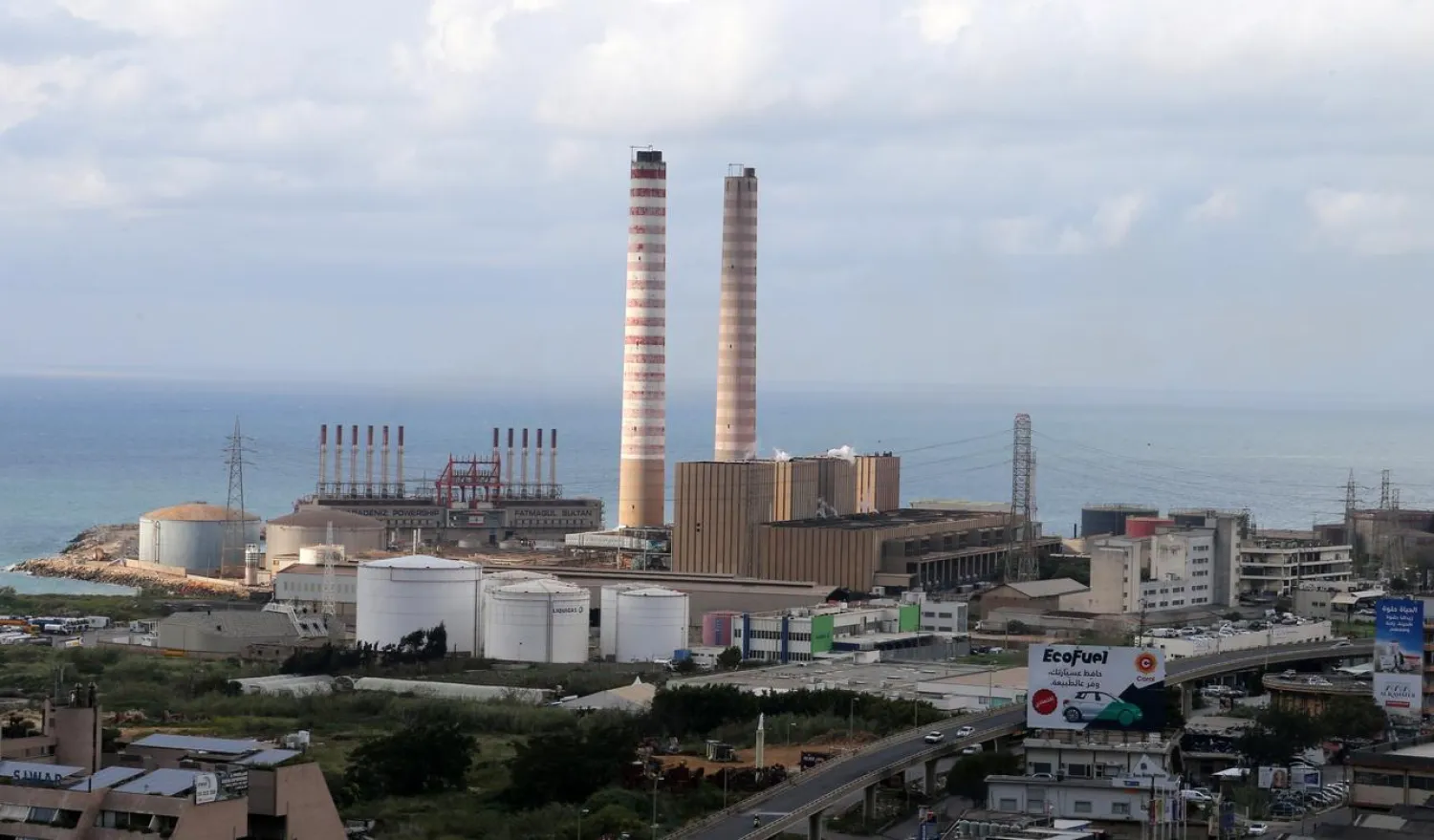
Zouk Power Station is seen in Zouk, north of Beirut, Lebanon March 27, 2019. REUTERS/Mohamed Azakir
TT

Lebanon's Cash for Electricity Runs Out

Zouk Power Station is seen in Zouk, north of Beirut, Lebanon March 27, 2019. REUTERS/Mohamed Azakir

Lebanon's lights may go off this month because cash for electricity generation is running out, a lawmaker said on Thursday, as the country grapples with a deep economic crisis.

Lebanon's parliament had approved a $200 million emergency loan to finance fuel imports for power generation in March, but a committee reviewing the loan has yet to approve it.

"We should not forget that starting May 15, gradual darkness will start," said Nazih Negm, a member of parliament, according to a government statement released after he met the caretaker finance and energy ministers.

The Lebanese have long learned to live with regular power cuts that run for at least three hours a day in the capital and much longer in other areas, because the state's power plants cannot meet demand. Many people rely on private generators.

But the financial crisis has exacerbated the heavily indebted nation's problems, as the government struggles to find enough foreign exchange to pay for fuel and other basic imports.

The loan, approved by lawmakers in March, is being reviewed by a constitutional committee, which is studying whether it is lawful. The government resigned after a massive blast in Beirut in August and is now acting in a caretaker capacity.

"We hope that the constitutional committee does not take a month to reach its decision because the situation can't wait," Reuters quoted Negm as saying, according to the government statement.

Lebanon usually keeps enough fuel for about two months or so, as it is too costly to hold strategic reserves for longer.

The economic meltdown has fueled unrest, locked depositors out of their accounts and hammered the currency, which has lost around 90% of its value against the dollar.


Syria Says Begun Destroying Assad-Era Chemical Weapon Materials

Syrian Ambassador to the United Nations Ibrahim Olabi addresses the Security Council during the meeting on the situation in the Middle East, at UN headquarters in New York City, US, February 18, 2026. (Reuters)
TT

Syria Says Begun Destroying Assad-Era Chemical Weapon Materials

Syrian Ambassador to the United Nations Ibrahim Olabi addresses the Security Council during the meeting on the situation in the Middle East, at UN headquarters in New York City, US, February 18, 2026. (Reuters)

Syria has begun the process of destroying chemical weapon materials identified by an international watchdog, the country's UN envoy said Thursday, signaling a major step forward since the 2024 ouster of autocratic leader Bashar al-Assad.

"This is the very first destruction process since we have been liberated from the previous regime," Ibrahim Olabi told the Security Council. "It's also the first of its kind to destroy chemical materials on Syrian territory for over a decade."

In 2021, the Organization for the Prohibition of Chemical Weapons (OPCW) took the unprecedented step of stripping Syria of its voting rights after finding its air force had used nerve agent sarin and chlorine gas on its own people.

But since Assad's overthrow, the new authorities in Damascus have vowed to cooperate with the OPCW to destroy the chemical weapons the former president was repeatedly accused of using during Syria's 13-year civil war.

"We aim at protecting the Syrian people so that such weapons will not fall into the wrong hands," Olabi said Thursday.

He added that his country was "also protecting the world and the region through such work. Every site that is secured, every ammunition that is identified, does not merely remove a danger to Syria, but the entire world."


Israeli Minister Presents Plan to Remove Gaza Population

Israel's far-right National Security Minister Itamar Ben Gvir - File photo
TT

Israeli Minister Presents Plan to Remove Gaza Population

Israel's far-right National Security Minister Itamar Ben Gvir - File photo

Israel's far-right National Security Minister Itamar Ben Gvir set out a plan on Thursday to remove Palestinians from the Gaza Strip and send them abroad.

Speaking in the run-up to close-fought Israeli elections, he said the plan aimed to see the departure of 250,000 Palestinians from Gaza in the first year, followed by the rest of the roughly two million residents over the following six years.

"It's realistic," said Ben Gvir, claiming that there were countries who were "ready" to take in Gazans, without naming which ones.

Forced displacement of civilians in occupied territory is considered a war crime under the Geneva Conventions.


Palestinians Say Israeli Army Kills Two Teenagers in West Bank

Israeli military heavy machinery demolish two Palestinian buildings near Ramallah, in the Israeli-occupied West Bank, August 31, 2026. REUTERS/Mohammed Torokman
TT

Palestinians Say Israeli Army Kills Two Teenagers in West Bank

Israeli military heavy machinery demolish two Palestinian buildings near Ramallah, in the Israeli-occupied West Bank, August 31, 2026. REUTERS/Mohammed Torokman

The Israeli army killed two teenagers in the occupied West Bank on Wednesday night, the Palestinian health ministry said, while the army said it opened fire during a "violent riot".

Omar Mohammad Naji al-Nassan, 19, and Khalil Rasem Khalil Shahada, 16, were shot dead by the Israeli army in the village of Al-Mughayyir, northeast of Ramallah in the central West Bank, the ministry said.

Amin Abu Alia, the head of the Al-Mughayyir village council, told AFP "Israeli settlers... tried to steal sheep from two homes" in the village, and that following a confrontation, "the Israeli army imposed a siege on the village before raiding its center".

He said the Israeli forces placed snipers inside buildings, who "opened live fire on residents who tried to confront the settlers".

The Israeli army meanwhile said it had "secured the entrance" to the village "in order to facilitate the return of livestock belonging to Israeli civilians that had been found in the area of the village".

"During the forces' activity in the area, a violent riot broke out, during which terrorists hurled cinder blocks and stones at the forces," the army said.

"The forces responded by firing at key instigators in order to remove the threat," it said, adding that the management of the incident was under review.

The Palestinian Red Crescent reported that the two teenagers were critically wounded by live fire during clashes, Nassan in the neck and Shahada in the back, and were transferred to two hospitals in Ramallah, where doctors pronounced them dead.

AFP footage filmed inside the Ramallah medical center showed mourners gathering around one of the bodies shrouded in a Palestinian flag.

The mourners carried the remains outside the hospital and chanted "with our souls and our blood, we will sacrifice ourselves for you, martyr. We were created to live in freedom."

The West Bank, occupied by Israel since 1967, has seen a surge in violence since the outbreak of war in the Gaza Strip following Hamas's attack on Israel on October 7, 2023.

Attacks by settlers on Palestinians have increased and become almost daily. At least 1,105 Palestinians, including a number of militants, have been killed by fire from Israeli soldiers or settlers, according to an AFP tally based on Palestinian official figures.

At least 48 Israelis, both civilians and security forces, have been killed in the West Bank in attacks carried out by Palestinians or during clashes with Israeli forces, according to Israeli official figures.
