

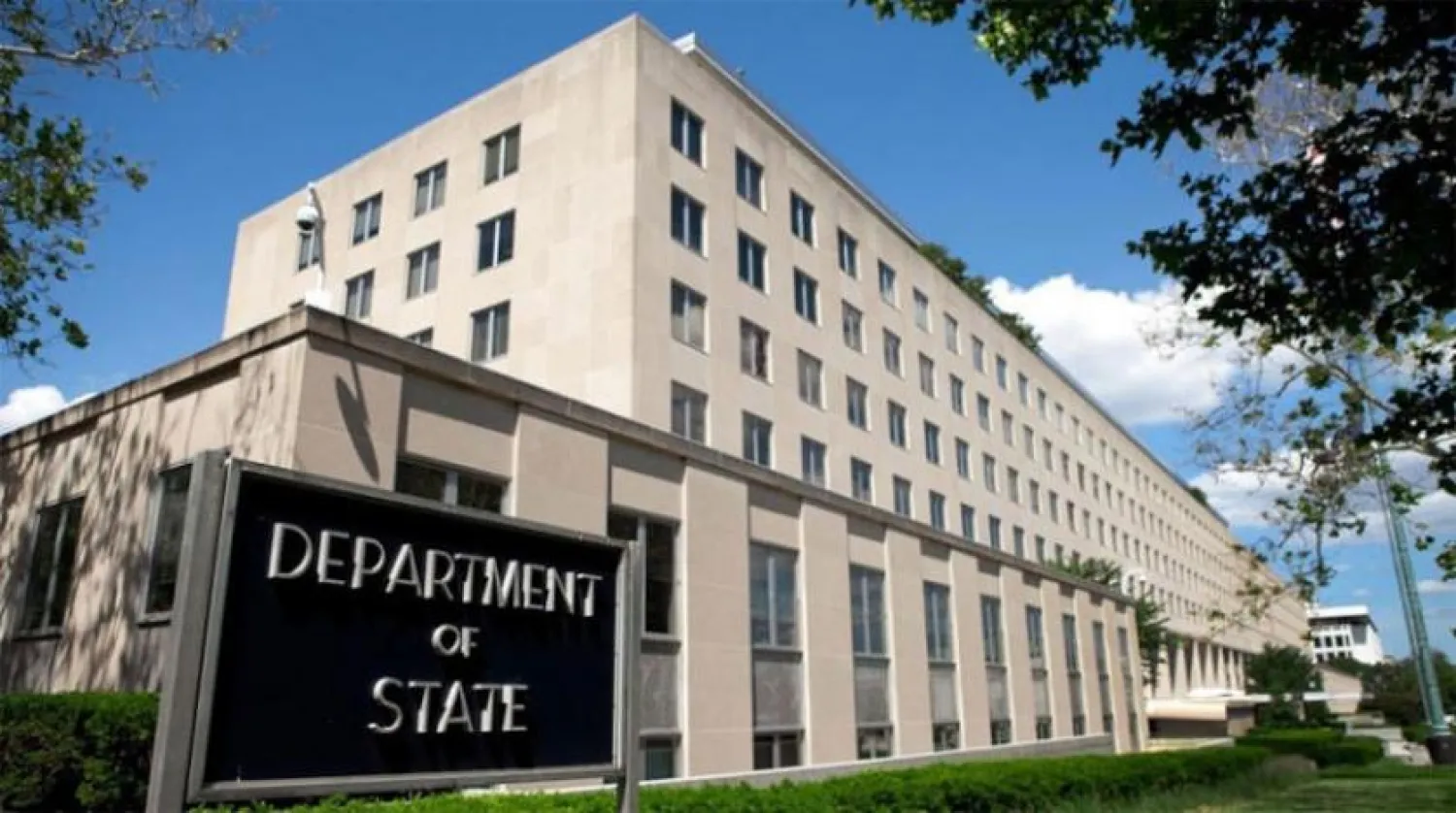

US State Department: We Will Not Normalize Ties With Assad

US State Department: We Will Not Normalize Ties With Assad
TT

US State Department: We Will Not Normalize Ties With Assad

US State Department: We Will Not Normalize Ties With Assad

Washington has restated its refusal for normalizing ties with Damascus, basing its blanket rejection for rebooting bilateral relations on the heinous crimes and inhumane conduct of the Syrian regime over the last decade.

The US’ renewed stance is aligned with predictions based on outcomes of the latest Group of Seven (G7) summit in London. After reviewing the group’s 47th meeting, analysts foresaw the West “overlooking” calls for restoring bilateralism with the regime of President Bashar Al-Assad.

A US State Department spokesperson, who requested anonymity, told Asharq Al-Awsat that the Biden administration will not re-establish or upgrade diplomatic relations with the Assad regime.

"We urge states in the region to consider carefully the atrocities visited by the Assad regime on the Syrian people over the last decade," the official said, reminding that the regime’s persistent efforts to block the delivery of humanitarian aid and inability to bring about security must be taken into account.

When asked about the reasons behind the new administration’s carelessness in dealing with the Syrian crisis and Washington’s current policy towards the war-torn country, the representative noted that the US position is made clear through its support for the political process.

On the US position on the crisis, he explained: "We believe that stability in Syria, and the greater region, can only be achieved through a political process that represents the will of all Syrians and we are committed to working with allies, partners, and the UN to ensure that a durable political solution remains within reach."

While the G7 summit’s final communique did not directly reject reviving ties with the Syrian regime, it stressed the significance of implementing UN Security Council Resolution 2254 and supporting humanitarian relief work and political solutions.

“In line with UNSCR 2254 and 1325, we urge all parties, especially the regime, to engage meaningfully with the inclusive UN-facilitated political process to resolve the conflict, notably the Constitutional Committee, to include the release of detainees and the meaningful participation of women,” read the statement of the G7 foreign and development Ministers.

“This includes a nationwide ceasefire and a safe and neutral environment to allow for the safe, voluntary, and dignified return of refugees,” it noted.

“It should pave the way for free and fair elections under UN supervision, ensuring the participation of all Syrians including members of the diaspora,” the statement added while pointing out that only a credible political process can get G7 countries to consider assisting with the reconstruction of Syria.

Former US Assistant Secretary of State for Near Eastern Affairs David Schenker, for his part, warned against an early rapprochement with the Syrian regime and called attention to Russia, a major backer of Assad, being behind most calls for reengaging with Damascus.

“In recent weeks, momentum has been building toward reintegrating Syria into the Arab League,” he wrote in a brief analysis published by The Washington Institute for Near East Policy.

“The country was suspended from the organization in November 2011, eight months into a brutal regime suppression effort that had killed 5,000 civilians,” he explained.

“Ten years on and with an estimated 500,000 dead, several Arab states—encouraged by Russia—are taking steps to end the decade-long isolation of Bashar al-Assad and restore Syria’s membership,” Schenker noted.

He called on the Biden administration to continue pressing for change in Syria and to increase humanitarian efforts in the battle-weary country.



Arab League Urges Action to Force Israel to Repeal Prisoner Execution Law

Meeting at Palestine’s request, the Arab League Council, at the level of permanent representatives, convened an extraordinary session in Cairo on Thursday. (Arab League)
TT

Arab League Urges Action to Force Israel to Repeal Prisoner Execution Law

Meeting at Palestine’s request, the Arab League Council, at the level of permanent representatives, convened an extraordinary session in Cairo on Thursday. (Arab League)

The Arab League strongly condemned on Thursday the Israeli Knesset’s approval of a law allowing the execution of Palestinian prisoners.

It urged the international community, particularly the United Nations Security Council and the United Nations Human Rights Council, to act urgently to compel Israel to repeal it.

Meeting at Palestine’s request, the Arab League Council, at the level of permanent representatives, convened an extraordinary session in Cairo, chaired by Bahrain, to address what it described as a “racist and invalid” law, and to discuss Arab and international steps to confront systematic Israeli violations in Jerusalem.

A 21-point resolution adopted at the meeting said limiting the death penalty to Palestinian prisoners amounted to “entrenching an apartheid system imposed by Israel,” holding “Israel, the illegal occupying power, fully responsible for the legal and humanitarian consequences.”

The Arab League called for listing Israel’s National Security Minister Itamar Ben-Gvir and members of his party, along with Finance Minister Bezalel Smotrich and their party members, on “international, regional, and national terrorism lists,” and welcomed condemnations of the law by several countries and the European Union.

It urged states party to the Fourth Geneva Convention to annul the law, and called on the International Criminal Court to open an urgent investigation and prosecute Israeli officials responsible for its approval, describing it as a “war crime.”

The Arab League also called for activating a legal monitoring unit to document any implementation of the law for use before international courts, and urged Arab parliamentary bodies to work toward suspending the Knesset’s membership in the Inter-Parliamentary Union.

Foreign ministers from Saudi Arabia, Türkiye, Egypt, Indonesia, Jordan, Pakistan, Qatar, and the United Arab Emirates also condemned the law, warning it entrenches an apartheid system and promotes rhetoric denying the Palestinian people’s inalienable rights and presence in occupied territory.

Regarding Jerusalem, the Arab League condemned what it described as unprecedented Israeli measures to close Al-Aqsa Mosque, calling it a “flagrant violation of international law” and an unprecedented provocation to Muslims worldwide, as well as an assault on freedom of worship. It also condemned measures targeting the Christian presence in the city.

The Arab League denounced Israeli efforts to dismantle the United Nations Relief and Works Agency for Palestine Refugees in the Near East and shut its offices and schools in Jerusalem, calling it an attempt to erase the refugee issue from final status talks.

It called for coordinated Arab, Islamic, and international action, political, diplomatic, economic, and legal, to protect Jerusalem and its holy sites, urging the international community, including the UN Security Council, to take a firm stance obliging Israel to halt its violations.

The Arab League reiterated its rejection of any move to alter Jerusalem’s legal status, including relocating diplomatic missions, and warned Argentina against moving its embassy to the city, saying such a move would damage Arab-Argentine relations.

Arab League Assistant Secretary-General for Palestine Affairs Faed Mustafa told the Cairo meeting that developments in Jerusalem and measures targeting Palestinian prisoners are “two facets of one policy,” urging a shift from condemnation to concrete action and impact.

Former Egyptian assistant foreign minister Mohamed Hegazy told Asharq Al-Awsat the meeting was a necessary step toward unifying the Arab stance and moving beyond political condemnation.

He called for a serious international debate on sanctions against Israel if violations continue.


Israel Says Hezbollah Chief to Pay ‘Heavy Price’ for Jewish Holiday Attacks

First responders clear the rubble from the site of an Israeli airstrike that targeted a building in the southern Lebanese village of Hanouiyeh, east of Tyre, on March 30, 2026. (AFP)
TT

Israel Says Hezbollah Chief to Pay ‘Heavy Price’ for Jewish Holiday Attacks

First responders clear the rubble from the site of an Israeli airstrike that targeted a building in the southern Lebanese village of Hanouiyeh, east of Tyre, on March 30, 2026. (AFP)

Israeli Defense Minister Israel Katz on Thursday warned that Hezbollah chief Sheikh Naim Qassem would pay an "extraordinarily heavy price" for escalating attacks during the ongoing Jewish holidays.

"I have a clear message for Naim Qassem... you and your associates will pay an extraordinarily heavy price for the intensified rocket fire directed at Israeli citizens as they gathered to celebrate Passover Seder," Katz said in a video statement.

"You will be consigned to the depths of hell alongside Nasrallah, Khamenei, Sinwar and the other fallen figures of the axis of evil," he said, referring to the former leaders of Hezbollah, Iran, and the Palestinian Hamas movement, who have been assassinated by Israel over the past two and half years.

"The Hezbollah terrorist organization you now lead, and its supporters in Lebanon, will bear the full and severe consequences," Katz added.

His warning followed claims by Hezbollah that it had carried out a series of rocket attacks on northern Israel late Wednesday and early Thursday, as Israeli Jews began marking the Passover holidays.

Katz also reiterated that Israeli forces "will clear Hezbollah and its supporters from southern Lebanon, maintain Israeli security control throughout the Litani area, and dismantle Hezbollah's military capabilities across Lebanon."

Lebanon was drawn into the Middle East war in early March when Tehran-backed Hezbollah launched rockets towards Israel to avenge the attack that killed Iran's supreme leader Ali Khamenei.

Israel has responded with massive strikes across Lebanon and a ground offensive.


UN Experts Call for Investigation into Israel's Killing of Lebanese Journalists

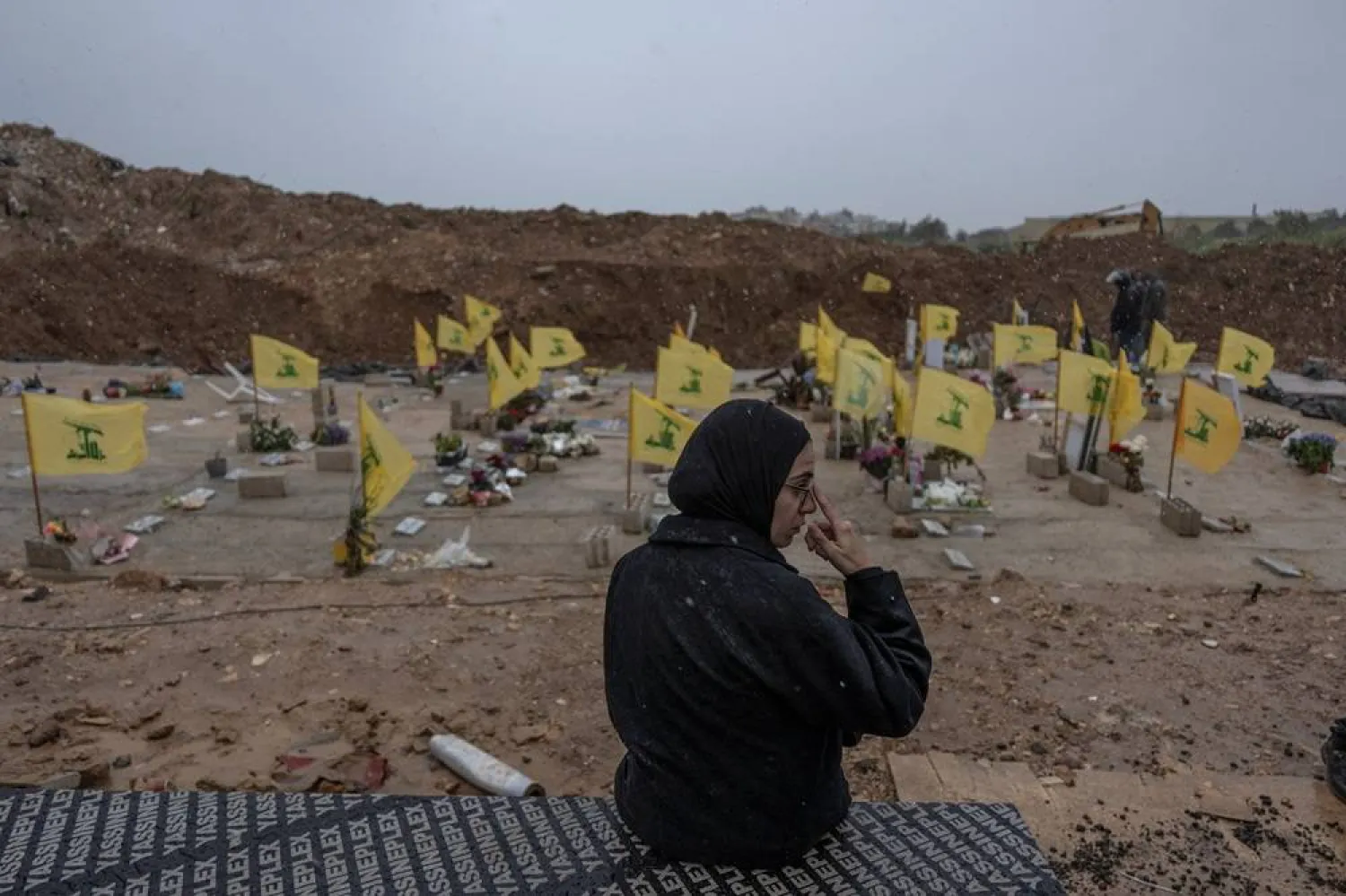
A woman sits in a cemetery before the funeral of Lebanese journalists, Al Manar reporter Ali Shoeib, Al Mayadeen reporter Fatima Ftouni and cameraman Mohammed Ftouni, who were killed by a targeted Israeli strike, amid escalating hostilities between Israel and Hezbollah, as the US-Israeli conflict with Iran continues, in Choueifat, Lebanon, March 29, 2026. (Reuters)
TT

UN Experts Call for Investigation into Israel's Killing of Lebanese Journalists

A woman sits in a cemetery before the funeral of Lebanese journalists, Al Manar reporter Ali Shoeib, Al Mayadeen reporter Fatima Ftouni and cameraman Mohammed Ftouni, who were killed by a targeted Israeli strike, amid escalating hostilities between Israel and Hezbollah, as the US-Israeli conflict with Iran continues, in Choueifat, Lebanon, March 29, 2026. (Reuters)

UN experts on Thursday called for an international investigation into the death of three Lebanese journalists in an Israeli strike, saying Israel had not provided "credible evidence" of their alleged links to armed groups.

The three journalists, including Ali Shoeib, a star correspondent for Al Manar channel of Hezbollah, which is at war with Israel, were killed on March 28 in an Israeli strike in southern Lebanon.

"We denounce strongly what has now become a standard, dangerous practice of Israel to target and kill journalists and then claim, without providing any credible evidence, that they were involved with armed groups," the experts said in a statement.

The Israeli army had described Shoeib as a member of the Radwan force, an elite Hezbollah unit, operating "under the guise of a journalist".

According to the experts, Israel's only so-called "evidence" for its claims was a photoshopped image of the journalist.

Israel also confirmed it killed journalist Fatima Ftouni of Al Mayadeen, seen as close to Hezbollah, and her brother cameraman Mohammed Ftouni, describing him as "an additional terrorist in Hezbollah's military wing".

The experts argued that working as a journalist for a media outlet linked to an armed group does not constitute direct participation in hostilities under international humanitarian law.

"Israeli officials know this, yet they choose to ignore it -- emboldened by impunity for their previous killings of journalists in Lebanon, Gaza and the West Bank."

At least 231 journalists and media workers have been killed by Israel since 2023, including 210 in Gaza and 11 in Lebanon, according to the Committee to Protect Journalists (CPJ).

Although appointed by the United Nations Human Rights Council, special rapporteurs are independent experts and do not speak on behalf of the UN.