


Afghan War Displaced Settle in the Ruins of a Lost City

Thousands of people have been displaced across Helmand since October following a surge in Taliban attacks - AFP
TT

Afghan War Displaced Settle in the Ruins of a Lost City

Thousands of people have been displaced across Helmand since October following a surge in Taliban attacks - AFP

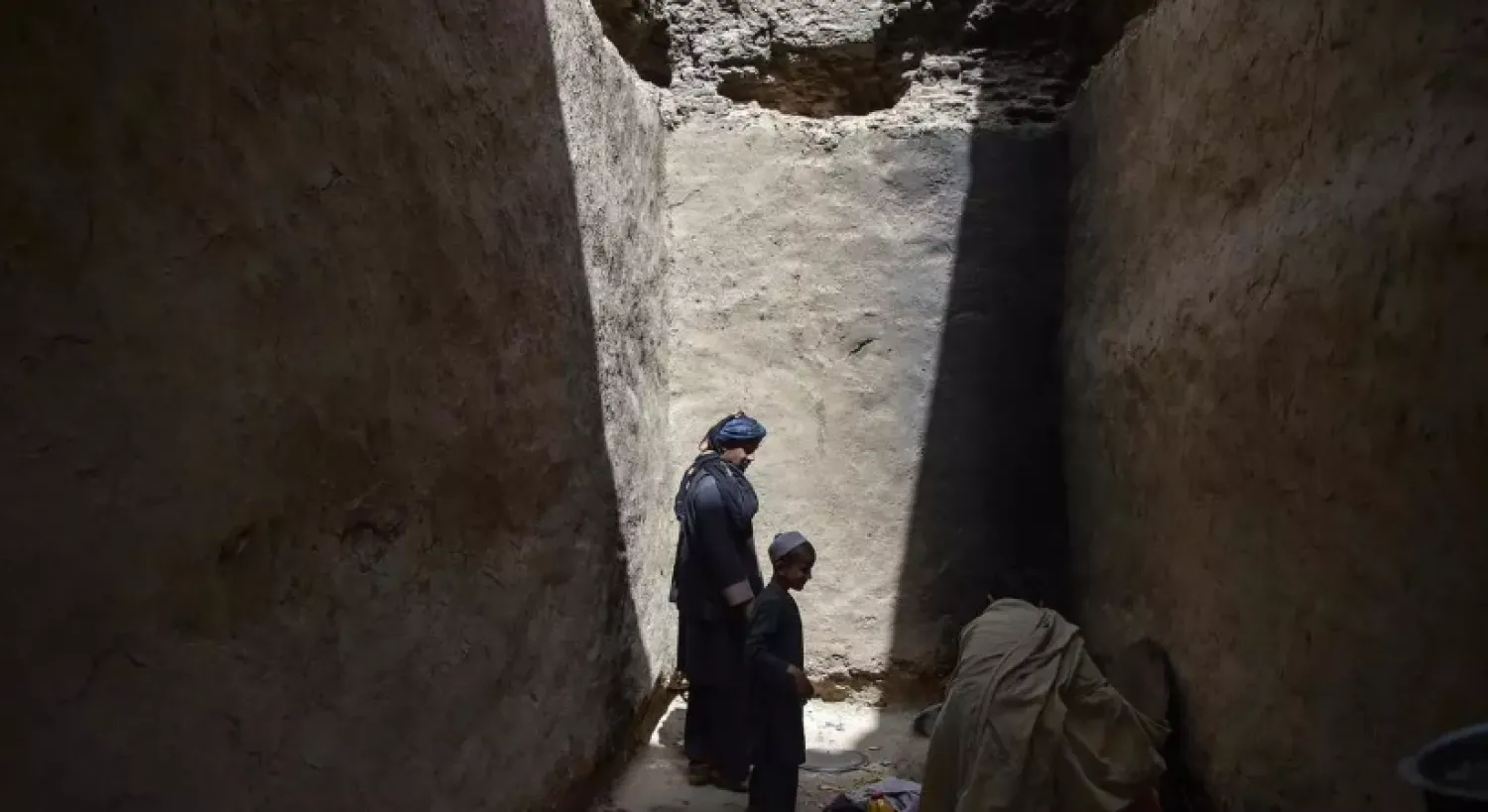
Once the winter residence of sultans from illustrious Islamic dynasties, the ruins of a thousand-year-old royal city in southern Afghanistan have become home to hundreds of people who have fled Taliban clashes.

The astonishing ochre clay complex juts from the cliffs along the Helmand River, threatened by decay and encroaching urban sprawl as well as the makeshift constructions that have grown within it.

Thousands of people have been displaced across Helmand since October following a surge in Taliban attacks, and while many have resettled in the capital Lashkar Gah -- one of the few areas in the province still under government control -- some have joined other refugees in the ruins.

Qala-e-Kohna, as it is known locally, or Lashkari Bazar to archaeologists, has garnered international attention for its scale, remarkable architecture and murals.

Spread over 10 kilometres (eight miles), the site is the only known winter residence of the Ghaznavid and Ghurid sultans -- two dynasties that ruled a region covering present-day Afghanistan between the 10th and 13th centuries and responsible for spreading Islamic art as far as north India.

"There is no place in the Islamic world where we have something like it -- a site as coherent, elaborate, and despite everything still relatively well preserved," said Philippe Marquis, the director of the French Archaeological Delegation in Afghanistan (DAFA).

"It is important to preserve it because we are sure that it will teach us a lot about this period," he told AFP.

- 'A place for ghosts' -

Among the ancient towers, doors and windows have been added and crumbling walls coated with a clay and straw mixture to strengthen them and plug gaps.

A blue wrought-iron door leads into Agha Mohammad's cramped two-room quarters that house 11 people, a makeshift cradle for his infant son hanging from a bamboo roof.

"I want the government to give me a place to live. Look at the cracks in the roof. I'm afraid one night it will fall," said Mohammad, a 33-year-old policeman whose district fell to a resurgent Taliban.

Southern Afghanistan has seen renewed fighting as talks between the Afghan government and Taliban leaders have stalled and the United States prepares to withdraw the last of its troops from the country by September.

"I should have the support of the government, because I lost three sons serving it," 48-year-old mother Bibi Halima told AFP from within the palace walls.

"Every house is full of widows," added a neighbor.

Many of the residents are from police families who cannot afford to live elsewhere and have no access to electricity or running water.

An official from the country's archaeology department in Kabul said there have been reports of land-grabbing at the site, with some families forced to pay rent to local mafias.

For residents, life within the ornate arches and adobe walls of the former royal city is a constant reminder of how the country has yet to emerge from a cycle of battles against invasion and civil war.

"It is a place for ghosts, not humans," said Khudai Nazar, 54.

First explored by DAFA in the 1950s, the site has seen no conservation work since then.

At that time, archaeologists identified the palaces, mosque and other annexe buildings, such as the pottery and craft workshops, as well as ice boxes used for the preservation of fresh food.

One of the most striking excavations was a series of paintings depicting court scenes, extremely rare for an era in which the realistic representation of living beings was already frowned upon in Islamic societies.

Moved to the Kabul museum, the paintings were destroyed or stolen during the Afghan civil war in the 1990s and only photographs remain.

DAFA director Marquis is now concerned about the impact looters and displaced families will have at the site -- as well as the effects of global warming, which could cause the river to flood.

On the flip side, reinforcements made from clay and straw that have been added to the partly collapsed towers may have also resulted in their temporary preservation.

"The paradox is that in their own way people are protecting the place, because it is their home," Marquis said.

He proposes building an "archaeological park" that involves displaced people in the conservation process so they can earn a living and settle outside the palace walls.

But for author Shah Mahmud Haseat, who has written a book about the citadel, the future of the largely unexplored ruins remains bleak.

"I tried to convince the government to protect the site, but they did nothing. We are really afraid that our history will be destroyed."



Media Dinner Shooting Suspect Wrote About Targeting Administration Officials

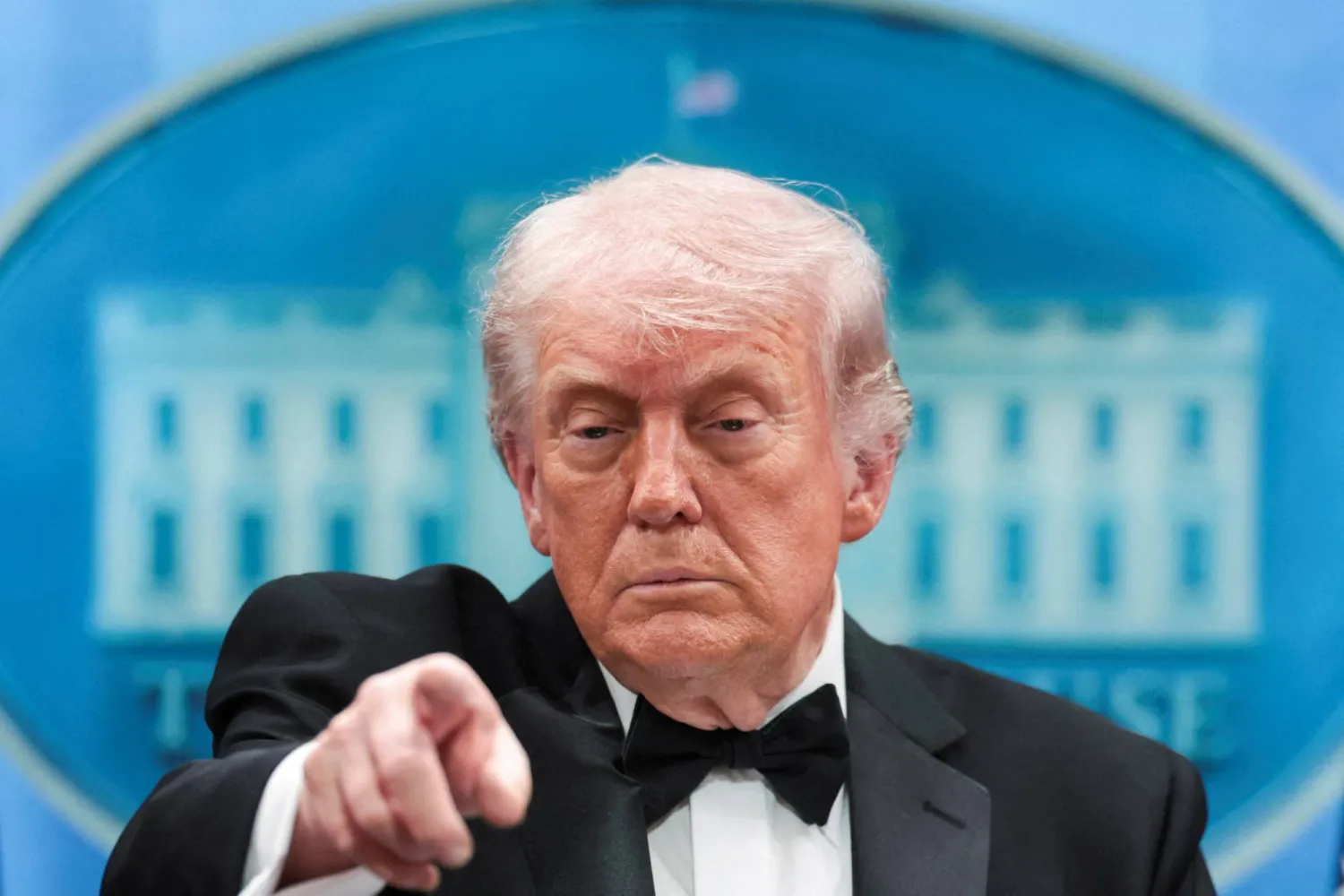
US President Donald Trump gestures as he speaks during a press briefing in the Brady Briefing Room at the White House in Washington. (Photo by Mandel NGAN / AFP)
TT

Media Dinner Shooting Suspect Wrote About Targeting Administration Officials

US President Donald Trump gestures as he speaks during a press briefing in the Brady Briefing Room at the White House in Washington. (Photo by Mandel NGAN / AFP)

The man accused of opening fire at the White House Correspondents’ Dinner sent writings to family members minutes before the shooting referring to himself as a “Friendly Federal Assassin,” railing against Trump administration policies and signaling what investigators increasingly believe was a politically driven attack, according to a law enforcement official familiar with the investigation.

The writings, sent shortly before shots were fired at the Washington Hilton, made repeated references to President Donald Trump without naming him directly and alluded to grievances over a range of administration actions and recent events, including US strikes on drug smuggling boats in the eastern Pacific, the official said.

Investigators are treating the writings, along with a trail of social media posts and interviews with family members, as some of the clearest evidence yet of the suspect’s mindset and possible motives.

Authorities also uncovered what the official described as numerous anti-Trump social media posts linked to the suspect, Cole Tomas Allen, a 31-year-old California man accused of trying to breach a security checkpoint at the dinner while armed with multiple weapons.

Allen’s brother contacted police in New London, Connecticut, after receiving the writings, according to the official. A police spokesperson said they contacted federal law enforcement after receiving that information.

Federal agents have also interviewed Allen’s sister in Maryland, who told investigators her brother had legally purchased several weapons from a California gun store and stored them at their parents’ home in Torrance without their knowledge, according to the official.

She described her brother as prone to making radical statements, the official said.

Allen legally bought a .38-caliber semiautomatic pistol in October 2023 and a 12-gauge shotgun two years later, the official and another law enforcement official told The Associated Press.

Authorities are still trying to determine how specific Allen’s alleged targets were. Officials have said investigators are examining whether his grievances centered on Trump and Vice President JD Vance personally or reflected a broader hostility toward the administration.

The officials were not authorized to discuss the ongoing investigation and spoke to AP on condition of anonymity.


Trump Says Iran Can Call if it Wants to Talk, as Iranian Envoy Returns to Pakistan

US President Donald Trump takes questions from media at a press briefing at the White House, in Washington, D.C., US, April 25, 2026. REUTERS/Jonathan Ernst
TT

Trump Says Iran Can Call if it Wants to Talk, as Iranian Envoy Returns to Pakistan

US President Donald Trump takes questions from media at a press briefing at the White House, in Washington, D.C., US, April 25, 2026. REUTERS/Jonathan Ernst

President Donald Trump said on Sunday that Iran can reach out to the United Stated if it wants to negotiate an end to the war between the two countries.

"If they ⁠want to talk, they ⁠can come to us, or they can call us. You know, there is a telephone. We ⁠have nice, secure lines," Trump said in an interview on Fox News' "The Sunday Briefing."

"They know what has to be in the agreement. It's very simple: they cannot have a nuclear weapon, otherwise there's no reason to meet," Trump said.

Iran has long demanded Washington acknowledge its right to enrich uranium, which Tehran says ⁠it only seeks ⁠for peaceful purposes but which Western powers and Israel say is aimed at building nuclear weapons.

Although a ceasefire has paused full-scale fighting in the conflict, which began with US-Israeli strikes on Iran on February 28, no agreement has been reached on terms to end a war that has killed thousands, driven up oil prices, fueled inflation and darkened the outlook for global growth.

Tehran has largely closed the Strait of Hormuz, which normally carries a fifth of global oil shipments, while Washington has imposed a blockade of Iran's ports.

Trump canceled a trip by his envoys Steve Witkoff and Jared Kushner to Pakistan on Saturday, dealing a new ⁠setback ⁠to peace prospects after Iranian Foreign Minister Abbas Araghchi departed Islamabad after speaking only to Pakistani officials.

Araghchi flew to Oman - another mediator in the war - where he met the country's leader, Haitham ⁠bin Tariq al-Said, on Sunday.

They discussed security in the strait and Araghchi called for a regional security framework free of outside interference, according to Iran's foreign ministry.

Araghchi later returned to Islamabad, Iranian state media reported. Pakistani government sources said he would hold talks with the country's leadership before heading to Moscow.

Iran's semi-official Tasnim news agency reported that Araghchi's talks with Pakistani officials would include "implementing a new legal regime over the Strait of Hormuz, receiving compensation, guaranteeing no renewed military aggression by warmongers, and lifting the naval blockade."

The talks would be unrelated to Iran's nuclear program, the report said.

Speaking in Florida before being rushed out of the White House Correspondents' Association dinner in Washington when a man opened fire nearby, Trump said he cancelled his envoys' visit due to too much travel and expense for what he considered an inadequate Iranian offer.

Iran "offered a lot, but not enough," Trump said.


Russia, North Korea Agree 'Long-term' Military Cooperation

FILE - Russian President Vladimir Putin, left, and North Korea's leader Kim Jong Un pose for a photo during a signing ceremony of a new partnership in Pyongyang, North Korea, June 19, 2024. (Kristina Kormilitsyna, Sputnik, Kremlin Pool Photo via AP, File)
TT

Russia, North Korea Agree 'Long-term' Military Cooperation

FILE - Russian President Vladimir Putin, left, and North Korea's leader Kim Jong Un pose for a photo during a signing ceremony of a new partnership in Pyongyang, North Korea, June 19, 2024. (Kristina Kormilitsyna, Sputnik, Kremlin Pool Photo via AP, File)

Russia and North Korea have agreed to "long-term" military cooperation, Russia's defense ministry said Sunday, as Moscow's military chief visited officials in Pyongyang.

Pyongyang has sent thousands of troops -- as well as missiles and munitions -- to support Russia's war in Ukraine.

In return, analysts say North Korea is receiving financial aid, military technology, food and energy from Russia, helping Pyongyang circumvent heavy international sanctions over its banned nuclear programs.

The two countries signed a military treaty in 2024, obligating both states to provide military assistance "without delay" in the event of an attack on the other.

"We agreed with the DPRK Defense Ministry to place our military cooperation on a stable, long-term footing," Moscow's Defense Minister Andrey Belousov said, using the initials of North Korea's official name.

"We are ready to sign a plan this year for Russian-Korean military cooperation for the period of 2027-2031," he added.

Russian officials are in Pyongyang for the opening ceremony of a memorial complex honouring those killed while supporting Moscow's war effort against Ukraine.

Belousov met North Korea's leader Kim Jong-un and Defense Minister No Kwang Chol on Sunday, while Russia's parliamentary speaker Vyacheslav Volodin also met Kim and thanked him for the role of North Korean troops in "the liberation of Kursk".

Pyongyang has deployed troops to Russia's western Kursk region to fend off a months-long counter-offensive by Kyiv's troops.

Belousov presented military awards to North Korean servicemen who took part in the Kursk operation, the Russian defence ministry said.

"Korean soldiers fought shoulder to shoulder with our soldiers and officers, liberating Russian soil from the Ukrainian Nazis," Volodin said.

Seoul estimates about 2,000 North Koreans have been killed in Moscow's war with Ukraine.

North Korean soldiers are said to have been instructed to kill themselves rather than be captured in battle.

Only two North Korean troops have been captured alive and are currently in custody of Ukrainian authorities.