

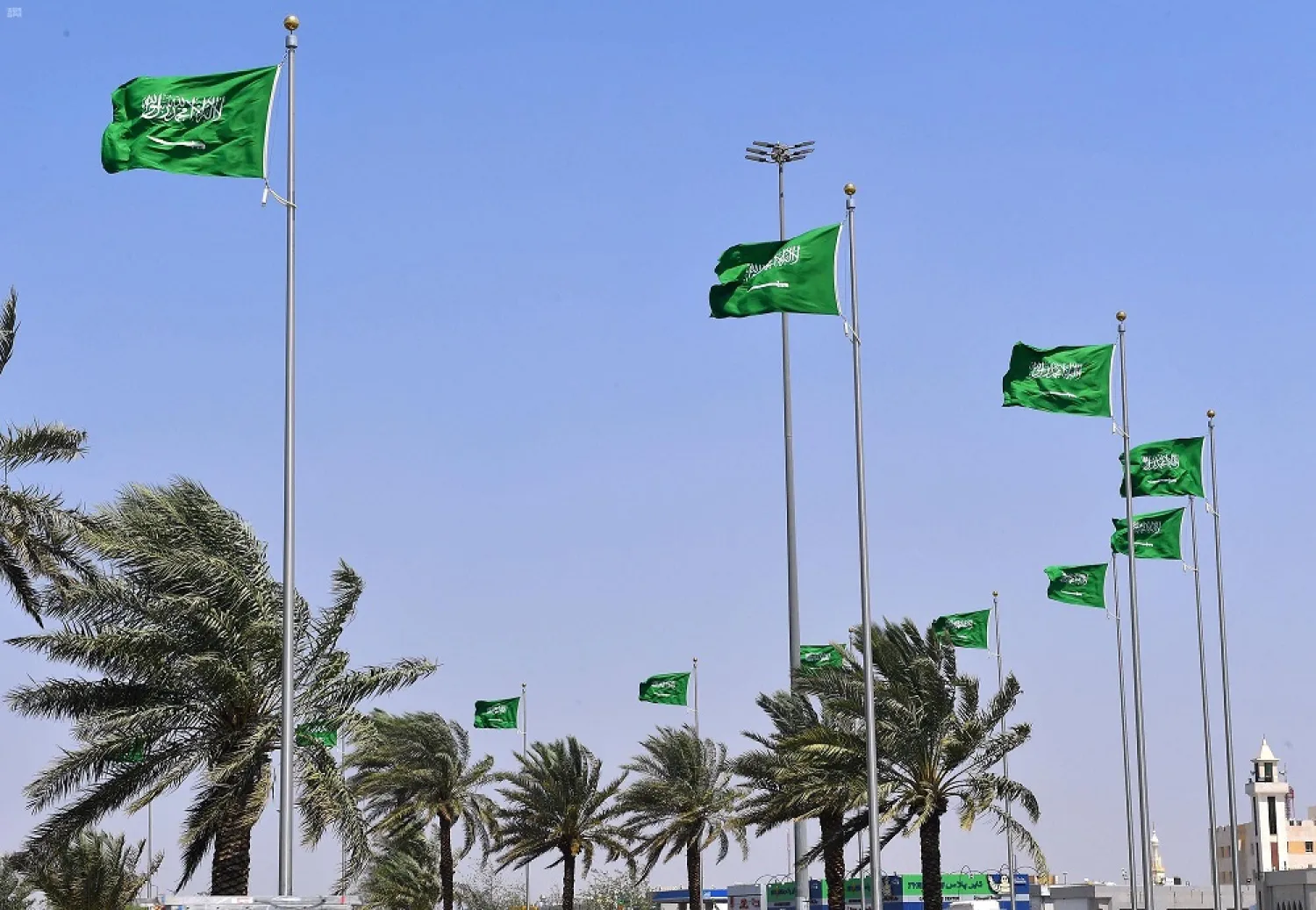

The Riyadh Initiative: A New Phase for a Global Fight Against Corruption

The global network was established at the initiative of Saudi Arabia under its presidency of the G20 in 2020. (SPA file photo)
TT

The Riyadh Initiative: A New Phase for a Global Fight Against Corruption

The global network was established at the initiative of Saudi Arabia under its presidency of the G20 in 2020. (SPA file photo)

Head of the Saudi Oversight and Anti-Corruption Authority (Nazaha) Mazin Al-Kahmous said the establishment of the Global Network of Anti-corruption Law Enforcement Authorities (GlobE) was the beginning of a new phase for all countries in the fight against corruption.

United Nations Secretary-General Antonio Guterres inaugurated on Thursday the global network, which was established at the initiative of Saudi Arabia under its presidency of the Group of Twenty (G20) in 2020.

Guterres expressed his appreciation to Saudi Arabia for its funding of the Riyadh Initiative, which is aimed at establishing the network, calling on all countries to benefit from the new body and exert more efforts to eradicate corruption.

“Corruption is not only immoral, but is a serious crime. It is often organized, and crosses borders. Most importantly, it betrays people and democracies. It steals trillions of dollars from people all over the world — usually from those most in need, as it siphons off resources for sustainable development,” he said in a video message on the launch of the GlobE Network.

He added: “Turning the tide against corruption is essential if we are to achieve the Sustainable Development Goals, promote peace, and protect human rights. We must reinvigorate political commitment to fight this crime. We must also strengthen international cooperation to recover stolen assets and prevent those responsible for corruption from finding safe havens for themselves and their funds.”

Guterres stressed that the establishment of the Global Operational Network of Anti-Corruption Law Enforcement Authorities was a step in the right direction.

“The Network will enable law enforcement authorities to navigate legal processes through informal cooperation across borders, helping to build trust and bring those guilty of corruption to justice,” he underlined, adding: “I thank the Government of Saudi Arabia for funding and launching the Riyadh Initiative to create the GlobE Network during their Group of 20 (G20) presidency last year, and I call on all Governments to make full use of the Network and encourage further efforts to eradicate corruption.”

For his part, Al-Kahmous affirmed that his country “understands that overcoming the challenges of cross-border corruption crimes requires close interaction between the relevant law enforcement authorities.”

He also praised the efforts of all countries and international organizations working with the United Nations Office on Drugs and Crime in establishing the network.

He called on the international community to actively participate in the establishment of the network, provide the necessary support for the success of this initiative and follow up on its development, in a manner that serves the common interests of all countries.



OPEC+ Agrees in Principle on Theoretical Oil Output Hike amid Iran War Paralysis

FILE PHOTO: A model of an oil pump is seen in front of the OPEC logo in this illustration taken January 9, 2026. REUTERS/Dado Ruvic/Illustration/File Photo
TT

OPEC+ Agrees in Principle on Theoretical Oil Output Hike amid Iran War Paralysis

FILE PHOTO: A model of an oil pump is seen in front of the OPEC logo in this illustration taken January 9, 2026. REUTERS/Dado Ruvic/Illustration/File Photo

OPEC+ has agreed in principle to raise its oil output quotas by 206,000 barrels per day for May, three sources with knowledge of the group's talks said ahead of its meeting later on Sunday, a rise that will largely exist on paper as its key members are unable to raise production due to the US-Israeli war with Iran.

The war has effectively shut the Strait of Hormuz - the world's most important oil route - since the end of February and cut exports from OPEC+ members.
Some group members such as Russia are unable to increase output due to Western sanctions and damage to infrastructure inflicted during the war with Ukraine.

Inside the Gulf, damage to infrastructure from missile and drone attacks has also been severe. Several Gulf officials have said it would take months to resume normal operations and reach production targets even if the war stopped and Hormuz reopened immediately, according to Reuters.
Iran on Saturday said Iraq was exempt from any restrictions to transit the vital route, and shipping data on Sunday showed a tanker loaded with Iraqi crude passing through the strait. Still, it remains to be seen if more vessels will take the risk involved, a source close to the issue said.

Sunday's OPEC+ talks are set to start at around 1300 GMT with a gathering of ministers called the Joint Ministerial Monitoring Committee, which does not decide on output policy.

After this, eight members of OPEC+ hold separate talks having agreed in principle to raise output quotas by 206,000 bpd for May, the three sources said. This would be the same as the increase decided for April at their last meeting held on March 1, just as the war began to disrupt oil flows. A month later, the largest oil supply disruption on record is estimated to have removed as many as 12 to 15 million bpd or up to 15% of global supply. Crude prices have soared to a four-year high close to $120 a barrel. Oil prices could spike above $150 - an all-time high - if flows via Hormuz remain disrupted into mid-May, JPMorgan said on Thursday. A quota increase will have little immediate impact on supply but would signal readiness to raise output once Hormuz reopens, OPEC+ sources have said. Consultancy Energy Aspects called the increase "academic" as long as disruptions in the strait persist.


War Weighs on Egypt’s Private Sector as PMI Hits Near Two-Year Low in March

People walk past a closed cinema as shops close early under a government-ordered curfew aimed at reducing energy costs in downtown Cairo on April 2, 2026. (AFP)
TT

War Weighs on Egypt’s Private Sector as PMI Hits Near Two-Year Low in March

People walk past a closed cinema as shops close early under a government-ordered curfew aimed at reducing energy costs in downtown Cairo on April 2, 2026. (AFP)

Egypt's non-oil private ‌sector deteriorated at its sharpest pace in almost two years in March, as the Middle East war drove up costs and dampened client demand, a closely watched business survey showed on Sunday.

The headline S&P Global Egypt Purchasing Managers' Index fell for a fourth consecutive month, dropping to 48.0 in March from 48.9 in February — its lowest reading since April 2024.

The ‌figure remained below ‌the 50.0 threshold that ‌separates growth ⁠from contraction, though ⁠it was broadly in line with the survey's long-run average of 48.2.

Output and new orders were the chief drags on the index, with both measures also hitting their lowest levels for nearly two years. Firms frequently blamed ⁠the Middle East conflict for dampening client ‌demand, partly through ‌intensifying price pressures.

In a first, business expectations for the ‌coming 12 months slipped into negative territory, with ‌companies citing uncertainty over the war as a key reason for pessimism, though the degree of gloom was described as mild.

David Owen, senior economist at ‌S&P Global Market Intelligence, nevertheless noted that "the latest figure of 48.0 still relates ⁠to ⁠annual GDP growth of around 4.3%," adding that "recent data suggests the domestic non-oil sector is on a solid underlying growth path."

Cost pressures remained a serious concern, however. Input prices surged at their joint-sharpest pace in one-and-a-half years, as firms cited fuel costs and other war-related commodity price increases, compounded by a stronger US dollar.

In response, companies raised their selling prices at the fastest rate in 10 months, though the increase remained modest overall.


Middle East War Presents ‘Serious Risk’ for Africa, Warns Report

Festus Mwirotsi, 34, scouts for pests and diseases in roses meant for export at Isinya Roses farm in Kajiado, Kenya, March 24, 2026, as Kenya's flower industry is losing up to $1.4 million a week as the Iran war cuts demand and disrupts shipping. (AP)
TT

Middle East War Presents ‘Serious Risk’ for Africa, Warns Report

Festus Mwirotsi, 34, scouts for pests and diseases in roses meant for export at Isinya Roses farm in Kajiado, Kenya, March 24, 2026, as Kenya's flower industry is losing up to $1.4 million a week as the Iran war cuts demand and disrupts shipping. (AP)

The Middle East war "presents a serious risk to Africa", the African Union and the African Development Bank (AfDB) said in a report seen by AFP Saturday.

The conflict threatens to increase the cost of living and curtail growth on the continent, the report warned.

The Middle East accounts for 15.8 percent of Africa's imports and 10.9 percent of its exports, the report noted.

"The conflict, which already has triggered a trade shock, could quickly turn into a cost-of-living crisis across Africa through higher fuel and food prices, rising shipping and insurance costs, exchange rate pressures, and tighter fiscal conditions," it added.

The growth rate of most African countries continues to be slower than before the Covid pandemic, it noted.

"A loss in output growth of 0.2 percentage points on Africa's GDP is projected for 2026 if it (the conflict) exceeds six months," it said.

"The longer the conflict lasts and the more severe the disruption to shipping routes and energy and fertilizer supplies, the greater the risk of a significant growth slowdown across the continent."

Reduced deliveries of liquefied natural gas (LNG) from the Gulf will impact fertilizer production, limiting its availability during the crucial planting period up to May, it added.

- Currencies hit -

The report was compiled by the UN Development Program (UNDP) and the United Nations Economic Commission for Africa (UNECA).

According to recent data from the AfDB, the currencies of 29 African countries have already depreciated, increasing the cost of servicing external debt, making imports more expensive and reducing foreign exchange reserves,

Some countries could see some short-term gains, such as Nigeria for its oil exports or Mozambique for its LNG.

The rerouting of ships around Cape of Good Hope could benefit ports in Mozambique, South Africa, Namibia and Mauritius.

Kenya is establishing itself as a logistics hub in East Africa, while Ethiopian Airlines, the leading carrier in Africa, is serving as an "emergency air bridge" between the continent, Asia, and Europe, the report noted.

But these gains are likely to be uneven and will not offset the consequences for inflation, budgets, and food security in Africa, they warned.

Above all, the current crisis could hit the costs of humanitarian aid and divert donor funds towards other priorities.