Saudi Arabia Records 984 New COVID-19 Cases

A Saudi citizen seen at a vaccination center. SPA
TT

Saudi Arabia Records 984 New COVID-19 Cases

A Saudi citizen seen at a vaccination center. SPA

Saudi Arabia recorded 984 new coronavirus cases, which raised the total number of infections in the Kingdom to 457,546, the Ministry of Health said Sunday.

The death toll from complications caused by the COVID-19 disease rose by 16 to 7,456, it said.

According to the ministry, the number of recoveries increased by 1,185 to reach a total of 440,644.


Faisal bin Farhan to Houthis: You Have Started Something You Cannot Handle

Saudi Foreign Minister Prince Faisal bin Farhan bin Abdullah and Russian FM Sergei Lavrov meet in Moscow on Tuesday. (SPA)
TT

Faisal bin Farhan to Houthis: You Have Started Something You Cannot Handle

Saudi Foreign Minister Prince Faisal bin Farhan bin Abdullah and Russian FM Sergei Lavrov meet in Moscow on Tuesday. (SPA)

Saudi Foreign Minister Prince Faisal bin Farhan bin Abdullah stressed on Tuesday that the Kingdom will not hesitate to defend itself against any aggression and will use all available means to protect its interests, directing a strongly-worded message to the Houthis that the militias “have started something they cannot handle.” 

Speaking during a joint press conference with his Russian counterpart in Moscow, Prince Faisal said Saudi Arabia “will not hesitate to support whatever achieves the interests of Yemen and the region,” and that it will use all available means to protect its interests and defend itself against aggressions. 

Addressing the Houthi escalation, he accused the Houthi terrorist militias of attempting to export their internal problems in Yemen to Saudi Arabia. 

He added that the Houthis resort to violence whenever they find themselves in a difficult position, and that they insist on inflicting further suffering upon the Yemeni people instead of responsibly engaging in a political process that would end the crisis. 

Despite the firm tone regarding the escalation, Prince Faisal added that the door to diplomacy remains open for dealing with the Houthis, noting that the legitimate Yemeni government has provided them with an opportunity to negotiate responsibly.  

However, the group prefers its narrow, personal interests over the interests of Yemen and its people, he lamented. 

The Saudi FM stressed that the Kingdom will not hesitate to support whatever serves the interest of Yemen and the region, while simultaneously upholding its right to protect its security and interests, and to counter aggressions using all available means. 

For his part, Russian Foreign Minister Sergei Lavrov described the Houthi attacks on civilian targets in Saudi Arabia as “unacceptable,” warning that they endanger civilian lives and infrastructure and inflict damage on the global economy, given the strategic importance of the Arabian Peninsula and its surrounding waters to international trade. 

He added that Moscow views the Houthi attacks as “counterproductive,” underlining Russia's full support for Saudi Arabia's efforts to continue implementing the roadmap for a peaceful settlement in Yemen. 

He stressed his rejection of any attempt to resolve issues through military means, underscoring the need to guarantee the freedom and safety of navigation in international waters, including the waters adjacent to the Yemeni coast. 

He also called for expediting the launch of a direct dialogue between influential Yemeni factions, based on the roadmap reached through a Saudi initiative. 

Prince Faisal had arrived in Moscow on Tuesday morning for an official visit, during which he held talks with Lavrov that addressed bilateral relations between the two countries, as well as regional and international developments of mutual interest. 


Saudi Arabia Says Reserves Right to Respond to Houthi Attacks as Condemnations Pour in

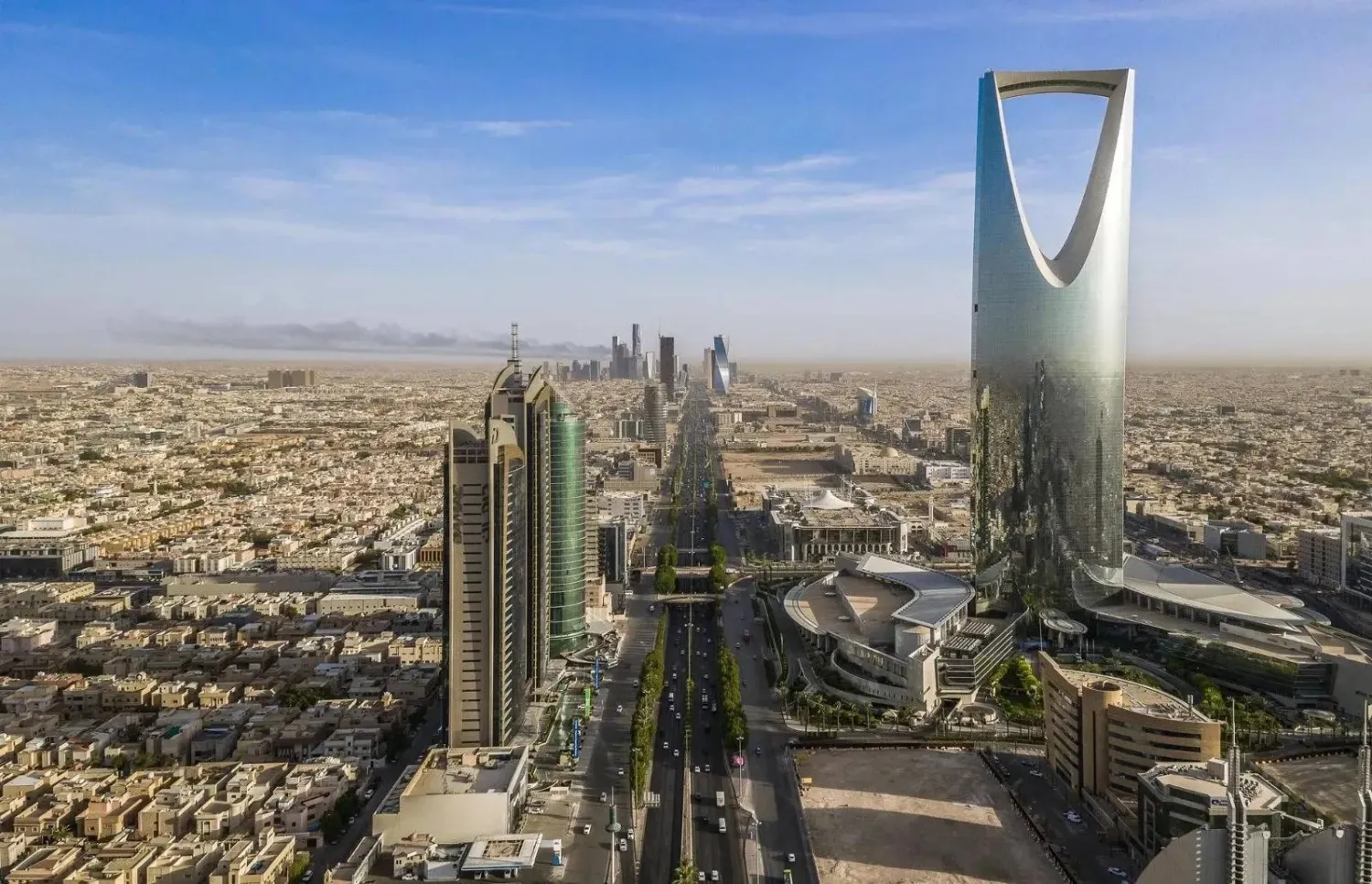
A view of Riyadh, Saudi Arabia. (SPA)
TT

Saudi Arabia Says Reserves Right to Respond to Houthi Attacks as Condemnations Pour in

A view of Riyadh, Saudi Arabia. (SPA)

Saudi Arabia underscored on Tuesday its right to take all necessary measures to protect its sovereignty and security for its citizens and residents following the terrorist Houthi militia attack that targeted civilian and economic areas in Abha, Khamis Mushait, Jazan and Najran that left 73 people wounded, including women and children.

In a statement, the Saudi Foreign Ministry strongly condemned the attacks, as well as the Houthis’ continued attacks on commercial vessels in the Red Sea and their threats to international marine navigation.

It reiterated its categorical rejection of the “hostile” and “criminal behavior” that the Houthis are adopting in threatening the security and stability of Yemen and its Arab and Islamic surroundings, as well as their continued rejection of peace efforts.

The Kingdom vowed that “it will not be lenient against any assault that targets its territories and capabilities,” stressing that “the measures it takes to defend its sovereignty and security are in line with international law.”

It demanded “an immediate halt to all forms of escalation and threats to marine navigation,” calling on the international community “to assume its responsibilities and implement relevant United Nations Security Council resolutions.”

Condemnations pour in

Secretary General of the Gulf Cooperation Council (GCC) Jasem Mohamed Albudaiwi strongly condemned the “terrorist attacks” carried out by the Houthi group against the Kingdom, saying they are a “flagrant violation of all international laws and norms” that deliberately disregard the security and safety of civilians and regional stability.

“These recurring attacks once again expose the malicious intent of the Houthi group and demonstrate its explicit rejection of all efforts aimed at achieving peace and stability in Yemen,” he said in a statement.

"Targeting civilian installations and national capabilities is a condemned terrorist act that cannot be justified or tolerated under any pretext. The Houthi group's persistence in these hostile practices represents a blatant challenge to the international community and a direct threat to regional and international peace and security," Albudaiwi stressed.

He further underscored “the urgent need for the international community to adopt a firm and deterrent stance against these violations, hold perpetrators and their backers accountable, and halt this ongoing terrorist conduct that jeopardizes regional security and the interests of its peoples.”

“GCC member states stand united alongside Saudi Arabia,” he added, expressing full solidarity with the Kingdom in confronting all threats to its security, stability, sovereignty, and national capabilities.

Albudaiwi reaffirmed complete GCC support for all measures and actions taken by the Kingdom to protect its territory, citizens, and residents, wishing the injured a swift and full recovery.

Gulf and Arab condemnations followed the Houthi attacks, underscoring full solidarity with Saudi Arabia, rejecting the targeting of civilians and civilian objects and infrastructure, and reaffirming support for the Kingdom in all measures it takes to protect its security, sovereignty, and capabilities. 

Kuwait strongly condemned the Houthi attacks, saying they are a “flagrant violation” of the Kingdom's sovereignty, a direct threat to the security and safety of its citizens and residents, and a breach of international law and international humanitarian law. 

The Kuwaiti Ministry of Foreign Affairs warned that these attacks are a “dangerous and unjustified escalation” that would undermine regional security and stability.  

It also condemned the Houthis' continued targeting of commercial vessels in the Red Sea, citing the threat it poses to the security and safety of maritime navigation, global energy supplies, and international trade. 

Kuwait stressed its absolute solidarity with Saudi Arabia and its support for all measures it takes to safeguard its sovereignty, maintain its security, stability, and interests, and protect its citizens and residents. It said that the Kingdom's security is “an indivisible part of the security of Kuwait and the security of the GCC states.” 

Bahrain condemned the attacks, calling on the international community, particularly the Security Council, to take a firm stance to deter the aggressions, hold the perpetrators accountable, and implement the relevant international resolutions. 

It noted that, in its capacity as a non-permanent member of the Security Council, it will continue to work alongside GCC states and international partners toward a “firm UN response” and to translate the council members' condemnation of the attacks into practical measures. 

Manama reiterated its support for efforts aimed at reaching a comprehensive and sustainable Yemeni-led political solution to the crisis, its standing alongside the legitimate government, and its support for the efforts of the UN envoy, in a manner that preserves the unity, sovereignty, and territorial integrity of Yemen. 

The Qatari Ministry of Foreign Affairs described the Houthi attacks as a “disgraceful aggressive behavior and an unacceptable disregard for civilian lives and the security of regional states,” a violation of Saudi Arabia's sovereignty, and a breach of the rules of international law. 

It warned of a “dangerous escalation” that threatens the security and stability of the region, urging the need for an immediate halt to these acts. 

Doha called on the international community to take a firm stance against the violations and to ensure the implementation of relevant Security Council resolutions regarding the security and freedom of navigation in the Red Sea. 

Similar condemnations poured in from Egypt, Jordan, Lebanon and the UAE.

Cairo expressed its full solidarity with Saudi Arabia, saying it stands by its side against any threats to its security, sovereignty, and territorial integrity. 

 The Kingdom's security is “an indivisible part of Egyptian and Arab national security,” it added. 

The Jordanian Ministry of Foreign Affairs stressed Amman’s “absolute” solidarity with Saudi Arabia and support for all steps it takes to protect its security, stability, capabilities, and the safety of its citizens and residents. 

Lebanese President Joseph Aoun said Lebanon was “following with deep concern this dangerous escalation targeting the security and stability of Saudi Arabia.” 

“We strongly condemn this aggressive act, which constitutes a blatant violation of a sisterly state's sovereignty and a direct threat to the safety of its citizens and residents,” he added. 

In a statement by its Ministry of Foreign Affairs, the UAE condemned in the strongest terms the Houthi attacks, as well as the continued targeting of commercial vessels in the Red Sea and the threat to the safety of maritime navigation. 

The ministry emphasized that these attacks are a flagrant violation of Saudi Arabia's sovereignty and a threat to its security and stability, reaffirming the UAE's full solidarity with the Kingdom and its support for all measures taken to safeguard its security and stability. 


Alliances, Energy Security and Balanced Partnerships: Pillars of Saudi Stability

Speakers are seen at the panel discussion at the Security and History Dialogue 2026 Conference in Riyadh on Monday. (Asharq Al-Awsat)
TT

Alliances, Energy Security and Balanced Partnerships: Pillars of Saudi Stability

Speakers are seen at the panel discussion at the Security and History Dialogue 2026 Conference in Riyadh on Monday. (Asharq Al-Awsat)

Political and economic experts linked security, stable energy supplies and independent decision-making as key pillars of Saudi stability, stressing that alliances can deter wars, while domestic security protects the energy industry and balanced partnerships allow the Kingdom to maintain international ties without compromising its sovereignty.

The remarks were made during a panel Monday at the Security and History Dialogue 2026 Conference in Riyadh.

Alliances to prevent wars

Saudi journalist and Asharq Al-Awsat columnist Abdulrahman Al-Rashed noted that Iran had attacked nine countries in the region and that major alliances were needed to prevent war.

He pointed to the establishment of the Gulf Cooperation Council as a bloc formed to confront Iranian threats, while other coalitions followed, including the alliance that liberated Kuwait, in which the GCC played a role.

Saudi Arabia has faced attacks from three fronts — directly from Iran, as well as from Iraq and Yemen — prompting countries to seek common ground, Al-Rashed added.

He described the Saudi-Pakistani-Turkish alliance as bringing together regional countries bordering Iran, but stressed that its purpose goes beyond Tehran and is aimed more broadly at protecting states from attacks.

Al-Rashed highlighted longstanding military ties between Saudi Arabia and Pakistan, dating to the 1970s and 1990s, as well as growing military cooperation between Saudi Arabia and Türkiye over the past three or four years.

He also cited the strength of Türkiye’s defense industry, saying that such cooperation sends a clear message that attacking any of the three countries would carry a high cost.

Security and energy supplies

Energy adviser Ibrahim Al-Muhanna described domestic and international energy security and stability as essential to economic growth, internal stability and citizens’ well-being, alongside the availability of petroleum products and other energy sources worldwide.

Saudi Arabia is the world’s second-largest oil producer, and has at times been first, as well as its second-largest exporter, he noted. The Kingdom is also virtually alone in maintaining spare production capacity that enables it to compensate for supply shortages elsewhere.

Al-Muhanna stressed that domestic security and stability underpin the Kingdom’s continued role in the oil industry and its ability to supply global markets. Protecting oil facilities has been a priority since the reign of King Abdulaziz, beginning around the time the Kingdom signed an agreement with an American company, he added.

Recalling the 1980s tanker war during the Iran-Iraq War, Al-Muhanna explained that Saudi Arabia began considering ways to export oil from the Gulf to the Red Sea and planning the East-West pipeline. The pipeline now carries about 7 million barrels and supplies refineries on the Red Sea, while providing an alternative route when Gulf exports face disruptions.

Balancing partnerships and independence

Abdulaziz Sager, chairman of the Gulf Research Center, highlighted Saudi Arabia’s ability to maintain its international relationships while balancing ties with competing global powers.

He pointed to Riyadh’s position on the Russia-Ukraine war as an example of that balance: the Kingdom voted against Russia and provided humanitarian aid to Ukraine while maintaining relations with Moscow.

Saudi Arabia also supported the establishment of the GCC, was a founding member of the Arab League, hosts the Organization of Islamic Cooperation and belongs to international organizations and the G20.

For the Kingdom, partnership does not mean relinquishing independence or sovereignty but instead reinforces the principles of neutrality and balance, Sager added.

Forward-looking policy

International relations researcher Joseph Kechichian described Saudi foreign policy as consistent over time and, in most cases, forward-looking.

While Saudi society is traditional, past and present developments have allowed it to evolve, contrary to some outside perceptions of authority in the Kingdom, he observed.

That consistency has evolved from reliance on basic security guarantees into a pragmatic strategy. Saudi Arabia’s strategic alignment at times extends beyond longstanding security partnerships with the US, UK and others to include relations with China, Russia and countries of the Global South, he said.

He stressed that the approach is aimed at promoting regional stability and supporting economic transformation.