


Biden Names Israel Ambassador Days after New Government

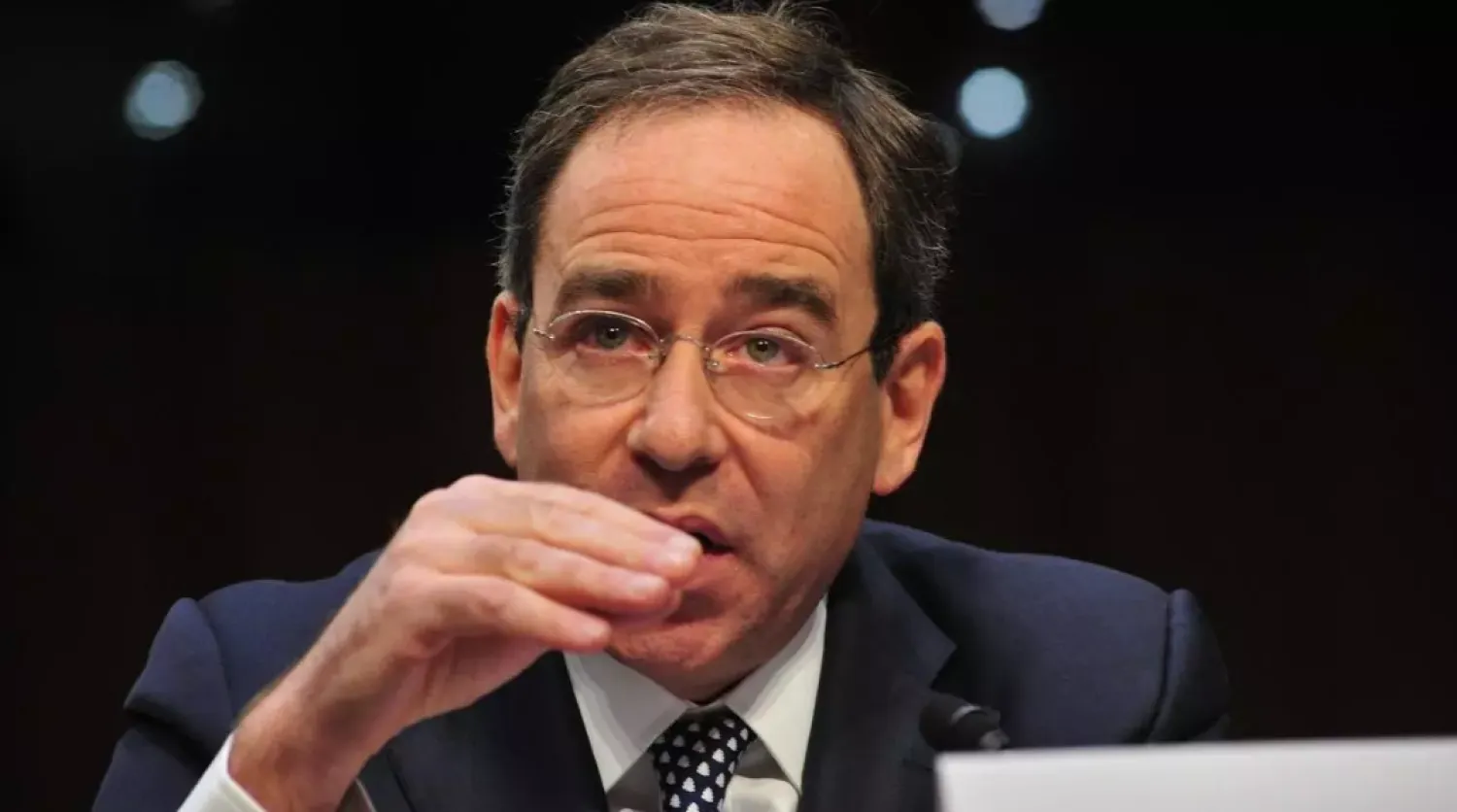
Thomas Nides, nominated as US ambassador to Israel, testifes before Congress in 2012 when he was deputy secretary of state for management and resources KAREN BLEIER AFP/File
TT

Biden Names Israel Ambassador Days after New Government

Thomas Nides, nominated as US ambassador to Israel, testifes before Congress in 2012 when he was deputy secretary of state for management and resources KAREN BLEIER AFP/File

US President Joe Biden on Tuesday nominated veteran Democratic Party official Thomas Nides to be US ambassador to Israel, filling the post two days after the formation of a new government eager to renew ties.

Nides, a former top banker at Morgan Stanley who has spent his adult life in Democratic politics, served in the US State Department when Barack Obama was president and defended funding for the Palestinians.

He would mark a sharp departure from the last US ambassador to Israel, David Friedman, a forceful advocate for hawkish Israeli policies who was tapped by former president Donald Trump after serving his company as a bankruptcy lawyer, according to AFP.

Nides grew up in a Jewish home in Duluth, Minnesota, where his father was temple president. He is not known as an ideological figure on the Middle East or other issues.

While serving as deputy secretary of state for management and resources, Nides fought attempts by Republicans in Congress to stop US funding for the UN agency for Palestinian refugees -- a step taken by Trump but reversed by Biden.

Michael Oren, the former Israeli ambassador to Washington, wrote in a 2011 book that Nides once called him to argue passionately -- and profanely -- against attempts in Congress to defund the UN cultural agency UNESCO after it admitted Palestine as a member state.

Nides, Oren wrote, said with colorful language that Israel would not want to defund UNESCO as it has played a role in education about the Holocaust.

Nides, whose nomination had been rumored for weeks, needs to be confirmed by the Senate, where the Democrats are narrowly in control.

His nomination was announced two days after the fall from power from Benjamin Netanyahu, Israel's longest serving prime minister who had toxic relations with Democrats after he rallied against Obama's Iran policy, rejected moves for a Palestinian state and aligned himself with Republicans.

Biden has quickly congratulated Prime Minister Naftali Bennett, who is a staunch defender of Jewish settlement in the West Bank but governs in coalition with centrists and leftists.



Netanyahu Says Israel Supports Trump's Iran Naval Blockade

FILE PHOTO: A map showing the Strait of Hormuz is seen in this illustration taken March 23, 2026. REUTERS/Dado Ruvic/Illustration/File Photo
TT

Netanyahu Says Israel Supports Trump's Iran Naval Blockade

FILE PHOTO: A map showing the Strait of Hormuz is seen in this illustration taken March 23, 2026. REUTERS/Dado Ruvic/Illustration/File Photo

Prime Minister Benjamin Netanyahu said Monday that Israel supports US President Donald Trump's decision to impose a naval blockade on Iran, adding that his government is in full coordination with Washington on the matter.

"Iran violated the rules (of the peace talks in Pakistan), President Trump decided to impose a naval blockade," Netanyahu said at a cabinet meeting, according to a video statement released by his office, AFP reported.

"We, of course, support this firm position, and we are in constant coordination with the United States."

The US military said it would begin a blockade of all Iranian ports on Monday after weekend talks with Tehran ended without a deal.

Trump had announced on social media that he would blockade the strategic Strait of Hormuz trade route that he has been demanding Tehran fully re-open, after Vice President JD Vance left the failed negotiations with an Iranian delegation in Islamabad.

The US military said the blockade would begin at 1400 GMT, and apply to all ships leaving or seeking to dock at Iranian ports on either side of the key waterway.

Netanyahu said Tehran had violated the terms of the talks to begin with, saying Vance had briefed him after the negotiations ended in Islamabad.

"The breakdown came from the American side, which could not tolerate Iran's blatant violation of the terms for entering negotiations," Netanyahu told the cabinet.

"The agreement was that there would be a ceasefire, and that the Iranians would immediately open the strait. They did not do so. The Americans could not accept this."

Netanyahu also said Vance had told him the "central issue" for Trump was the removal of all enriched uranium from Iran and "ensuring that there is no further enrichment in the years ahead -- even decades ahead -- no enrichment within Iran".

"That is their focus, and of course it is important to us as well," Netanyahu added.


Iran in Touch with India on Ships Passage through Strait of Hormuz, Iranian Envoy Says

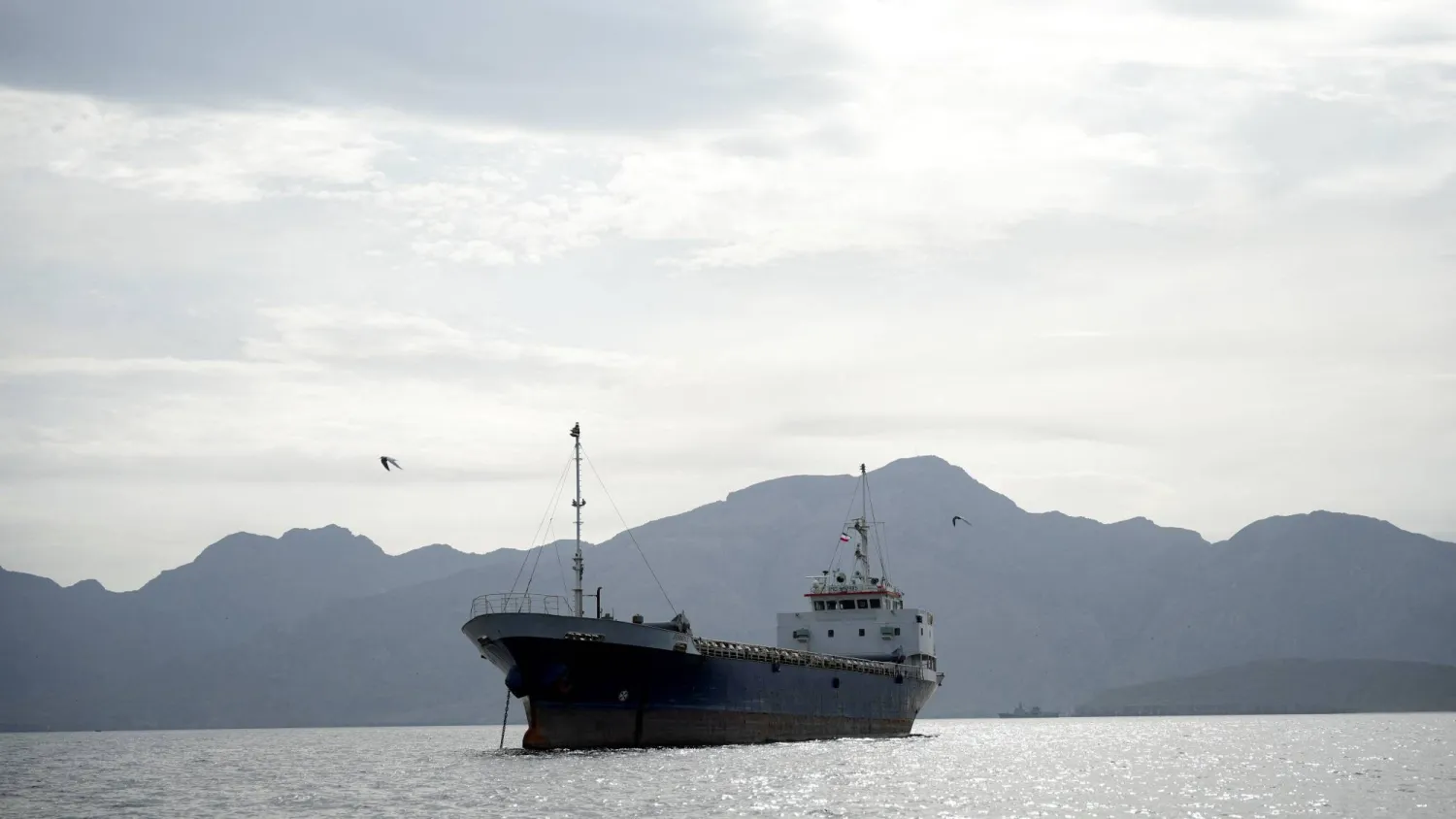
A vessel at the Strait of Hormuz, off the coast of Oman’s Musandam province, April 12, 2026. REUTERS
TT

Iran in Touch with India on Ships Passage through Strait of Hormuz, Iranian Envoy Says

A vessel at the Strait of Hormuz, off the coast of Oman’s Musandam province, April 12, 2026. REUTERS

Iran has "good contact" with the Indian government on passage of the South Asian nation's ships through the Strait of Hormuz and wants to help New Delhi, Iranian Ambassador to India Mohammad Fathali said on Monday.

The US-Israeli war on Iran, which began in February, has restricted shipping through the key route - a conduit for 40% of India's crude imports - impacting trade and squeezing oil supplies.

This came as ⁠the US Central Command said in a note to seafarers seen by Reuters on ⁠Monday that US military will enforce a blockade ​in Gulf of Oman and Arabian Sea east of the Strait of Hormuz and it will ‌apply to ‌all ​vessel ‌traffic regardless ⁠of ​flag.

The advanced note ‌said ‌the blockade ​would ‌come into effect at ‌1400 GMT on Monday.

"Any vessel entering or departing the blockaded ‌area without authorization is subject to interception, ⁠diversion, ⁠and capture," the note said.

"The blockade will not impede neutral transit passage through the Strait of Hormuz to or from non-Iranian destinations." 


Russia Offers to Take in Iran's Enriched Uranium

FILE - This satellite image provided by Vantor shows the Natanz nuclear complex in Iran on March 7, 2026, with no new damage seen at the facility or the tunnels. (Satellite image ©2026 Vantor via AP, file)
TT

Russia Offers to Take in Iran's Enriched Uranium

FILE - This satellite image provided by Vantor shows the Natanz nuclear complex in Iran on March 7, 2026, with no new damage seen at the facility or the tunnels. (Satellite image ©2026 Vantor via AP, file)

Russia is ready to take in Iran's enriched uranium as part of a future peace deal with the United States, the Kremlin said on Monday.

Failed talks between Iran and the United States over the weekend dashed hopes of a swift deal to permanently end the war that has killed thousands and thrown the global economy into turmoil since it began in late February.

Russia, which possesses the world's largest stockpile of nuclear weapons, has repeatedly offered to host Iran's enriched uranium as part of any peace deal.

"This proposal was voiced by President (Vladimir) Putin in contacts with both the United States and regional states. The offer still stands, but has not been acted upon," the Kremlin's spokesman Dmitry Peskov told reporters on Monday in response to a question by AFP.

The Kremlin also criticized Trump's threat to blockade the Strait of Hormuz, a key waterway that has been at a standstill since the US and Israel began striking Iran in late February.

"Such actions will likely continue to negatively impact the international market," Peskov said.