


Jordan's Direct Foreign Investment Grows by 2% in 2020

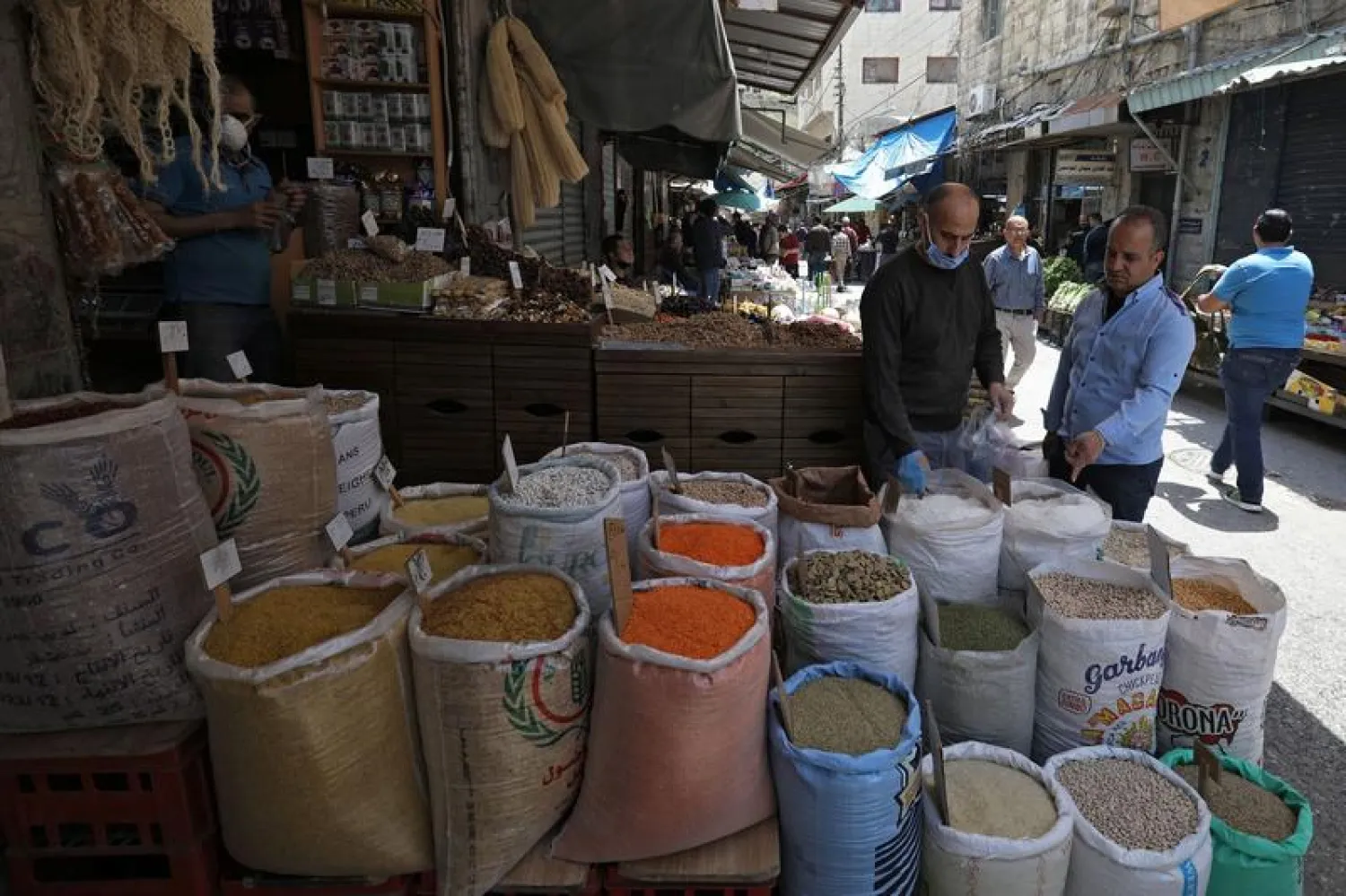
A vendor wearing a protective face mask serves customers at his shop, ahead of the Muslim holy month of Ramadan, amid concerns over the coronavirus disease (COVID-19), in Amman, Jordan April 21, 2020. REUTERS/Muhammad Hamed/File Photo
TT

Jordan's Direct Foreign Investment Grows by 2% in 2020

A vendor wearing a protective face mask serves customers at his shop, ahead of the Muslim holy month of Ramadan, amid concerns over the coronavirus disease (COVID-19), in Amman, Jordan April 21, 2020. REUTERS/Muhammad Hamed/File Photo

Foreign direct investment in Jordan grew by two percent in 2020 to about 497 million dinars, said Acting Head of the Jordan Investment Commission (JIC) Faridoun Hartouqa, citing Central Bank estimates.

Hartouqa told the First Jordanian Economic Expatriate conference, which was held online by the Jordanian Expatriate Association Platform, that the volume of investment projects benefiting from the JIC law increased in 2020 by 26.4 percent, compared to the same period in 2019.

Up to 376 investment projects with a total value of 618.4 million dinars and a projected employment volume of about 24,000 job opportunities, had benefited from the law in 2020, he added.

Hartouqa said that several international indicators pointed to an improvement in the investment environment in the Kingdom, as Jordan was listed among the 10 most reform-implementing countries in the world in the 2020 Ease of Doing Business report of the World Bank Group.

Jordan was also among the top 3 countries in the world with an improvement in the ease of doing business, in addition to advancing nine spots in the 2021 World Competitiveness Yearbook, issued by the International Institute for Management Development, achieving 49th globally, and fourth in the Arab world, he added.

Hartouqa highlighted key reforms carried out by the government to improve Jordan's competitiveness in attracting foreign capital, in addition to investment opportunities and competitiveness report prepared by the commission, where more than 80 promising and attractive investment opportunities were launched in various sectors across the Kingdom.

He stressed that the commission attached special care to Jordanian expatriates and providing them with the necessary facilities.

The World Bank Group’s Board of Executive Directors approved a $500 million Program to catalyze public and private investment in Jordan for a green and inclusive recovery from the COVID-19 pandemic.

The program is expected to help Jordan accelerate its recovery and create more jobs by capitalizing on the economy’s potential, especially its green growth opportunities, and to strengthen the Government’s accountability mechanisms for delivery.

The Asian Infrastructure Investment Bank (AIIB) is also preparing an additional $250 million in financing to support the Program.

The Inclusive, Transparent and Climate Responsive Investments Program-for-Results (PforR) is part of the US$1.1 billion recently announced by the World Bank Group (WBG) in combined loans and grant financing support from the WBG and international partners to support Jordan in responding to the pandemic and promoting an early, climate-resilient, and inclusive recovery.



Gold Rises, but on Track for Weekly Loss as Fed Rate Hike Expectations Build

FILE PHOTO: A raw gold bar is displayed at Nigeria’s booth at the 8th China International Import Expo (CIIE) venue in Shanghai, China, November 5, 2025. REUTERS/Maxim Shemetov/File Photo
TT

Gold Rises, but on Track for Weekly Loss as Fed Rate Hike Expectations Build

FILE PHOTO: A raw gold bar is displayed at Nigeria’s booth at the 8th China International Import Expo (CIIE) venue in Shanghai, China, November 5, 2025. REUTERS/Maxim Shemetov/File Photo

Gold prices rose on Friday but was on track for a weekly loss, as rising US Treasury yields and growing expectations of Federal Reserve rate hikes weighed on the metal.

Spot gold was up 0.6% at $4,303.19 per ounce by 1210 GMT, but was down about 1.7% so far this week. US gold futures rose 1% to $4,339.

US and Iranian negotiators in New York are seeking a deal that would involve Tehran reopening the Strait of Hormuz and Washington lifting its economic blockade of Iran, sources close to the talks said.

"Gold finds support today as oil prices pull back on renewed hopes for a US-Iran deal," said Nikos Tzabouras, a senior market analyst at Jefferies-owned Tradu.com.

"That said, the precious metal is heading for weekly losses, as higher Fed rates and bond yields raise the opportunity cost of holding gold."

The Fed raised interest rates by a quarter-point last week, its first hike in three years, and flagged more hikes follow. Traders are pricing in a 71% chance of an October hike and a 95% chance of an increase in December, according to the CME FedWatch Tool.

Although gold is traditionally seen as a hedge against inflation, higher rates dampen demand as investors shift to yield-bearing assets.

Gold demand in India picked up modestly this week as lower prices drew in buyers ahead of the festive season.

Oil prices fell, and the dollar eased about 0.3%, making greenback-priced bullion more affordable for holders of other currencies.

"Lingering deficit fears could revive the debasement trend that drives investors toward hard assets like gold. Alongside persistent central bank demand, the precious metal has a credible case for a strong fourth-quarter recovery, should the macro winds begin to shift," said Tzabouras.

Spot silver gained 1.4% to $64.82 per ounce, platinum added 1.7% to $1,777.38 and palladium fell 0.4% to $1,269.77. All three metals were poised for weekly losses.


Dollar Falls as Oil Eases, Yen Rallies on Japan Remarks

US dollar banknotes (Reuters)
TT

Dollar Falls as Oil Eases, Yen Rallies on Japan Remarks

US dollar banknotes (Reuters)

The dollar fell on Friday as oil prices eased, but was poised for a second straight weekly advance on growing rate hike bets, while the yen rallied after Japan said Tokyo and Washington remain committed to the stance behind July's joint intervention.

The dollar was on track to snap a four-day streak of gains as crude prices fell more than 1%.

Global oil prices have eased but still they remain above $100 a barrel, maintaining upward pressure on inflation.

Comments from central bank officials flagging inflation concerns and support for more rate increases after last week's rate hike of 25 basis points have boosted market expectations for a more aggressive path of monetary policy and helped spark a jump in US Treasury yields.

"We've had like a pretty aggressive rally in the dollar over the last couple of days and maybe it's a little stretched, just taking a little breather. So I wouldn't really say that the dollar is really weakening materially today," said Eugene Epstein, head of trading and structured products at Moneycorp in Stamford, Connecticut.

"It's just a combination of those factors that you have not only a slight increase in odds of a second hike before year-end, but also just general bond yields going up and the market getting a bit concerned about that, so that's really what we have, what's been driving the dollar stronger overall."

DOLLAR INDEX POISED FOR BIGGEST DROP IN THREE WEEKS

The dollar index, which measures the dollar against five other currencies, fell 0.34% and was on track for its biggest daily percentage drop since September 3, to 100.95. The euro was up 0.2% at $1.1402 but on pace for a third straight weekly decline.

Expectations for a rate hike from the Fed at its October meeting stood at about 66%, according to CME FedWatch, up from about 58% a week earlier.

On the data front, new orders for US-manufactured capital goods increased more than expected in August and data for the prior month was revised sharply higher, pointing to another quarter of robust growth in business spending as part of artificial intelligence infrastructure is created.

In a separate report, the University of Michigan's Surveys of Consumers said its Consumer Sentiment Index ticked up to 48.1 from the prior reading of 47.8, above the 47.6 estimate of economists polled by Reuters.

Sterling strengthened 0.24% to $1.3247, supported by hawkish comments from Bank of England Governor Andrew Bailey. Yet it remained close to a three-month low hit on Thursday.

YEN STRENGTHENS AS JAPAN STEPS UP INTERVENTION WARNINGS

The Japanese yen strengthened 1.09%, on pace to snap a four-day streak of declines and its biggest daily gain against the dollar since September 7, to 157.13.

The currency rose after Japan's Finance Minister Satsuki Katayama said US President Donald Trump raised concern about yen weakness during a summit with Japanese Prime Minister Sanae Takaichi earlier this week.

Katayama said this reaffirmed the shared US-Japan stance behind July's joint intervention, adding she and Treasury Secretary Scott Bessent would stay in close contact as policymakers stepped up warnings over renewed yen weakness.

Still, the yen was on track for a second weekly fall, after markets judged the Bank of Japan's rate hike last week to a 31-year high and its latest guidance as insufficiently hawkish.

Elsewhere, the dollar strengthened 0.14% to 6.725 versus the offshore Chinese yuan, as a Trump-Xi summit in Washington showed no signs of breakthroughs at a closed-door meeting on thorny issues such as AI, trade, Taiwan and the Iran war.


Gasoline Shipped to Syria Begins Moving by Road to Iraq, Syrian Official Says

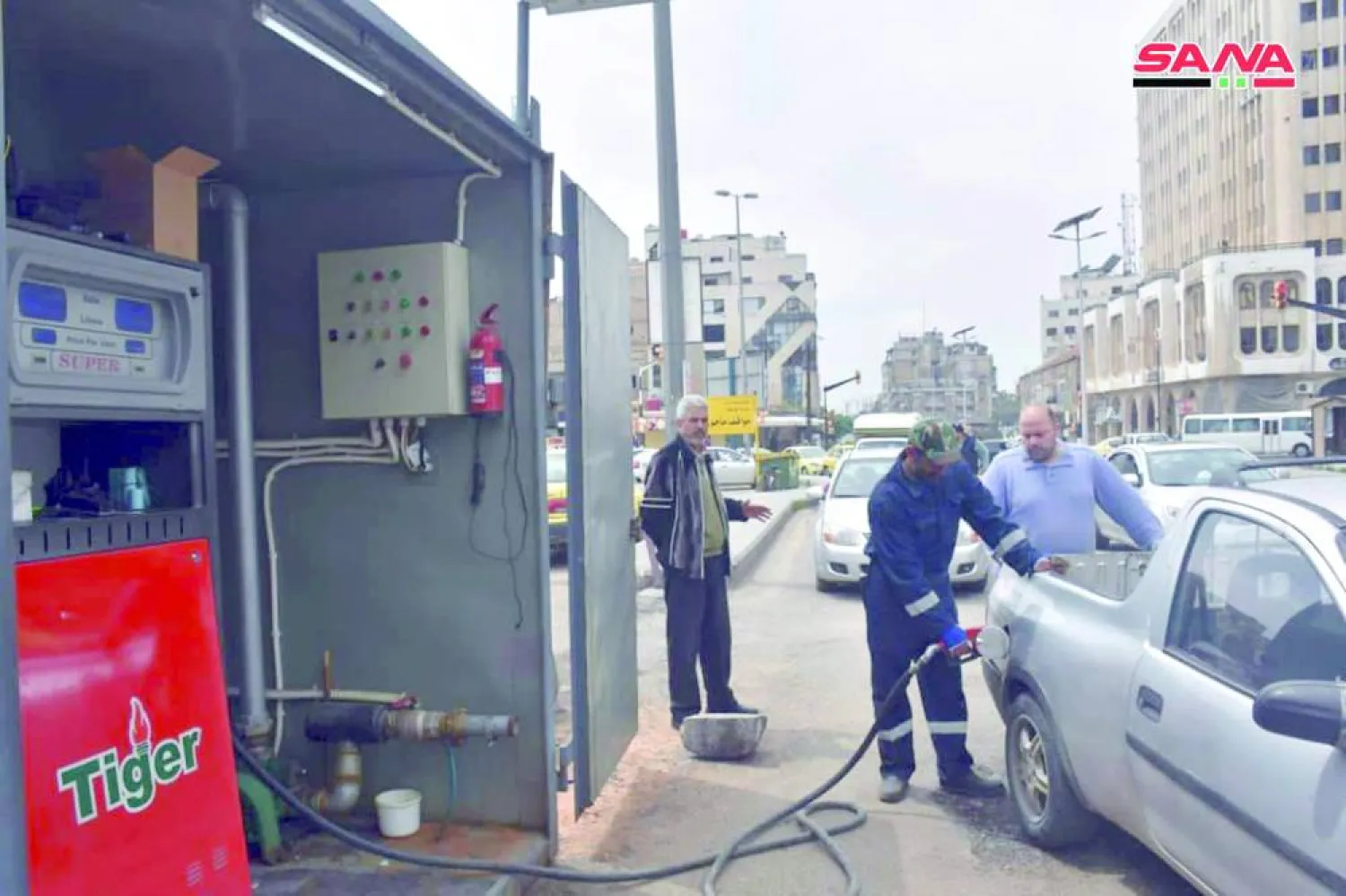
FILE - This file photo released on April 7, 2019, by the Syrian official news agency SANA, shows a worker filling a pickup at a gas station, in Homs, Syria. (SANA via AP, File)
TT

Gasoline Shipped to Syria Begins Moving by Road to Iraq, Syrian Official Says

FILE - This file photo released on April 7, 2019, by the Syrian official news agency SANA, shows a worker filling a pickup at a gas station, in Homs, Syria. (SANA via AP, File)

Gasoline shipped to Syria has begun moving by road to Iraq, a senior Syrian oil official told Reuters, establishing a two-way energy corridor through a route Baghdad has used to export fuel since disruption to shipping through the Strait of Hormuz.

Iraq began using the Syrian route after the Iran war cut off the Strait of Hormuz, its main Gulf trade route. Baghdad has said it plans to develop alternative routes through Syria even if traffic through Hormuz normalizes.

Transport of fuel oil had so far been from Iraq to Syrian ports before establishment of the return leg.

The first cargo to Iraq, about 32,800 metric tons of gasoline aboard the Marshall Islands-flagged tanker Avanti, was unloaded into storage tanks at Syria's Baniyas refinery before being loaded onto trucks this week, said Tareq Shallash, director of the Refining Directorate at state-owned Syrian Petroleum Company (SPC).

Shallash said 77 tanker trucks have already left Baniyas for the Iraqi border and loading was continuing, adding that further shipments were expected.

The gasoline was neither produced in Syria nor drawn from stocks intended for the Syrian market, he said.

The operation is being carried out under a transit contract between SPC and Qatar's UCC Holding, which Shallash said was the supplier and was overseeing transportation.

"A contract was signed between SOMO and the Qatari company to supply Iraq with improved gasoline through the port of Banias by road tankers, and the supplies have in fact been delivered on a regular basis," Iraqi oil ministry spokesperson Saleem al-Rikabi told Reuters on Friday when asked for comment.

Another Marshall Islands-flagged tanker, Gaita, loaded gasoline at the Port of Houston before sailing to Baniyas for discharge, LSEG shipping data showed.