


US Warns that ISIS Still a World Threat

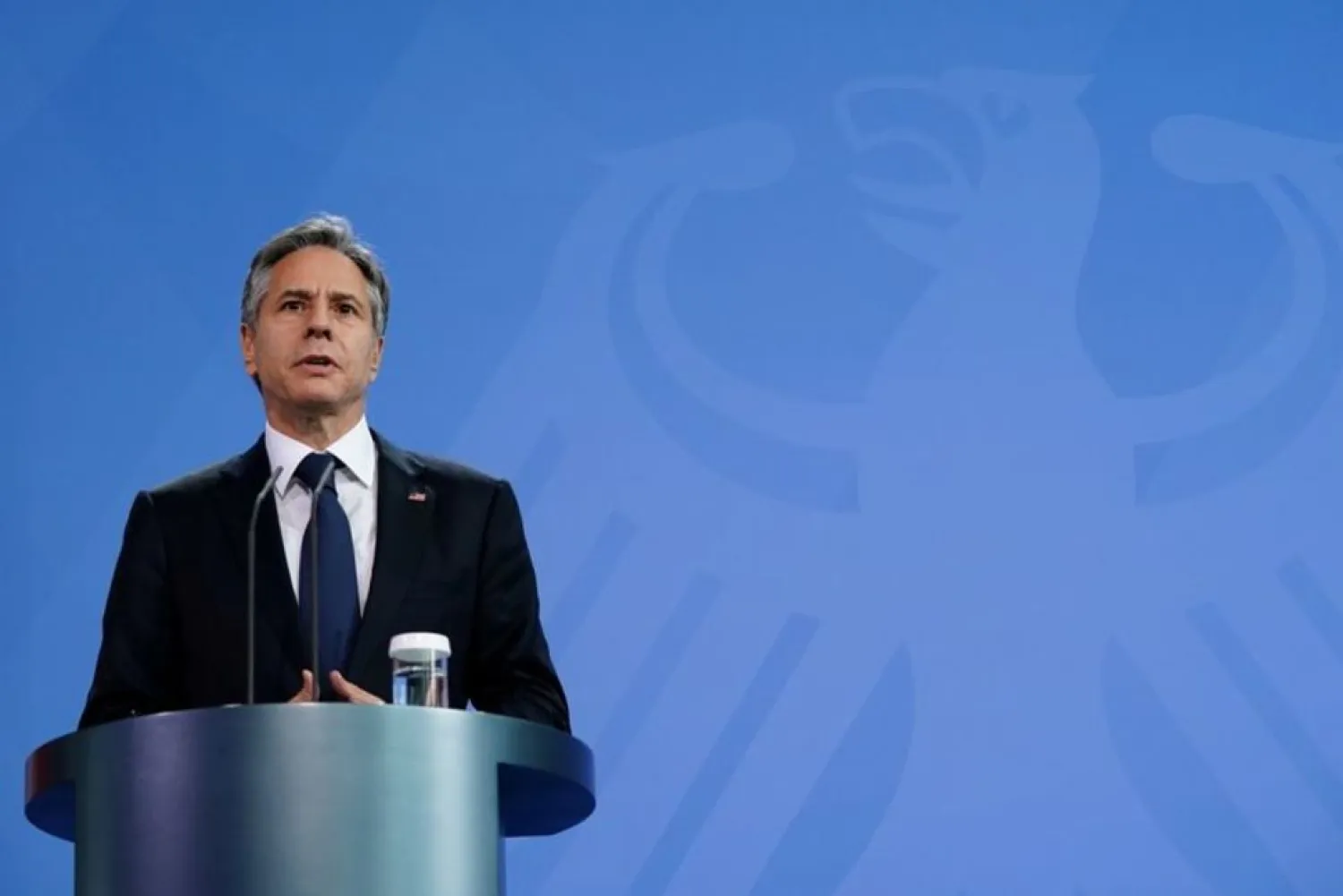
US Secretary of State Antony Blinken speaks during a joint news conference with German Chancellor Angela Merkel (not pictured) at the Chancellery in Berlin, Germany June 23, 2021. (Reuters)
TT

US Warns that ISIS Still a World Threat

US Secretary of State Antony Blinken speaks during a joint news conference with German Chancellor Angela Merkel (not pictured) at the Chancellery in Berlin, Germany June 23, 2021. (Reuters)

As the US works on its military withdrawal from Afghanistan, members of the global coalition fighting the ISIS met Monday to chart future steps against the extremist group.

The meeting came just a day after the US launched air strikes against Iran-backed militias near the Iraq-Syria border

US Secretary of State Antony Blinken and Italian Foreign Minister Luigi Di Maio co-chaired the gathering of senior officials from the seven-year-old, 83-member bloc. Participants were taking stock of current efforts to ensure the complete defeat of ISIS, whose remnants still pose a threat in Iraq and Syria and have shown signs of surging in parts of Africa.

Amid significant other international priorities, including taming the coronavirus pandemic and stepping up the fight against climate change, the coalition is hoping to stabilize areas liberated from ISIS, repatriate and hold foreign fighters accountable for their actions and combat extremist messaging.

Blinken and Di Maio urged representatives of the 77 other countries and five organizations that make up the coalition not to drop their guard.

“We must step up the action taken by the coalition, increasing the areas in which we can operate,” said Di Maio.

Outside of Iraq and Syria, he said there was an “alarming” surge in ISIS activity, particularly in the Sahel, Mozambique and the Horn of Africa. He called for the coalition to create a special mechanism to deal with the threat in Africa.

Blinken noted that despite their defeat, ISIS elements in Iraq and Syria “still aspire to conduct large-scale attacks.”

“Together, we must stay as committed to our stabilization goals as we did to our military campaign that resulted in victory on the battlefield,” he said.

Blinken announced a new US contribution of $436 million to assist displaced people in Syria and surrounding countries and called for a new effort to repatriate — and rehabilitate or prosecute — some 10,000 ISIS fighters who remain imprisoned by the Syrian Defense Forces.

“This situation is simply untenable,” Blinken said. “It just can’t persist indefinitely.” However, no countries present made any new commitment to repatriating their citizens and it was unclear if the number of detainees could be reduced in any significant way in the near-term.

Blinken also announced sanctions against Ousmane Illiassou Djibo, a native of Niger, who is a key leader of the ISIS affiliate in the greater Sahara. Djibo was designated a global terrorist, meaning that any of his US are frozen and Americans are barred from any transactions with him.

In addition to the meeting on ISIS, foreign ministers of countries concerned about the broader conflict in Syria met in Rome ahead of a critical UN vote on whether to maintain a humanitarian aid corridor from Turkey.

Russia has resisted reauthorizing the channel amid stalled peace talks between the Syrian government and opposition factions.

Two senior US officials said Blinken told the Syria conference that the US believes the corridor must be reauthorized and expanded to prevent more deaths. The officials, who spoke on condition of anonymity because they weren’t authorized to publicly discuss the private diplomatic conversations, said Blinken made clear that any US-Russia cooperation on Syria would be dependent on Moscow agreeing to the extension. Russia, however, wasn’t present at the meeting.

Last week, the UN special envoy for Syria, Geir Pederson, said there were worrying signs that the ISIS may be getting stronger in the country and called for a boost in cooperation to counter it. Pederson has also joined calls for new international talks on ending Syria’s war.

Since the Syrian conflict erupted in March 2011, numerous high-level gatherings aimed at ending the fighting and guiding the country to a political transition have failed. The UN, US, Russia and many other countries support a 2015 Security Council resolution endorsing a roadmap to peace in Syria that calls for a new constitution followed by UN-supervised elections.

Blinken, who also met with Italian Prime Minister Mario Draghi and President Sergio Mattarella on Monday, hailed the state of US-European relations, noting that Italy, France and Germany — the three countries he visited on his current European tour — are the only members of NATO, the Group of Seven and the European Union.

“We share a deep commitment to promoting democracy and human rights,” he said. “We see the same big challenges on the horizon. And we recognize that we can’t tackle them alone.”

Blinken and Di Maio downplayed differences between the US and Italy over China, saying there was an increasing awareness of the complexities and dangers of dealing with Beijing.



Syria Starts Evacuating ISIS-linked Al-Hol Camp

TOPSHOT - Members of Syrian security forces march through the entrance of the Al-Hol camp in the desert region of Hasakeh province on January 21, 2026. (Photo by OMAR HAJ KADOUR / AFP)
TT

Syria Starts Evacuating ISIS-linked Al-Hol Camp

TOPSHOT - Members of Syrian security forces march through the entrance of the Al-Hol camp in the desert region of Hasakeh province on January 21, 2026. (Photo by OMAR HAJ KADOUR / AFP)

Syrian authorities began evacuating remaining residents of the ISIS group-linked Al-Hol camp in the country's northeast on Tuesday, as they empty the formerly Kurdish-controlled facility, two officials told AFP.

Fadi al-Qassem, the official appointed by the government with managing Al-Hol's affairs, told AFP that the camp "will be fully evacuated within a week, and nobody will remain", adding that "the evacuation started today".

A government source told AFP on condition of anonymity that "the emergencies and disaster management ministry is working now to evacuate Al-Hol camp" and take residents to a camp in Akhtarin, in the north of Aleppo province.


Protesters Block Beirut Roads after Cabinet Approves New Taxes that Raise Fuel Prices

Taxi drivers, foreground, block a main highway with their cars during a protest against the increased taxes and gasoline prices issued by the Lebanese Cabinet on Monday, in Beirut, Lebanon, Tuesday, Feb. 17, 2026. (AP Photo/Hussein Malla)
TT

Protesters Block Beirut Roads after Cabinet Approves New Taxes that Raise Fuel Prices

Taxi drivers, foreground, block a main highway with their cars during a protest against the increased taxes and gasoline prices issued by the Lebanese Cabinet on Monday, in Beirut, Lebanon, Tuesday, Feb. 17, 2026. (AP Photo/Hussein Malla)

Protesters blocked main roads in and around Beirut on Tuesday after Lebanon’s Cabinet approved new taxes that raise fuel prices and other products to fund public pay hikes.

The Cabinet approved a tax of 300,000 Lebanese pounds (about $3.30) on every 20 liters (5.3 gallons) of gasoline on Monday. Diesel fuel was exempted from the new tax, as most in Lebanon depend on it to run private generators to make up for severe shortages in state electricity.

The government also agreed to increase the value-added tax on all products already subject to the levy from 11 to 12%, which the parliament still has to approve, The Associated Press said.

The tax increases are to support raises and pension boosts of public employees, after wages lost value in the 2019 currency collapse, giving them the equivalent of an additional six months’ salary. Information Minister Paul Morcos said the pay increases were estimated to cost about $800 million.

Though the Mediterranean country sits on one of the largest gold reserves in the Middle East, it suffers ongoing inflation and widespread corruption. The cash-strapped country also suffered about $11 billion in damages in the 2024 war between Israel and the Hezbollah militant group.

Anger over fuel hike Ghayath Saadeh, one of a group of taxi drivers who blocked a main road leading into downtown Beirut, said the country’s leaders “consider us taxi drivers to be garbage.”

“Everything is getting more expensive, food and drinks, and Ramadan is coming,” he said. “We will block all the roads, God willing, if they don’t respond to us.”

When the Lebanese government proposed new taxes in 2019, including a $6 monthly fee for using internet calls through services such as WhatsApp, mass protests broke out that paralyzed the country for months. Demonstrators called for the country’s leaders to step down over widespread corruption, government paralysis and failing infrastructure, and for an end to the country’s sectarian power-sharing system.

Lebanon has been under international pressure to make financial reforms for years, but has so far made little progress.

Weapons plan discussed

Also Monday, the cabinet received a report from the Lebanese army on its progress on a plan to disarm non-state militant groups in the country, including Hezbollah.

Last month, the army announced it had completed the first phase of the plan, covering the area south of the Litani River, near the border with Israel. The second phase of the plan will cover segments of southern Lebanon between the Litani and the Awali rivers, which includes the port city of Sidon.

Morcos, the information minister, said following the cabinet session that the second stage is expected to take four months but could be extended “depending on the available resources, the continuation of Israeli attacks and the obstacles on the ground.”

The disarmament plan comes after a US-brokered ceasefire nominally ended a war between Hezbollah and Israel in November 2024. Since then, Israel has accused Hezbollah of rebuilding and has continued to launch near-daily strikes in Lebanon and to occupy several hilltop points on the Lebanese side of the border.

Hezbollah has insisted that the ceasefire deal only requires it to disarm south of the Litani and that it will not discuss disarming in the rest of the country until Israel stops its strikes and withdraws from all Lebanese territory.


Under Israeli Cover, Gaza Gangs Kill and Abduct Palestinians in Hamas-Controlled Areas 

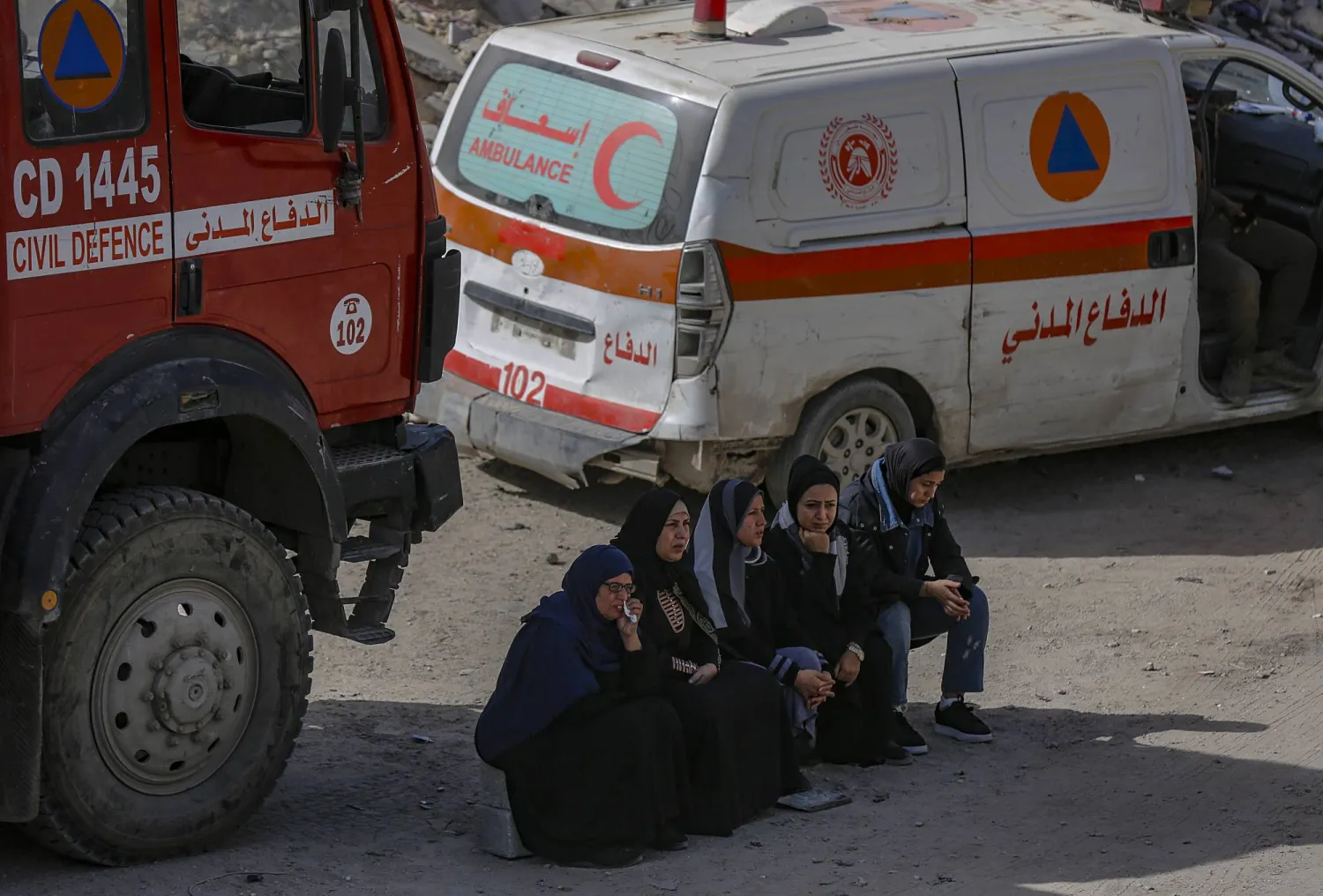
A group of women wait for news as Palestinian civil defense teams work to recover the remains of 67 members of the Abu Nasr family from beneath the rubble of their home after it was destroyed in an Israeli airstrike in Beit Lahiya, north of Gaza City, 15 February 2026. (EPA)
TT

Under Israeli Cover, Gaza Gangs Kill and Abduct Palestinians in Hamas-Controlled Areas 

A group of women wait for news as Palestinian civil defense teams work to recover the remains of 67 members of the Abu Nasr family from beneath the rubble of their home after it was destroyed in an Israeli airstrike in Beit Lahiya, north of Gaza City, 15 February 2026. (EPA)

Amid heavy Israeli airstrikes across Gaza, armed gangs carried out kidnappings and executions of Palestinians on Monday in areas controlled by Hamas, west of the so-called “yellow line” separating Israeli forces from the Palestinian movement.

According to local sources, Sunday’s strikes against Hamas and other armed factions deployed along the separating line resulted in security breaches that allowed armed gangs operating in Israeli-controlled zones to infiltrate areas west of the yellow line.

In response, Palestinian factions expanded their deployment, under what they termed “Operation Ribat”, to prevent the infiltration of collaborators with Israel into their areas. However, the Israeli strikes hit those fighters, killing several.

Before dawn on Monday, gunmen affiliated with the Rami Helles gang, which is active in eastern Gaza City, raided homes on the western outskirts of the Shujaiya neighborhood, just meters from Salah al-Din Road and more than 150 meters from the yellow line.

Field sources and affected families told Asharq Al-Awsat that the gunmen abducted several residents from their homes and interrogated them on the spot amid intense Israeli drone activity. Quad-copter drones were reportedly providing “security cover” for the attackers and opening fire in the surrounding area.

The sources said the gunmen shot and killed Hussam al-Jaabari, 31, after he refused to answer their questions. His body was left at the scene before the attackers withdrew, releasing others who had been detained. Al-Jaabari was later pronounced dead at Al-Maamadani (Al-Ahli Arab) Hospital.

In a separate incident, gunmen linked to the Ashraf al-Mansi gang, which is active in Jabalia and Beit Lahiya in northern Gaza, stormed Abu Tammam School in Beit Lahiya that shelters dozens of displaced families, also under Israeli drone surveillance.

Several young men were abducted and taken to a gang-controlled location, and they haven’t been heard of since. Three families of women and children were briefly detained and later released.

Sources in the Palestinian armed factions denied that any of the abducted individuals or the victim of the killing were members of their groups.

Meanwhile, Hamas’ Ezzedine al-Qassam Brigades froze deployments near the yellow line after Israeli airstrikes killed 10 of its members in two raids in Khan Younis and Jabalia on Sunday.

A Hamas source said the move was temporary and could be reversed once Israeli strikes subside.

Israel said it targeted Qassam fighters after gunmen emerged from a tunnel in Beit Hanoun, a claim it has used to justify strikes on faction targets and the assassination of senior operatives.

On Monday, the army announced it had killed a group of gunmen in Rafah, raising fears of further escalation.

Separately, dozens of families of missing Palestinians held a protest in Khan Younis, demanding information about relatives who disappeared during the war. UN estimates put the number of missing in Gaza at between 8,000 and 11,000, with their fate still unknown.