


Iran’s Rouhani Apologizes for Power Cuts, Blames Heat

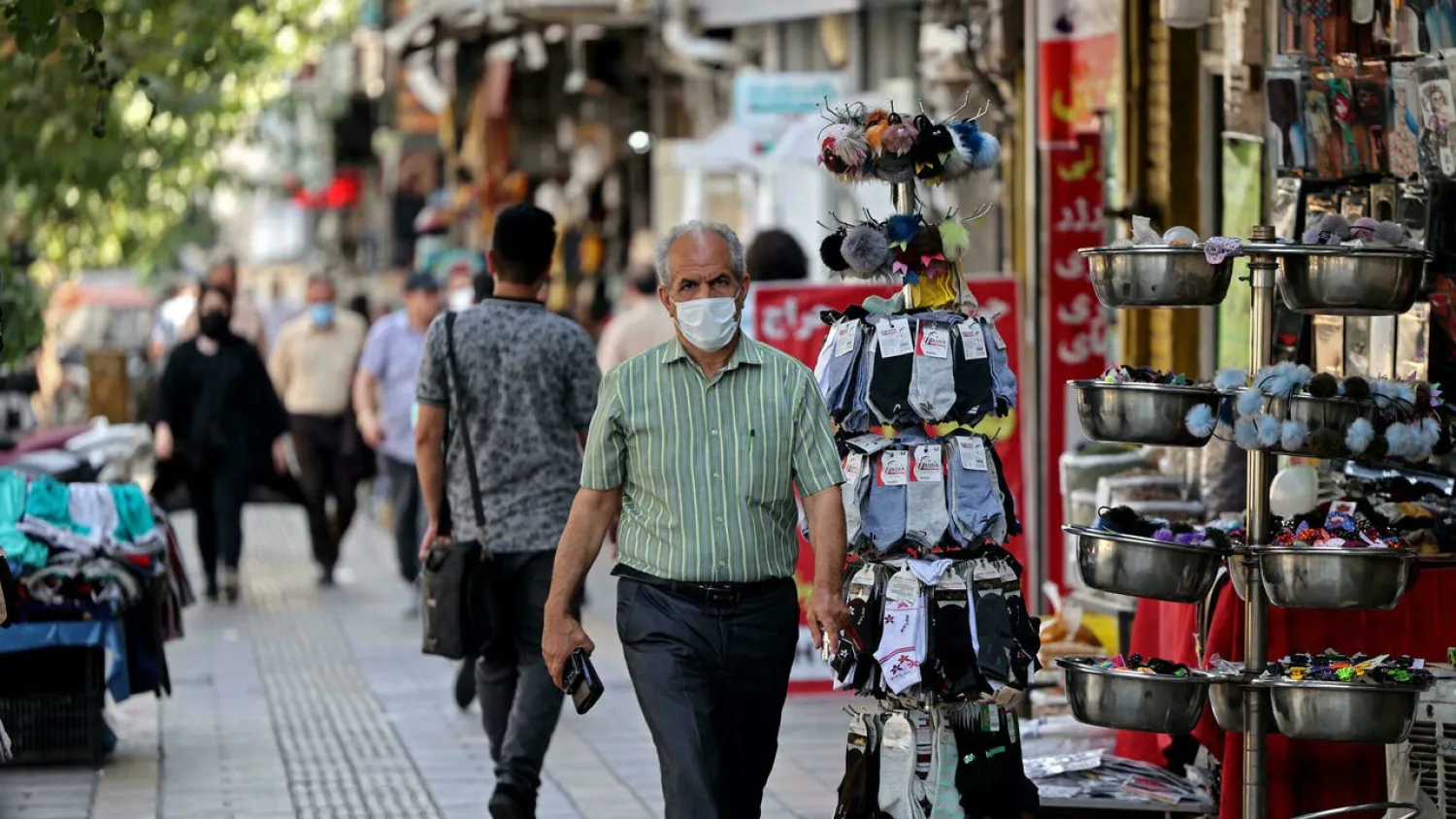
Iranians are enduring sweeping power blackouts, which authorities blame on high temperatures and a drought which have driven up demand and curtailed hydroelectric power generation. (AFP)
TT

Iran’s Rouhani Apologizes for Power Cuts, Blames Heat

Iranians are enduring sweeping power blackouts, which authorities blame on high temperatures and a drought which have driven up demand and curtailed hydroelectric power generation. (AFP)

Iranian President Hassan Rouhani apologized Wednesday for sweeping blackouts, blaming a searing drought he said had sharply driven up demand and virtually halted hydroelectric power generation.

Since last week, Tehran and Iran’s other major cities have experienced frequent power outages that authorities say may continue until late July.

Unconfirmed videos circulating on social media appear to show frustrated Iranians protesting the outages in several cities including Shiraz and Kazeroun in the south, and Amol and Kordkuy in the north, as well as Tehran.

Tehran resident Azam, a hairdresser, said she holds the government responsible for failing to “provide the basics” like electricity.

“It’s not like we’re asking for much,” she told AFP, complaining that the authorities “just ask the people to be patient and endure”.

“All our business requires electricity, and this (outage) has disrupted our life,” said private company employee Hamid.

The energy ministry has published schedules for rolling blackouts but many citizens and businesses have lost power unexpectedly in recent days.

“We regret the problems the people have had in the past few days,” Rouhani said in televised remarks at a cabinet meeting mostly dedicated to the power cuts, which have sparked a chorus of complaints.

“On the one hand, our output has dropped due to the condition of hydroelectric power plants, and on the other consumption has gone up,” Rouhani said.

He attributed the surge in demand to “industrial growth and extreme heat” as well as energy-intensive cryptocurrency mining operations.

In May, the government temporarily banned crypto mining for four months, but Iranian news agencies still report frequent police raids on “illegal farms” that authorities say use large amounts of subsidized electricity.

‘Unprecedented drought’
On Tuesday, Rouhani said Iran was facing an “unprecedented drought” with average rainfall down 52 percent compared to the previous year, bringing hydroelectric power generation to “almost” zero.

He called on the energy ministry to prevent any cuts outside of the scheduled blackouts of at least two hours a day.

Rouhani also blamed Washington’s punishing sanctions on Iran for choking investment in energy infrastructure.

“The result is having no capital, and then big projects cannot be done,” he told the cabinet. “Who would want to invest when the country’s risk goes up?”

Sanctions have left Iran facing its “most serious macroeconomic crisis” since its 1979 revolution, Thierry Coville of the Institute for International and Strategic Relations in Paris told AFP last month.

The crisis has also sharply reduced infrastructure investment by the government, said Coville, who added “it is no coincidence that we are starting to see power cuts in Iran.”

After the cabinet meeting, Energy Minister Reza Ardakanian said he “sincerely” apologized to Iranians. Until late August all government departments would remain closed for an extra day a week, on Thursdays, to save energy, he added.

Ardakanian had offered a similar apology in May, when Iran introduced planned, rolling blackouts after Tehran and other cities were hit by unannounced power cuts.

Tehran’s police chief said the blackouts were placing a huge burden on his officers as traffic lights failed across the capital.

The cuts also raised concerns about the ongoing Covid-19 pandemic in Iran, as Tehran’s anti-coronavirus committee chief warned against health centers losing power while the capital struggles to contain a new wave of the virus.

Some 85,000 people have died after contracting the virus, with more than 3.3 million cases recorded in Iran, making it the region’s hardest-hit country.

Power cuts are not uncommon during Iran’s hot summers, when the rising temperatures lead to a spike in the use of air-conditioning.

But Rouhani said this year’s power shortage was the worst in 11 years, brought about by the searing drought.

Iran’s meteorological office forecast the extreme heat would continue until Friday, with highs of 41 degrees Celsius (106 degrees Fahrenheit) in Tehran and 51 degrees (124 degrees) in Ahvaz in the southwest.



Turkish FM to Attend Trump’s Board of Peace Meeting in Washington, Italy as ‘Observer’ 

28 November 2025, Berlin: Turkish Foreign Minister Hakan Fidan during a joint press conference with German Foreign Minister Wadephul. (dpa)
TT

Turkish FM to Attend Trump’s Board of Peace Meeting in Washington, Italy as ‘Observer’ 

28 November 2025, Berlin: Turkish Foreign Minister Hakan Fidan during a joint press conference with German Foreign Minister Wadephul. (dpa)

‌Turkish Foreign Minister Hakan Fidan will travel to Washington in lieu of President Recep Tayyip Erdogan for the inaugural meeting of US President Donald Trump's "Board of Peace" on Thursday, the foreign ministry said on Wednesday.

A Turkish diplomatic source told Reuters ‌that Fidan, during the ‌talks, would call ‌for ⁠determined steps to ⁠resolve the Palestinian issue and emphasize that Israel must end actions to hinder the flow of aid into Gaza and stop its ceasefire violations.

Fidan ⁠will also reiterate Türkiye's ‌readiness ‌to contribute to Gaza's reconstruction and its ‌desire to help protect Palestinians ‌and ensure their security, the source said.

He will also call for urgent action against Israel's "illegal ‌settlement activities and settler violence in the West Bank", ⁠the ⁠source added.

According to a readout from Erdogan's office, the president separately told reporters on Wednesday that he hoped the Board of Peace would help achieve "the lasting stability, ceasefire, and eventually peace that Gaza has longed for", and would focus on bringing about a two-state solution.

The board, of which Trump is the chairman, was initially designed to oversee the Gaza truce and the territory's reconstruction after the war between Hamas and Israel.

Meanwhile, Italy will be present at the meeting as an "observer", Italian Foreign Minister Antonio Tajani said Wednesday.

"I will go to Washington to represent Italy as an observer to this first meeting of the Board of Peace, to be present when talks occur and decisions are made for the reconstruction of Gaza and the future of Palestine," Tajani said according to ANSA news agency.

Italy cannot be present as anything more than an observer as the country's constitutional rules do not allow it to join an organization led by a single foreign leader.

But Tajani said it was key for Rome to be "at the forefront, listening to what is being done".

Since Trump launched the Board of Peace at the World Economic Forum in Davos in January, at least 19 countries have signed its founding charter.


Energy Secretary: US to Stop Iran's Nuclear Ambitions 'One Way or the Other'

US Secretary of Energy Chris Wright speaks during a press conference after a meeting with Venezuela's acting president Delcy Rodriguez at the Miraflores Presidential Palace in Caracas on February 11, 2026. (Photo by Juan BARRETO / AFP)
TT

Energy Secretary: US to Stop Iran's Nuclear Ambitions 'One Way or the Other'

US Secretary of Energy Chris Wright speaks during a press conference after a meeting with Venezuela's acting president Delcy Rodriguez at the Miraflores Presidential Palace in Caracas on February 11, 2026. (Photo by Juan BARRETO / AFP)

The United States will deter Iran from acquiring nuclear weapons "one way or the other", US Energy Secretary Chris Wright warned on Wednesday.

"They've been very clear about what they would do with nuclear weapons. It's entirely unacceptable," Wright told reporters in Paris on the sidelines of meetings of the International Energy Agency.

"So one way or the other, we are going to end, deter Iran's march towards a nuclear weapon," Wright said.

US and Iranian officials held talks in Geneva on Tuesday aimed at averting the possibility of US military intervention to curb Tehran's nuclear program.

Iran said following the talks that they had agreed on "guiding principles" for a deal to avoid conflict.

US Vice President JD Vance, however, said Tehran had not yet acknowledged all of Washington's red lines.


Iran, Russia to Conduct Joint Drills in the Sea of Oman 

This handout photo released by Iran's Revolutionary Guards Corps (IRGC)'s official website Sepanews on February 17, 2026, shows boats maneuvering around a tanker vessel during a military exercise by members of the IRGC and navy in the Strait of Hormuz. (Sepahnews / AFP)
TT

Iran, Russia to Conduct Joint Drills in the Sea of Oman 

This handout photo released by Iran's Revolutionary Guards Corps (IRGC)'s official website Sepanews on February 17, 2026, shows boats maneuvering around a tanker vessel during a military exercise by members of the IRGC and navy in the Strait of Hormuz. (Sepahnews / AFP)

Iran and Russia will conduct naval maneuvers in the Sea of Oman on Thursday, following the latest round of talks between Tehran and Washington in Geneva, Iranian media reported.

On Monday, the Revolutionary Guards, the ideological arm of Iran's military, also launched exercises in the strategic Strait of Hormuz, a challenge to US naval forces deployed in the region.

"The joint naval exercise of Iran and Russia will take place tomorrow (Thursday) in the Sea of Oman and in the northern Indian Ocean," the ISNA agency reported, citing drill spokesman, Rear Admiral Hassan Maghsoudloo.

"The aim is to strengthen maritime security and to deepen relations between the navies of the two countries," he said, without specifying the duration of the drill.

The war games come as Iran struck an upbeat tone following the second round of Oman-mediated negotiations in Geneva on Tuesday.

Previous talks between the two foes collapsed following the unprecedented Israeli strike on Iran in June 2025, which sparked a 12-day war that the United States briefly joined.

US President Donald Trump has deployed a significant naval force in the region, which he has described as an "armada."

Iranian officials have repeatedly threatened to block the Strait of Hormuz, particularly during periods of tension with the United States, but it has never been closed.

A key passageway for global shipments of oil and liquefied natural gas, the Strait of Hormuz has been the scene of several incidents in the past and has returned to the spotlight as pressure has ratcheted amid the US-Iran talks.

Iran announced on Tuesday that it would partially close it for a few hours for "security" reasons during its own drills in the strait.