

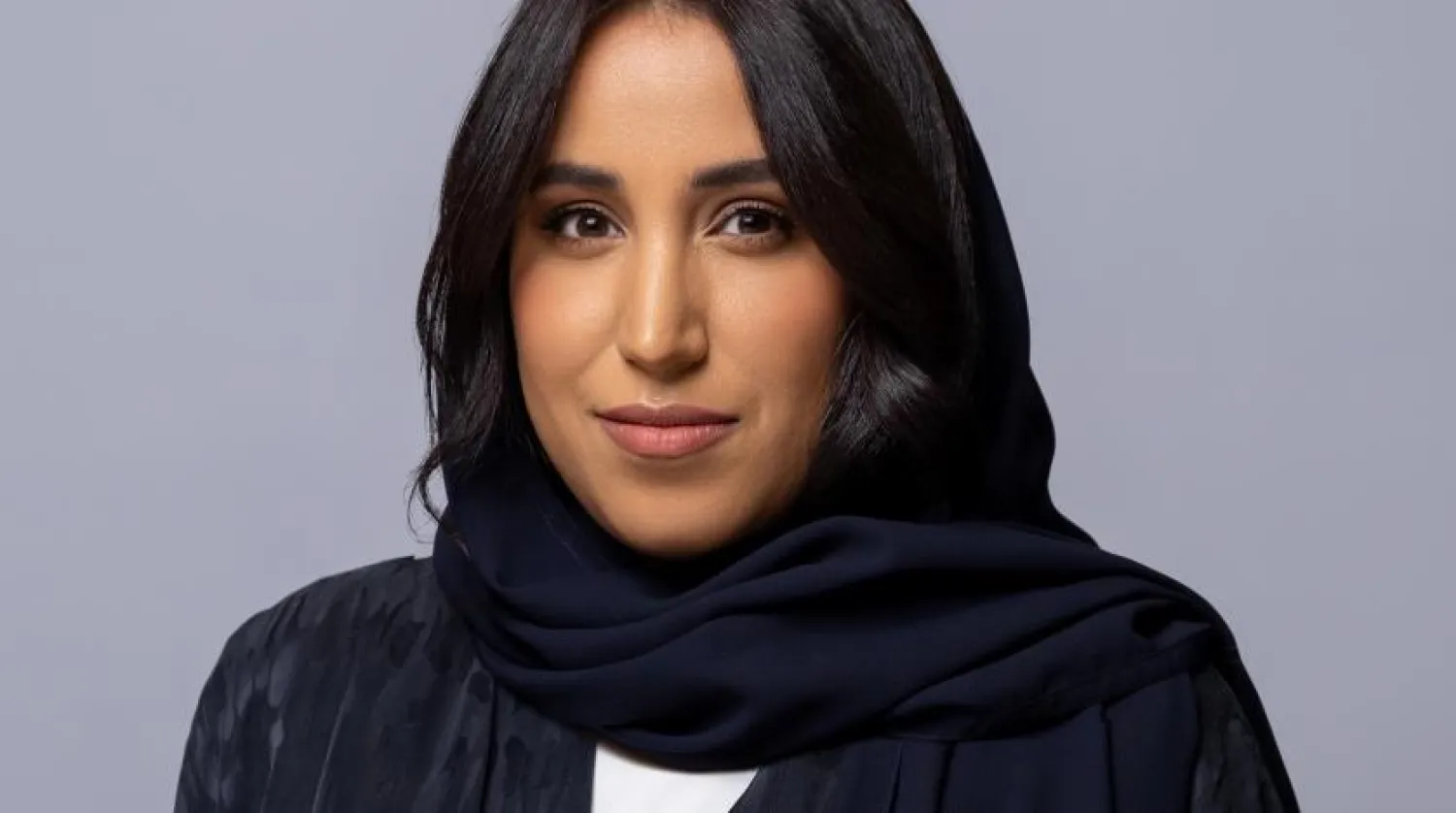

Jomana Al-Rashid: We Have Ambitious Growth Plans for the Saudi Research & Media Group

Saudi Research & Media Group’s CEO Jomana Al-Rashid.
TT

Jomana Al-Rashid: We Have Ambitious Growth Plans for the Saudi Research & Media Group

Saudi Research & Media Group’s CEO Jomana Al-Rashid.

Campaign had a conversation with the Saudi Research & Media Group’s CEO Jomana Al-Rashid, who was appointed in October last year.

Why do you think you were appointed? What skills, ambitions, etc. do you bring to the table that can help us understand the company’s ambitions more?

Merit!.. Merit, ambition, focus, and vision which is the only way you can introduce bold transformational ideas and have the tenacity to see them through. You must consider the Kingdom’s transformation when looking at my appointment, a transformation born out of a vision that embodies merit ambition and tenacity. This vision trickled down from the highest levels of government to all facets of life including private publicly traded entities like SRMG.

The fact is that change is inevitable but change can be unsettling without forethought and planning.

I have always had a deep passion for journalism and media, which inspired me to dedicate my interests, studies and career to this vibrant industry. Then, the digital world emerged and got us all hyper-connected and engaged. I have been an avid reader of SRMG’s news media titles, like Asharq Al-Awsat and Arab News, Sayidati among many others, for as long as I can remember, and they’ve played a significant role in my life, even during my previous role as the London correspondent for Al-Riyadh newspaper.

Now, I am humbled and privileged to lead our team and one of the region’s leading media houses. I’m standing on the shoulders of the giants of Arab media and journalism both personally and professionally. And I intend to build on what they have achieved.

We have ambitious growth plans which will build on SRMG’s long-established legacy to drive a digital transformation strategy that will sustain our role as the region’s industry leader. SRMG will shift into a modern global provider of news and information. We will bolster our media reach and engagement by enhancing our content, advancing our technology, and investing in raw talents.

We want to empower our audiences and enrich their lives with original, exclusive, and premium content, news and information, available whenever and wherever they want it.

What is your road map for SRMG in the coming years?
We are focused on further expanding our current portfolio, digital offerings and global reach by transforming our print publications into digital-first platforms, introducing new platforms that address white spaces in the market, investing in media startups with bold ideas and building long-term mutually beneficial partnerships with internationally recognized brands. We already have successful partnerships and collaborations with leading media organizations including Bloomberg and The Independent and are working on adding more to these.

We want to build on SRMG’s position as the region’s leading global media house from the Middle East, providing original, exclusive and market-relevant premium content and experiences to our audiences, primarily through our commitment to multi-platform digital and social expansion, as well as strengthening our cable and satellite reach.

We will also continually look to leverage and expand our data and technology capabilities to enhance our monetization capabilities and diversify our revenue streams.

Clearly, we mean business, and commercial revenues is the Group’s priority. We want to be able to offer client-partners, advertisers and key stakeholders – be they subscribers, content producers, aggregators or others – the highest ROI and value for their time and money invested in our titles and platforms. The objective is for us to offer more data insights and analytics that would make sense to them in terms of business, bottom-line, measurability and unique experiences.

I would like SRMG to be involved in thought leadership across the MENA region proposing new policies, initiatives and solutions to existing issues affecting the Arab Media industry as a whole, such as an audience measurement, Ad spend, anti-piracy, intellectual property rights (IPR), diversity and inclusion in/out of newsrooms, global standards and best practices.

What’s good for the industry is often good for us! Competition is healthy but, there’s a lot we can achieve together, across the board, for the common good of all.

How has SRMG been coping with the transition from traditional media to digital? Where will your focus be, and what will be your strategy to continue to navigate the transition?

Going forward, we’re focusing on brand, product and distribution; original and unique premium content; and multi-platform, multi-touch points delivery. Clearly, one has to stay culturally relevant and commercially viable while keeping a tight grip on cost and monetization. In short, we’re increasingly providing our audiences with the content they want most, on the platforms they use most, including social media, podcasts, audiobooks, e-books, events, gaming and e-sports platforms and exhibitions.

Our new growth strategy is an exciting next chapter for a media house with a long history of growth and innovation. Working across five new business verticals (SRMG Media, SRMG International, SRMG Think, SRMG X, and SRMG Labs). We will explore new regional and international commercial opportunities, develop new digital platforms, conduct unique research and insights, and deliver leading events and exhibitions amplifying personal connections through our digital platforms.

How have you picked your management team? What characteristics and skillsets did you look for?

For this to work we need not just good talent in key positions, we need the best talent in all positions. Merit, ambition, and tenacity are the metrics by which SRMG welcomes talent. My team completes and complements me and we all bring something to the table. A strong and empowered team guided by a clear vision will translate into exponential growth and change. They say “People, people, people” is for the cultural and creative industries (CI) what “location, location, location” is for the real-estate world.

People are our greatest assets and SRMG’s continued development will be driven by both the commitment to retain our top talent whilst attracting new talent.

In parallel, we’ll work on the training and upskilling of SRMG team members. Our mission demands the best out of our people, and we look to give them the best in return. Our new strategy has a significant focus on talent incubation and professional development, so we can help the next generation of journalists, content creators and other media professionals thrive.

I want all SRMG employees to be passionate about what they do and feel empowered to come up with innovative ideas, solutions and to be bold in their creative process.

Our editorial expertise has been a huge part of our success over the past 50 years, and it will continue to be at the absolute heart of our work over the next 50 years because compelling, unique content is the bedrock of everything we do.

Your appointment says a lot about the Kingdom’s new freedom to recognize and reward female talent; what more do you hope/expect to see for women in the media industry in the coming years?

Women are an integral part of the growth and advancement of any community, society, or specific sector. They play a vital role in the cultural and creative industries (CCI), both regionally and globally. SRMG’s wide portfolio of women’s market-leading titles – including Sayidaty, Hia and Al-Jamila, among others – have included compelling content catering to women since the 1980s and we continue to pave the way for everyone’s voices to be heard, and stories to be told.

We pride ourselves in tackling real issues and telling the stories that matter most to all women, (Saudi women, Arab women), without distortion, exaggeration, or bias. That’s why millions of women, in Saudi Arabia and across the MENA region seek and trust our content which in turn drives us to deliver more. Definitely, there’s still a lot to do in this respect and we don’t intend to rest on our laurels.

Under our new transformation strategy, we want SRMG to be a talent magnet, a hub with a focus on professional development, encouraging more women to come on board and take up roles in the media industry and newsroom. We believe this will help firmly position SRMG at the heart of the Middle East’s digital future, empowering media professionals, journalists and content creators, and changing the way journalism is taught and produced.

What is SRMG’s relationship with the government in terms of editorial guidelines, censorship, etc? How do you work together, and how is that changing?

Each of our publications has its own editorial line, just like any other publication in the world, and our coverage and stories are approached with the utmost integrity in line with all the global best practices.

If you go back in history, since 1972, SRMG’s titles like Asharq Al-Awsat and Arab News have never shied away from introducing, examining and discussing ideas that were not necessarily popular, including for example introducing Sayidaty in the 80s, a time when society was not necessarily open to discussing women’s issues publicly, let alone having a dedicated magazine for women.

We have been a leading source of news, information and lifestyle content and have played a significant role in telling the authentic, unique story of the Middle East. This rich and unique history is the foundation on which SRMG is built, so we recognize the important role that journalism plays in society.

At SRMG, our editors define their own coverage and we have a proud tradition of covering the news fairly and accurately with an on-the-ground perspective. This will remain the case as we continue to grow and embrace new platforms and new ideas. Our goals are to empower global audiences, enrich people’s lives, invest in knowledge and forge enduring global connections.



Saudi Leadership Offer Condolences to King of Norway over Death of King Harald V

(R) Custodian of the Two Holy Mosques King Salman bin Abdulaziz Al Saud, (L) Prince Mohammed bin Salman bin Abdulaziz Al Saud, Crown Prince and Prime Minister.
TT

Saudi Leadership Offer Condolences to King of Norway over Death of King Harald V

(R) Custodian of the Two Holy Mosques King Salman bin Abdulaziz Al Saud, (L) Prince Mohammed bin Salman bin Abdulaziz Al Saud, Crown Prince and Prime Minister.

Custodian of the Two Holy Mosques King Salman bin Abdulaziz Al Saud has sent a cable of condolences and sympathy to King Haakon VIII of the Kingdom of Norway over the death of King Harald V of the Kingdom of Norway.

The Custodian of the Two Holy Mosques expressed his deepest condolences and sincere sympathy to King Haakon VIII, the family of the deceased, and the friendly people of Norway, SPA reported.

For his part, Prince Mohammed bin Salman bin Abdulaziz Al Saud, Crown Prince and Prime Minister, has also sent a cable of condolences and sympathy expressing his deepest condolences and sincere sympathy to King Haakon VIII and the family of the deceased, wishing the king continued health and well-being.


Saudi Arabia Foils Smuggling of 1.9 Million Amphetamine Pills Hidden in a Lentil Shipment

Quantity of narcotic pills seized after being found hidden in a lentil shipment at the Al-Haditha border crossing (Saudi Customs).
TT

Saudi Arabia Foils Smuggling of 1.9 Million Amphetamine Pills Hidden in a Lentil Shipment

Quantity of narcotic pills seized after being found hidden in a lentil shipment at the Al-Haditha border crossing (Saudi Customs).

Saudi Arabia has foiled an attempt to smuggle 1,950,581 pills of the narcotic substance amphetamine, which were found concealed in a shipment transported on trucks entering the country through the Al-Haditha border crossing with Jordan.

Hamoud Al-Harbi, spokesman for the Zakat, Tax and Customs Authority, said the quantity of narcotic pills was found hidden in a shipment of lentils after a truck underwent customs procedures and was inspected using security technologies and live detection methods.

Al-Harbi affirmed that the authority is continuing, across all ports of entry, to tighten customs controls over Saudi Arabia’s imports and exports and to remain vigilant against attempts to smuggle these harmful substances and other prohibited goods, in order to strengthen security and protect society, in coordination and cooperation with the Ministry of Interior and the General Directorate of Narcotics Control.

The spokesman called on everyone to contribute to combating smuggling and protecting society and the national economy by contacting the authority through its dedicated security reporting number, 1910, its email address, [email protected], or the international number, 009661910.

Al-Harbi noted that through these channels, the authority receives reports related to smuggling crimes and violations of the provisions of the Unified Customs Law in complete confidentiality. Informants are also eligible for a financial reward if the information they provide is verified.


Qatar Expands Political, Economic Outreach in Libya, Engages Benghazi

Saddam Haftar, acting commander-in-chief of the Libyan National Army, receives Qatari Minister of State for Foreign Affairs Mohammed bin Abdulaziz Al-Khulaifi. (General Command)
TT

Qatar Expands Political, Economic Outreach in Libya, Engages Benghazi

Saddam Haftar, acting commander-in-chief of the Libyan National Army, receives Qatari Minister of State for Foreign Affairs Mohammed bin Abdulaziz Al-Khulaifi. (General Command)

Qatar has significantly expanded its diplomatic and political presence in Libya, appearing poised to deepen cooperation and partnerships with political factions in both the east and west and forge future ties after years of strained relations, particularly with Benghazi.

During visits to the capital Tripoli and Benghazi, Qatari Minister of State for Foreign Affairs Mohammed bin Abdulaziz Al-Khulaifi held a series of meetings focused on political, economic and military cooperation. He also held talks with UN envoy to Libya Hanna Tetteh.

Al-Khulaifi concluded his two-day tour of Libya with a visit to Benghazi, where he met Lieutenant General Saddam Haftar, the acting commander-in-chief of the Libyan National Army, at the Libyan National Army's general command headquarters.

The two discussed the latest political developments in Libya and abroad, as well as ways to develop bilateral relations and strengthen cooperation across various fields in a manner that serves the two countries’ mutual interests.

Qatar has close ties and extensive cooperation with the authorities in Tripoli in western Libya, but this was the first visit by a senior Qatari official to Benghazi in the east since a political split engulfed the country 14 years ago.

Qatari Ambassador Khalid Al-Dosari has also conducted diplomatic outreach in Libya aimed at strengthening cooperation, advancing mutual interests and supporting stability in the country.

Saddam Haftar welcomed the Qatari delegation led by Al-Khulaifi, stressing the depth of the fraternal relations between the two countries and praising Qatar’s efforts to support Libya’s stability and unity.

The general command said on Thursday evening that Al-Khulaifi expressed his pleasure at visiting Benghazi and praised the stability and urban development the city was experiencing. He also formally invited Saddam Haftar to visit Qatar to continue consultations and coordination between the two sides.

Saddam Haftar visited Doha on July 16 to offer condolences to Qatar’s Emir Sheikh Tamim bin Hamad Al Thani over the death of his father, Sheikh Hamad bin Khalifa Al Thani.

Before meeting Saddam Haftar, Al-Khulaifi met his brother, Belqasim Haftar, director-general of the Libya Development and Reconstruction Fund, who was accompanied by Qatar’s ambassador to Libya, Khalid Al-Dosari.

Their talks focused on the importance of cooperation in development and reconstruction, economic partnerships and the participation of Qatari institutions and companies in development projects carried out by the fund.

The fund’s media office said on Thursday evening that the two sides discussed expanding cooperation in areas of mutual interest and maintaining communication and coordination in the coming period to translate bilateral relations into practical cooperation and partnerships in development and reconstruction.

Before traveling to Benghazi, Al-Khulaifi held several meetings at various levels in Tripoli late last week, beginning with talks with Abdulhamid al-Dbeibah, prime minister of the interim Government of National Unity, and his deputy Salem al-Zadma. He also met Salah al-Namroush, chief of the general staff in western Libya.

Talks between Dbeibah and Al-Khulaifi focused on developments in bilateral relations and ways to enhance Qatar’s role in supporting stability and Libya’s political and economic tracks.

Dbeibah welcomed the Qatari minister’s visits to Tripoli and Benghazi and stressed the importance of maintaining contact with Libya’s various factions.

He said his government hoped Qatar would play a greater role in the coming period to support stability and consensus and strengthen regional and international coordination on Libya.

The meeting also addressed the development of bilateral cooperation in several sectors, particularly energy and healthcare, and the expansion of economic cooperation between the two countries into broader programs and practical projects, according to Dbeibah’s office.

The two sides also discussed developments in a four-way cooperation mechanism involving Libya, Qatar, Türkiye, and Italy to address irregular migration.

They reviewed ways to build on the launch of a pilot operations room and to strengthen joint programs for capacity building, combating migration, and supporting voluntary returns.

Southern Libya also featured in Al-Khulaifi’s meeting with Dbeibah’s deputy, al-Zadma, who said he briefed the Qatari minister on conditions in the southern Fezzan region and the main challenges and obstacles it faced across various sectors.

They also discussed prospects for economic and development cooperation, developments related to irregular migration, and ways to strengthen coordination between the two countries.

Al-Zadma spoke of Qatar’s importance as an active partner in supporting cooperation with Libya, and the need to broaden communication and partnership to advance stability and development.

He also stressed the importance of continued communication and coordination to open wider prospects for cooperation on issues of mutual interest.

Al-Khulaifi and the Qatari delegation also met al-Namroush at the general staff headquarters in Tripoli to discuss strengthening and developing bilateral relations in various fields.

They also discussed support for efforts to unify Libya’s military establishment and ways to enhance cooperation that could bolster security and consolidate stability in the country.

Tetteh and Al-Khulaifi exchanged views on the latest political and security developments in Libya.

The UN mission said on Thursday evening that Tetteh briefed Al-Khulaifi on recommendations emerging from the “Structured Dialogue,” which the mission sponsored in an effort to break the political deadlock, and on ways to build on them.

She also briefed him on the outcome of a smaller meeting known as the “4+4 Committee” and the next steps, highlighting the role of regional and international actors in supporting UN efforts to pave the way for elections.

Al-Khulaifi expressed support for the efforts of the UN secretary-general’s special representative and the United Nations Support Mission in Libya. He stressed the need to integrate all initiatives aimed at resolving Libya’s political deadlock and leading the country toward elections.

The period following the overthrow of the late Libyan leader Muammar Gaddafi in 2011 was marked by political differences among regional states. Some chose to support Tripoli for ideological reasons, while others backed Field Marshal Khalifa Haftar, commander-in-chief of the Benghazi-based Libyan National Army.