

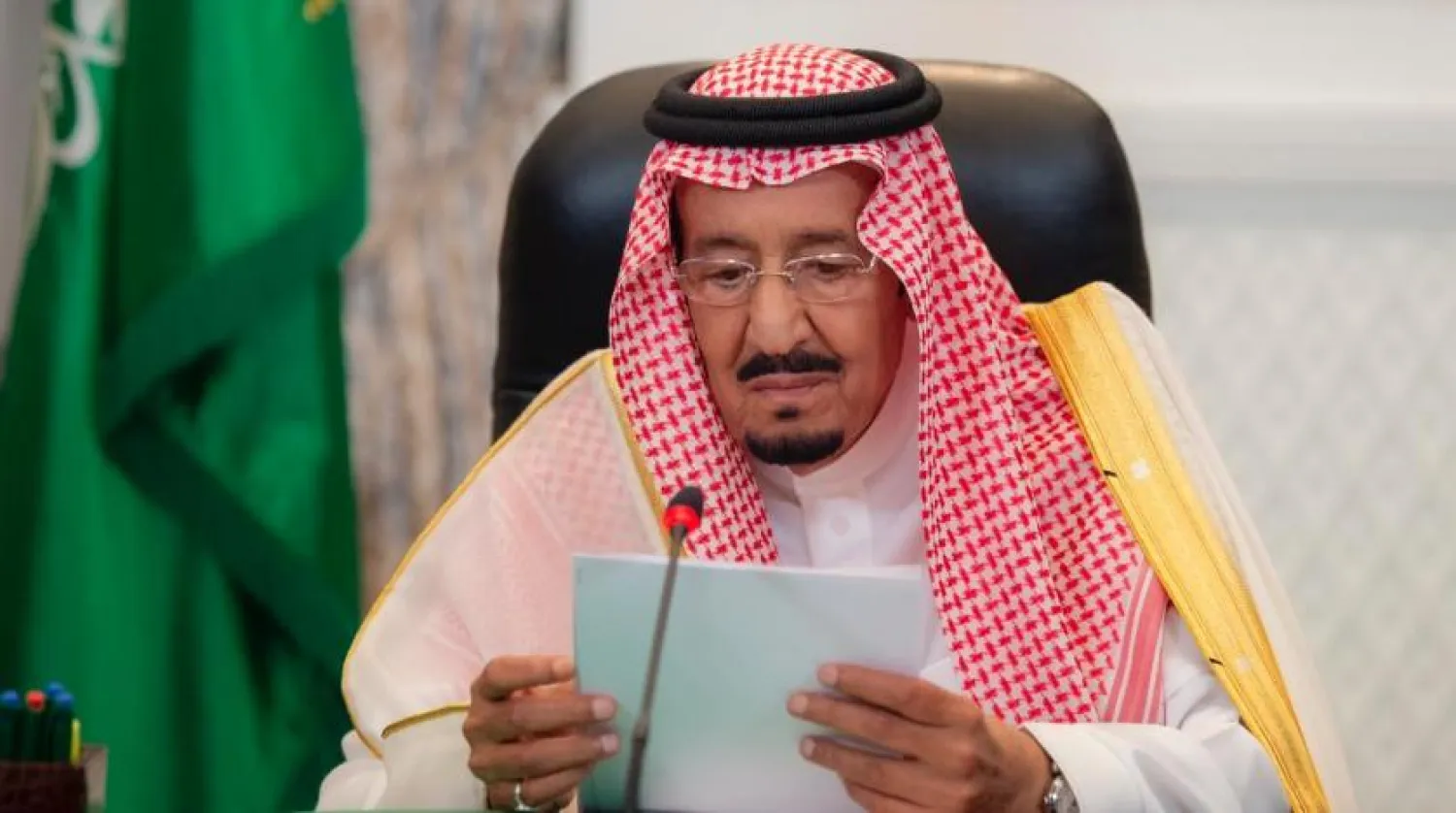

King Salman Says Islamic Cooperation Led to the Success of Hajj Season

King Salman delivers an address on the occasion of Eid al-Adha. (SPA)
TT

King Salman Says Islamic Cooperation Led to the Success of Hajj Season

King Salman delivers an address on the occasion of Eid al-Adha. (SPA)

Custodian of the Two Holy Mosques King Salman bin Abdulaziz said on Tuesday that Islamic cooperation has led to the success of the Hajj this year.

King Salman highlighted the usual solidarity of countries and the efforts of religious authorities that have supported and praised Saudi Arabia’s measures for this year’s annual pilgrimage.

In a statement on the occasion of Eid al-Adha, he stressed that the Kingdom’s efforts have been largely successful in limiting the impact of the coronavirus on all aspects of life.

In this regard, he praised the great awareness of the Hajj pilgrims and their compliance with health precautions during their holy journey amid the ongoing coronavirus pandemic.

He cited its success in increasing community immunity by administering over 22 million vaccine shots to citizens and residents.

This in turn had helped raise the operational capacity of the Two Holy Mosques and allowed people to safely carry out their pilgrimage.

King Salman stressed that the Kingdom has taken a number of organizational and preventive measures for the Hajj that are in line with international health standards.

Among them is the implementation of a digital system for the Hajj that increases technological services to the pilgrims and reduces the number of employees in managing crowds at the holy sites to limit the chances of infections.


Bahrain Condemns Iranian Attack on Saudi Oil Tanker in Strait of Hormuz

Bahrain Condemns Iranian Attack on Saudi Oil Tanker in Strait of Hormuz
TT

Bahrain Condemns Iranian Attack on Saudi Oil Tanker in Strait of Hormuz

Bahrain Condemns Iranian Attack on Saudi Oil Tanker in Strait of Hormuz

Bahrain strongly condemned and denounced the heinous Iranian attack targeting the Saudi oil tanker SIDR while it was transiting the Strait of Hormuz, which resulted in fatalities among the tanker's crew, the Saudi Press Agency said on Thursday.

Bahrain affirmed that the attack poses a serious threat to the security and safety of maritime navigation and the free movement of commercial vessels.

It also described the attack as a flagrant violation of international law, the United Nations Convention on the Law of the Sea, relevant UN Security Council resolutions, including Resolution 2817, and International Maritime Organization resolutions.

The Bahraini Ministry of Foreign Affairs affirmed Bahrain's full solidarity with Saudi Arabia and its support for all measures Saudi Arabia takes to safeguard its security and protect its citizens and vital interests.

It underscored the deep-rooted fraternal and historical ties between the leaderships and peoples of the two countries, stressing that Saudi Arabia's security and stability are integral to Bahrain's national security.


Kuwaiti Air Defenses Intercept Iranian Missile and Drone Attacks

Aerial view of Kuwait City (Reuters)
TT

Kuwaiti Air Defenses Intercept Iranian Missile and Drone Attacks

Aerial view of Kuwait City (Reuters)

The Kuwaiti military announced early Thursday that it was repelling an Iranian attack involving missiles and drones.

“Kuwaiti air defenses are currently responding to hostile missile and drone threats”, the Kuwaiti military said on X.

"The General Staff of the Kuwait Armed Forces confirms that any explosions that may be heard are the result of air defense systems intercepting hostile targets. The public is urged to adhere to safety and security instructions issued by the relevant authorities", the military added.


Al-Jadaan at G20 Meeting: Global Economy Resilient but More Vulnerable to Risks

Saudi Finance Minister Mohammed Al-Jadaan during previous G20 meetings (SPA) 
TT

Al-Jadaan at G20 Meeting: Global Economy Resilient but More Vulnerable to Risks

Saudi Finance Minister Mohammed Al-Jadaan during previous G20 meetings (SPA) 

Saudi Finance Minister Mohammed Al-Jadaan took part in the second G20 Finance Ministers and Central Bank Governors Meeting, held under the US presidency of the group in Asheville, North Carolina, on Aug. 31 and Sept. 1, 2026.

The meeting brought together finance ministers and central bank governors from G20 member countries, representatives of invited nations and heads of international financial institutions.

During a session on current economic developments, Al-Jadaan said the global economy had demonstrated resilience in the face of shocks but had also become more vulnerable to risks.

He stressed the importance of strengthening economic resilience by diversifying production alternatives, ensuring adequate inventories and maintaining infrastructure with spare capacity, describing these factors as the first line of economic defense against shocks.

In a session on economic growth, the Saudi finance minister emphasized the need to strengthen economies’ capacity to achieve robust and sustainable long-term growth, noting that constraints on growth vary among economies and evolve as they progress through different stages of development.

He noted that raising growth potential requires identifying the most significant constraints at each stage and then adapting policies and reforms to the nature of those challenges as they evolve.

During discussions on global imbalances, Al-Jadaan said external surpluses and deficits may reflect differences in countries’ economic conditions and structures and do not necessarily constitute imbalances in themselves.

He added that effectively addressing global imbalances requires looking beyond trade flows to consider domestic fiscal and economic conditions as well as the underlying structural factors.

The minister underlined that building a more robust international framework for addressing debt challenges requires not only dealing more effectively with debt crises in vulnerable countries but also limiting the accumulation of debt that does not generate sustainable economic and development returns.

His comments came during a session on sovereign debt. He explained that strengthening countries’ capacity to assess their financing needs and manage debt sustainability is a key pillar in preventing liquidity pressures from developing into deeper debt crises.

Al-Jadaan also participated in a closed-door dialogue with finance ministers, central bank governors and private-sector leaders in the field of artificial intelligence. The session addressed the role of technology in driving innovation, boosting productivity, and strengthening economic growth.

On the sidelines of the meeting, the Saudi finance minister held a series of bilateral talks with counterparts from participating countries and senior officials from international financial institutions.

The discussions covered global economic developments and financial issues of mutual interest, as well as opportunities to strengthen cooperation and exchange expertise in economic and financial fields.