


Let the Fashion Policing Begin on Opening Day of Tokyo Games

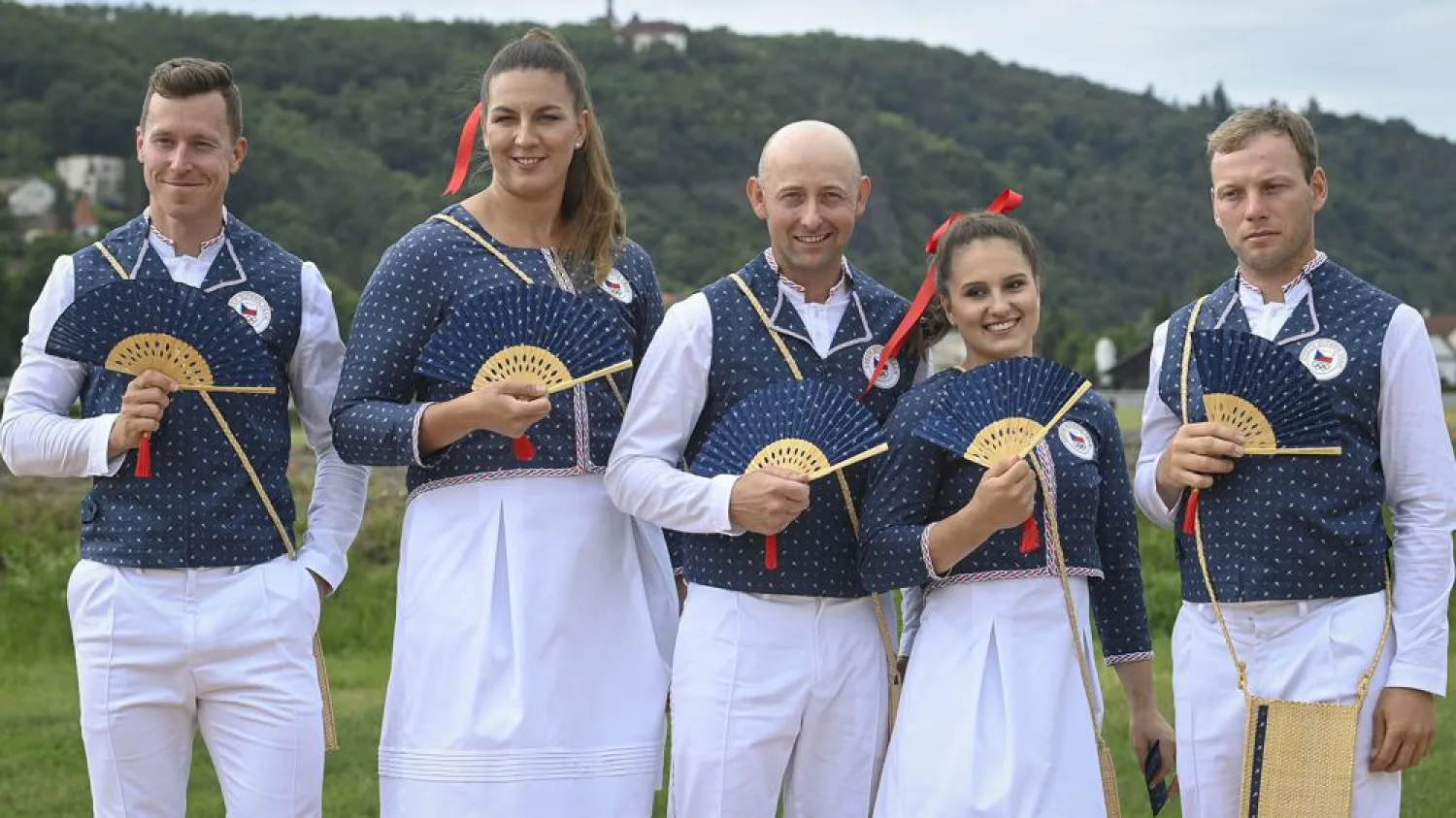
From left, Czech track cyclist Tomas Babek, hammer thrower Katerina Safrankova, rider Miroslav Trunda, artistic gymnast Aneta Holasova and rider Miloslav Prihoda, pose wearing the new Olympic uniforms for The Tokyo Olympic Summer Games 2020, in Prague, Czech Republic, Tuesday, June 22, 2021. (AP)
TT

Let the Fashion Policing Begin on Opening Day of Tokyo Games

From left, Czech track cyclist Tomas Babek, hammer thrower Katerina Safrankova, rider Miroslav Trunda, artistic gymnast Aneta Holasova and rider Miloslav Prihoda, pose wearing the new Olympic uniforms for The Tokyo Olympic Summer Games 2020, in Prague, Czech Republic, Tuesday, June 22, 2021. (AP)

Let the fashion policing begin.

The Olympics in Tokyo open Friday, when the world’s athletes will march behind their flag-bearers. And when they do, the peanut gallery on what they’re wearing will be open, too.

Olympic gear makes for lively social media fodder, starting with the hours-long Parade of Nations. The year-long wait due to the pandemic has given enthusiasts extra time to ponder what they love or hate.

There’s the Czech Republic and its traditional indigo block-print design with matching fans, already the butt of some jokes. It follows the country’s loud umbrellas and neon-blue Wellington boots of 2012 in London, along with its “Beetlejuice” stripes in Rio in 2016.

Israel’s athletes have see-through nylon jackets with huge pockets, while Emporio Armani decked out Italy’s team in track suits with a reinterpretation of Japan’s rising sun in the colors of the Italian flag: red, green and white. Liberia received the gift of designer Telfar Clemens, the buzzy Liberian American who makes sought-after bags and created their kits for the first time.

Things used to be a lot simpler for the athletes, fashion wise. In the beginning, there was no parade, or opening ceremony for that matter. Athletes wore whatever they chose, often walking with the equipment of their sports.

“In the early days it was no big deal,” said David Wallechinksy, executive board member and past president of the International Society of Olympic Historians. “People would just come on. If a team wanted to dress alike they did.”

Wallechinksy unearthed an image in an archival film showing the 1924 British curlers walking in the Winter Games parade in Chamonix, France, their brooms held high.

In the beginning, clothes were optional altogether, during competition anyway, according to scholars. Athletes often performed in the nude in Ancient Greece. In more modern times, parade uniforms often pay homage to a host country, in addition to traditions, athletic feats and patriotic flourishes.

This year, the pandemic has brought on another element: masks.

Australia has on offer for athletes a sand-colored blazer lined with the names of the country’s 320 Olympic gold medalists. For the closing ceremony, Canada’s Olympic organizers teamed with Levi’s to produce a denim “Canadian tuxedo” jacket alive with Japanese street-style graffiti to be worn with white denim pants.

“This is the gang that comes after you if you say you tried watching ‘Schitt’s Creek’ but couldn’t get into it,” New York Times culture writer Dave Itzkoff tweeted of the look in April, several months after the jacket was unveiled with Team Canada’s other gear.

Alison Brown, host of the Olympic fans podcast “Keep the Flame Alive,” said outfitting Olympic teams, including those competing in the Paralympics, isn’t easy.

“They have to fit all kinds of body types. Think tiny gymnasts, brawny weightlifters and lanky basketball players. They have to convey something about the nation, honor the host, be serious enough for the solemnity of the occasion but practical enough to be comfortable for hours of standing in the heat,” she said.

Count Brown among the fans of the Czech uniforms, done by Zuzana Osako in Prague. They include the team’s mainstay, a gymnast, built into the design. Men will be in blue vests with white pants and women in blue blouses and white skirts.

“They managed to blend elements of Czech folk tradition, traditional Japanese indigo dying techniques, and a call out to the great Czech gymnast Vera Caslavska, but still keep the outfit wearable and comfortable for the heat,” Brown said.

Of Canada’s denim jackets, she said: “I think I wore something similar in 1987. I wonder if anyone over 12 really wants to wear it.”

Lucia Kinghorn, vice president of design at Hudson’s Bay, which helped created Canada’s uniforms and other Olympic gear, is aware of the scorn.

“For as many naysayers, we have even more fans,” she said. “We’re proud of the thoughtful design behind Team Canada’s clothing and happy that so many people are talking about it.”

Brown was similarly unimpressed by the looks for Team USA. They include blue denim pants for the opening parade and white denim pants for the closing ceremony.

“The US has stayed with the same designer, Ralph Lauren, as it has for years, leading to another yachting look. Yawn,” she said. “Also, it’s expected to be very hot in Tokyo. Jeans, a knit top, scarf and a blazer? Who wants to wear denim in that kind of heat and humidity?”

The denim is lightweight in a stretchy fabric.

Japan’s uniforms harken back to those worn by the Japanese team at the opening ceremony of the last Olympics to be held in Tokyo, in 1964. Back then, jackets were red and trousers were white. The colors are switched this year.

“It’s in line with the many call-backs organizers are including to 1964,” Brown said.

Her favorite parade look so far is Mexico’s. The Mexico Olympic Committee held a national vote online to choose the opening ceremony looks from three designs created by High Life. The winning design honors Oaxaca in a single, brightly colored lapel.

“The blazer includes one floral lapel in traditional Zapotec embroidery. So beautiful without being costumey,” Brown said.

The embroidery was done by Oaxacan artisans, making each lapel among the 150 blazers a different custom design, said Jeannette Haber, marketing director of High Life. The artisans, she said, were “happy to be part of the project, and that their designs and their work could have this worldwide exposure.”

Whole collections for sale to consumers are built around what Olympic athletes wear during opening ceremonies.

“It’s a great moment for these brands to show their team spirit and their innovation in new technologies,” said Ted Stafford, fashion director of Men’s Health magazine and market director for Esquire.

That includes a cooling unit Ralph Lauren built into a white denim jacket for the Team USA flag-bearer.

“It’s the world stage and it sets the tone,” Stafford said. “It’s more than just a big fashion show.”



Fashion Commission, Saudi Retail Academy to Develop National Talent 

Fashion Commission, Saudi Retail Academy to Develop National Talent 
TT

Fashion Commission, Saudi Retail Academy to Develop National Talent 

Fashion Commission, Saudi Retail Academy to Develop National Talent 

The Saudi Fashion Commission signed a memorandum of understanding (MoU) with the Saudi Retail Academy to develop national capabilities and boosting specialized skills in the fashion and retail sectors, reported the Saudi Press Agency on Monday.

The MoU aims to support local talent and the creation of sustainable employment opportunities in this vital industry. It stems from the two sides’ keenness to cooperate in the fields of training and professional development.

The agreement was signed on the sidelines of the graduation ceremony of the academy’s first cohort.

The Fashion Commission focuses on developing local talent, transferring global expertise, and advancing the fashion sector in the Kingdom, while the Saudi Retail Academy is a non-profit institute and a specialized entity in training and development in the retail field and in building professional competencies and skills related to retail and sales.

The MoU aims to establish a framework for cooperation to design and implement specialized training programs that boost the readiness of national cadres and qualify them according to the highest professional standards, with a focus on developing skills in sales, customer experience, and store management to meet labor market requirement and the needs of the growing fashion sector.

Fashion Commission chief executive Burak Cakmak said that developing human capital is a fundamental pillar for the long-term growth of the Kingdom’s fashion sector.

The partnership reflects the commitment to strengthening the capabilities that form the foundation of a competitive and sustainable industry through investment in specialized skills within retail and customer experience, enabling brands to grow and supporting the sector’s confident evolution, he added.

Saudi Retail Academy chief executive Hend Al-Dhaban stressed that the partnership embodies a shared vision to empower national talent and elevate professionalism in the retail sector.

The agreement will help channel training expertise to meet the specialized needs of the fashion sector and equip young men and women with the practical skills required to succeed in the labor market, thereby boosting service quality and supporting localization targets and economic growth, she explained.

This cooperation is part of the Fashion Commission’s ongoing efforts to develop the fashion value chain through building strategic partnerships with specialized training and education entities, expanding professional opportunities for national talent, and linking education and training outputs with labor-market needs.

Through their partnership, the commission and the academy will help in building an integrated ecosystem that connects education, vocational qualification, and employment, bolstering the competitiveness of the fashion and retail sectors and supporting the objectives of Saudi Vision 2030 in empowering national cadres, localizing jobs, and improving quality of life.


Saudi 100 Brands Debuts Landmark Fashion Presentation at Saudi Cup 2026

The experience introduced global audiences to Saudi Arabia’s dynamic and growing fashion ecosystem - SPA
TT

Saudi 100 Brands Debuts Landmark Fashion Presentation at Saudi Cup 2026

The experience introduced global audiences to Saudi Arabia’s dynamic and growing fashion ecosystem - SPA

The Fashion Commission launched its Saudi 100 Brands showcase at the Saudi Cup 2026, marking a historic milestone for the world-renowned equestrian event at King Abdulaziz Racecourse in Riyadh.
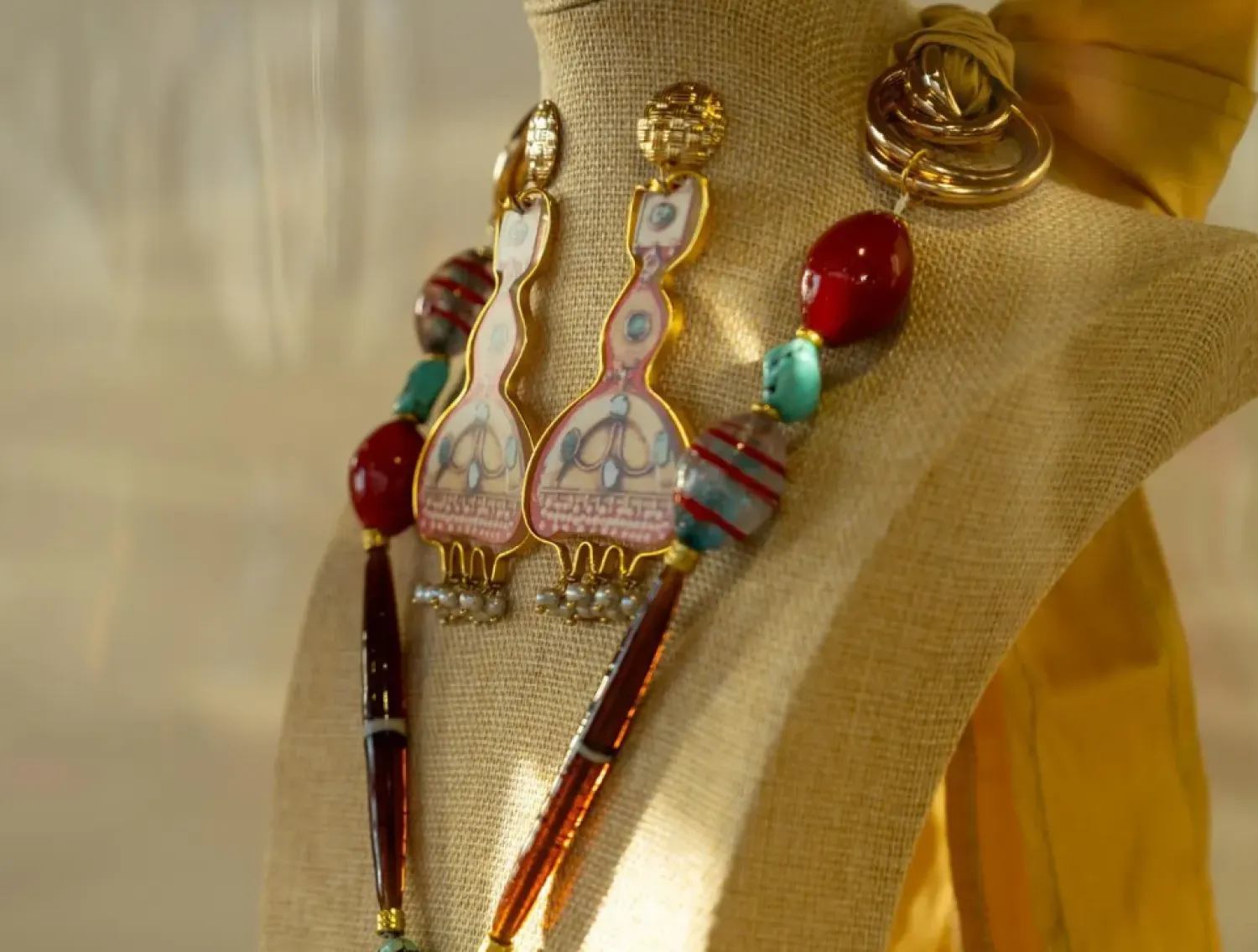
The collections celebrate Saudi heritage by blending traditional and contemporary design. Jewelry and accessory brands also exhibited throughout, providing Saudi designers with a platform to reach a broader global audience. These showcases emphasize the fusion of heritage and modern design, offering a new perspective on the Kingdom's creative identity.
The Saudi 100 Brands program, a flagship initiative of the Fashion Commission, supports emerging designers by providing tools, expertise, and platforms to grow their global presence. This collaboration with the Saudi Cup underscores the importance of celebrating cultural heritage while advancing design innovation.

Each piece in the exhibition incorporates heritage motifs, textiles, and storytelling, reimagined through innovative design to appeal to modern and international audiences.

The exhibition aims to celebrate national identity, highlight local creative talent, and present the evolving direction of Saudi fashion, SPA reported.

Visitors explored the intersection of craftsmanship and cultural expression, discovering how designers honor tradition while advancing fashion design.

The experience also introduced global audiences to Saudi Arabia’s dynamic and growing fashion ecosystem.

This participation reflects the Fashion Commission’s vision to develop a thriving fashion sector rooted in cultural heritage and global ambition. By combining cultural narratives with innovative design, the commission enables Saudi fashion to contribute to global creative industries, nurture talent, and position Saudi brands for sustained success.


L’Oreal Shares Sink as Sales Miss Forecasts 

This photo taken on February 16, 2018 shows a board with the L'Oreal logo outside of the L'Oreal plant, in Lassigny. (AFP)
TT

L’Oreal Shares Sink as Sales Miss Forecasts 

This photo taken on February 16, 2018 shows a board with the L'Oreal logo outside of the L'Oreal plant, in Lassigny. (AFP)

L'Oreal shares fell heavily on the Paris stock market on Friday after the cosmetics giant posted sales that fell short of analyst expectations, stoking fears of weakness for its luxury brands and in the key Chinese market.

While revenues rose seven percent in the fourth quarter in Europe -- still the company's biggest market -- they edged up just 0.7 percent in North America and fell five percent in North Asia, which includes China.

Overall, sales were up 1.5 percent to 11.2 billion euros ($13.3 billion) in the final quarter of 2025 -- usually when the company benefits from strong holiday-fueled buying.

This was a marked slowdown from the 4.5-percent growth seen the previous year.

On a like-for-like comparison that excludes the impact of currency fluctuations, sales rose six percent, whereas the consensus forecast was around eight percent, analysts said.

The luxury division (Luxe) in particular, which includes high-end perfumes and make-up and is L'Oreal's biggest by revenue, saw a 0.5-percent sales slide in the fourth quarter, to 4.2 billion euros.

"We think the miss, led by North Asia and Luxe, will be a concern amid a vague outlook," said David Hayes, an analyst at investment bank Jefferies.

L'Oreal's stock was down 3.2 percent in morning trading, partly recovering from a drop of more than six percent at the open.

Net profit for the full year was down 4.4 percent to 6.1 billion euros.

Chief executive Nicolas Hieronimus said when he presented the results on Thursday that L'Oreal had achieved a "solid" performance "despite a context that was at the very least volatile and unfavorable".

For 2026, he said the company had to be "cautious and humble", although he expected "the beauty market to continue its acceleration" unless there was "a new surprise".

"We're going to have to intensify our efforts in terms of innovation to energize the market and win over customers," he added.