


Sudan Looking Forward to US Investments

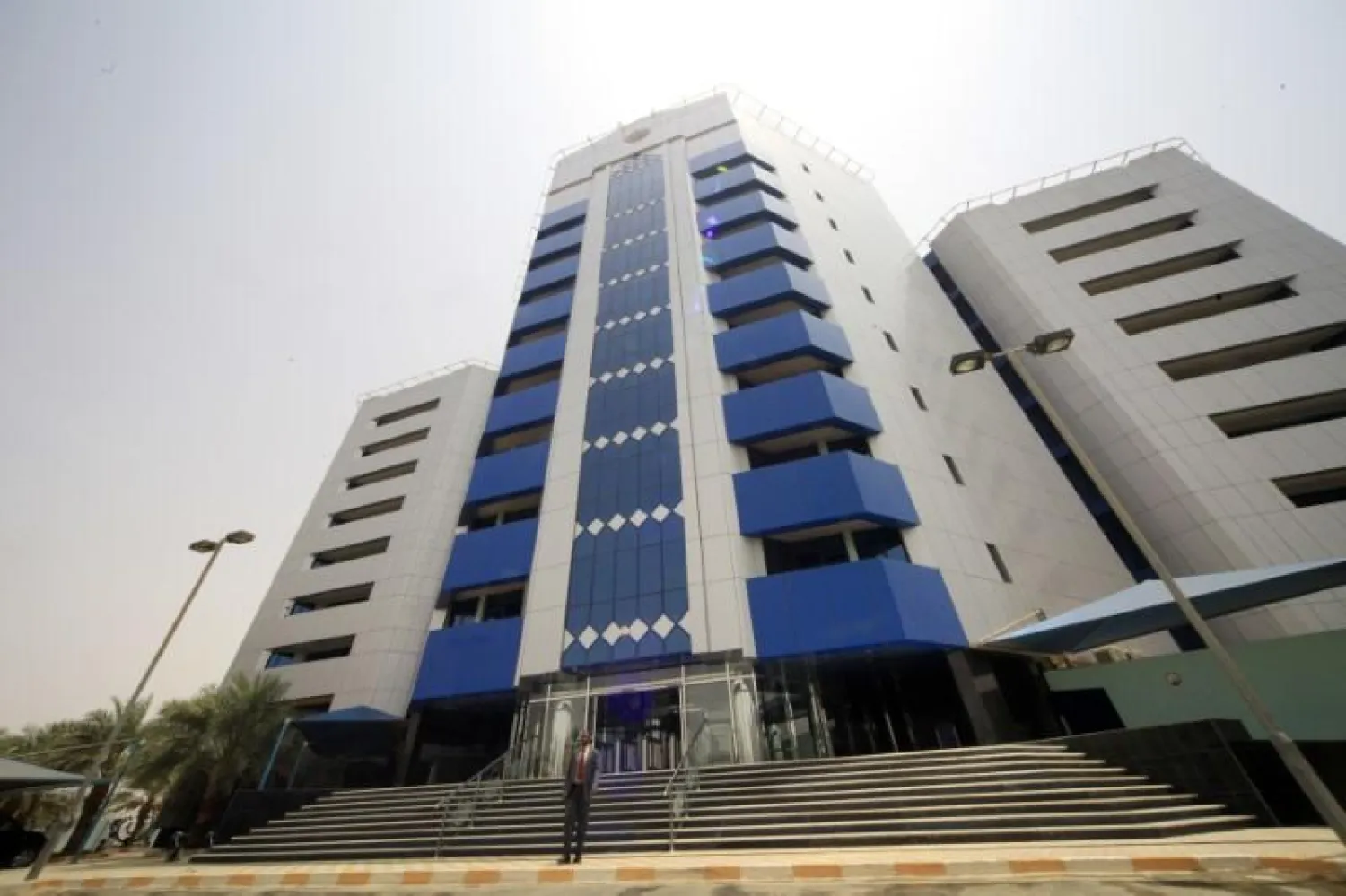
Sudan’s Central Bank headquarters in Khartoum. (Reuters file photo)
TT

Sudan Looking Forward to US Investments

Sudan’s Central Bank headquarters in Khartoum. (Reuters file photo)

Chairman of Sudan’s Sovereignty Council Lt Gen Abdel Fattah al-Burhan stressed that his country welcomes US investments, ahead of the two-day visit of Andrew Torre, the Regional President for Central and Eastern Europe, Middle East, and Africa (CEMEA) at Visa.

It is Torre’s first visit since the country’s first Visa card was issued by United Capital Bank (UCB) earlier this year.

He is scheduled to arrive in Sudan on Monday to meet with some existing and potential partner banks and financial institutions, and top government officials to explore opportunities for close collaboration.

During a meeting on Saturday evening with a US delegation, Burhan praised bilateral relations between Khartoum and Washington.

He reiterated Sudan’s desire to establish a partnership with the US that is based on friendship and constructive cooperation.

Visa issued a press release indicating that Torre’s trip is the latest example of its efforts to build new partnerships and leverage its world-class payments technology to support Sudan’s financial inclusion and economic growth.

Visa is already working closely with eight licensed partners in Sudan to help enable a more inclusive and empowered economy.

Torre described Sudan as a “country with great potential” that is undergoing many positive economic developments.

“We are committed to partnering in support of Sudan’s transformation goals and advancing our mission to expand access and global economic inclusion so that more consumers and businesses can enjoy the benefits of digital payments.”

Torre said he looks forward to meeting and engaging in constructive dialogue with key banks and financial institutions, government agencies, and other economic stakeholders to see how new partnerships can be forged to build a trusted payments ecosystem that will drive the adoption of digital payments, which in turn will help solidify the country’s economic expansion and development efforts.

Visa’s focus is to drive acceptance of digital payments through traditional ATMs and POS networks and find opportunities to launch new digital products and services to Sudanese consumers and merchants.




Gold Recovers from Two-Week Low Ahead of US Inflation Figures

A customer holds a gold chain at a jewellery store in Mumbai, India, January 30, 2026. (Reuters)
TT

Gold Recovers from Two-Week Low Ahead of US Inflation Figures

A customer holds a gold chain at a jewellery store in Mumbai, India, January 30, 2026. (Reuters)

Gold rose on Tuesday after hitting a two-week low earlier in the session, as markets awaited key US inflation data, with escalating US-Iran tensions driving oil prices higher and reinforcing expectations of further Federal Reserve rate hikes.

Spot gold was up 0.5% at $4,021.62 per ounce by 0440 GMT, recovering from its lowest level since July ‌1. US gold ‌futures for August delivery gained 0.6% at $4,028.

Gold shed ‌about ⁠3% in the ⁠previous session, its biggest daily percentage decline in more than a month, as continued fighting between the US and Iran drove oil prices to a one-month high.

While gold is often viewed as a hedge against inflation, higher rates tend to weigh on the non-yielding metal by increasing the appeal of interest-bearing assets.

"You ⁠have a situation where the markets probably ‌don't want to commit. They have ‌a big batch of event risks in front of them. There's, of ‌course, the Warsh testimony and then the CPI print, so ‌there's a lot for people to look at in addition to the headlines out of the Middle East," said Ilya Spivak, head of global macro at Tastylive.

Investors will closely watch June US CPI data ‌due later in the day for fresh clues on inflation and the Fed's policy path, ⁠with PPI data ⁠and Fed Chair Kevin Warsh's first semi-annual testimony before Congress this week also in focus.

The US central bank may need to raise interest rates "in the near term" if coming data show inflation continuing well above the 2% target, Fed Governor Christopher Waller said on Monday.

Traders have ramped up bets on a September US interest rate hike, with CME Group's FedWatch Tool showing the probability rising to around 76% from 57% a week ago.

Elsewhere, spot silver inched 0.1% higher to $57.70 per ounce, having earlier touched a two-week low. Platinum fell 0.1% to $1,603.72 and palladium rose 1.4% to $1,264.61.


China’s June Oil Imports Hit Near 10-Year Low Amid Iran War

Containers are seen at the port in Shanghai on July 14, 2026. (AFP)
TT

China’s June Oil Imports Hit Near 10-Year Low Amid Iran War

Containers are seen at the port in Shanghai on July 14, 2026. (AFP)

China's June crude imports slumped 41.3% to their lowest in almost a decade as refinery run rates hit a ten-year low due to weak domestic demand and export curbs on refined oil products to safeguard energy security amid the Iran war.

China imported 29.27 million tons of crude oil in June, or 7.12 million barrels per day, the lowest since October 2016, customs data showed on Tuesday.

The slump extended into June from May, with imports falling by another 12%, after oil imports hit an eight-year low ‌in May.

China's seaborne ‌crude imports stood at around 6 ‌million ⁠bpd in June, with ⁠imports from the Middle East hitting their lowest level in ten years and Iranian oil imports also dropping 40% month on month to below 800 thousand barrels per day, according to ship-tracking company Vortexa.

In June, the utilization rate of China's crude distillation units stood at 57.72%, down 3.28 percentage points month on month and down ⁠13.09 percentage points year on year, according to Chinese ‌consultancy Oilchem.

"Refinery run rates were ‌likely near a 10-year low, weighed down by weak domestic demand and ‌refined oil product export restrictions. But if refined product exports ‌are eased, run rates could see a partial rebound," said Emma Li, analyst at Vortexa.

Lower Chinese imports are freeing up oil for other buyers, while the market is also weighing the permanent loss of demand from China, ‌as the steep drop in fuel consumption after oil prices soared suggests China can live on ⁠less oil ⁠due to its massive EV fleet.

Customs data also showed natural gas imports rose 3.7% year on year to 10.9 million tons in June.

However, natural gas imports in the first half of 2026 dropped 3.4% to 57.45 million tons from the same period last year.

The data does not separate LNG from gas piped overland.

China's refined oil product exports stood at 4.36 million tons in June.

In the first six months, China exported 23.59 million tons of refined oil products, down 13.2% year-on-year due to export restrictions imposed in March to safeguard domestic supply amid the Iran war.


Saudi Arabia Revamps Payroll Deduction and Financing Services Through Etimad

Saudi banknotes in 500-riyal and 100-riyal denominations (Reuters) 
TT

Saudi Arabia Revamps Payroll Deduction and Financing Services Through Etimad

Saudi banknotes in 500-riyal and 100-riyal denominations (Reuters) 

Saudi Arabia has introduced a new regulatory framework for payroll deduction, financing, and the sale of receivables through the Etimad platform, in a move aimed at improving financial services, expanding competition, and strengthening the Kingdom’s digital financial ecosystem.

According to information obtained by Asharq Al-Awsat, the Cabinet approved the new framework, replacing Cabinet Decision No. 490. Under the new rules, the National Center for Government Resources Systems will provide payroll deduction services for government employees in favor of lenders, as well as financing and the sale of receivables for public and private sector entities through Etimad, subject to compliance with the requirements and regulations of the Saudi Central Bank (SAMA).

The reform supports the goals of Saudi Vision 2030 by advancing the digitalization of government services, improving access to finance, and developing the government receivables financing market. It is also expected to enhance liquidity and enable financial institutions to offer a broader range of financing products.

The new framework replaces Cabinet Decision No. 490, under which the Ministry of Finance was responsible for payroll deduction services, financing, and the sale of receivables, as well as collecting service fees and annual subscription charges.

Beyond reallocating responsibilities, the decision establishes a more advanced regulatory framework that combines Etimad’s digital infrastructure with SAMA’s oversight. It is expected to improve the efficiency of the receivables financing market, boost competition among financing providers, and encourage the development of more flexible financing products.

Etimad, the Ministry of Finance’s digital platform, provides financial and procurement services to government entities, businesses, and individuals. It is designed to enhance transparency, improve efficiency, streamline government transactions, and support the Kingdom’s digital transformation agenda.

Under the new framework, the National Center for Government Resources Systems will coordinate with the National Development Fund to determine the fees it will receive for providing the two services to the fund and its affiliated development funds and development banks, ensuring their long-term sustainability under a clear financial and regulatory framework.

The reform also strengthens SAMA’s supervisory role by requiring all payroll deduction and financing services offered through Etimad to comply with its regulatory requirements. The move is expected to enhance customer protection and reinforce financial sector stability while opening the market to a wider range of banks and financing companies operating under unified rules, fostering greater competition and potentially improving both pricing and service quality.