


Russia, US Hold Consultations on Iran's Nuclear Program to Break Vienna Deadlock

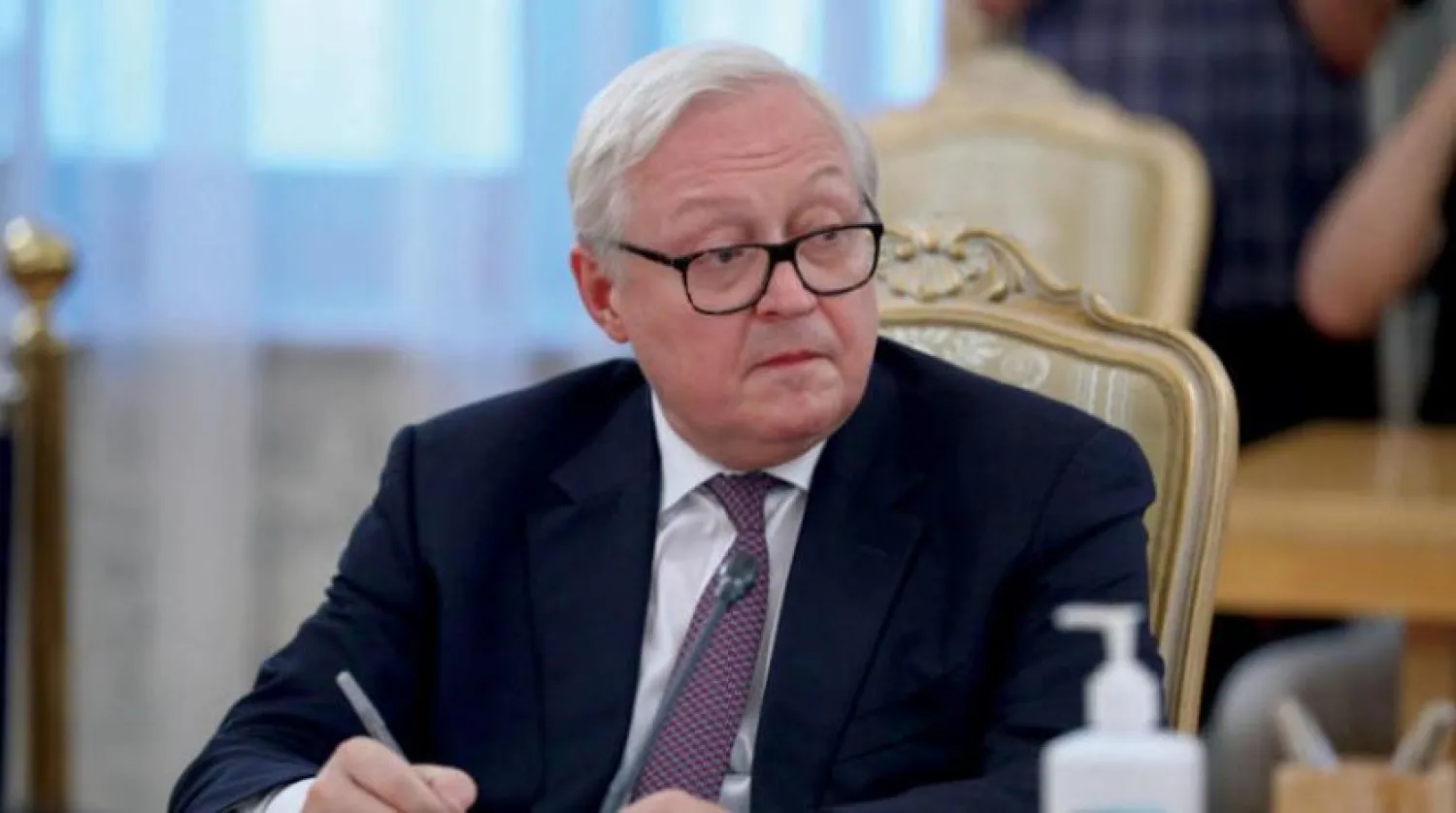
 Russian Deputy Foreign Minister Sergei Ryabkov during talks in Moscow last July (Photo: Russian Foreign Ministry).
Russian Deputy Foreign Minister Sergei Ryabkov during talks in Moscow last July (Photo: Russian Foreign Ministry).
TT

Russia, US Hold Consultations on Iran's Nuclear Program to Break Vienna Deadlock

 Russian Deputy Foreign Minister Sergei Ryabkov during talks in Moscow last July (Photo: Russian Foreign Ministry).
Russian Deputy Foreign Minister Sergei Ryabkov during talks in Moscow last July (Photo: Russian Foreign Ministry).

A round of Russian-US consultations was launched in Moscow on Wednesday, focusing on the Iranian nuclear program and mechanisms to deal with the stalemate in the Vienna negotiations over the resumption of the Joint Comprehensive Action Plan (JCPOA).

Russia anticipated the dialogue with the US special envoy to Iran, Robert Malley, by expressing “grave concern” over the stalled negotiations, and stressed the need for Tehran to show flexibility regarding international demands.

The US envoy held a round of talks on Wednesday with Russian Deputy Foreign Minister Sergei Ryabkov, who is in charge of the Iranian issue. The two sides are expected to hold a second round of talks on Thursday to seek to converge the views and find mechanisms to re-launch the stalled negotiations in Vienna on the Iranian nuclear program.

Ryabkov preceded the talks by expressing his country’s hope that the United States and the West would not complicate the situation regarding the process of returning to the nuclear agreement. He added that Moscow would call on Tehran to “agree with other parties on this issue.”

Russia is concerned by the lack of progress in the normalization of the situation regarding cooperation between the IAEA and Iran, the Russian state news agency, RIA Novosti, quoted Ryabkov as saying.

“I should also state we are alarmed and concerned as we see no progress in normalization of cooperation between Iran and the IAEA, a number of aspects are in limbo,” he said.

“It is unacceptable to depart from these negotiating positions. Attempts to revise what was agreed in Vienna would be counterproductive and we will keep sending signals about that both to Iran and our colleagues from the Western group,” he noted

The diplomat added: “We call on the Iranian side to show a proper understanding that additional efforts are required.”

Moscow had expressed concern over the stalled negotiations and what it described as “unilateral actions by the parties that impede the return to the dialogue table and making progress,” in reference to the Western threat of sanctions on the one hand, and Tehran’s repeated declarations of reviving uranium enrichment on the other.

Russian state media focused on a recent report by the International Atomic Energy Agency, which revealed Iran’s progress in stockpiling 60 percent enriched uranium.

Russian sources noted that Moscow’s positions converged with the International Energy Agency’s conclusion that the Iranian authorities “create obstacles to verifying the activity of its nuclear facilities,” but at the same time held the West responsible for this development, noting that the policy of Washington and Western capitals led to an escalation of the situation.


Iran, Russia to Conduct Joint Drills in the Sea of Oman 

This handout photo released by Iran's Revolutionary Guards Corps (IRGC)'s official website Sepanews on February 17, 2026, shows boats maneuvering around a tanker vessel during a military exercise by members of the IRGC and navy in the Strait of Hormuz. (Sepahnews / AFP)
TT

Iran, Russia to Conduct Joint Drills in the Sea of Oman 

This handout photo released by Iran's Revolutionary Guards Corps (IRGC)'s official website Sepanews on February 17, 2026, shows boats maneuvering around a tanker vessel during a military exercise by members of the IRGC and navy in the Strait of Hormuz. (Sepahnews / AFP)

Iran and Russia will conduct naval maneuvers in the Sea of Oman on Thursday, following the latest round of talks between Tehran and Washington in Geneva, Iranian media reported.

On Monday, the Revolutionary Guards, the ideological arm of Iran's military, also launched exercises in the strategic Strait of Hormuz, a challenge to US naval forces deployed in the region.

"The joint naval exercise of Iran and Russia will take place tomorrow (Thursday) in the Sea of Oman and in the northern Indian Ocean," the ISNA agency reported, citing drill spokesman, Rear Admiral Hassan Maghsoudloo.

"The aim is to strengthen maritime security and to deepen relations between the navies of the two countries," he said, without specifying the duration of the drill.

The war games come as Iran struck an upbeat tone following the second round of Oman-mediated negotiations in Geneva on Tuesday.

Previous talks between the two foes collapsed following the unprecedented Israeli strike on Iran in June 2025, which sparked a 12-day war that the United States briefly joined.

US President Donald Trump has deployed a significant naval force in the region, which he has described as an "armada."

Iranian officials have repeatedly threatened to block the Strait of Hormuz, particularly during periods of tension with the United States, but it has never been closed.

A key passageway for global shipments of oil and liquefied natural gas, the Strait of Hormuz has been the scene of several incidents in the past and has returned to the spotlight as pressure has ratcheted amid the US-Iran talks.

Iran announced on Tuesday that it would partially close it for a few hours for "security" reasons during its own drills in the strait.


First Ramadan After Truce Brings Flicker of Joy in Devastated Gaza 

Worshippers perform evening Tarawih prayer on the first night of the holy fasting month of Ramadan at the Al-Kanz Mosque, which was damaged during the Israel-Hamas war, in Gaza City, Tuesday, Feb. 17, 2026. (AP)
TT

First Ramadan After Truce Brings Flicker of Joy in Devastated Gaza 

Worshippers perform evening Tarawih prayer on the first night of the holy fasting month of Ramadan at the Al-Kanz Mosque, which was damaged during the Israel-Hamas war, in Gaza City, Tuesday, Feb. 17, 2026. (AP)

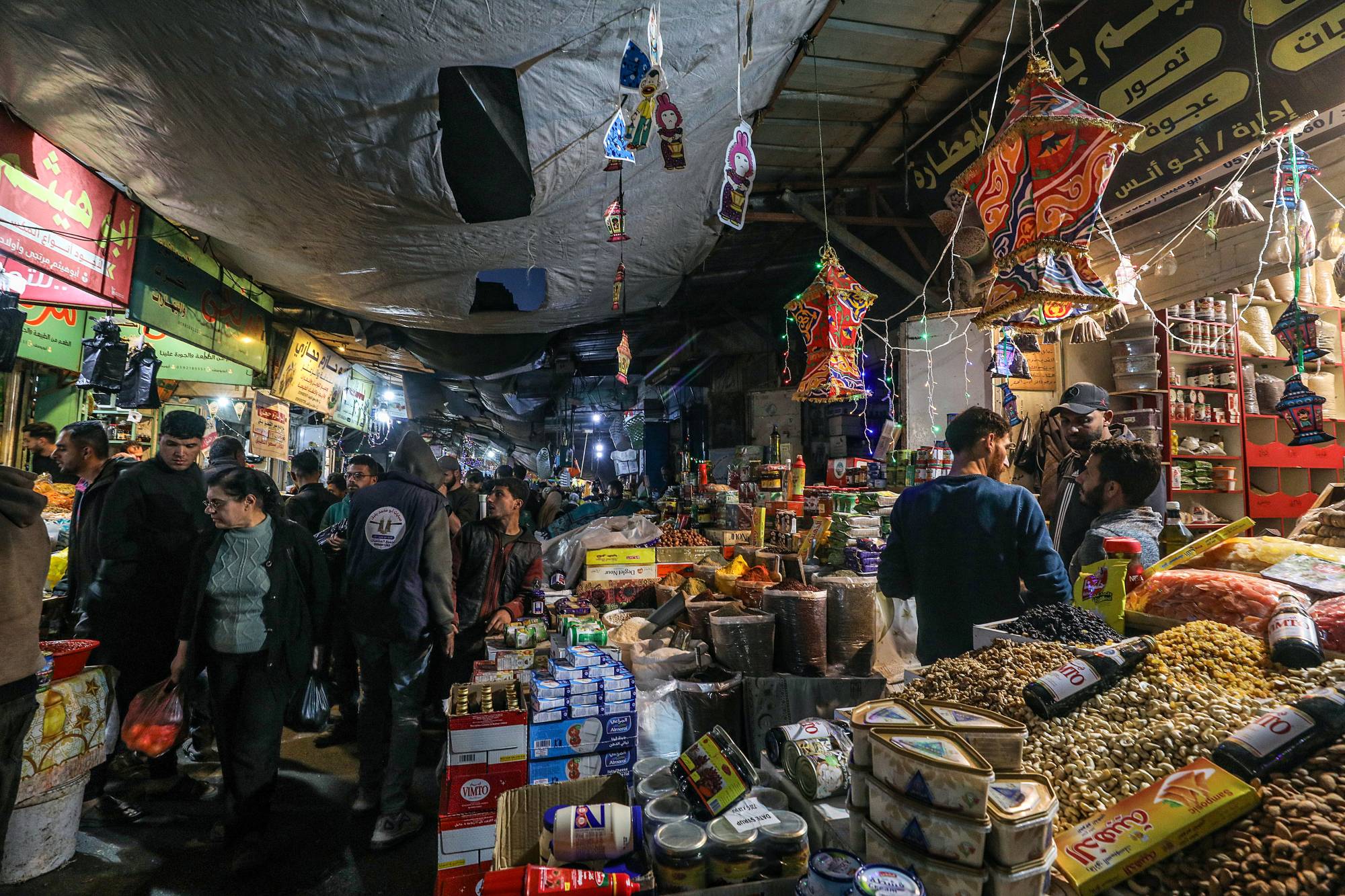
Little Ramadan lanterns and string lights appeared on streets lined with collapsed buildings and piles of rubble in Gaza City, bringing joy and respite as Islam's holiest month began -- the first since October's ceasefire.

In the Omari mosque, dozens of worshippers performed the first Ramadan morning prayer, fajr, bare feet on the carpet but donning heavy jackets to stave off the winter cold.

"Despite the occupation, the destruction of mosques and schools, and the demolition of our homes... we came in spite of these harsh conditions," Abu Adam, a resident of Gaza City who came to pray, told AFP.

"Even last night, when the area was targeted, we remained determined to head to the mosque to worship God," he said.

A security source in Gaza told AFP Wednesday that artillery shelling targeted the eastern parts of Gaza City that morning.

The source added that artillery shelling also targeted a refugee camp in central Gaza.

Israel does not allow international journalists to enter the Gaza Strip, preventing AFP and other news organizations from independently verifying casualty figures.

A Palestinian vendor sells food in a market ahead of the holy month of Ramadan in Gaza City, 17 February 2026. (EPA)

- 'Stifled joy' -

In Gaza's south, tens of thousands of people still live in tents and makeshift shelters as they wait for the territory's reconstruction after a US-brokered ceasefire took hold in October.

Nivin Ahmed, who lives in a tent in the area known as Al-Mawasi, told AFP this first Ramadan without war brought "mixed and varied feelings".

"The joy is stifled. We miss people who were martyred, are still missing, detained, or even travelled," he said.

"The Ramadan table used to be full of the most delicious dishes and bring together all our loved ones," the 50-year-old said.

"Today, I can barely prepare a main dish and a side dish. Everything is expensive. I can't invite anyone for Iftar or suhoor," he said, referring to the meals eaten before and after the daily fast of Ramadan.

Despite the ceasefire, shortages remain in Gaza, whose battered economy and material damage have rendered most residents at least partly dependent on humanitarian aid for their basic needs.

But with all entries into the tiny territory under Israeli control, not enough goods are able to enter to bring prices down, according to the United Nations and aid groups.

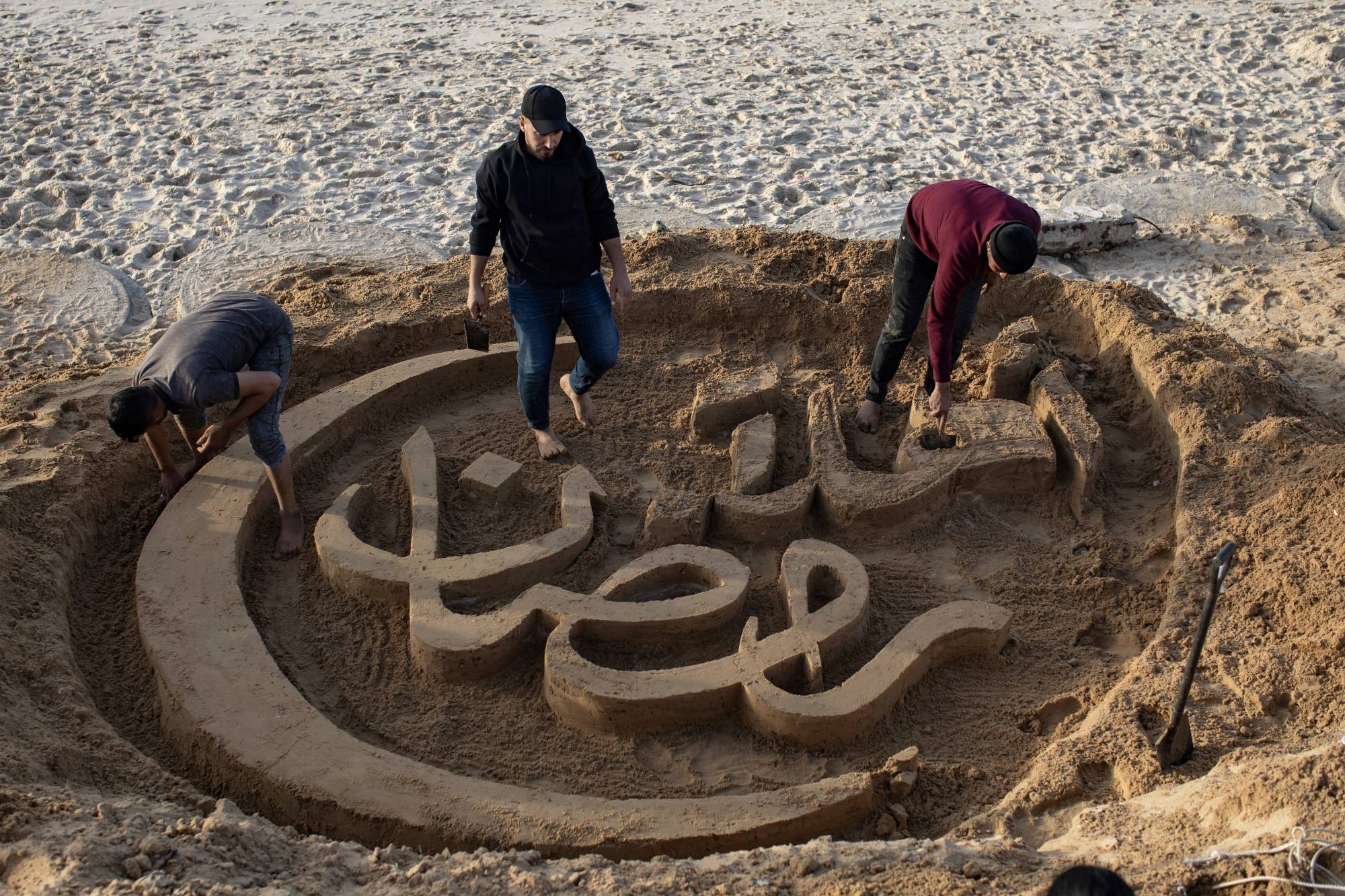
A sand sculpture bearing the phrase "Welcome, Ramadan," created by Palestinian artist Yazeed Abu Jarad, on a beach in Khan Younis, southern Gaza Strip, 17 February 2026, amid a ceasefire between Israel and Hamas. (EPA)

- 'Still special' -

Maha Fathi, 37, was displaced from Gaza City and lives in a tent west of the city.

"Despite all the destruction and suffering in Gaza, Ramadan is still special," she told AFP.

"People have begun to empathize with each other's suffering again after everyone was preoccupied with themselves during the war."

She said that her family and neighbors were able to share moments of joy as they prepared food for suhoor and set up Ramadan decorations.

"Everyone longs for the atmosphere of Ramadan. Seeing the decorations and the activity in the markets fills us with hope for a return to stability," she added.

On the beach at central Gaza's Deir al-Balah, Palestinian artist Yazeed Abu Jarad contributed to the holiday spirit with his art.

In the sand near the Mediterranean Sea, he sculpted "Welcome Ramadan" in ornate Arabic calligraphy, under the curious eye of children from a nearby tent camp.

Nearly all of Gaza's 2.2 million residents were displaced at least once during the more than two years of war between Israel and Hamas, sparked by the latter's unprecedented October 7 attack on Israel.

Mohammed al-Madhoun, 43, also lives in a tent west of Gaza City, and hoped for brighter days ahead.

"I hope this is the last Ramadan we spend in tents. I feel helpless in front of my children when they ask me to buy lanterns and dream of an Iftar table with all their favorite foods."

"We try to find joy despite everything", he said, describing his first Ramadan night out with the neighbors, eating the pre-fast meal and praying.


Moody’s Establishes Regional HQ in Riyadh, Deepening Presence in Region

(FILES) Signage for Moody's Corporation is displayed at their headquarters at 7 World Trade Center on March 18, 2025 in New York City. (Photo by ANGELA WEISS / AFP)
TT

Moody’s Establishes Regional HQ in Riyadh, Deepening Presence in Region

(FILES) Signage for Moody's Corporation is displayed at their headquarters at 7 World Trade Center on March 18, 2025 in New York City. (Photo by ANGELA WEISS / AFP)

Moody’s Corporation announced that it has established its regional headquarters in Riyadh, reflecting ongoing commitment to support the development of the Kingdom’s capital markets and economy.

“This investment aligns to the Kingdom's Vision 2030 initiative and underscores its dynamism and growth,” Moody’s said in a statement this week.

The new regional headquarters marks an expansion of Moody’s presence in Saudi Arabia, where the company first opened an office in 2018, and reflects its longstanding commitment to the Middle East.

“The headquarters will strengthen Moody’s engagement with Saudi institutions and enable broader access to Moody’s decision grade data, analytics and insights,” said the statement.

“Our decision to establish a regional headquarters in Riyadh reflects our confidence in Saudi Arabia’s strong economic momentum, as well as our commitment to helping domestic and international investors unlock opportunities with our expertise and insights,” said President and Chief Executive Officer of Moody’s Rob Fauber.

“We are well positioned to provide the analytical capabilities and market intelligence that investors and institutions need to navigate evolving markets across the Middle East,” the statement quoted him as saying.

Mahmoud Totonji will lead the regional headquarters as General Manager.
