


The Beach is Back: French Riviera Marsh Ditches Seawalls for Sand

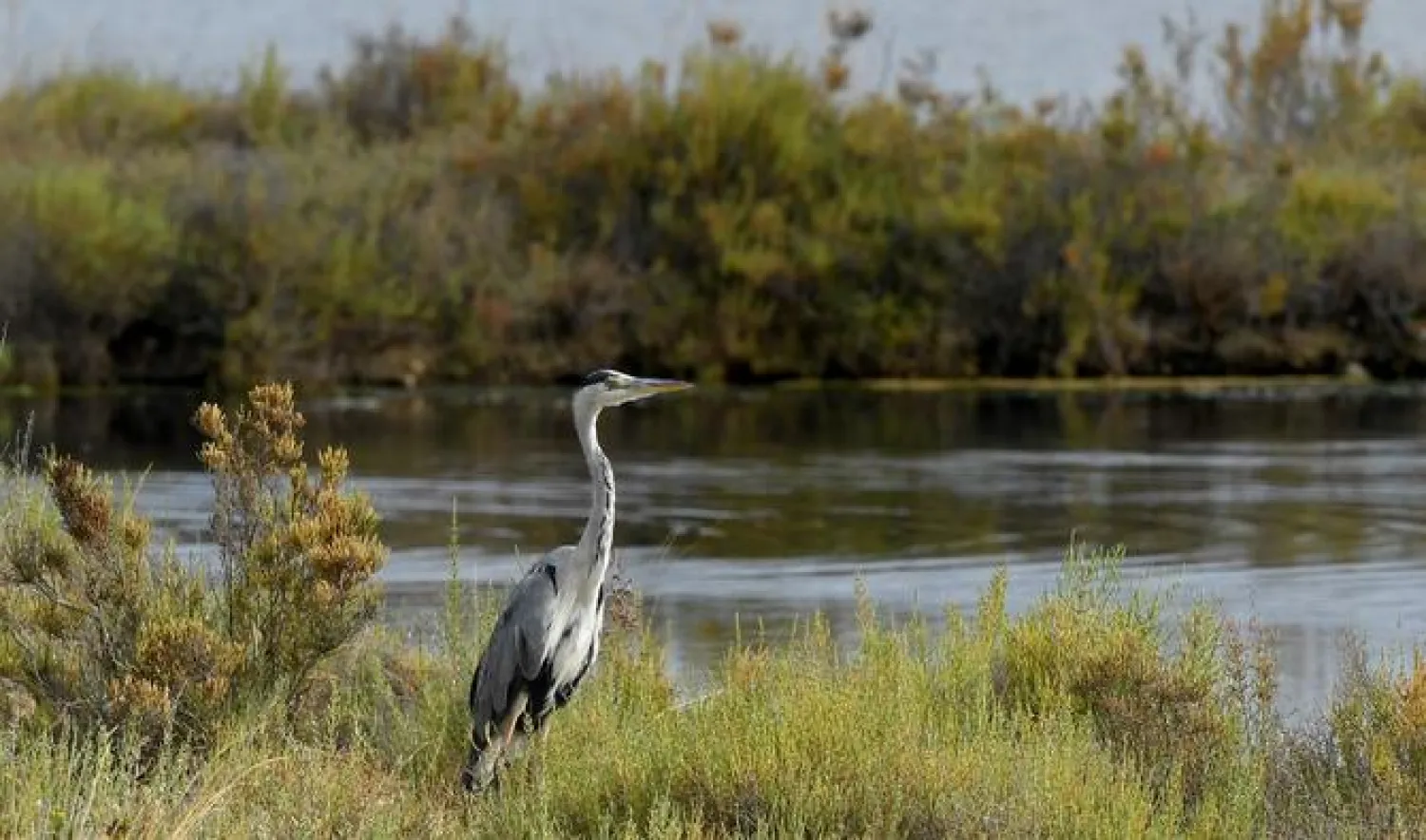
More than 300 bird species have been spotted in the area. Nicolas TUCAT AFP
TT

The Beach is Back: French Riviera Marsh Ditches Seawalls for Sand

More than 300 bird species have been spotted in the area. Nicolas TUCAT AFP

To save one of the last wetlands on the French Riviera from rising sea levels, conservationists have taken the unusual step of removing its protective seawalls.

Instead, they have let nature take its course.

The Vieux-Salins d'Hyeres salt marshes sit just below sea level with a stretch of vital but shifting sand beach that separates them from the open sea.

"The coastline was receding with each winter storm," said wetlands expert Guirec Queffeulou, who helps manage the site located in the heart of the Cote d'Azur, the tourist-clogged French Mediterranean coast.

Conservationists acquired the site through legal wrangling in the late 1990s after the former owner, a salt company that built the protective dykes, wanted to sell it do developers.

But the dykes didn't really work -- even with two kilometers (just over one mile) of seawalls, the sea still crept inland more than 30 meters (around 100 feet).

The beach along its outer edge disappeared, and it seemed inevitable that the rest of the wetland would one day be submerged.

Then after years of studies, work began in 2019 to extract thousands of tons of fake boulders.

- Biodiversity benefits -

"We had to do it gently to avoid damaging the natural barrier of Neptune grass a few meters from the coast," says Richard Barety of the coastal conservation organization that has owned the site for the last 20 years.

Astonishingly, once the dykes were gone it only took a few months for a new landscape to emerge, including a wide beach with a small dune.

Small Mediterranean dunes and leaves of dead Neptune grass -- an underwater plant vital to the ecosystem -- soon formed banks that serve as natural barriers against erosion.

With its vast area separating the land from the sea, the salt marsh plays a crucial role in regulating the local climate and provides a habitat for a rich variety of animal species.

"The interaction between the wetlands and the beach mean that biodiversity here has increased tenfold," says Barety.

Norbert Chardon, who heads up the regional chapter of the Bird Protection League, says more than 300 bird species have been documented in the area, drawn by fish and insects prey that thrive in the salty water.

- Nature-based solutions -

At the world's biggest biodiversity summit this week, so-called "nature-based solutions" are at the forefront of ideas for adapting to unprecedented environmental change.

Radhika Murti, who heads up global ecosystem management for the International Union for the Conservation of Nature (IUCN), says the scale of the climate crisis means we can't rely on technological solutions alone.

"Engineering will never be enough because the disasters are going to get bigger and bigger," she says.

Instead, we need to learn from the ways that nature has of changing and self-regulating.

"Look at solutions that already exist in nature," she adds, "so we can work with it to meet our need rather than against it."

The concept has been around for over a decade and last year the IUCN adopted eight criteria that define solutions as "nature-based" -- though so far no project has received the label.

Its proponents emphasize that such solutions are often less expensive and more flexible than using infrastructure or technology.

In Hyeres, residents hope the newly-formed beach will keep the Vieux-Salins from being submerged over the long term.

The old Aleppo pines have died and in their place Tamarisk trees, more adapted to salt water, are taking their places, suggesting that the changes are taking root.

The sea could also eventually seep into the basins, altering the site's unique water mixture -- a possibility long feared but today seen as potentially positive for biodiversity.

Chardon says that whatever happens to the Vieux-Salins could serve as a teaching tool to illustrate the effects of climate change "gently, without frightening people".



Spain and Portugal Continue to Battle Storm Leonardo as New Storm Approaches

 A mountain landslide blocks railway tracks during heavy rains, as storm Leonardo hits parts of Spain, in Benaojan, Spain, February 6, 2026. (Reuters)
A mountain landslide blocks railway tracks during heavy rains, as storm Leonardo hits parts of Spain, in Benaojan, Spain, February 6, 2026. (Reuters)
TT

Spain and Portugal Continue to Battle Storm Leonardo as New Storm Approaches

 A mountain landslide blocks railway tracks during heavy rains, as storm Leonardo hits parts of Spain, in Benaojan, Spain, February 6, 2026. (Reuters)
A mountain landslide blocks railway tracks during heavy rains, as storm Leonardo hits parts of Spain, in Benaojan, Spain, February 6, 2026. (Reuters)

Storm Leonardo continued to batter the Iberian Peninsula on Friday, bringing floods and putting rivers at risk of bursting their banks while thousands of people were evacuated from their homes in Spain and Portugal.

In southern Spain's Andalusia region, some 7,000 people have had to leave their homes due to successive storms.

Among them were around 1,500 people ordered to evacuate the mountain village of Grazalema, where Andalusia's regional leader Juan Manuel Moreno warned that aquifers were "full to the brim with water,” and at risk of collapsing.

“It's raining on already saturated ground. The land is unable to drain," Moreno said. “We urge extreme caution. This is not over.”

Spanish police said Friday they had found a body located 1,000 meters (about 0.6 miles) away from where a woman had disappeared Wednesday after she fell into a river in Malaga province while trying to rescue her dog. Police said they had not yet identified the body, but believed it belonged to the 45-year-old woman.

Another storm front, Marta, was expected to arrive Saturday, with Spain's weather agency AEMET saying it would bring even more rain and heavy winds, including to areas already drenched by Storm Leonardo.

Marta is expected to affect Portugal, too.

Of particular concern was southern Spain's Guadalquivir River, which flows through Córdoba and Seville and eventually into the Atlantic Ocean, and whose water levels have dramatically risen in recent days.

Additional rain Saturday could leave many more homes at risk in Córdoba, local authorities warned.

In Portugal, parts of Alcacer do Sal were submerged after the Sado River overflowed, forcing residents to leave the city located 90 kilometers (about 56 miles) south of Lisbon.

Alerts were issued also for regions near the Tagus River due to rising water levels.

A separate storm in late January left a trail of destruction in Portugal, killing several people, according to Portuguese authorities.


AROYA Cruises Debuts Arabian Gulf Voyages for 2026

AROYA offers a curated experience featuring culturally inspired entertainment and diverse dining options - SPA
TT

AROYA Cruises Debuts Arabian Gulf Voyages for 2026

AROYA offers a curated experience featuring culturally inspired entertainment and diverse dining options - SPA

AROYA Cruises, a subsidiary of the PIF-owned Cruise Saudi, has officially launched its inaugural season in the Arabian Gulf.

Running from February 21 to May 8, the season marks a milestone in regional tourism by blending authentic Saudi hospitality with international maritime standards, SPA reported.

AROYA offers a curated experience featuring culturally inspired entertainment and diverse dining options.

The season is designed to provide guests with a dynamic way to explore the Gulf, setting a new benchmark for luxury travel that reflects the Kingdom's heritage on a global stage.


Snowstorm Brings Much of Denmark to a Halt

A car drives in heavy snow at Store Heddinge in South Zealand, Denmark, 05 February 2026.  EPA/Mads Claus Rasmussen
A car drives in heavy snow at Store Heddinge in South Zealand, Denmark, 05 February 2026. EPA/Mads Claus Rasmussen
TT

Snowstorm Brings Much of Denmark to a Halt

A car drives in heavy snow at Store Heddinge in South Zealand, Denmark, 05 February 2026.  EPA/Mads Claus Rasmussen
A car drives in heavy snow at Store Heddinge in South Zealand, Denmark, 05 February 2026. EPA/Mads Claus Rasmussen

Denmark authorities halted public transport, closed schools and cancelled flights on Friday as heavy snowfall blanketed much of the country.

The Nordic country's meteorological institute DMI warned that heavy snow would likely continue until Friday evening in the east, where the capital Copenhagen is located.

Police said people should avoid going outdoors unless necessary and stay indoors in the capital and the surrounding region.

Copenhagen's airport cancelled flights to Paris and Berlin and warned of "delay and cancellation risks because of snowy conditions." Many schools were closed.

In the second-largest city of Aarhus, bus services were cancelled.