


Washington Demands Moscow, Damascus To Stop “Politicizing” Aid

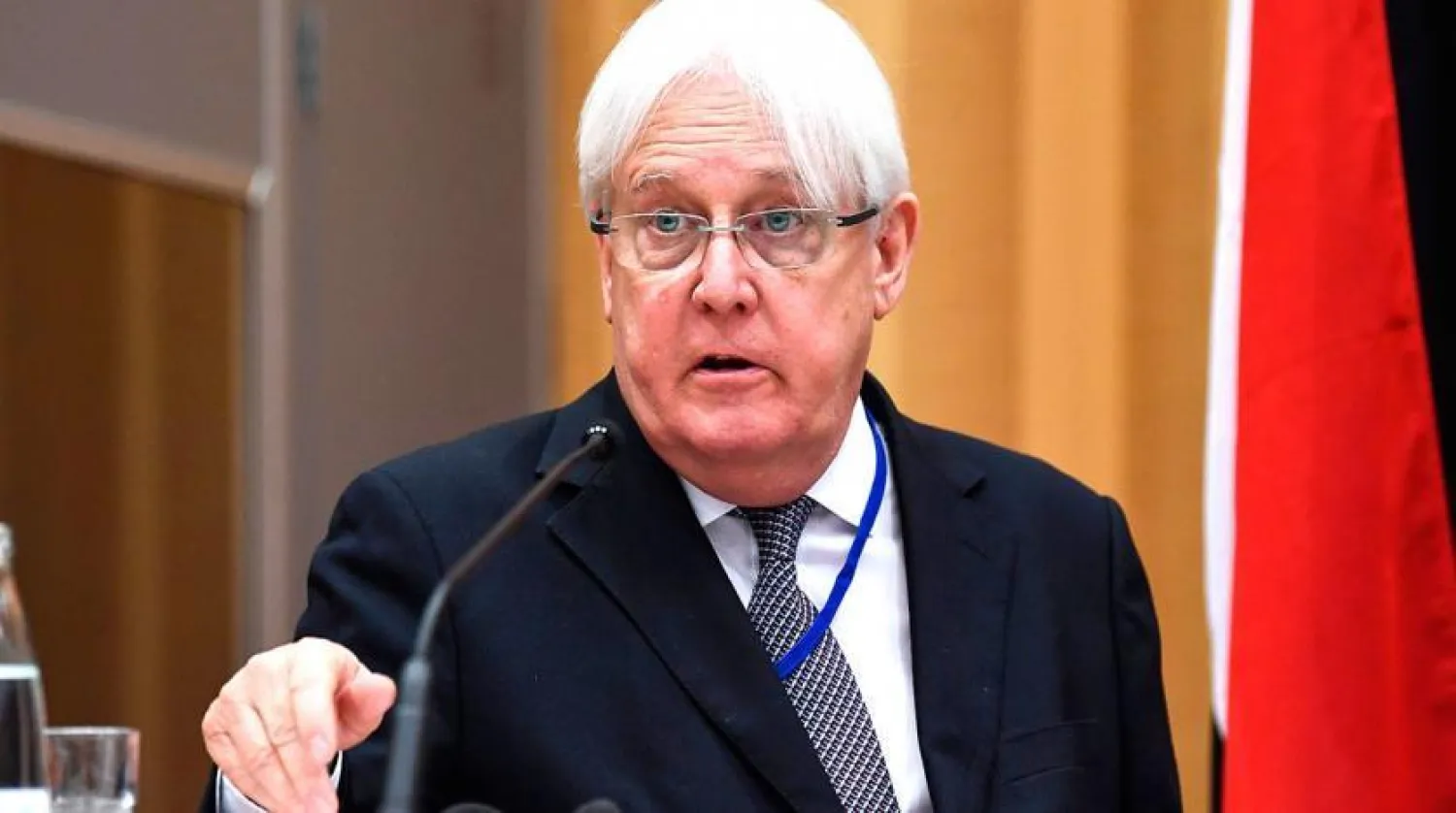
UN envoy to Yemen Martin Griffiths. AFP file photo
TT

Washington Demands Moscow, Damascus To Stop “Politicizing” Aid

UN envoy to Yemen Martin Griffiths. AFP file photo

Under-Secretary-General for Humanitarian Affairs and Emergency Relief Coordinator, Martin Griffiths warned that Syria is caught in a downward spiral and that the country will continue to be a place of tragedy so long as the conflict continues.

Meanwhile, US representative Jeffrey DeLaurentis called on Russia and the Bashar Assad regime to stop politicizing cross-border aid as a bargaining tactic against Syrians who object to their government’s policies. Instead, he demanded the Council to reauthorize the use of the Bab al-Salaam and Al Yarubiyah crossings.

DeLaurentis’ statements came as Griffiths briefed last Wednesday the Security Council on the humanitarian situation in Syria, following his return last week from the first visit to Syria, Lebanon and Turkey, in his new capacity.

The UN official’s trip offered an opportunity for candid and constructive discussions, including in Damascus with Foreign Minister Faisal Mekdad and his Deputy, Bashar al-Jaafari, and in Ankara with several Turkish officials.

In Damascus, Griffiths said his visit coincided with continued tensions in southern Syria, particularly around the neighborhood of Daraa Al-Balad.

“I discussed these issues with the Syrian authorities and others, and the need for the protection of civilians, the need for humanitarian access and the well-being of over 36,000 people displaced in recent hostilities,” he said.

The official stressed that humanitarian needs in Syria are greater than they have ever been, with an estimated 13.4 million people across the country requiring humanitarian assistance. “This is a 21 per cent increase compared to the year before and the highest since 2017,” he said.

Griffiths also told the Security Council that after speaking with women, men and children about the profound effects of more than ten years of conflict, children asked for help to learn, to receive health care, and for fuel to survive the upcoming winter.

“Women-headed households spoke of the challenges they have in finding income, almost none of them having such income available, as well as for their families to survive,” he said.

Despite noting that donors remain generous in their support for the Syria Humanitarian Response Plan – which is, at $4.2 billion a year, the largest and most expensive plan worldwide, Griffiths said funding is not keeping pace with the growing needs of Syrians. This is a fundamental and objective reality.

At the same session, Amany Qaddour, Regional Director of Syria Relief and Development, also briefed the Council, saying that with many Syrians living in crowded camps and other temporary settlements, security risks --- including rape and other acts of violence --- have grown exponentially. She spotlighted the recruitment of children as young as 10 into hard labor, as well as an increase in suicides amid an atmosphere that is "palpable with hopelessness and despair".

During his intervention, Syria’s representative Bassam Sabbagh particularly lashed out at Turkey, accusing Ankara of obstructing the safe passage of a cross-line convoy to Sarmad.

Meanwhile, French representative Nicolas De Riviere said an immediate cessation of hostilities, as well as a humanitarian pause, are the immediate priorities in Syria, and civilians and civilian infrastructure must be protected.



Turkey's PKK Says Will 'Not Abandon' Syrian Kurds

Kurdish children and their families fleeing a government advance through Kurdish-controlled areas arrive in the Kurdish Syrian city of Qamishli on January 19, 2026. (Photo by Delil SOULEIMAN / AFP)
TT

Turkey's PKK Says Will 'Not Abandon' Syrian Kurds

Kurdish children and their families fleeing a government advance through Kurdish-controlled areas arrive in the Kurdish Syrian city of Qamishli on January 19, 2026. (Photo by Delil SOULEIMAN / AFP)

Outlawed Kurdish militants in Türkiye will "never abandon" Kurds in Syria following an offensive by Damascus, a leader of the PKK armed group said, quoted by the Firat news agency Tuesday.

Syrian forces began an offensive nearly two weeks ago which pushed Kurdish-led SDF forces out of the northern city of Aleppo, and expanded over the weekend to push deep into territory that has been held by Kurdish forces for over a decade.

"You should know that we will not leave you alone. Whatever the cost, we will never leave you alone.. we as the entire Kurdish people and as the movement, will do whatever is necessary," Murat Karayilan of the Kurdistan Workers' Party (PKK) was quoted as saying by Firat.

A close ally of Syria's new leadership that overthrew Bashar al-Assad in December 2024, the Turkish government is simultaneously leading a drive to reach a settlement with the PKK -- listed as a terror group by Türkiye and its Western allies.

Karayilan said the Damascus-led offensive was an "attempt to nullify" the peace process in Türkiye.

"This decision by international powers to enable these attacks, will be a black mark for the US, the UK, Germany, France and other international coalition states," he said.

On Monday, at least 500 people rallied in Türkiye’s Kurdish-majority city of Diyarbakir against the Syrian offensive. Clashes erupted when police tried to break up the protest.

The pro-Kurdish DEM party, the third largest force in the Turkish parliament, called for a rally on Tuesday in the town of Nusaybin, located on the border with Syria.


Israel Begins Demolitions Inside UNRWA Headquarters in East Jerusalem

A photograph shows a demolished structure inside the headquarters of the United Nations Relief and Works Agency (UNRWA) in the Sheikh Jarrah neighborhood of Israeli-annexed east Jerusalem on January 20, 2026. (AFP)
TT

Israel Begins Demolitions Inside UNRWA Headquarters in East Jerusalem

A photograph shows a demolished structure inside the headquarters of the United Nations Relief and Works Agency (UNRWA) in the Sheikh Jarrah neighborhood of Israeli-annexed east Jerusalem on January 20, 2026. (AFP)

Israeli bulldozers began demolishing structures inside the headquarters of the UN agency for Palestinian refugees (UNRWA) in east Jerusalem on Tuesday, an AFP photographer saw, with the Israeli foreign ministry defending the move.

"UNRWA-Hamas had already ceased its operations at this site and no longer had any UN personnel or UN activity there. The compound does not enjoy any immunity and the seizure of this compound by Israeli authorities was carried out in accordance with both Israeli and international law," the foreign ministry said in a statement.

Israel has repeatedly accused UNRWA of providing cover for Hamas, claiming that some of its employees took part in the group's October 7, 2023 attack on Israel, which sparked the war in Gaza.


Hamas Leaders Prepare for 'Safe Exit' from Gaza, Amid Doubts Over Return

A Palestinian child is seen as fighters from Hamas’ Qassam Brigades search for the bodies of Israeli hostages in the Jabalia refugee camp in northern Gaza, last December. (EPA)
TT

Hamas Leaders Prepare for 'Safe Exit' from Gaza, Amid Doubts Over Return

A Palestinian child is seen as fighters from Hamas’ Qassam Brigades search for the bodies of Israeli hostages in the Jabalia refugee camp in northern Gaza, last December. (EPA)

Sources within Hamas in Gaza revealed that senior figures in the movement are preparing for a “safe exit” from the enclave following arrangements related to Gaza’s future under the second phase of the ceasefire agreement, which the United States announced had begun last week.

Three Hamas sources told Asharq Al-Awsat that several prominent political and military leaders who survived the war are preparing to leave the territory. One source said the departure would be voluntary and carried out under specific arrangements, with full coordination with the Hamas leadership abroad. Another source noted that other leaders, particularly military figures, categorically reject leaving Gaza under any circumstances.

Throughout nearly two years of war, Hamas officials have repeatedly stated their rejection of removing the movement’s leadership from the Strip.

The sources separately provided Asharq Al-Awsat with the names of several leaders believed likely to depart, though it is refraining from publishing them due to the inability to contact them promptly. Some of these figures were recently appointed to leadership positions in Hamas’ political bureau in Gaza as part of new organizational arrangements aimed at rebuilding and restructuring the movement.

According to the same sources, a number of former prisoners released in the 2011 exchange deal for Israeli soldier Gilad Shalit — who now oversee key portfolios within Hamas leadership — are expected to be among those traveling to Türkiye.

However, a senior Hamas leader based outside Gaza denied the reports, telling Asharq Al-Awsat that the issue of leaders leaving the Strip “has not been raised.”

Another source inside Gaza declined to comment, saying only that he had no knowledge of the matter.

Sources in Gaza said the exit would likely be “without return, at least for several years,” with those leaders likely to end up residing in several countries. Other sources said some leaders would leave temporarily to hold meetings in Egypt with security officials on critical issues related to Gaza’s governmental security forces and other key files, before returning to the Strip.

In September, Israeli Prime Minister Benjamin Netanyahu said in an interview with Fox News that Israel was considering providing safe passage for Hamas leaders to leave Gaza under certain conditions, as part of a plan being prepared by US President Donald Trump, which entered into force in October.

Israel’s public broadcaster reported that Hamas leaders would most likely head to Qatar or Türkiye if they left Gaza. Israel’s Channel 12 previously reported that Hamas officials told US officials they were prepared to accept a limited relocation of military leaders and some operatives from Gaza.

On Jan. 14, US envoy Steve Witkoff officially announced the launch of the second phase of the ceasefire, which includes Hamas relinquishing control of Gaza, establishing a Palestinian technocratic committee to administer the enclave, initiating a comprehensive disarmament process, and launching large-scale reconstruction projects.

Hamas welcomed the announcement, saying it had fulfilled all requirements for completing the first phase and moving to the second, while continuing discussions with mediators over options regarding its weapons and those of other Palestinian factions.