Refugees in Fear as Sentiment Turns Against Them in Turkey

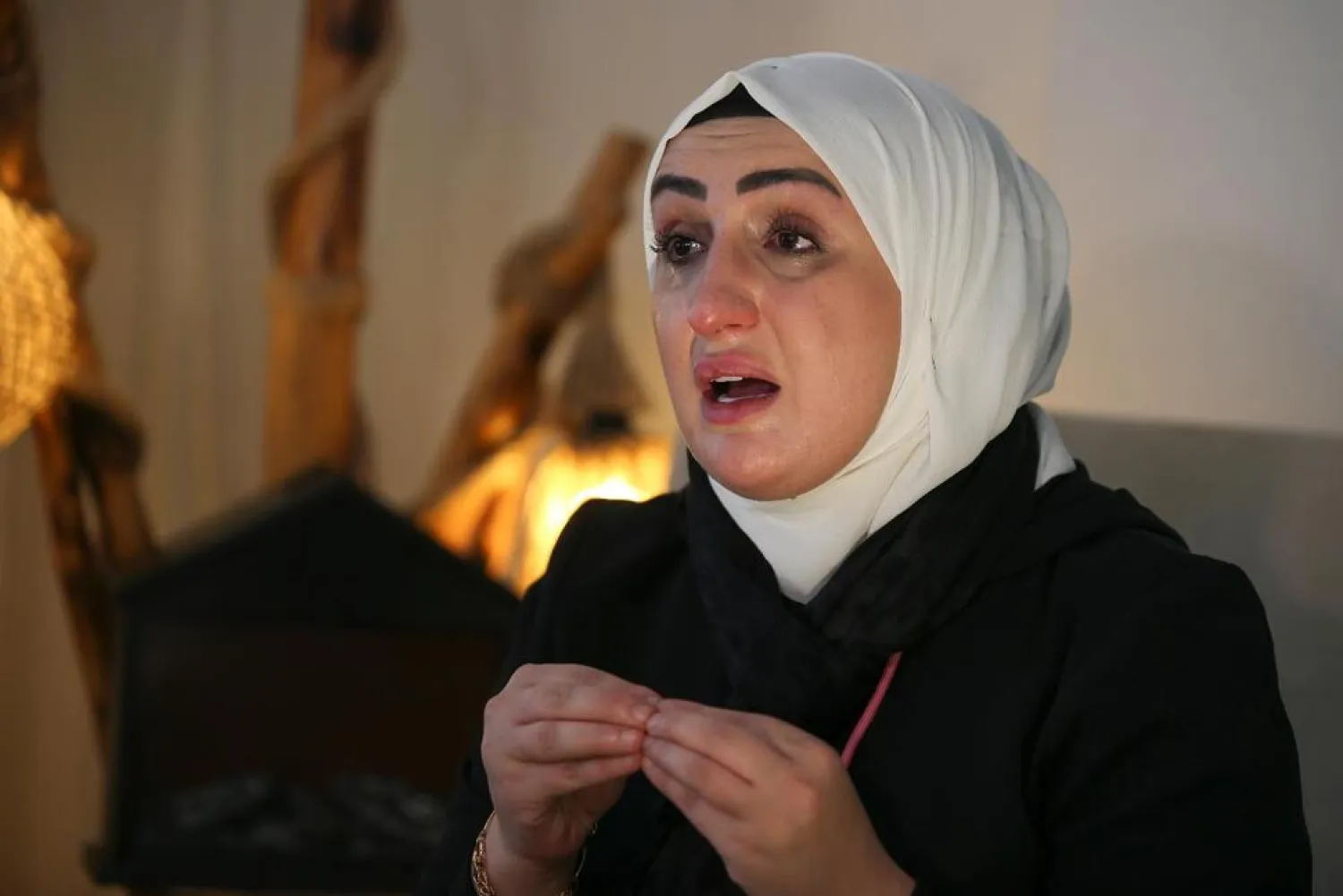
Fatima Alzahra Shon, 32, a Syrian refugee talks to The Associated Press during an interview in Istanbul, Friday, Sept. 17, 2021.(AP Photo/Emrah Gurel) THE ASSOCIATED PRESS
TT

Refugees in Fear as Sentiment Turns Against Them in Turkey

Fatima Alzahra Shon, 32, a Syrian refugee talks to The Associated Press during an interview in Istanbul, Friday, Sept. 17, 2021.(AP Photo/Emrah Gurel) THE ASSOCIATED PRESS

Fatima Alzahra Shon thinks neighbors attacked her and her son in their Istanbul apartment building because she is Syrian.

The 32-year-old refugee from Aleppo was confronted on Sept. 1 by a Turkish woman who asked her what she was doing in “our” country. Shon replied, “Who are you to say that to me?” The situation quickly escalated.

A man came out of the Turkish woman's apartment half-dressed, threatening to cut Shon and her family “into pieces,” she recalled. Another neighbor, a woman, joined in, shouting and hitting Shon. The group then pushed her down a flight of stairs. Shon said that when her 10-year-old son, Amr, tried to intervene, he was beaten as well.

Shon said she has no doubt about the motivation for the aggression: “Racism.”

Refugees fleeing the long conflict in Syria once were welcomed in neighboring Turkey with open arms, sympathy and compassion for fellow Muslims. But attitudes gradually hardened as the number of newcomers swelled over the past decade.

Anti-immigrant sentiment is now nearing a boiling point, fueled by Turkey’s economic woes. With unemployment high and the prices of food and housing skyrocketing, many Turks have turned their frustration toward the country’s roughly 5 million foreign residents, particularly the 3.7 million who fled the civil war in Syria.

In August, violence erupted in Ankara, the Turkish capital, as an angry mob vandalized Syrian businesses and homes in response to a the deadly stabbing of a Turkish teenager.

Turkey hosts the world's largest refugee population, and many experts say that has come at a cost. Selim Sazak, a visiting international security researcher at Bilkent University in Ankara and an advisor to officials from the opposition IYI Party, compared the arrival of so many refugees to absorbing “a foreign state that’s ethnically, culturally, linguistically dissimilar.”

“Everyone thought that it would be temporary,” Sazak said. “I think it’s only recently that the Turkish population understood that these people are not going back. They are only recently understanding that they have to become neighbors, economic competitors, colleagues with this foreign population.”

On a recent visit to Turkey, United Nations High Commissioner for Refugees Filippo Grandi acknowledged that the high number of refugees had created social tensions, especially in the country's big cities. He urged “donor countries and international organizations to do more to help Turkey.”

The prospect of a new influx of refugees following the Taliban takeover of Afghanistan has reinforced the unreceptive public mood. Videos purporting to show young Afghan men being smuggled into Turkey from Iran caused public outrage and led to calls for the government to safeguard the country’s borders.

The government says there are about 300,000 Afghans in Turkey, some of whom hope to continue their journeys to reach Europe.

Turkish President Recep Tayyip Erdogan, who long defended an open-door policy toward refugees, recently recognized the public’s “unease” and vowed not to allow the country to become a “warehouse” for refugees.
Erdogan’s government sent soldiers to Turkey's eastern frontier with Iran to stem the expected flow of Afghans and is speeding up the construction of a border wall.

Immigration is expected to become a top campaign topic even though Turkey’s next general election is two years away. Both Turkey’s main opposition party, the Republican People’s Party, or CHP, and the nationalist IYI Party have promised to work on creating conditions that would allow the Syrian refugees’ return. waste collection fees foreigners there to propel them to leave.

Following the anti-Syrian violence in the Altindag district of Ankara last month, Umit Ozdag, a right-wing politician who recently formed his own anti-immigrant party, visited the area wheeling an empty suitcase and saying the time has come for the refugees to “start packing.”

The riots broke out on Aug. 11, a day after a Turkish teenager was stabbed to death in a fight with a group of young Syrians. Hundreds of people chanting anti-immigrant slogans took to the streets, vandalized Syrian-run shops and hurled rocks at refugees’ homes.

A 30-year-old Syrian woman with four children who asked not to be named for fear of reprisals said her family locked themselves in their bathroom as an attacker climbed onto their balcony and tried to force the door open. The woman said the episode traumatized her 5-year-old daughter and the girl has trouble sleeping at night.

Some shops in the area remain closed, with traces of the disturbance still visible on their dented, metal shutters. Police have deployed multiple vehicles and a water cannon on the streets to prevent a repeat of the turmoil.

Syrians are often accused of failing to assimilate in Turkey, a country that has a complex relationship with the Arab world dating back to the Ottoman empire. While majority Muslim like neighboring Arab countries, Turks trace their origins to nomadic warriors from central Asia and Turkish belongs to a different language group than Arabic.

Kerem Pasaoglu, a pastry shop owner in Istanbul, said he wants Syrians to go back to their country and is bothered that some shops a street over have signs written in Arabic instead of Turkish.

“Just when we said we are getting used to Syrians or they will leave, now the Afghans coming is unfortunately very difficult for us,” he said.

Turkey’s foreign minister this month said Turkey is working with the United Nations' refugee agency to safely return Syrians to their home country.

While the security situation has stabilized in many parts of Syria after a decade of war, forced conscription, indiscriminate detentions and forced disappearances continue to be reported. Earlier this month, Amnesty International said some Syrian refugees who returned home were subjected to detention, disappearance and torture at the hands of Syrian security forces, proving that going back to any part of the country is unsafe.

Shon said police in Istanbul showed little sympathy when she reported the attack by her neighbors. She said officers kept her at the station for hours, while the male neighbor who threatened and beat her was able to leave after giving a brief statement.

Shon fled Aleppo in 2012, when the city became a battleground between Syrian government forces and opposition fighters. She said the father of her children drowned while trying to make it to Europe. Now, she wonders whether Turkey is the right place for her and her children.

“I think of my children’s future. I try to support them in any way I can, but they have a lot of psychological issues now and I don’t know how to help them overcome it,” she said. “I don’t have the power anymore. I’m very tired.


Trump Says Takes ‘Very Seriously’ Possible Iran Threat to Washington

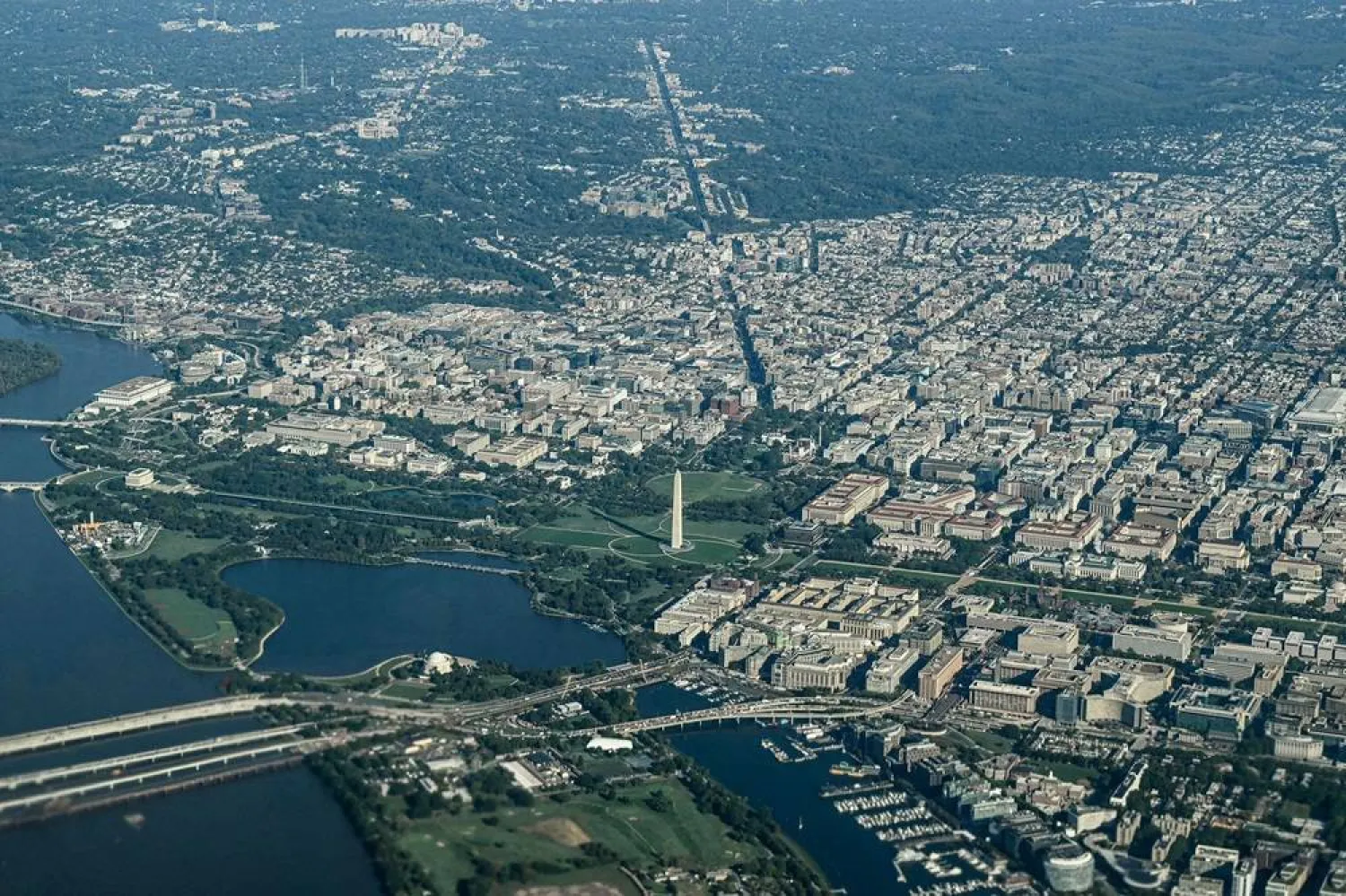
 An aerial view of Washington, DC is seen on October 13. (AFP/Getty Images)
An aerial view of Washington, DC is seen on October 13. (AFP/Getty Images)
TT

Trump Says Takes ‘Very Seriously’ Possible Iran Threat to Washington

 An aerial view of Washington, DC is seen on October 13. (AFP/Getty Images)
An aerial view of Washington, DC is seen on October 13. (AFP/Getty Images)

President Donald Trump said Tuesday that US authorities take "very seriously" any possible threat to Washington, after reports of Iran preparing a so-called dirty bomb plot.

"They will pay a price the likes of which no other country has ever paid before," Trump said, referring to Iran. "We take it very seriously because they happen to be crazy."

Earlier on Tuesday, Iran's Foreign Ministry spokesperson denied a CNN report that it ‌planned to ‌detonate a dirty ‌bomb ⁠in Washington, saying ⁠the allegations were "baseless".

CNN ‌cited ‌sources as saying that US intelligence ‌indicates that Tehran is developing ⁠plans ⁠to potentially detonate a dirty bomb in Washington DC.

Sources familiar with the latest intelligence characterized the Iranian planning as, for now, an effort to give itself options rather than an indicator of an imminent attack, reported CNN. But the plotting picked up by the US has been very specific and includes locations and targets, two of the sources said, and has sparked a flurry of US contingency planning.  

In a statement, White House spokesperson Lauren Bis said that the US is “monitoring any and all potential threats, but at this time there are no credible threats to the homeland.” 


Trump Arrives in Manila for Quad Talks Ahead of China Visit

US President Donald Trump waves as he walks to board Air Force One at Joint Base Andrews, Maryland, on November 16, 2026. (AFP)
TT

Trump Arrives in Manila for Quad Talks Ahead of China Visit

US President Donald Trump waves as he walks to board Air Force One at Joint Base Andrews, Maryland, on November 16, 2026. (AFP)

US President Donald Trump arrived in the Philippines on Tuesday at the tail end of a Southeast Asian summit, with protests awaiting him as he prepares for the first meeting in two years of the Quad group of Indo-Pacific countries.

Trump's Asia trip, which includes the Asia-Pacific Economic Cooperation (APEC) forum in Shenzhen and a much-anticipated trilateral meeting with his Chinese and Russian counterparts, comes after his Republican Party's defeat in midterm elections, plus spy allegations and new US curbs on China's access to AI chips that could complicate a fragile trade-war truce.

Demonstrators gathered in Manila for a fifth day of protests that have included the burning of Trump effigies, calls for an end to the Middle East war and scrapping of the US-led Pax Silica supply chain initiative.

Trump arrived late afternoon at the end of the Association of Southeast Asian Nations summit ‌and will join a ‌US-ASEAN "Special Summit" later on Tuesday.

He will first hold a meeting of the Quad – ‌the ⁠US, Japan, Australia and ⁠India – which will be his first and takes place two years after the last gathering of the group, which Trump's predecessor Joe Biden regarded as a signature foreign policy initiative.

It comes ahead of the APEC gathering hosted by Chinese President Xi Jinping, who has previously objected to the Quad as an effort to encircle Beijing. Quad members have said the grouping is not directed against any one country.

QUAD MEETING THE 'BEST POSSIBLE SIGNAL'

At the ASEAN summit on Monday, Chinese Premier Li Qiang hailed what he called "truly extraordinary" economic achievements of China and ASEAN in the face of global trade restrictions, expressing Beijing's commitment to free trade and the need to "stand united, ward off interference, and work together".

China ⁠is ASEAN's largest trading partner and a key source of investment, but the biggest economies ‌of the 11-member bloc – which has a combined GDP of more than $3.9 trillion – ‌want to deepen ties with the US despite protracted trade and diplomatic uncertainty under the Trump administration.

Former US Deputy Secretary of State Kurt ‌Campbell credited Washington's top diplomat, Marco Rubio, with the timing and reconvening of the Quad, which he said had lost ambition ‌under Trump.

"Part of what he (Rubio) is thinking is that this is probably the best possible signal if you're going to go into a trilateral meeting," said Campbell, co-founder of The Asia Group, referring to Thursday's US-China-Russia talks.

"The linchpin of everything that we do in Asia is the US-Japan relationship, and a perception that this is not at the top of the president's mind would concern me."

White House spokesperson Olivia Wales on Friday ‌said that under Trump's leadership, the Quad had demonstrated it is "a partnership of action, tackling the region's toughest challenges and driving opportunities to ensure a free and open Indo-Pacific".

A Japanese foreign ⁠ministry official said it was ⁠expected that Quad leaders would try to show unity, with maritime security, export restrictions, critical-minerals supply-chain diversification and AI among potential discussion points.

Undersea cables, emerging technology and disaster relief were also likely to be covered, a source familiar with the matter said.

JAPAN TO PLAY MORE PROACTIVE ROLE, PM SAYS

ASEAN's leaders held meetings on Tuesday involving counterparts of Japan, South Korea, China and India.

Japanese Prime Minister Sanae Takaichi pledged to work with ASEAN to boost regional economic and energy resilience to address export restrictions and vulnerabilities from rapid AI development, and strengthen supply chains, including on critical minerals.

"While the international order is experiencing a period of great instability, Japan will play an ever more proactive role," Takaichi said.

Trump will sign a joint statement with Thai Prime Minister Anutin Charnvirakul on Tuesday on an agreement on reciprocal trade. Thai media have reported the two would hold talks and the statement would be about progress on negotiations.

The US is Thailand's largest export market, accounting for 24% of its total shipments this year. The US designated Thailand as a major non-NATO ally in 2003.

Trump will on Wednesday meet Ferdinand Marcos Jr, president of US defense ally the Philippines, before heading to Shenzhen.


Pakistan Army Chief and Iran FM Discuss Regional Peace, Security

Vessels at the Strait of Hormuz, as seen from Musandam, Oman, November 17, 2026. (Reuters)
TT

Pakistan Army Chief and Iran FM Discuss Regional Peace, Security

Vessels at the Strait of Hormuz, as seen from Musandam, Oman, November 17, 2026. (Reuters)

Asim Munir, the powerful army chief of mediating country Pakistan, met with Iranian foreign minister Abbas Araghchi, the Pakistani military said Tuesday, during continued efforts to end the war between the United States and Iran.

Pakistan brokered a June accord that led to a brief halt in fighting between the United States and Iran and set a roadmap for further agreement on reopening the crucial Strait of Hormuz waterway and for negotiations on Tehran's nuclear program.

But the truce collapsed with Washington and Tehran accusing each other of violating the agreement and prompting months of shuttle diplomacy to resuscitate the ceasefire, led principally by mediators Qatar and Pakistan.

During the meeting on Monday, "matters of mutual interest, regional security dynamics and evolving geopolitical developments were discussed," the Pakistani military's media wing said in a statement.

Munir "underscored the importance of sustained engagement, mutual trust and close coordination between the two brotherly countries for promoting regional peace and stability", it added.

Araghchi arrived in Pakistan late on Sunday for a meeting of the Economic Cooperation Organization, a group of nations from Central and South Asia and the Middle East.

Pakistani Foreign Minister Ishaq Dar said on Monday he had held "very candid, very frank" discussions with Araghchi, during the conference confirming that Iran had put forward a two-day proposal to reopen the Strait of Hormuz as part of efforts to end the war with the United States.

He said Washington had not yet responded.

The United States and Israel launched the war on February 28, killing members of Iran's leadership and demanding it cease any nuclear-related activities.

The war plunged the Middle East into violence, with Tehran's retaliatory strikes targeting Gulf countries and sending global energy prices skyrocketing.

Tehran has insisted that Washington meet conditions including the release of frozen assets abroad, sanctions relief and an end to the US naval blockade of Iranian ports in exchange for reopening the Strait of Hormuz.