


Eye on Polls, Turkey’s Erdogan May Regret Rate Cut He Pushed for

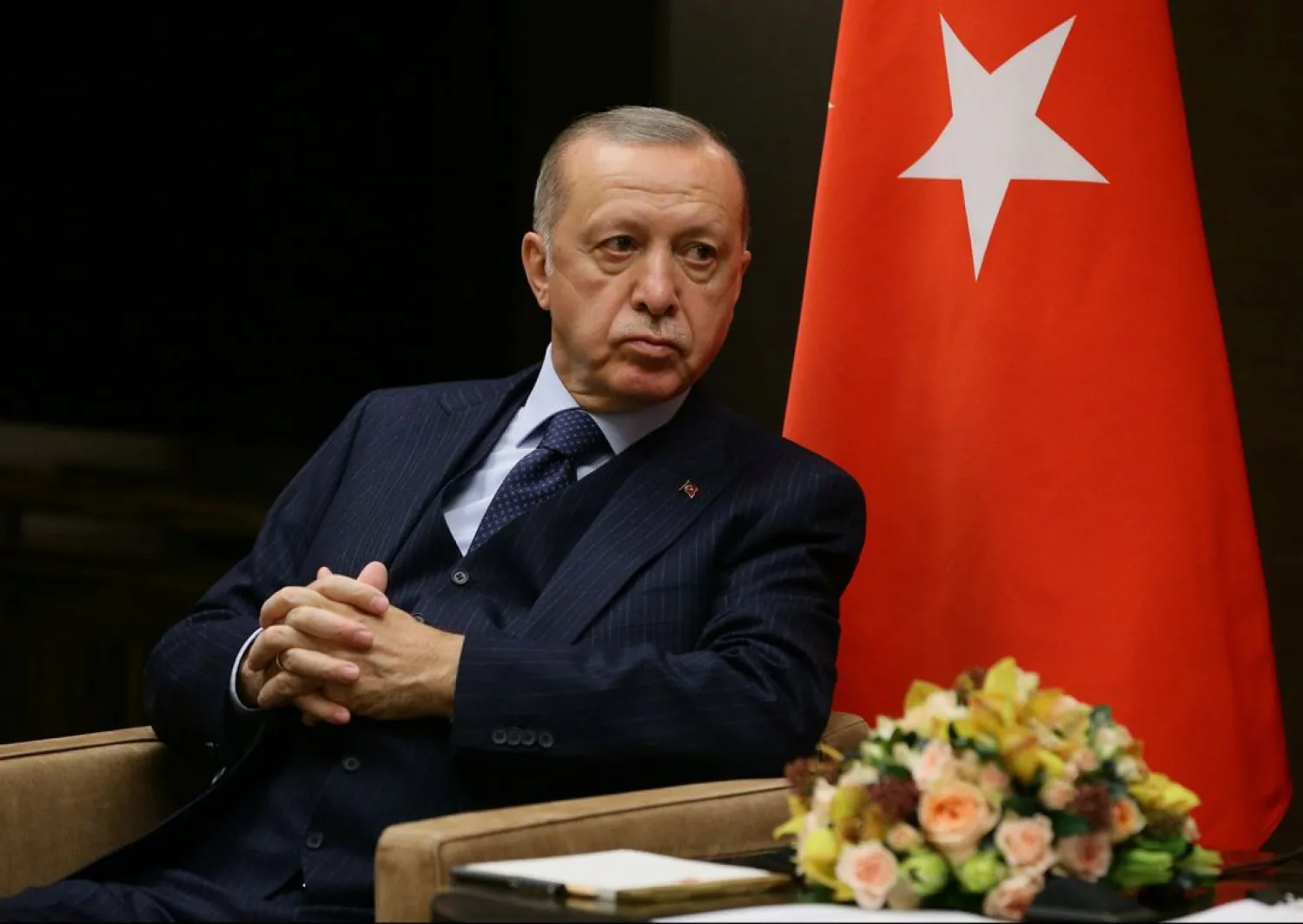
Turkish President Recep Tayyip Erdogan attends a meeting with Russian President Vladimir Putin in Sochi, Russia September 29, 2021. (Reuters)
TT

Eye on Polls, Turkey’s Erdogan May Regret Rate Cut He Pushed for

Turkish President Recep Tayyip Erdogan attends a meeting with Russian President Vladimir Putin in Sochi, Russia September 29, 2021. (Reuters)

President Recep Tayyip Erdogan’s belief that a shock interest rate cut will stoke up Turkey’s economy ahead of elections is instead likely to backfire as hot inflation and a lira selloff stall growth.

Sources close to the presidency told Reuters that Erdogan pushed the central bank for months - both publicly and privately - to deliver the monetary stimulus in order to boost lending, exports and jobs despite soaring inflation.

On Sept. 23, the bank delivered, unexpectedly lowering its policy rate by 100 basis points to 18% - sending the lira currency to all-time lows.

Investors dumped Turkish bonds and said the move marked the latest blow to the central bank’s tattered credibility, given inflation had jumped above 19% amid global price pressures that leave emerging markets like Turkey uniquely vulnerable.

Consumer prices were up 19.6% in September from the same month last year, the biggest rate of increase in 2-1/2 years, data showed on Monday.

In interviews, several Turkish economists said the rate cut was a grave error that would likely sink Turks deeper into economic distress ahead of elections that must be held by mid-2023.

“The sense of gloom, the exchange rate, is exposing that economic governance is in shambles,” said Refet Gurkaynak, chair of Bilkent University’s economics department, in Ankara.

Yet Erdogan - sliding in opinion polls - had grown impatient for a rate cut after installing a new central bank chief earlier this year, and he was surprised that inflation had marched higher, two Turkish officials said.

Still, one official close to the presidency said the rate cut was worth it despite the risks and inevitable criticism.

“This decision was necessary to increase exports, to generate employment and to open the way for new investments,” the person said, requesting anonymity. “There may be negative effects, but it had to be taken ... to achieve these benefits.”

The president’s office did not immediately comment on whether it pushed for the rate cut and why. The central bank declined to comment on whether Erdogan applied pressure.

Erdogan, a self-described enemy of interest rates, said on Friday that inflation will drop to single digits, but he did not address the interest rate cut.

His government has blamed supermarkets for unfair practices, while on Sunday Erdogan promised to open 1,000 new markets across the country to provide “suitable” prices for goods.

‘False assumptions’
The central bank said easing was needed since inflation is temporary and a core measure had dipped, and also since lending suffered after six months of the policy rate being held at 19% - among the highest in the world.

But Turkey’s relatively low foreign reserves, heavy imports and a “real” inflation-adjusted interest rate becoming more negative are all red flags for the currency. Adding to the risks, lira depreciation drives inflation higher.

All this, combined with companies’ high foreign debt, means that exports benefit little from rate cuts, while private banks would rather shrink than expand credit again, said Gurkaynak, a former US Federal Reserve Board economist.

“If the policy change is based on the belief it will help economic activity, there are false assumptions,” he said.

Selva Demiralp, director of the Koc University-TUSIAD Economic Research Forum, said Turkey’s “trial and error” policy is reckless given the Fed and other major central banks are moving to tighten policy to head off inflation, including the recent energy-price shock.

“The rest of the world correctly analyzed the Fed’s guidance ... but this decision will cause large damage to Turkey’s economy,” she said.

Past Fed policy tightening cycles have pulled funds from Turkey and other emerging market economies.

Benchmark debt yields jumped after the rate cut, signaling little faith that the central bank can lower inflation. Nevertheless, money market prices show traders expect more cuts before the policy rate returns to 18%-18.5% in a year.

Sliding polls
After a currency crisis in 2018 and smaller selloffs, the lira has shed two-thirds of its value in five years, eating into the earnings of Turks who have also faced double-digit inflation for most of that period.

This has alarmed Erdogan, whose conservative AK Party has ruled for 19 years on a reputation of strong economic growth and household wealth.

But that reputation has somewhat rusted.

Polls show the party has 31%-33% support, down from 42.6% in 2018 elections. Its nationalist ally the MHP has also slipped, suggesting Erdogan would lose control of parliament in a vote.

Erdogan looms large over the central bank after firing its last three governors over policy differences. He turned up the heat in June when he said he spoke to Sahap Kavcioglu, the current chief, about the need for a rate cut after August.

Even as inflation jumped to 19.25% in August, Kavcioglu began giving dovish signals on Sept. 1 investor calls, Reuters reported, citing participants. He reinforced that in a speech on Sept. 8 that, according to a separate source, the bank hastily decided should be made public only the night before.

Another official with knowledge of the matter said Erdogan was told that a cut could come in July or August. When it didn’t, “the president continued to have a serious expectation that rates should be lowered,” the person said.

Erinc Yeldan, acting dean of Bilkent’s economics faculty, said the AK Party is attempting to build a new economic growth story “whatever the cost” ahead of elections.

“It is clear that the result of these efforts will be even stronger instability and a deepening forex crisis,” he said.



Türkiye TPAO, Shell Sign Deal to Carry out Exploration Work offshore Bulgaria

A Shell logo is seen at a gas station in Buenos Aires, Argentina, March 12, 2018. (Reuters)
TT

Türkiye TPAO, Shell Sign Deal to Carry out Exploration Work offshore Bulgaria

A Shell logo is seen at a gas station in Buenos Aires, Argentina, March 12, 2018. (Reuters)

Türkiye Petrolleri (TPAO) has signed a partnership agreement with Shell to carry out exploration work in Bulgaria's maritime zone, the Turkish energy ministry and British oil major said on Wednesday.

European Union member Bulgaria, which had been totally dependent on Russian gas until 2022, has been seeking to diversify its gas supplies and find cheaper sources, Reuters reported.

TPAO and Shell will jointly explore the Khan Tervel block, located near Türkiye's Sakarya gas field, and will hold a five-year licence in Bulgaria's exclusive economic zone, Minister Alparslan Bayraktar said.

Shell will continue as operator of the block, while TPAO will take a 33% interest in the licence, a Shell spokesperson said.

Since the start of this year, TPAO has signed energy cooperation agreements with ExxonMobil, Chevron and BP for possible exploration work in the Black Sea and the Mediterranean.

In April, Shell signed a contract with Bulgaria's government to allow the oil major to explore 4,000 square metres in the block.


Saudia Signs Strategic Partnership Agreement with Six Flags and Aquarabia Qiddiya City

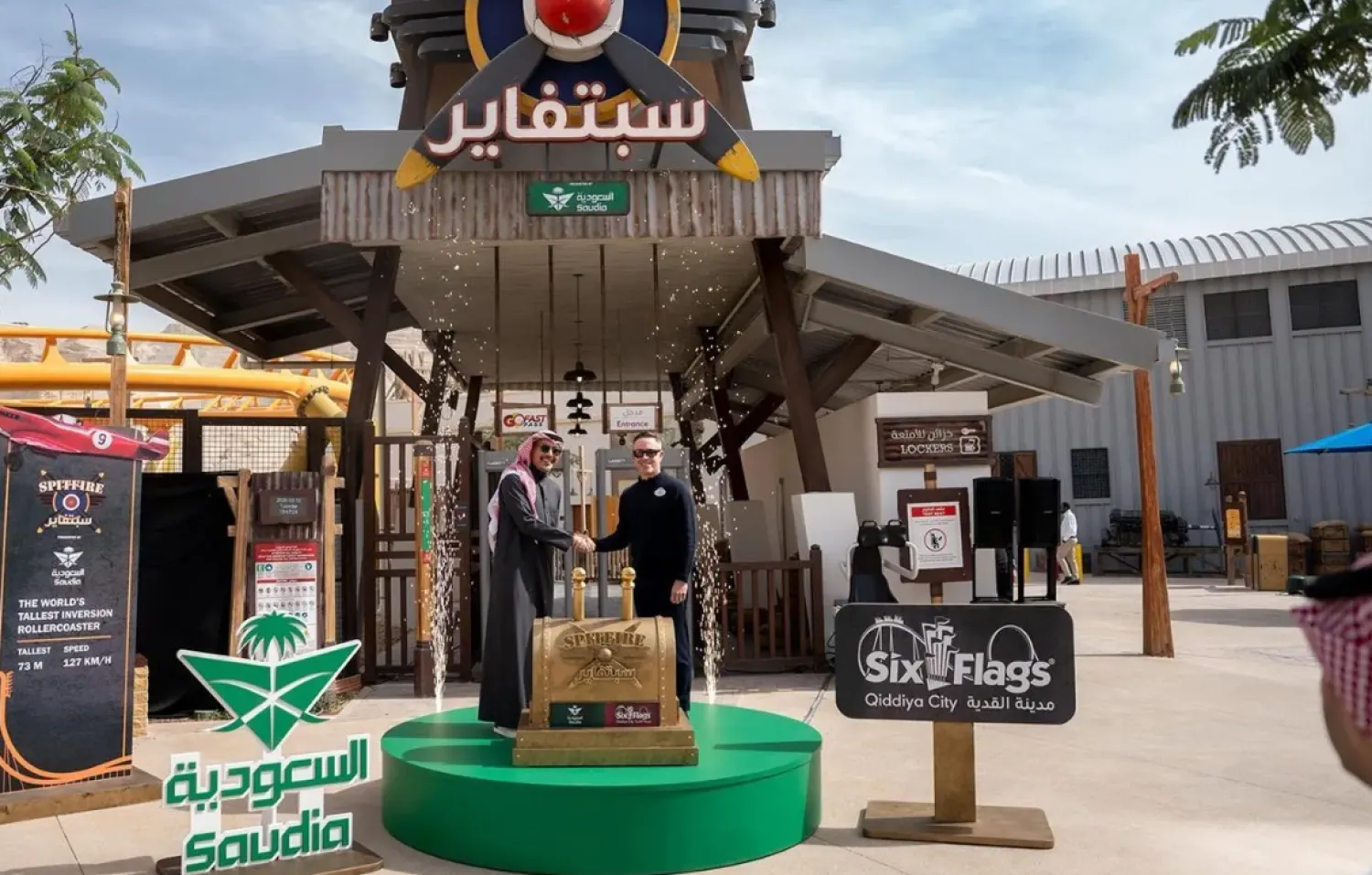
udia will develop special travel packages designed to enable visitors to experience world-class attractions - SPA
TT

Saudia Signs Strategic Partnership Agreement with Six Flags and Aquarabia Qiddiya City

udia will develop special travel packages designed to enable visitors to experience world-class attractions - SPA

Saudia Airlines has signed a five-year strategic partnership with Six Flags and Aquarabia Qiddiya City, becoming the official premier partner exclusively in the airline category.

As part of the partnership, Saudia will develop special travel packages designed to enable visitors to experience world-class attractions. The collaboration also brings the spirit of Six Flags and Aquarabia Qiddiya City to the skies through special aircraft branding across Saudia’s fleet, SPA reported. 

Chief Marketing Officer of Saudia Group Khaled Tash said in a press release: "Saudia is committed to supporting national development projects as part of its contribution to Vision 2030, aligned with our strategy to bring the world to the Kingdom. Partnerships of this scale with national partners play a key role in positioning Saudi Arabia as a leading global destination for entertainment and tourism."

Park President of Six Flags and Aquarabia Qiddiya City Brian Machamer added: "Our partnership with Saudia not only reflects a shared ambition to connect the Kingdom to the world through world-class entertainment experiences, but strengthens our ability to attract visitors from around the world and realize our vision of setting a new global benchmark for immersive, world-class theme park entertainment and reinforcing Saudi Arabia’s growing presence on the global tourism stage."

Six Flags Qiddiya City sets a new benchmark for exceptional entertainment regionally and globally. Spanning six iconic themed lands, the theme park takes visitors on an immersive journey across 28 rides and attractions designed to world-class standards. Beyond the scale and diversity of its offerings, Six Flags Qiddiya City stands out for pushing the boundaries of engineering and entertainment, featuring five exclusive, record-breaking rides that have redefined global benchmarks. Leading these innovations is Falcons Flight, the roller coaster that has captured global attention as the fastest, tallest, and longest in the world.

Aquarabia Qiddiya City delivers a distinctive aquatic entertainment experience, offering 22 rides and water attractions, along with a man-made river designed for both relaxation and family-friendly water fun. For guests seeking privacy and elevated comfort, Aquarabia features 91 luxury cabanas, positioning the destination as a fully integrated leisure offering that redefines water-based entertainment to the highest international standards.

Located in the Tuwaiq Mountains near Riyadh, Qiddiya City is an emerging destination bringing together entertainment, sports, and culture. Six Flags and Aquarabia Qiddiya City form part of its entertainment offering.


Moody’s Establishes Regional HQ in Riyadh, Deepening Presence in Region

(FILES) Signage for Moody's Corporation is displayed at their headquarters at 7 World Trade Center on March 18, 2025 in New York City. (Photo by ANGELA WEISS / AFP)
TT

Moody’s Establishes Regional HQ in Riyadh, Deepening Presence in Region

(FILES) Signage for Moody's Corporation is displayed at their headquarters at 7 World Trade Center on March 18, 2025 in New York City. (Photo by ANGELA WEISS / AFP)

Moody’s Corporation announced that it has established its regional headquarters in Riyadh, reflecting ongoing commitment to support the development of the Kingdom’s capital markets and economy.

“This investment aligns to the Kingdom's Vision 2030 initiative and underscores its dynamism and growth,” Moody’s said in a statement this week.

The new regional headquarters marks an expansion of Moody’s presence in Saudi Arabia, where the company first opened an office in 2018, and reflects its longstanding commitment to the Middle East.

“The headquarters will strengthen Moody’s engagement with Saudi institutions and enable broader access to Moody’s decision grade data, analytics and insights,” said the statement.

“Our decision to establish a regional headquarters in Riyadh reflects our confidence in Saudi Arabia’s strong economic momentum, as well as our commitment to helping domestic and international investors unlock opportunities with our expertise and insights,” said President and Chief Executive Officer of Moody’s Rob Fauber.

“We are well positioned to provide the analytical capabilities and market intelligence that investors and institutions need to navigate evolving markets across the Middle East,” the statement quoted him as saying.

Mahmoud Totonji will lead the regional headquarters as General Manager.