


'An Amazing Ride': Study Offers Dengue Treatment Hope

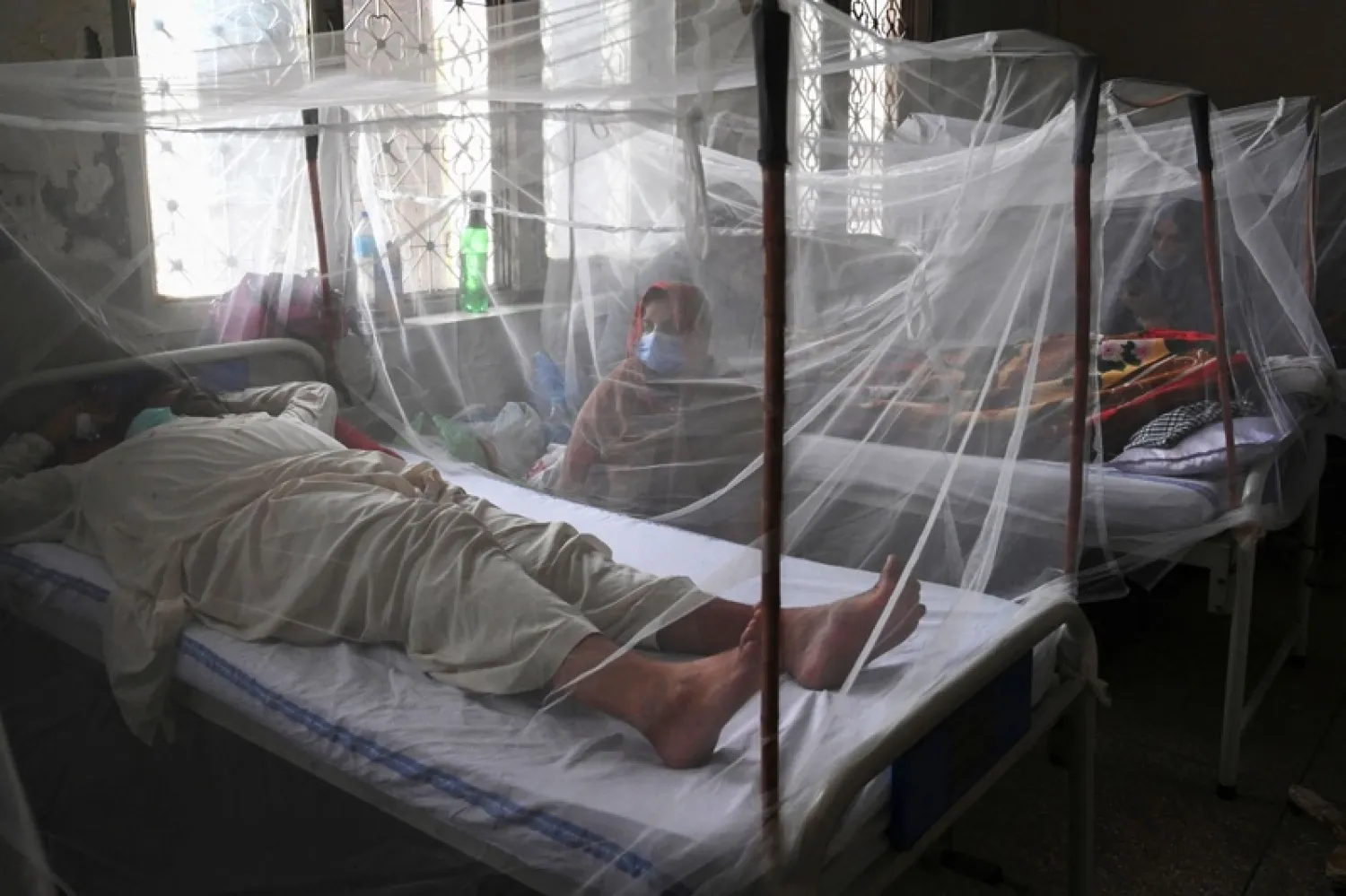
Dengue can cause intense flu-like symptoms that earned it the nickname 'breakbone fever' (AFP/Arif ALI)
TT

'An Amazing Ride': Study Offers Dengue Treatment Hope

Dengue can cause intense flu-like symptoms that earned it the nickname 'breakbone fever' (AFP/Arif ALI)

Dengue affects tens of millions each year, producing brutal symptoms that have earned it the moniker "breakbone fever," but new research may have found the first-ever treatment for the virus.

Tests in cell cultures and mice found that a newly identified compound can effectively disarm dengue, stopping it from replicating and preventing disease, according to a study published Wednesday in the journal Nature.

And it appears to be effective whether taken protectively before infection or as a treatment after the virus is contracted, said AFP.

It is an "exciting" development in the battle against dengue, according to Scott Biering and Eva Harris of the University of California, Berkeley's School of Public Health.

It "represents a major advance in the field of dengue therapeutics," the pair, who were not involved in the research, wrote in a review in Nature.

There is no doubt about the threat posed by the mosquito-borne dengue virus, which is estimated to infect at least 98 million people a year and is endemic in 128 countries worldwide.

It can cause intense flu-like symptoms, and sometimes develops into severe dengue which can be fatal.

And because there are four different strains, infection with one does not protect against another, and catching dengue a second time is often more serious.

No treatment exists so far, with efforts focusing instead on reducing transmission -- including a program that infects mosquitoes with disease-resistant bacteria.

A vaccine called Dengvaxia is approved for use only in some countries and is effective against a single strain.

- 'Unprecedented' -

Enter the unassumingly named JNJ-A07, a compound found by screening thousands of potential candidates, in a process researcher Johan Neyts described as like "looking for a needle in a haystack".

It turned out to be worth the wait.

Its effect "in infected animals is unprecedented", Neyts, who helped lead the research, told AFP.

"Even if treatment is started at the time of peak viral replication there is important antiviral activity," added Neyts, a professor of virology at the University of Leuven, Belgium.

JNJ-A07 works by targeting the interaction between two proteins in the dengue virus that are key to its replication, and it worked effectively against all four strains.

Dengue can evolve quickly, but the team found JNJ-A07 was unlikely to face significant challenges from drug resistance.

"It took us in the lab, in infected cells, almost half a year before we could obtain important resistance (to the treatment)," said Neyts.

"Given that the barrier to resistance is so high, it is very unlikely that this will clinically be a problem."

Intriguingly, the mutations that caused resistance also appeared to make the virus incapable of replicating in mosquito cells.

That could suggest that even if the virus develops resistance to JNJ-A07, it would no longer be transmissible via mosquitoes, effectively reaching a dead end in its host.

- Clinical trials in progress -
Promisingly, the compound was effective whether administered to mice before infection or afterwards.

The version of the compound reported in Nature has now been "further slightly optimized" and is in clinical development by Johnson & Johnson, Neyts said.

In a statement, Johnson & Johnson chief scientific officer Paul Stoffels said the work had "tremendous potential to... transform the world's fight against this significant and growing public threat".

There are still questions to answer however, including whether the compound could increase vulnerability to reinfection.

When people contract dengue, the presence of the virus in their blood -- known as viraemia -- generally stimulates a potent immune response that protects them from future infection.

But in some people, the immune response is weaker and that leaves them vulnerable to reinfection with different strains, which can produce more serious symptoms.

Given that JNJ-A07 works to reduce viraemia, Biering and Harris said research was needed into whether this might leave people more susceptible to reinfection.

Despite the unknowns, Neyts said the study offered exciting possibilities.

"Seeing the compound work so potently in animals was breathtaking," he said, describing the research as "an amazing ride".



Sleepy Seal Diverts Traffic in Australian Seaside Town

This frame grab from handout video footage by Laura Ellen taken on April 10, 2026 shows traffic along a road in the seaside Australian town of Dromana, located south of Melbourne in the southern state of Victoria, that was briefly diverted after a local seal decided to take a nap. (Photo by Handout / LAURA ELLEN / AFP)
TT

Sleepy Seal Diverts Traffic in Australian Seaside Town

This frame grab from handout video footage by Laura Ellen taken on April 10, 2026 shows traffic along a road in the seaside Australian town of Dromana, located south of Melbourne in the southern state of Victoria, that was briefly diverted after a local seal decided to take a nap. (Photo by Handout / LAURA ELLEN / AFP)

Traffic in a seaside Australian town was briefly diverted on Friday when a local seal decided to take a nap on the road.

The dozy pinniped was spotted snoozing on a road in Dromana in the southern state of Victoria.

Local police placed cones around the seal -- known to some locals as Sammy -- who could be seen sunning himself with little concern for the traffic.

"You don't know where he will pop up next," local Laura Ellen, who spotted the slumbering animal, told AFP.

"He usually sleeps all day," she said.

"It made me laugh when I saw him on the road. Haven't seen him do that before."

The seal was later redirected back to the beach by wildlife rescuers and the lane was re-opened.

Seals are a common sight along Victoria's coast and it is illegal to touch or feed them, the state government says.


Saudi Ministry of Interior, Red Sea Global Sign MoU

The Saudi Ministry of Interior and Red Sea Global signed a memorandum of understanding. (SPA)
TT

Saudi Ministry of Interior, Red Sea Global Sign MoU

The Saudi Ministry of Interior and Red Sea Global signed a memorandum of understanding. (SPA)

The Saudi Ministry of Interior and Red Sea Global signed a memorandum of understanding (MoU) on Thursday at the ministry’s headquarters in Riyadh.

The agreement was signed by Undersecretary of the Ministry of Interior for Security Capabilities Abdullah Al-Kathiri and Chief Executive Officer of Red Sea Global John Pagano, the Saudi Press Agency said.

The agreement aims to promote integration between the two sides in strengthening public safety requirements and standards.


Citizen ‘Frog Patrol’ Helps Amphibians Survive a Dangerous Road Journey in Poland

 Biologist Krzysztof Klimaszewski holds a common toad during a "Frog Patrol" in Otrebusy, Poland, Monday, March 30, 2026. (AP)
Biologist Krzysztof Klimaszewski holds a common toad during a "Frog Patrol" in Otrebusy, Poland, Monday, March 30, 2026. (AP)
TT

Citizen ‘Frog Patrol’ Helps Amphibians Survive a Dangerous Road Journey in Poland

 Biologist Krzysztof Klimaszewski holds a common toad during a "Frog Patrol" in Otrebusy, Poland, Monday, March 30, 2026. (AP)
Biologist Krzysztof Klimaszewski holds a common toad during a "Frog Patrol" in Otrebusy, Poland, Monday, March 30, 2026. (AP)

On rainy spring nights in a forest near the Polish capital, a citizen “Frog Patrol” springs into action — humans helping amphibians survive dangerous road crossings for a chance to enjoy millennia-old mating rituals.

As warmer weather comes to Mlochowski Forest, 30 kilometers (19 miles) west of Warsaw, thousands of toads and frogs wake up from their winter slumber and begin their meticulous spawning journey to the marshes, a few kilometers away.

The females carry the burden of the journey. Male toads here don't really give off princely vibes but travel on the backs of their much larger female partners, tightly holding on to ensure they are not dumped in favor of a rival upon reaching the waters.

While generations of toads and frogs have traveled to these marshes to mate, a road built in the last decade right across their route made the spring journey much more dangerous.

What followed was sheer amphibian slaughter — when the mating season started and the frogs were on the move, thousands would get run over.

Enter the ‘Frog Patrol’

Łukasz Franczuk, coordinator of the “Frog Patrol” initiative, recounted the sad scenes from four years ago.

“The frogs were being run over in the hundreds or thousands,” he said. “When you were driving on this road, you could see the decomposing corpses of the frogs. People going to collect the surviving ones were crying, they couldn’t stand to watch what was happening.”

Franczuk and his friends responded by helping locals organize, starting three years ago.

Volunteers would meet every wet, rainy evening as soon as spring starts, fan out along the road by the forest and collect frogs from the roadside, then carry them safely across to the marshes. Frogs breathe through their skin, which must stay humid, so they only move and migrate when it rains.

Wearing reflective yellow vests emblazoned with the words “Frog Patrol” and armed with head lamps and buckets, hundreds of volunteers can now be routinely seen out in the evenings during migration season.

Locals, including children, have also started carrying gloves with them during the day, so they can pick up the amphibians if they see them in distress at any time.

“It's really impressive to see whole families with kids walking in the rain, with buckets, in these lovely jackets to make them visible because it's pretty unsafe, this road is narrow, and they carry the frogs from one side of the road to the other,” said Katarzyna Jacniacka, one of the participants.

“When the frogs are migrating, there are a lot of people here,” she added.

For Aleksandra Tkaczyk, another volunteer, this is “the kind of connection with nature about which some of us care deeply.”

Locals say they have saved about 18,000 amphibians since their initiative started.

Helping frogs survive

Biologist Krzysztof Klimaszewski from the Institute of Animal Sciences at the Warsaw SGGW University, who took part in a few of the frog patrols, said that what the locals are doing here is very important because “it actually allows this local population of amphibians to survive.”

Such citizen initiatives to help toads and frogs cross roads built through their natural habitats are not unique to Poland.

In New Hampshire, US volunteers from the Harris Center for Conservation Education save all sorts of amphibians, including salamanders, from being run over by cars. In Bavaria, in southeastern Germany, volunteers from BUND Naturschutz say they rescue up to 700,000 frogs, toads, newts and salamanders every year.

Even in France, where frog legs are a culinary delicacy, local volunteers help the suffering amphibians. In the southern French region of Provence-Alpes-Côte d’Azur, people have installed nets on the roadside to collect the frogs before they head into the dangerous traffic.

And in the Estonian capital of Tallinn, authorities announced in early April the construction of additional frog fences on Tahetorni Street — right on the frogs' springtime migrating route — to guide the amphibians and other animals safely into underground tunnels and avoid getting them killed by traffic.