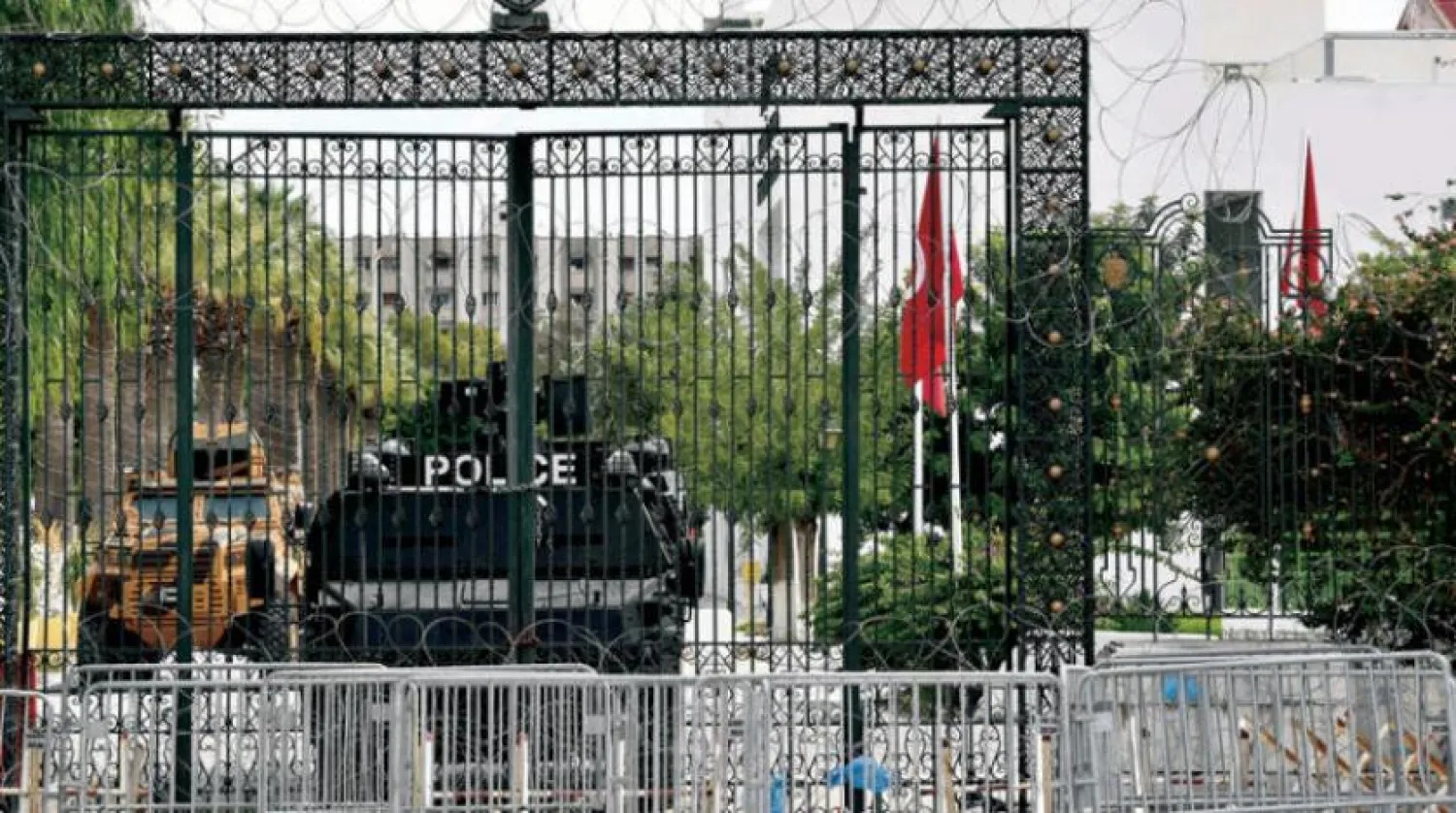

Ennahda movement has called for early elections and dissolving the Tunisian parliament, which was paralyzed by a presidential decision more than two months ago.
Ennahda's member Mohammed al-Qumani said that suspending the parliament's work is not the solution.
Qumani stressed that Ennahda tried to organize dialogue sessions to end the political crisis in the country.
However, President Kais Saied ended prospects for dialogue after his presidential orders, considering that the best solution is to resort to peace and political discussion, not the streets, referring to protests in favor of and against the exceptional measures.
The presidential decision to suspend parliamentarians' wages and grants impacted the lawmakers, who were faced with legal measures to resign and return to their original jobs.
Lawmakers are unable to resign from the parliament because of the presidential orders. They must submit the resignation through the parliament's control office, but its activities have been suspended for the past weeks.
Several law experts called for adopting a solution in such exceptional circumstances, suggesting the deputies submit their resignations to the Control Office.
Meanwhile, Judge Fadhila Gargouri issued over 350 preliminary rulings against electoral lists that participated in the 2019 legislative elections.
The rulings include provisions related to failing to submit the financial account, exceeding the electoral spending limit, obtaining illegal funds, and violating the transparency principle.
Gargouri indicated that the Court of Auditors referred more than 30 files to the Public Prosecution in January and February. The cases include suspicions of electoral violations, such as political advertising and suspicious financing.
She called for a review of procedures and deadlines and establishing mechanisms for coordination between the various judiciary structures.